


Contentment is a feast without end
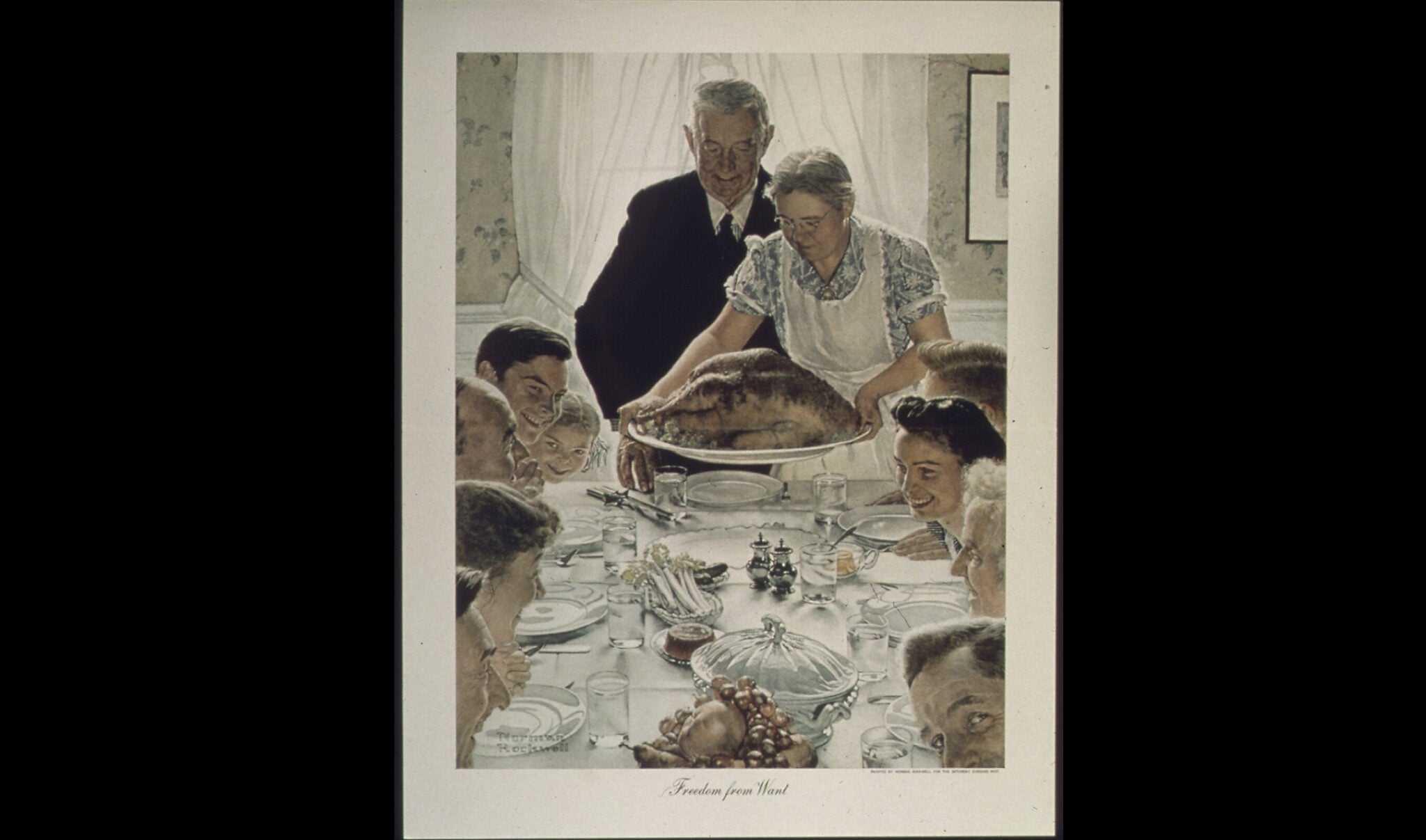
In 1943, Norman Rockwell painted his iconic tribute to American happiness. In “Freedom from Want,” the bespectacled family matriarch places a large turkey on a white plate in front of her doting husband. The children and grandchildren don’t look at the bird; they are too busy smiling at each other and the viewer. Some look with affection and others with mischief. It’s a multi-generational gathering, but, aside from the turkey, the food offerings on the table are actually sparse. We are drawn to the faces and not the side-dishes on Rockwell’s canvas.
Today, more than 60 years after Rockwell painted “Freedom of Want,” food is almost always at the center of any coverage of Thanksgiving. Major newspapers feature this year’s hottest new recipes, integrating exotic international flavors into candied yams and pumpkin muffins. Hotlines help people through the fear of dry turkey. Call 1-800-BUTTERBALL for support. Social media gurus offer their guides to managing leftovers. Famous chefs add their stylistic touches to classic dishes.
But when it comes to the people at the table, no one seems to be smiling. Two years ago, The New York Times published “Anxiety. It’s What’s for Thanksgiving Dinner,” as people worried about elections results, avian flu, and job loss. The UK-based newspaper, The Independent, recently published “The Awkward Conversations Americans Are Bracing for This Thanksgiving,” where I learned that holiday meals that veer political are likely to be 24 minutes shorter than those that are not. Blog posts with titles like “Avoiding Family Conflicts during Thanksgiving Gatherings” stir a nervy frisson that trouble is on the menu.
It seems as though the turkey isn’t the only thing that’s stuffed. Have we become overly full of ourselves, too enamored by the psychic relief of cancelling or ghosting others – let alone estrangement – and too bloated with our own opinions to make two hours of space for others unlike ourselves? Maybe it’s time to put down the evaporated milk and replace the string bean and fried onion casserole with a big helping of maturity. We can do this. We can delight in each other’s company, laugh at the same old jokes together, and withhold political views for a few hours because life is so much more than who we voted for and why.
This Thanksgiving, I’m turning to the biblical book of Proverbs: “All the days of a poor man are wretched, but contentment is a feast without end” (Prov. 15:15). Poverty and homelessness weary the body and soul. Misfortune and worry compound when there are not enough resources to cover mounting expenses, be they for food, medicine, education, or rent. But one ancient rabbinic reading of this verse transcends the literal. Poverty is also an emotional state. The poor are discontented with what they have or suffer from compassionate fatigue carrying the pain of too many to find their own serenity. A person who can afford a feast may never have the emotional state to truly enjoy it, while someone who has little money can still achieve a state of inner peace.
In the verse itself, the tragedy of poverty gives way to human contentment. Wealth, suggests the ancient Jewish book of morals, Ethics of the Fathers, lies in being happy with one’s lot. We can afford to be kind because everyone has small and great struggles. Even on a bad day, we might be unwilling to exchange our lives for those of others. When we combat the mental state of scarcity and elevate our sense of abundance, we generate blessings and lives of purpose. In “A Moveable Feast,” Ernest Hemingway’s description of his time in Paris, he enviably describes those who “who give each day the quality of a festival.”
Remember Isak Dinesen’s famous 1958 short story “Babette’s Feast,” which was turned into an Academy Award winning movie? A French maid who works in the home of two religiously rigid and parsimonious sisters, wins a lottery, and uses all the money to prepare a wonderful French feast for them and their ascetic congregation. She wants to show them the beauty of food, drink, and a companionship of lightness. A feast, in this sense, is not a multi-course meal with so many trimmings, where it is hard to make it to the couch. It’s a beautiful, incremental unfolding of humanity around a suddenly boisterous table that a delicious meal releases.
Nobel Prize Laureate Derek Walcott, in “Love after Love,” describes a time when we will experience the tranquility that comes with self-love and greet our own faces in the mirror with a smile, maybe the same wide smiles in Rockwell’s painting. We will speak to ourselves: “And say, sit here. Eat./You will love again the stranger that is yourself.” In that meal, with no food at all, we will finally be nourished. His closing words will reverberate: “Sit. Feast on your life.”
Maybe this Thanksgiving, we can put aside all the anxious talk and feast on our lives, and, in the stunning words of Proverbs, appreciate that contentment is a feast without end.