
Always out of step with orthodoxy
Could not or would not? The question Albanese left unanswered
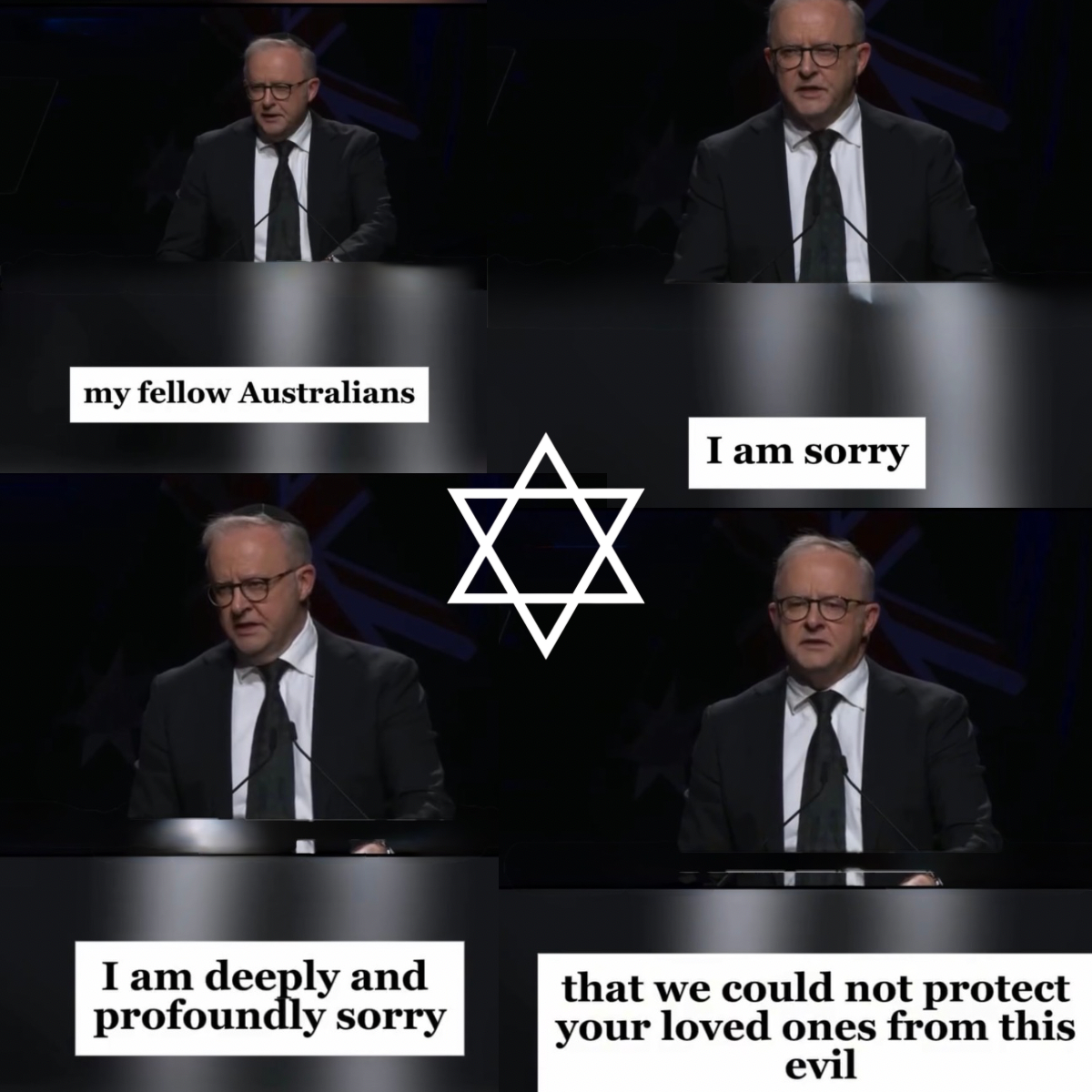
Was the failure to protect Australians unavoidable or the result of choices made and warnings ignored? Image AI generated
Last night the Prime Minister apologized. He apologized for not being able to protect the 15 victims of the Bondi Hanukah massacre.
The line was carefully chosen, rehearsed, and delivered with solemn gravity.
“I am deeply and profoundly sorry that we could not protect your loved ones from this evil.”
Australia was meant to take comfort in those words. Many did.
But the most important question was left untouched.
Could not. Or would not.
This distinction is not semantic. It is moral. And it goes to the heart of whether an apology is an act of accountability or an exercise in political containment.
“Could not” frames the state as powerless. A tragedy beyond control. A failure without agency. It implies inevitability rather than choice.
“Would not” is far more confronting. It suggests decisions were made. Priorities set. Warnings weighed and discounted. Political costs calculated. It suggests responsibility.
The Prime Minister chose “could not” because it is the safest possible formulation. It expresses sorrow without conceding fault. It acknowledges loss without interrogating cause. It closes the emotional moment while leaving the policy record untouched.
This is the modern political apology in its purest form.
Moral regret without institutional consequence.
No apology is meaningful without three things. Admission of failure. Acceptance of responsibility. And a commitment to change. Last night delivered only the first, and even that in softened form.
There was no explanation of why Jewish Australians had been warning of rising antisemitic violence for months. No account of why public assurances of safety rang hollow. No acknowledgment of whether ideology, fear of offense, or electoral caution shaped the response before the massacre.
Instead, we were offered unity language and candlelight symbolism. These have their place. They are not substitutes for truth.
An apology that says “we could not” asks the public to accept that nothing more could have been done. That this was fate. That accountability begins and ends with sorrow.
But if that is the case, then the logical follow up is proof. Proof that prevention was impossible. Proof that every lever of state power had already been pulled.
If such proof cannot be offered, then the more uncomfortable explanation remains. That protection was possible. But inconvenient. Politically sensitive. Deferred.
Australia is not a fragile country. It does not need its leaders to speak softly to spare it from hard truths. It needs them to speak plainly.
Last night closed a ceremony. It did not close the question.
Until we are prepared to answer whether this tragedy was unavoidable or merely unaddressed, no apology, however profound, will be enough.
Related Topics