
An American Olah In Israel
Crossing the Finish Line: One Month after Aliyah
“Shit, I forgot my headphones,” I whisper as I head out to catch the bus to Tel Aviv for my first job interview in Israel. I shake my head and keep going. By the time I realize I’ve forgotten my wallet, too, I’m already at the interview.
Usually, anxiety keeps me on top of these things. I tell people I use it as fuel. Since October 7th, as the violence against Jews got worse and reached into my own life in Oakland, I always had somewhere to put that fear. After all, I had decided to make Aliyah: I had a goal. Another document to track down. Another appointment to make. By the time I boarded the plane, I’d spent so long working toward Aliyah that getting here felt like the beginning of a marathon.
I knew when I landed I had exactly 14 days to find somewhere to live.
The other day, a follower asked me why I was so thankful for an empty apartment. I’ve been thinking about that question a lot. I suppose the answer starts with what it’s cost me, over the years, to have somewhere safe to go.
At 12, I told mandated reporters that I was being abused. I was removed from the home I lived in and went to live with my grandparents. At 31, after losing my job and facing homelessness in New York City, I moved back to California to stay with my parents. My brother, who was a meth addict, held me down by the throat and punched me several times in the face. So badly in fact, I had to have my gums sewn back onto my upper palate.
I left that home, too. I went to a hostel in San Francisco and started looking for work again.
Years later, in 2020, I became a case manager for people experiencing chronic homelessness. I knew what it felt like to lose a job and have to ask someone for a place to stay. I also knew what it felt like to get a yes and still have nowhere safe to sleep.
I’ve also held a gratitude practice since I was 19. It was part of my therapy for chronic depression and suicidal ideation. The work was intended to help me re-frame the reality I perceived, and it did indeed work for me. When you’ve had to leave an unsafe home more than once, a door you can close and lock behind you is one of those things you tend to appreciate.
I’d spent months looking at apartments in Israel from California. One landlord needed an Israeli phone number. Another wanted Israeli credit. Others wanted to meet me in person. Eventually, I took a chance. I booked two weeks in an overpriced, cockroach-infested studio in the worst part of Netanya and figured I’d have better luck once I got here.
Every night I spent there was one less night I had left. I felt the clock ticking down in my soul each day. I kept thinking, “I cannot be homeless in the Middle East”.
Every potential landlord seemed to have the same question. “When do you want to move in?” I learned quickly that the correct answer was “Immediately.” Take time to think it over and somebody else would be living there.
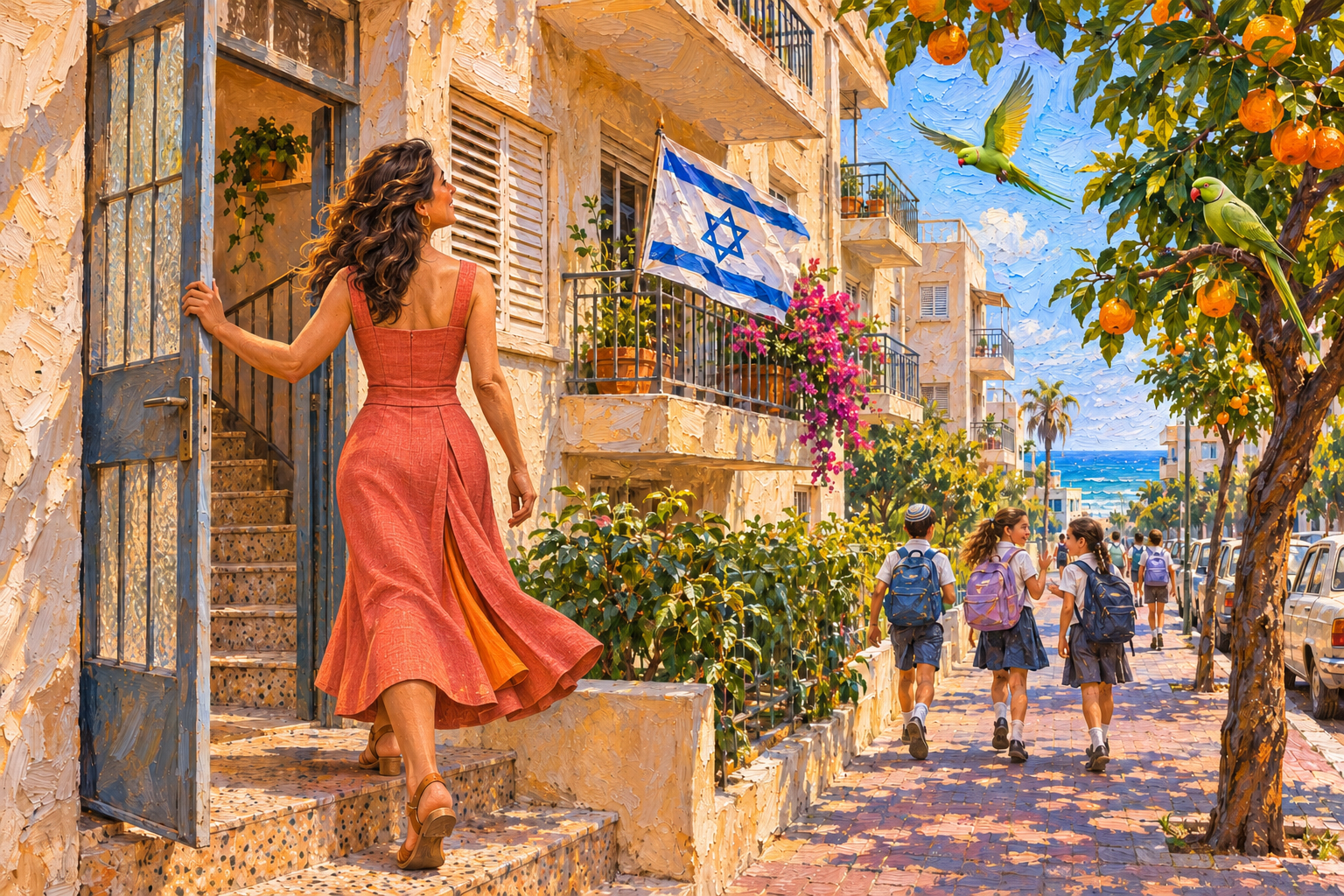
Then I saw the apartment with the mid-century details, two bedrooms, and a view of the Mediterranean. Up until then I’d been doing the arithmetic of how many nights I had left. Now here I was, a woman with a deadline and daring to feel something that also scared me: Desire. God, I wanted that apartment. It had been a while since I’d let myself want something that specifically.
It took some doing, but I got the keys. For the first time since I’d landed, I knew where I’d be sleeping when the two weeks were up. I could go upstairs, close my own door, and decide who got to walk through it. If you want to know what that empty apartment meant to a woman living with PTSD, that’s about as close as I can get. It represented safety.
Then I got the job in Tel Aviv. After doing the math, I discovered I could pay the rent on the place I loved and still afford to go out for a cocktail with my girlfriends. The money represented stability in a world that has felt very unstable.
But now, I can breathe a sigh of relief and just live my life. Collecting vintage treasures at markets, socializing with friends, hell – maybe one of these days I’ll even go on a date. After a month of figuring out how to live in Israel, I was finally able to think about plans not for survival but for pleasure.
I’ve survived violence, cancer, and the deaths of people I loved. I tell those stories because I remember how badly I needed to hear from somebody who’d been through hell and could tell me what came afterward. Well, here’s what came afterward for me: I get to be an ordinary working stiff who lives near the beach and has a bus to catch in the morning. No Palestinian flags and chants to kill my people from the river to the sea.
One month into Aliyah, my idea of the finish line has changed. The next time I catch that bus to Tel Aviv, I’ll be going to work. Maybe I’ll remember my headphones. I’d better remember my wallet.
And if I forget either one, I know exactly where I left it. At home.
Related Topics