

D.Trump and the Nobel: Peace without Virtue
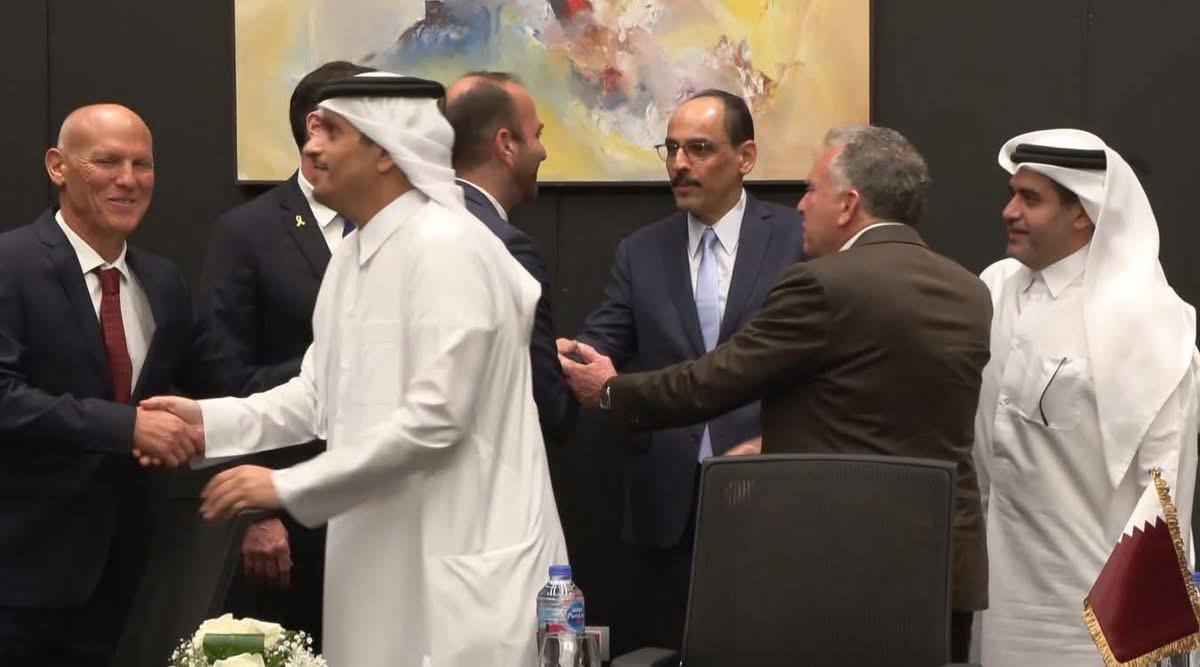
He surprised everyone, once again. While many diplomats bet on a stalemate in Gaza, Donald Trump achieved what no president, neither Democrat nor Republican, had dared to hope for: an agreement between Israel and Hamas, the release of hostages, and a gradual military disengagement from the IDF. This is an undeniable diplomatic feat that could earn him the Nobel Peace Prize.
Yet in Oslo, the silence is deafening. There is a world that lies between making peace and embodying it.
Under American pressure, Hamas agreed to a historic compromise: release the Israeli hostages, lay down their arms, and begin a process supervised by Egypt and Qatar. In exchange, Israel withdraws from the Gaza Strip while maintaining security guarantees on its borders. For Trump, the operation is a ‘doublet’: he puts the United States back at the center of the game while confirming his strategy of ‘deals’—that which prioritizes transactions over doctrine and pressure over consensus.
Trump imposes peace by force. He maneuvers with arrogance, and it is precisely this method that makes his accession to the Nobel Peace Prize improbable.
The Nobel, a moral mirror of the world
The prize has never rewarded only a result. It enshrines an attitude, a vision of the world, and a certain idea of international morality. It is not peace as a balance of forces, but peace as moral transcendence. Donald Trump, for his part, seeks neither to reconcile nor to moralize. He negotiates by dominating the balance of power, calculating political profit, and demanding immediate guarantees. For the committee, one should not honor “cleavage people.” Under this prism, Trump represents everything that the Nobel Prize no longer wishes to embody.
The second reason is due to the very character of the American president; he is the most polarizing political character in the world.
For Oslo, it would be a moral earthquake, because the Nobel Prize is not just a trophy: it’s a message to the world. Giving it to D. Trump would be validating a diplomacy perceived as brutal, transactional, and indifferent to morality.
Trump does not believe in peace in the European or UN sense of the term. He believes in stability. For him, peace is a by-product of power.
This logic of the ‘deterrent balance of power’ structured his foreign policy (with North Korea, Iran, China, and Hamas). This conception goes against the philosophy of Oslo. Where Europe sees peace as a collective process, Trump treats it as a bilateral transaction.
two visions of the world—one idealistic, the other realistic.
Yet, the dilemma remains real. Because if we judge the American president by the facts, he obtained what decades of diplomacy have not succeeded in: a lasting ceasefire, an end to hostilities, the release of hostages, and the promise of reconstruction. And this example inspires as much as it divides.
History may remember that Donald Trump brought peace to Gaza, without emotion, without illusion, but with formidable efficiency, and Donald Trump can boast of having achieved a major geopolitical victory. On September 23, 2025, during the session of the United Nations General Assembly in New York, President Macron stated that”if Donald Trump really wanted to deserve the Nobel Peace Prize, he should stop the war in Gaza.”
“mission accomplished”