
Daughters of Deborah, IDF’s Women Warriors
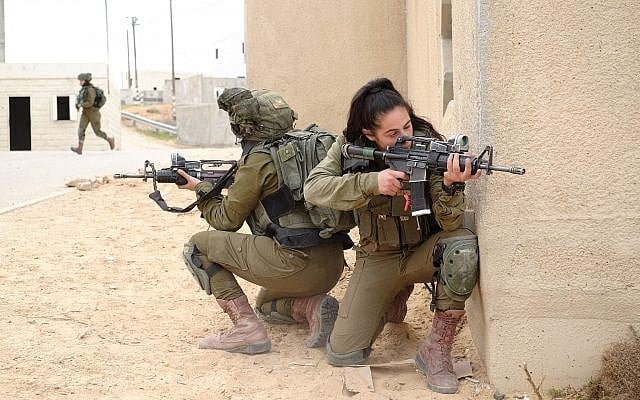
Carrying Deborah’s spirit into the 21st century, these warriors are innovating the future of Israel’s security
It is one of my favourite stories in the Hebrew Bible: Deborah, the prophetess and judge, affectionately known as ‘a mother in Israel.’ She was a leader who not only sat beneath her palm tree dispensing wisdom but also rallied the people into battle. She was strategist, warrior, and poet all in one, and a woman who embodied both vision and action.
When I think of Deborah, I think of today’s Israel. I think of the thousands of young women who now put on the olive uniform and take their place not in the background, not in the supporting cast, but on the very front lines of Israel’s defense.
The other day, I was reading the IDF’s newest data, and I had to pause. A record-breaking 5,000 women were recruited for combat roles last year. Let that sink in. Just a decade ago, the number was closer to 500. Now, tenfold more – women who train, serve, and lead in mixed battalions along Israel’s borders, in the Artillery Corps, the Home Front Command, the Air Defense Formation, and even the tank crews of the Armored Corps. What a welcome development!
And just as Deborah rose in her time, so too does Israel today see many Deborahs rising in hers.
For years, women in the army were confined to administrative roles. They were present, yes, but largely unseen. Then came the pilots – at first tentative, even controversial – to place women in tanks, aboard naval warships, in combat engineering units. Some scoffed, others predicted failure. But history has a way of vindicating courage.
Today, one in five combat soldiers in the IDF is female – 20.9% of the fighting force, according to recent Knesset committee reports. That’s not a token percentage. That’s transformation.
And it is not just numbers. These women are taking on command roles, leading missions, and proving that they can shoulder the same operational responsibilities as their male counterparts. In fact, in mixed battalions along the borders with Egypt, Jordan, and the West Bank, women now make up more than 60% of personnel. Many of these same battalions have carried out missions inside Gaza.
Israel’s enemies may still cling to an outdated picture of the Jewish state, imagining a small, vulnerable country held up by a few exhausted reservists. But on the ground, in the dust and grit of border defense, a different reality is emerging: women are no longer the exception, they are the backbone.
Some of these stories you know. During the October 7 Hamas onslaught, female soldiers from the Caracal Battalion fought for hours, holding back waves of attackers along the Egypt border. Israel owes them a debt it can never fully repay.
Others are less visible but no less vital. Women serve as drone operators, canine handlers, and paramedics embedded within infantry brigades. In the Iron Dome units of the Air Defense Array, women sit side by side with men, intercepting rockets before they fall on Israeli cities. In the Navy, female sailors now serve aboard missile boats, operating some of the most advanced systems in the fleet.
Even in elite formations, the walls are cracking. Twelve women passed the grueling screening for the Yahalom Combat Engineering Unit. Pilot programs have opened – and sometimes closed – but each one has pushed the frontier further.
It is, in every sense, resilience and renewal.
Of course there are challenges. Attrition is real. Injury rates can differ. Religious sensitivities complicate integration. Some elite units remain closed. Pilots are paused, reviewed, debated. This is the people’s army, and every choice reverberates across society.
But here is what cannot be denied: Israel has a manpower problem. Reservists are strained. Draft dodging is on the rise. The Haredi draft issue is still unresolved. In this environment, the untapped potential of Israel’s daughters is not just a matter of equality, it is a matter of national survival.
As Brig. Gen. Shay Tayeb recently told lawmakers, every new mixed-gender battalion reduces dependence on reserves. One regular battalion can equal the operational output of seven reserve battalions. That is not theory; that is arithmetic.
In other words, opening the gates for women is not a concession. It is innovating the future of Israel.
I picture a young recruit in 2024, perhaps a religious girl from Beit Shemesh or a secular one from Tel Aviv. She watches her brothers enlist. She watches her friends head into combat. She wants to do her part. No special campaign targeted her. No glossy billboard told her she was needed. The motivation came from within.
That is the story of Deborah all over again. Leadership born not of convenience but of conviction.
And when she stands her watch on the border, or climbs into the tank, or scans the skies for incoming rockets, she is not just defending Israel today. She is reshaping what Israel will be tomorrow.
So yes, Deborah’s story is ancient. But it is also alive. Alive in the determination of 5,000 young women who put on their boots, pick up their rifles, and march into the same dangers as their brothers. Alive in the steady rise from 500 to 5,000, in the one-in-five statistic that no one can dismiss anymore.
And alive in the quiet truth that Israel’s survival has always depended on the courage of its sons and daughters together.
The IDF’s women warriors are not just part of the story. They are the story, the story of resilience, of renewal, of innovation, of a people who never stop finding ways to defend, adapt, and thrive.
Deborah would recognize them. And I think she would smile.