Day 606 of the War: Another Shavuot
Last Wednesday marked the 600th day since October 7. While for us it was another unbearable milestone, the world has long forgotten the massacre and the hostages who are still in Gaza, with no end in sight. On the one hand, I can understand it — we are talking about “only” 58 hostages, while millions of innocent civilians suffer in Gaza. On the other hand, it was Hamas’s vicious attack on October 7 that brought on the war, the destruction of Gaza, and the suffering of the civilians that Hamas uses as human shields. Still, one form of suffering does not justify another, and many people in Israel actively protest against the war and the cruelty inflicted on Gazans.
Last weekend, we celebrated Shavuot. For many Israelis, this harvest holiday is one of the most beloved. As a city child growing up in Haifa, I always longed to visit my family in Kibbutz Gan Shmuel. On Shavuot, there was always a very colorful festival outdoors, with Bikkurim and everything related to “firsts”: fruits, animals, and babies.
When we returned from the US after several long years, we took the girls to visit the kibbutz for Shavuot. I was surprised to see that while I was gone, visiting kibbutzim on Shavuot had become a tradition for families, even those without relatives in a kibbutz. This year, I was happy to learn that many kibbutzim in the south and north have revived this Shavuot tradition, celebrating the harvest, community, and togetherness.
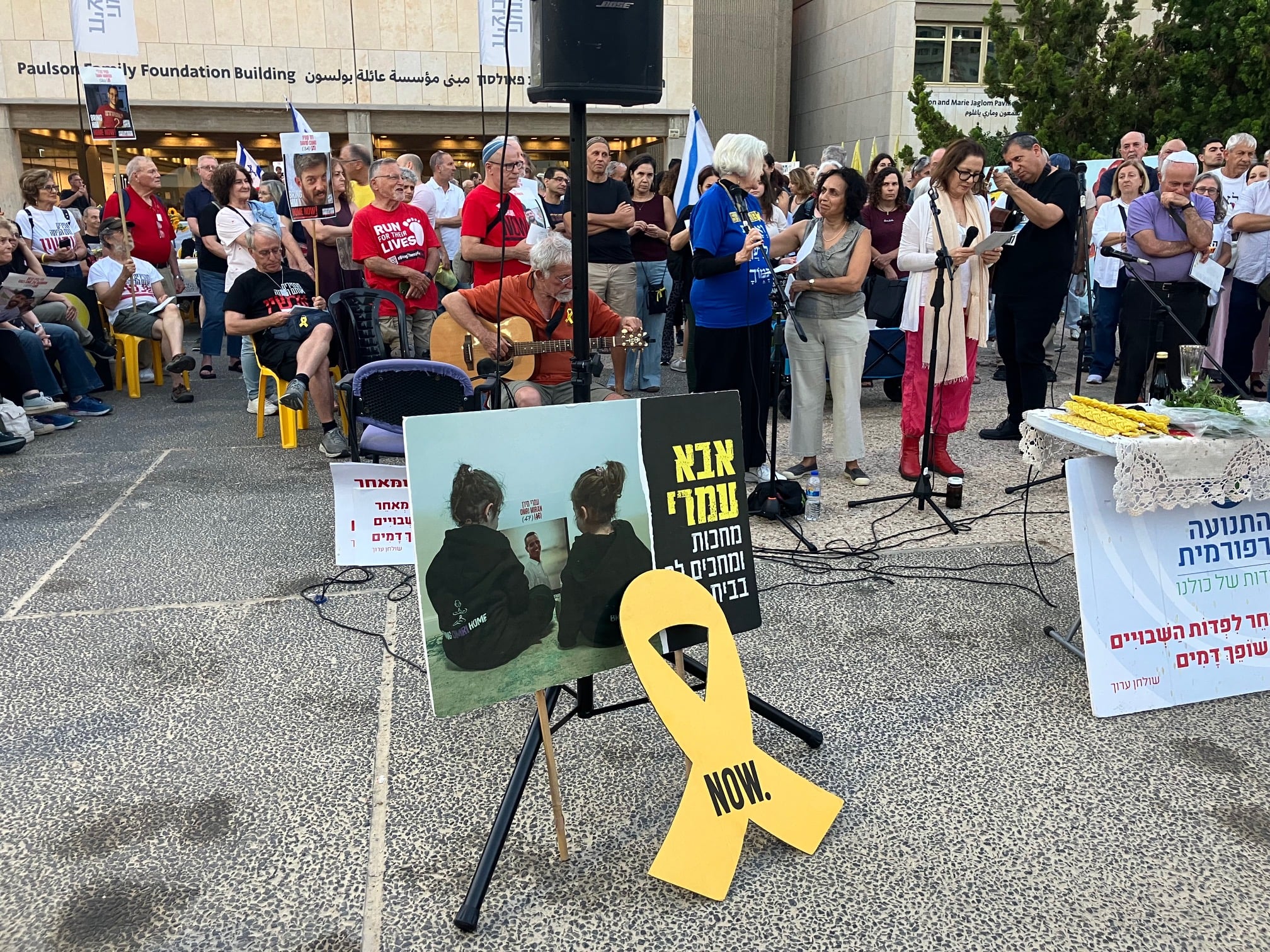
Last Saturday, before the rally in Hostages Square, I attended a Havdalah service organized by the Reform Movement in the square. It was a beautiful spring evening, and the atmosphere during the service was soothing and serene. The guitar-accompanied singing was just what everyone around needed. Booklets were laid out on the table, and we were invited to take one and sing along. For the blessings over fragrance, there were different leaves like myrtle, and several people held the special Havdalah candles. The ceremony was deeply moving, yet gentle and not obtrusive.
Once it ended, thousands of people began filing into the main rally. For me, it was a jarring transition from the calm of the service. Within minutes, we were back in action, standing in solidarity with the families. The message was especially powerful when three mothers and wives of the hostages — Lishay, Rivka, and Sharon — pleaded for a hostage deal that would bring their loved ones home: Omri, Elkana, and David. Bring Them Home Now!