


Days before darkness: New life born out of grief and ashes
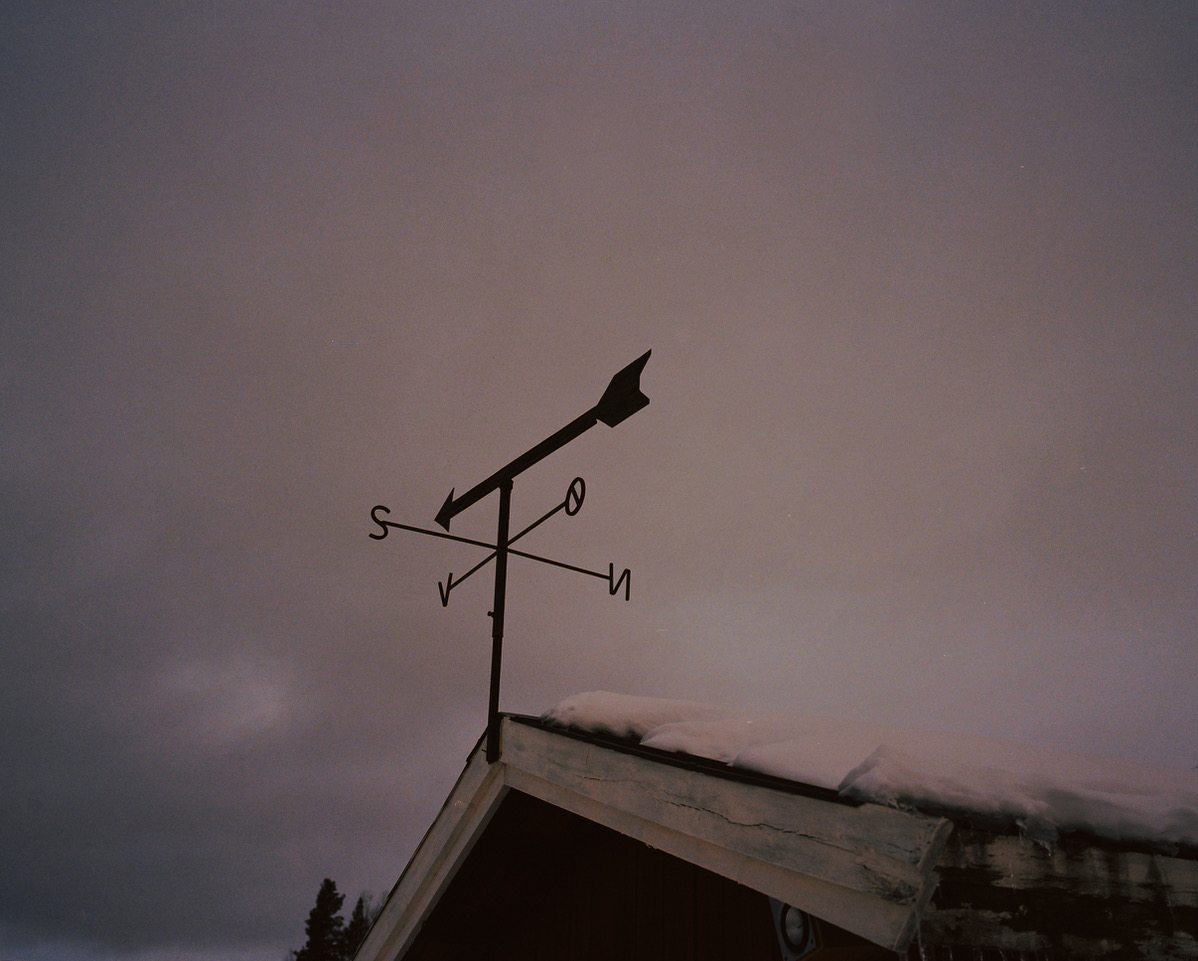
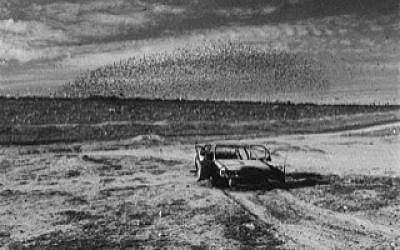
The Eretz Israel Museum in Tel Aviv is home to Daniel Tchetchik’s sobering exhibition Days Before Darkness.
The moving installation came to Tel Aviv after its original home, the Beeri gallery, was destroyed in the October 7th atrocities. “The gallery was torched and burnt to the ground” explained the show’s curator, and Beeri resident Sofie Berzon MacKie, “the whole kibbutz was destroyed and over 90 people were murdered, nobody lives there anymore.”
Not long after news of Beeri’s tragedy hit the headlines, a consoling call came from the Tel Aviv Museum, with an offer for an alternative exhibition space. “I immediately suggested they accommodate Daniel’s show,” said Mackie. “We have been working on it for many months, long before the life-altering atrocities happened, we formed a sound connection that only deepened with the October 7th devastation – it was this strong connection that allowed the exhibition to be reborn.”
Days Before Darkness didn’t just survive the earth shattering attack – in a remarkable, uncanny twist of fate, the exhibition’s concept of good and evil both being part of the human experience, that was conceived long before the atrocities, assumed a broader, more profound, and piercingly relevant meaning.
Days Before Darkness is about a journey. “It carries the theme of an archetypal crisis or an odyssey, that is present in all cultures throughout our history,” explained Mackie, “we enter a space where we go through some sort of transformation, and re-enter society with a very deep newfound knowledge to be shared with others.”
The exhibition space itself is somewhat disconnected from time – “we created these really dark walls and low lighting, so that Daniel’s very grainy images would disappear into the walls. The images feel like they are born out of, or disappearing into the walls, and the walls themselves feel like they are part of the make up of the exhibition, in the same way that when you look at the night’s sky where darkness is prominent, you only see the stars, you have this whole fabric that holds everything together, so that was the vision we tapped into. The two light boxes in this show are like sparkling stars in the night sky – a very small one right at the entrance, and one hidden behind a wall.”
There is an ongoing interplay between light and dark, destruction and rebirth, harsh and tender – “lightboxes shining from the walls reveal a scorched expanse, a barren terrain and the buzz of a lone streetlamp,” reflected Tchetchik, “in the same breath, however, there are tender memories and daydreams, you see destruction countered by compassion and tenderness as bright lights shine through the annihilation, and determined inner forces ward off the threat of disintegration.”
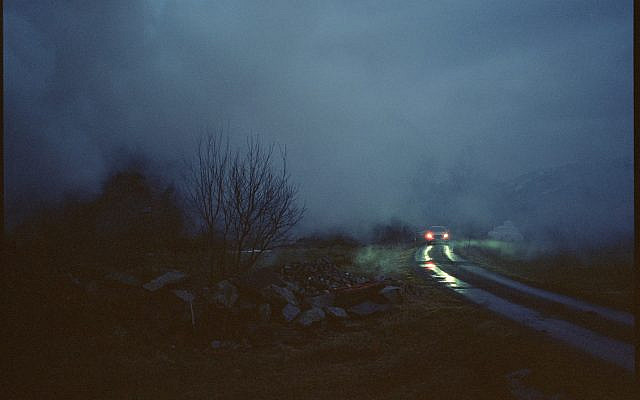
Days Before Darkness is a quest – going to a dark cave and looking for clues, constantly searching for which way to go – a transformative voyage of self exploration. “The space itself is calm, almost meditative because it is sitting inside the eye of the storm where everything is quiet,” added Tchetchik, “there’s zero wind, not even a little leaf is moving, it’s completely silent. It’s very peaceful and everything kind of swirls around us – you have memories, fragments of visions as subtle reminders of what brought us there, and also what can lead us out. It is about stepping into darkness physically and also metaphysically. Everything is darkened except for the works that are lit with specific spotlights – the space itself is an integral part of course of the show – the negative space, the places where there are no works on the wall, are just as important as the areas with works on them. It is a reflection on destruction vs. creation, on the good and the extreme evil that mankind is capable of – in this extreme darkness however, there is shimmering lights on the horizon that break through the darkness to give hope.”
Comprised of images taken over the past decade, Days Before Darkness stands in stark contrast to Techtchik’s previous works which carry a powerful, overwhelming sense of an impending, imminent danger. “Here, there’s no hidden force to be felt, or a looming disaster to be feared,” explained Tchetchik, “it’s all very dark landscapes with the occasional burnt out whites, and a heavy sense of the frequency of now.”

“This time the threat is behind us” asserted Mackie, “the evil has already struck with all its might, the tragedy is behind us as the destruction has already happened. We are not scared anymore because we survived it, but now we were thrown into this space where there is this omnipresent force – the force of life and the force of creation, and I think that that’s what shifted in Daniels work. The fear from what can happen is gone because the worst has happened – I couldn’t imagine anything worse happening to us. Now we are in this completely new stage, and there is a force of life, or maybe some sort of metaphysical being that we are all connected to – the collective unconscious is the force one can feel in Daniel’s exhibition.”
I put it to Tchetchik that there is something prophetic at play here, it is as if he foresaw the unfathomable attacks.
“It is quite striking – just fate if for want, that this has happened”, he replied, “even the title of the exhibition Days Before Darkness is eerily prophetic. Also, we were going to make a catalogue for the exhibition in Beeri and I literally pitched the idea to have it go in reverse – kind of a countdown towards the darkness. Artistic people often have some kind of higher sensitivity to what is going on around them, I was definitely having serious emotions that we’re going to a very dark place, and this started two or three years ago with the series Maybe It’s a Sign, and then the sea level series which reflected on the need to keep our head above water.”
Days Before Darkness is very different than other exhibitions – Tchetchik and Mackie have created a real, physical space for people to step into and wander through. “A gap in reality” as Mackie describes it, “allowing for these ideas to appear and to come into existence. This is deeper than just conveying an idea or representing something through an image, it’s kind of a metaphysical idea just appearing in the world.”
The powerful images come together to play a part in the story of the journey. The images pile-up onto each other, sending and receiving meanings, echoing back and forth through the space between them.
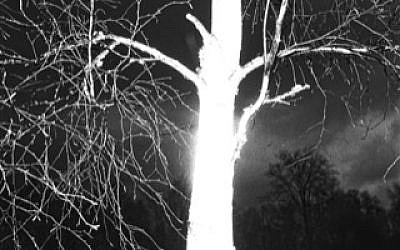
The images themselves are immersive, engaging and singularly powerful. From the breathtaking, mysterious landscapes and the sparkling of light on the swirling clouds, to an eerie scene of a fairground ride or the magically glowing tree of light, all seeking a deeper understanding of the world, all somewhat removed from specific time or place.
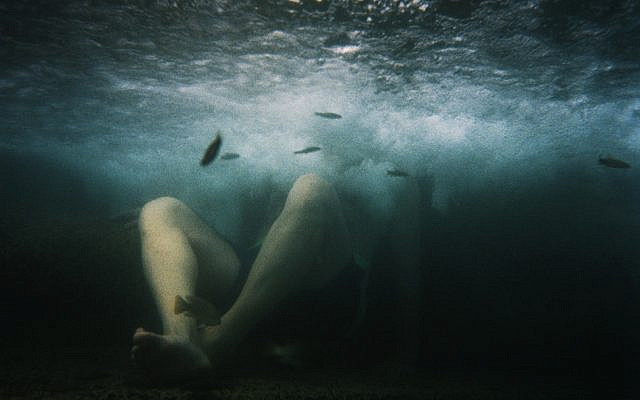
“October 7th really just exploded in the middle of our work on the exhibition,” concluded Tchetchik, “a very very strong, abrupt, horrific turn in the road happened three months ago. The exhibition that we were putting together in the idyllic, pastoral pre-October 7th setting of Beeri proved to be sharply poignant, and painfully current after the events, its message of destruction vs creation is resonating even louder now. The very first, opening image of the exhibition is of the two legs underwater, it’s kind of a rebirth. We’re in a different world now, the world has been reborn into a different reality.”
To Mackie, the horrors brought creative clarity. “After this horrible destruction of at least my life” she explained, “we could see things from within, we weren’t looking at it from the outside anymore because it became our reality. Something so extreme happened that it’s like the fabric of reality is just completely torn, events that really shatter your whole existence and then you just stand in the middle of it and you have nothing to hold on to. The exhibition is about these spaces of in between after everything was lost, and now we have to find our way into a future, we have to find our way back into life.
We are now after the destruction and just floating into this new type of existence, this space in the museum kind of floats with us and I think it offers a safe space to feel at home with this void. Reality and its order are shattered and lost, we have yet to reenter the world with a new understanding of things – we have to find our way through this space that we created in the museum.”
Days Before Darkness
Eretz Israel Museum Tel Aviv
Until June 8th 2024