


Dead Soldiers – Are They a Money Making Machine?
One of the most prominent myths of Israeli Hasbara (or propaganda – depends on one’s view) is the notion according to which Palestinians “pay money to the parents of terrorists.” Like most myths, this one also has a truthful element that has been inflated, distorted, and taken completely out of context.
The Palestinian Authority does, indeed, pay approximately one thousand and four hundred shekels per month to families whose children were killed in combat against the IDF. From our perspective, these children are, obviously, despicable terrorists, but from their perspective, our soldiers who killed them are a bunch of cruel gunmen. Let’s dig into the numbers. One thousand and four hundred shekels are barely one seventh of the amount Israel pays to bereaved parents whose children died during their military service. These parents receive over nine thousand and seven hundred shekels every month for the rest of their lives. This money comes from our taxes, alongside a variety of financial benefits—from Chinese medicine to loans for home renovation.
To most of us, it seems natural that if an offspring dies during his military service, the parents should be paid, but this is far from being the case in other countries. In Germany, parents of a soldier who dies while serving receive only a one-time payment of two thousand and five hundred euro, only if the deceased soldier lived with the parents. In France, parents of a deceased soldier don’t receive a single euro. This is also the case in the United Kingdom. The United States is the most generous country to bereaved parents after Israel, but even the one hundred thousand dollars lump sum Washington pays to parents of a deceased soldier are worth less than three years of the Israeli allowance.
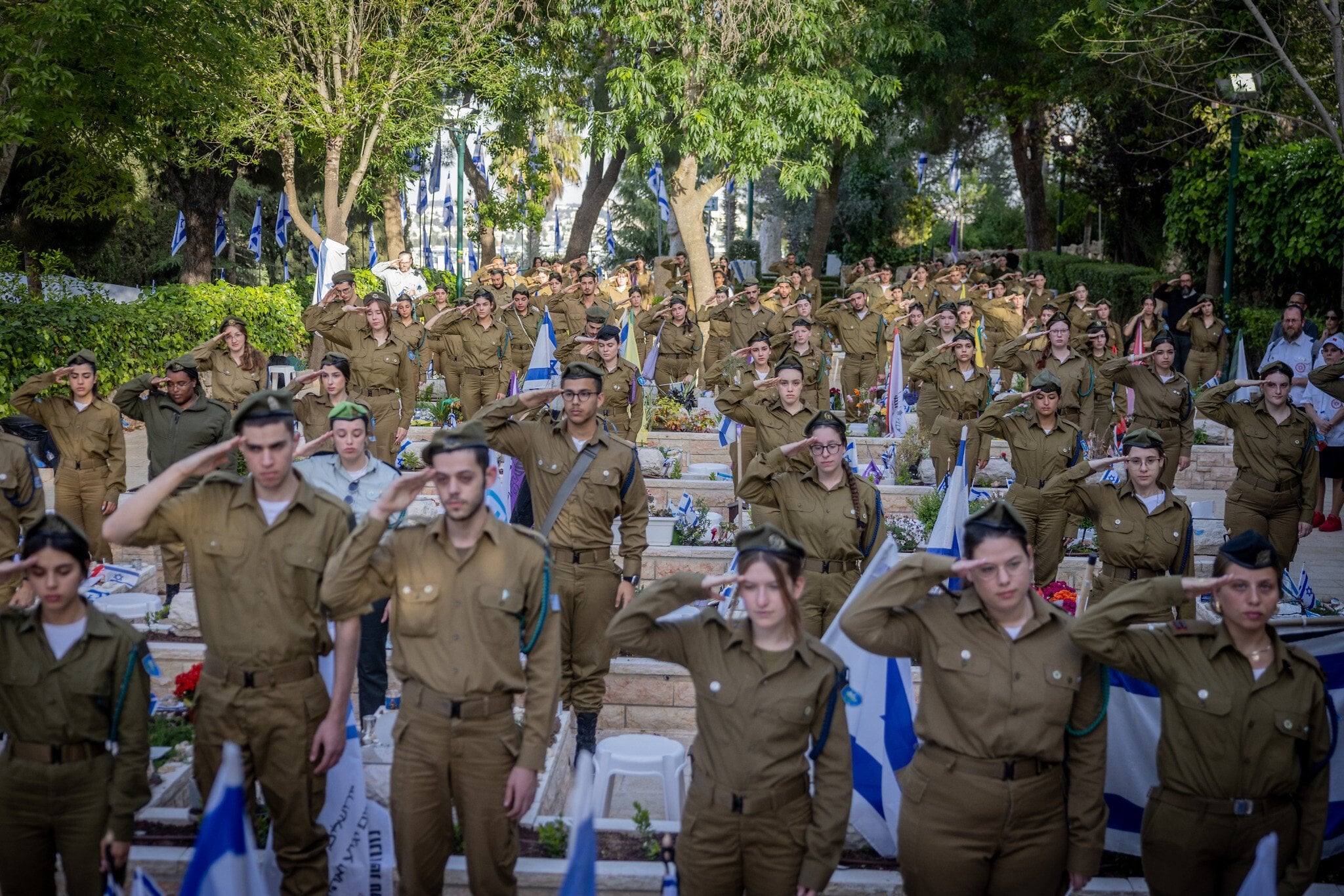
Around the world it is customary to offer consistent allowance to bereaved parents when the parents were financially dependent on the deceased soldier, or when the soldier listed the parents as beneficiaries of an insurance policy. Beyond the financial savings, there is here also a psychological and sociological statement that separates parents from their adult children who have chosen to volunteer to combat units or run a military career despite the risks. Israel and Palestine are exceptions—and not necessarily for the better. Only we and the Palestinians pay money to bereaved parents of soldiers regardless of the parents’ financial status or the cause of the child’s death. A large portion of the Israeli soldiers who passed away in recent years—even the majority before October 7th—died in completely non-heroic circumstances, from heart attack to stroke. Among the Palestinians, too, one can differentiate between those who were killed while trying to prevent an occupying army from confiscating their land and those who murdered civilians in cold blood. For us, they are all soldiers. For them, they are all martyrs (shuhada).
Of course, the special status of bereaved parents finds expression not only in money. In the Palestinian Authority, the parents of martyrs are given a place of honor in anti-Israeli propaganda. In Israel, bereaved parents are regularly invited by media outlets to share their insight on the war and how it should be managed. Itzik Bonzel, for example, whose son was killed in 2023, was recently given a weekly radio show on “Galei Israel” where he lays out his hawkish philosophy, which is associated with the “Gevura” (heroism) Forum, and even received permission to speak in front of the Supreme Court when it discussed the dismissal of secret service head. On the left wing, Shlomo Vishinsky, a veteran actor whose son was killed in Gaza twenty years ago, is frequently interviewed and explains why, despite everything, he believes that there is still hope for reconciliation.
There is no doubt that bereaved parents have lost the most precious, but the state’s decision to regularly fill their bank account and our decision as a society to give them an iconic status glorifies militarism and makes the transition from a state of a seemingly heroic war to a banal ceasefire almost impossible. Where dead soldiers are heroes, there is no realistic chance for peace.
It is worth remembering that children die in various circumstances – not only in military service. They die in car accidents, on school trips, and even from a malignant tumor. In none of these cases, do the parents receive money or special status. Ultimately, and sadly, we and the Palestinians are very similar in our sanctification of the death of those who wear military attire. Our inability to let the deceased rest in peace explains the difficulty of ending a war that could have ended long time ago.