
Debate Grows in Pakistan Over Possible Role in Gaza Peace Force
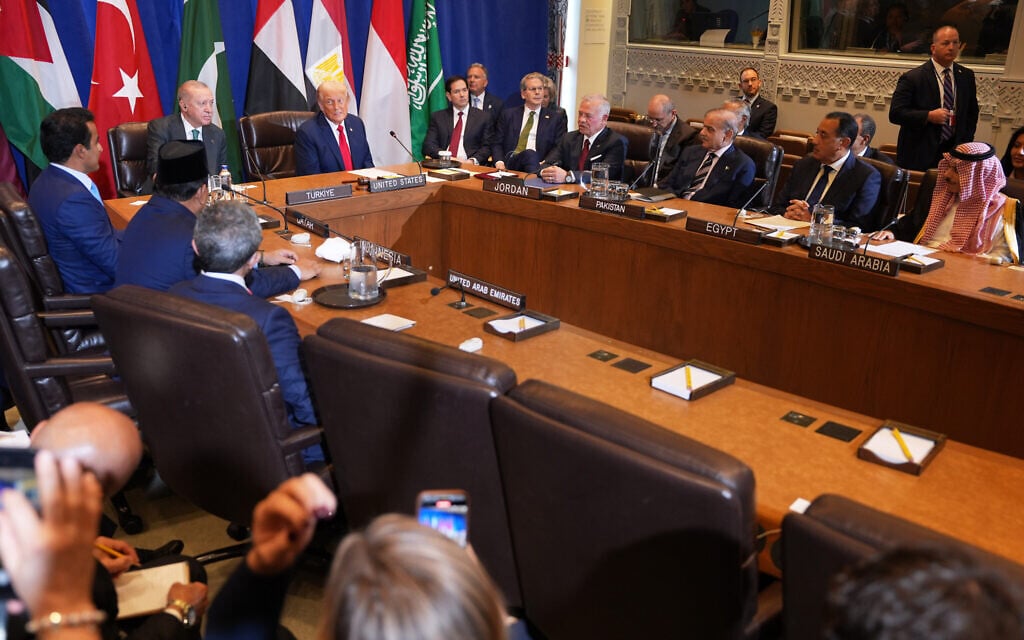
A lively debate has erupted across Pakistan’s political and public circles over the country’s possible inclusion in an international peacekeeping mission for post-war Gaza — a role that could mark one of Islamabad’s most consequential foreign policy decisions in years.
The discussions come amid reports that representatives from eight Muslim-majority countries — including Pakistan, Turkey, Egypt, Jordan, Indonesia, Qatar, Saudi Arabia, and the United Arab Emirates — are scheduled to meet in Türkiye next week to finalize plans for the proposed International Stabilisation Force (ISF). The multinational force, envisioned under the US-brokered Gaza Peace Agreement, aims to maintain security, assist reconstruction efforts, and oversee the demilitarisation of militant factions in the war-ravaged enclave.
US officials have been holding sensitive conversations with a range of countries about establishing an international force to deploy to Gaza and intend to present a plan in the next few weeks, three sources intimately involved in that process tell Axios.
The spark: remarks that reignited the debate
The national conversation intensified after Barrister Danyal Chaudhry, Federal Parliamentary Secretary for Information and Broadcasting, said during a television interview that if Pakistani troops were to join the Gaza mission, they would “ensure there is no extremism or cross-border violence,” adding that “Hamas would have to be disarmed for peace to take hold.”
His comments immediately drew a sharp rebuke from Defense Minister Khawaja Asif, who called the statement “irresponsible” and clarified that it did not reflect the government’s position. “God forbid — nothing like this is our target or mandate,” Asif said on Friday. “If someone is making such comments on television, it is entirely inappropriate. Pakistan will follow whatever collective decision the government makes on this matter.”
Asif reiterated that discussions about the Gaza peace force were still underway at senior levels, and that “no final decision” had yet been made.
Government reiterates support for Palestinians
Speaking to the media outside the Rawalpindi Judicial Complex, Barrister Danyal Chaudhry later clarified his stance, reaffirming Pakistan’s “unwavering support for the Palestinian people, particularly the children of Gaza.”
“The government, armed forces, and people of Pakistan stand united in solidarity with our Palestinian brothers and sisters,” he said, stressing that Pakistan continues to call for a lasting ceasefire and humanitarian relief. “Our nation remains prepared to assist affected civilians and will continue to be a strong voice for Palestine on all global platforms.”
Regional diplomacy in motion
Meanwhile, regional diplomacy over Gaza is gaining momentum. Turkish Foreign Minister Hakan Fidan announced that foreign ministers from several Muslim-majority nations — including Pakistan — will convene in Istanbul on Monday to discuss how to move into the “second stage” of the peace process. This meeting follows an earlier session with US President Donald Trump in New York, where participants explored a framework for long-term stability in Gaza.
Fidan noted that discussions will focus on the deployment of the stabilisation force and coordination mechanisms among participating countries. Israeli Prime Minister Benjamin Netanyahu, however, recently hinted at his opposition to any Turkish security presence in Gaza as part of the mission.
In September, eight Arab and Muslim-majority nations issued a joint statement expressing support for US President Donald Trump’s efforts to end the war in Gaza. The statement welcomed what it called the president’s “sincere efforts” to secure peace and affirmed the countries’ willingness to “engage positively and constructively with the United States and all parties” to finalize and implement the agreement.
The signatories included Egypt, Jordan, the United Arab Emirates, and Turkey — all of which maintain diplomatic ties with Israel, though relations have at times been strained. Also among them were Qatar, a key mediator in the conflict, and Saudi Arabia, whose potential normalization with Israel remains a central goal for both Trump and Israeli Prime Minister Benjamin Netanyahu.
Indonesia and Pakistan, the world’s two most populous Muslim-majority nations, also endorsed the statement. Indonesia has already signaled readiness to contribute troops to a future Gaza stabilisation force.
Jordan calls for a credible political horizon
At the Manama Dialogue 2025 in Bahrain, Jordan’s Foreign Minister Ayman Safadi stressed that while stabilising Gaza is urgent, it must be tied to a credible political process leading to a two-state solution. Safadi reaffirmed Jordan’s position that no Jordanian troops would be deployed to Gaza, but highlighted Amman’s readiness to train Palestinian police and cooperate with any international force established under a UN mandate — particularly in training and coordination roles.
Pakistan’s deliberations and direction
Within Pakistan, officials say discussions between the government and the military establishment have reached an “advanced stage,” though final decisions await further consultations and clarity on the mission’s legal framework.
Islamabad’s participation, if confirmed, would build on its long-standing peacekeeping legacy. Pakistan has contributed over 200,000 troops to more than 40 UN missions across Africa, Asia, and the Middle East — a record that has earned global respect. Officials argue this experience uniquely qualifies Pakistan to operate in volatile post-conflict environments such as Gaza.
Still, the proposal has triggered a range of reactions at home. Many analysts describe it as a strategic necessity, positioning Pakistan as a responsible and respected player in the Muslim world. Others, however, fear that participation in a US-backed initiative could be misinterpreted as tacit alignment with Israel or the West.
A domestic divide over orthodoxy and pragmatism
The debate has also taken on ideological tones. Voices from Pakistan’s political left and various religious circles — including several influential public figures — have accused the government of “abandoning the Palestinian cause” merely for entertaining the idea of joining a Western-backed peace mission. Yet supporters argue that such criticism is misplaced, noting that Hamas itself bears significant responsibility for triggering the recent conflict and that the current focus should be on reconstruction and civilian safety, not ideological posturing.
Observers point out the irony that many self-styled “progressive” voices — quick to condemn Israel — have remained silent about Hamas’s documented human rights abuses, including summary executions of Palestinians accused of collaboration after the ceasefire.
Supporters of Islamabad’s new direction say Pakistan must act with strategic realism, not nostalgia. “A respected role in the Middle East requires being on speaking terms with both Israel and Palestine,” one senior diplomat said. “This is about pragmatism, not surrender of principle.”
Navigating the Way Forward
While no final announcement has been made, officials close to the process suggest Pakistan is inclined to support the multinational force once details — particularly regarding command structure and other details — are finalized.
For now, the government maintains that any decision will be made collectively and transparently, “taking the nation into confidence.”
As the conversation unfolds, one thing is clear: Pakistan’s potential role in Gaza has sparked a deeper national reflection — on how the country defines its responsibilities, its alliances, and its place in a rapidly changing Middle East.