Learn. Grow. Self-Actualize.
Defeating the Seven-Headed Serpent (Then and Now)
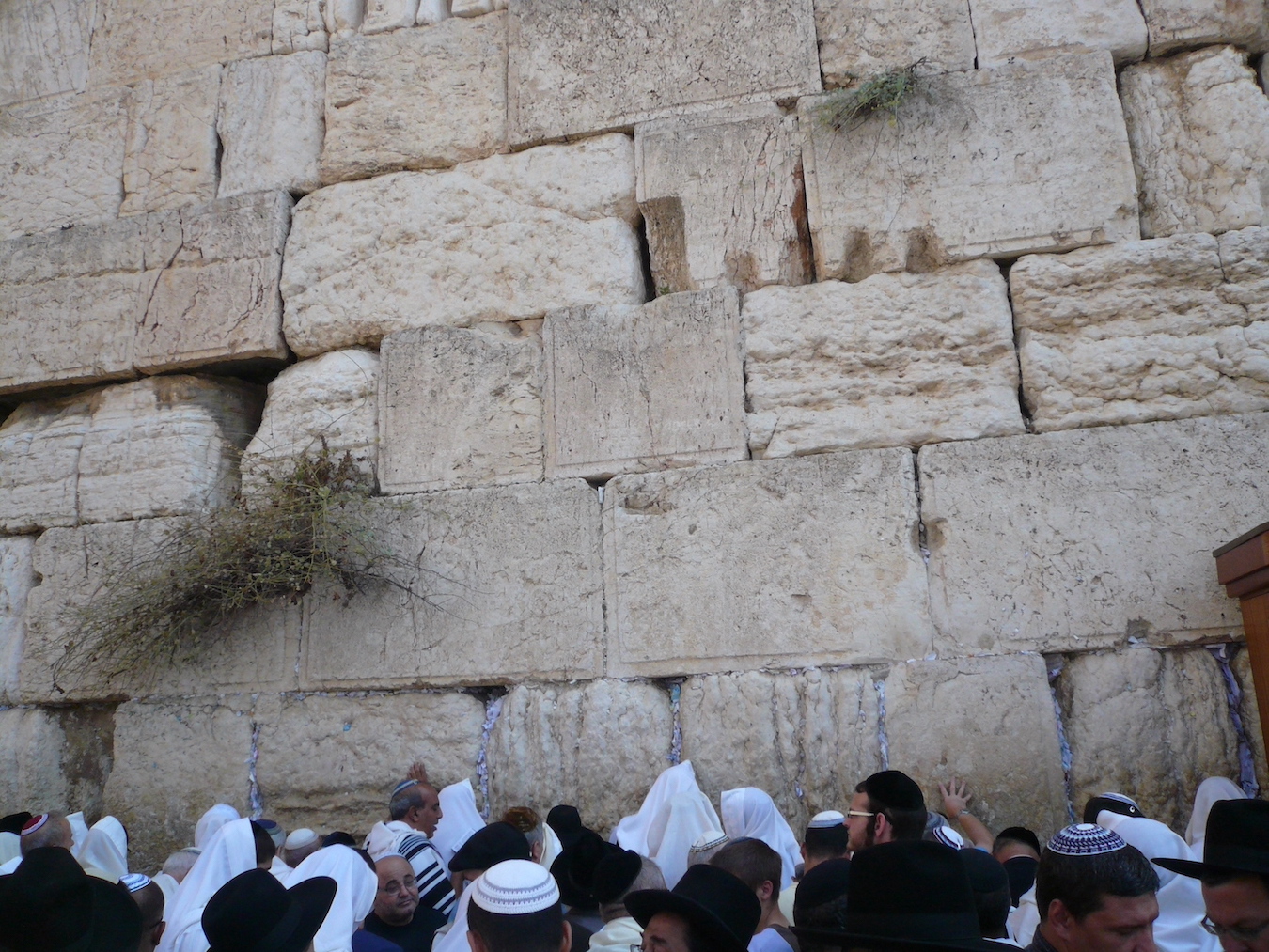
Praying at the Kotel (Image Taken by the Author)
There are moments in Torah learning that feel almost electric—when a sugya (section) of Gemara suddenly aligns with a parashah in Chumash, and two seemingly unrelated branches merge into a single, powerful trunk. In those moments, we do more than uncover a beautiful idea: we catch a fleeting glimpse of the unity of the Torah itself (our Etz HaChaim—Tree of Life), and, by extension, the unity of the Almighty.
Such a moment emerges when we place a striking aggadah in Kiddushin alongside Yaakov Avinu’s encounter with the Sar Shel Esav in parashat Vayishlach. Though seemingly separated by genre and context—one unfolding in the Bet Midrash of Abaye and the other on the road to a fateful reunion with Esav—these two narratives converge to reveal a timeless lesson about prayer, humility, and the ongoing struggle against evil.
The Seven-Headed Serpent in Abaye’s Bet Midrash
The Gemara in Kiddushin (29b) relates that Rav Acha bar Yaakov sent his son to study in Abaye’s Bet Midrash. When the son returned home, Rav Acha perceived that his learning had not sharpened as hoped and concluded that he himself was better suited to attend in his son’s place.
At that time, Abaye’s Bet Midrash was plagued by a powerful demon—a seven-headed serpent that attacked even during the daytime and even when people walked together. Recognizing Rav Acha bar Yaakov’s spiritual stature, Abaye arranged for no one to offer him lodging, ensuring that he would be forced to spend the night alone in the Bet Midrash.
As expected, the serpent appeared. Rav Acha bar Yaakov responded not with force, but with prayer. With each bow he made during his Shemoneh Esrei (Amidah), one of the serpent’s heads fell away, until the demon was completely vanquished and the Bet Midrash purified.
Yaakov Avinu and the Sar Shel Esav (Ministering Angel of Esav)
In parashat Vayishlach, Yaakov Avinu prepares for his encounter with Esav and the Sar Shel Esav through three means: military readiness, diplomatic gestures, and heartfelt prayer. Of these, prayer emerges as the decisive weapon.
As Yaakov approaches Esav, the Torah records that he bows seven times. The Sefer Ha’Mikneh, an early commentator on Kiddushin, together with the Zohar, identifies the Sar Shel Esav as the spiritual manifestation of the primordial snake from the Garden of Eden—a force that introduced seven kochot ha’tumah (forces of spiritual contamination) into the world. The Vilna Gaon alludes to this as well, explaining that through Yaakov’s seven bows, each of those forces was weakened, ensuring the spiritual survival of Yaakov and his descendants.
Here, the parallel becomes unmistakable. Rav Acha bar Yaakov stands before a serpent that no one else could defeat. Like Yaakov Avinu, he turns to prayer, bows seven times, and strips the serpent of its power. Just as Yaakov weakened the forces of evil threatening Klal Yisrael, Rav Acha bar Yaakov cleanses Abaye’s Bet Midrash of its spiritual danger.
Ma’aseh Avot Siman L’Banim (the Actions of the Fathers Pave the Way for the Children)
One further point deepens the connection. Rav Acha’s name itself—bar Yaakov—cannot help but evoke Yaakov Avinu. While clearly the son of a different Yaakov, the symbolism is difficult to ignore. In a broader sense, Rav Acha bar Yaakov is a son of Yaakov Avinu, as we all are. The spiritual path paved by Yaakov empowered his descendants to confront the forces of evil through humility and prayer.
This is ma’aseh avot siman l’banim in its truest sense: Yaakov’s struggle did not end with him. It continues, refined and weakened, in every generation.
A Non-Literal Reading—and an Even Deeper Lesson
It is worth noting that a prominent Rosh Kollel once suggested that this aggadah need not be understood literally. The “demon” haunting Abaye’s Bet Midrash may have been a heretic attempting to undermine the students’ faith in Abaye’s absence. Recognizing that no one else could confront him, Abaye orchestrated Rav Acha bar Yaakov’s arrival. Through his deep fear of heaven, humility, and spiritual strength, Rav Acha “cut off” each of the man’s arguments, until he was driven away.
Whether understood literally or allegorically, the message remains unchanged: deep faith, humility, and prayer are genuine weapons we all can wield in the fight against darkness.
Our Own Seven-Headed Serpents
Each of us faces a seven-headed serpent of our own. The Sar Shel Esav still exists, albeit weakened by Yaakov Avinu’s actions. Our struggles—with the Evil Inclination, disappointment, frustration, or doubt—are echoes of that original battle.
When a relationship goes south, a job doesn’t materialize, or the world just feels darker and heavier than ever before, we are faced with a choice: Do we give in? Or do we bow our heads in prayer and declare that we are ready to keep fighting?
Every challenge we face is an opportunity to further weaken the forces of evil in the world—not only for ourselves, but also for our children and generations to come.
We too have what it takes to knock off the heads of our own seven-headed serpents. In doing so, we weaken the Sar Shel Esav in our generation and grow, step by step, each day.
May we merit to see how every branch of Torah connects to the Etz HaChaim, to have the courage to keep pressing forward during difficult times, and to continue Yaakov Avinu’s eternal victory.
Related Topics
Related Posts