Democracy Before Democracy: The Iranian Diaspora’s Democratic Reckoning
With the recent war involving the United States, Israel, and Iran seemingly moving toward a conclusion, many are wondering if the damage inflicted upon the Islamic Republic has created the conditions for the Iranian people to overthrow the regime and reclaim their country. While it remains far too early to know whether the conflict — if it has truly ended — will ultimately lead to regime change, another equally important question has emerged alongside it: if the Islamic Republic were to fall, could Iran realistically undergo a stable democratic transition?
Critics of externally pressured regime change often point to cases such as the 2003 invasion of Iraq and the collapse of First Libyan Civil War, where the fall of authoritarian governments did not produce stable liberal democracies, but instead led to political fragmentation, prolonged instability, or renewed authoritarianism. These examples raise a necessary question: what guarantees that the Islamic Republic’s collapse would produce something better rather than something equally unstable?
One argument raised in response is that Iran may differ from these cases because of the unique position of the Iranian diaspora. Indeed, compared to many other Middle Eastern communities, the Iranian diaspora are more highly educated, economically established, and globally connected. As a result, the Iranian diaspora may be better positioned to help support democratic institution-building in Iran after a hypothetical regime collapse.
Yet, if the diaspora hopes to help lay the foundation for democracy in Iran, then it must begin by cultivating democratic norms within its own movements and communities.
Healthy democracies depend not only on elections and constitutions, but also on political actors accepting certain democratic norms. In their 2018 book, How Democracies Die, Harvard professors Steven Levitsky and Daniel Ziblatt argue that democracies often collapse not only because of authoritarian leaders, but because political actors themselves abandon the norms necessary to sustain political pluralism and institutional stability. Among the most important norms they identify are what they refer to as “mutual toleration” and “institutional forbearance.”
Mutual toleration refers to the willingness of political groups to accept one another as legitimate participants in the democratic process, even amid profound disagreement. Institutional forbearance refers to restraint — the idea that political actors should avoid exploiting every possible political or institutional mechanism to permanently sideline or destroy their opponents. When one or both of these norms erode, democratic systems often begin descending into illiberalism and authoritarianism.
In many ways, the Iranian diaspora appears to be struggling with precisely these challenges.
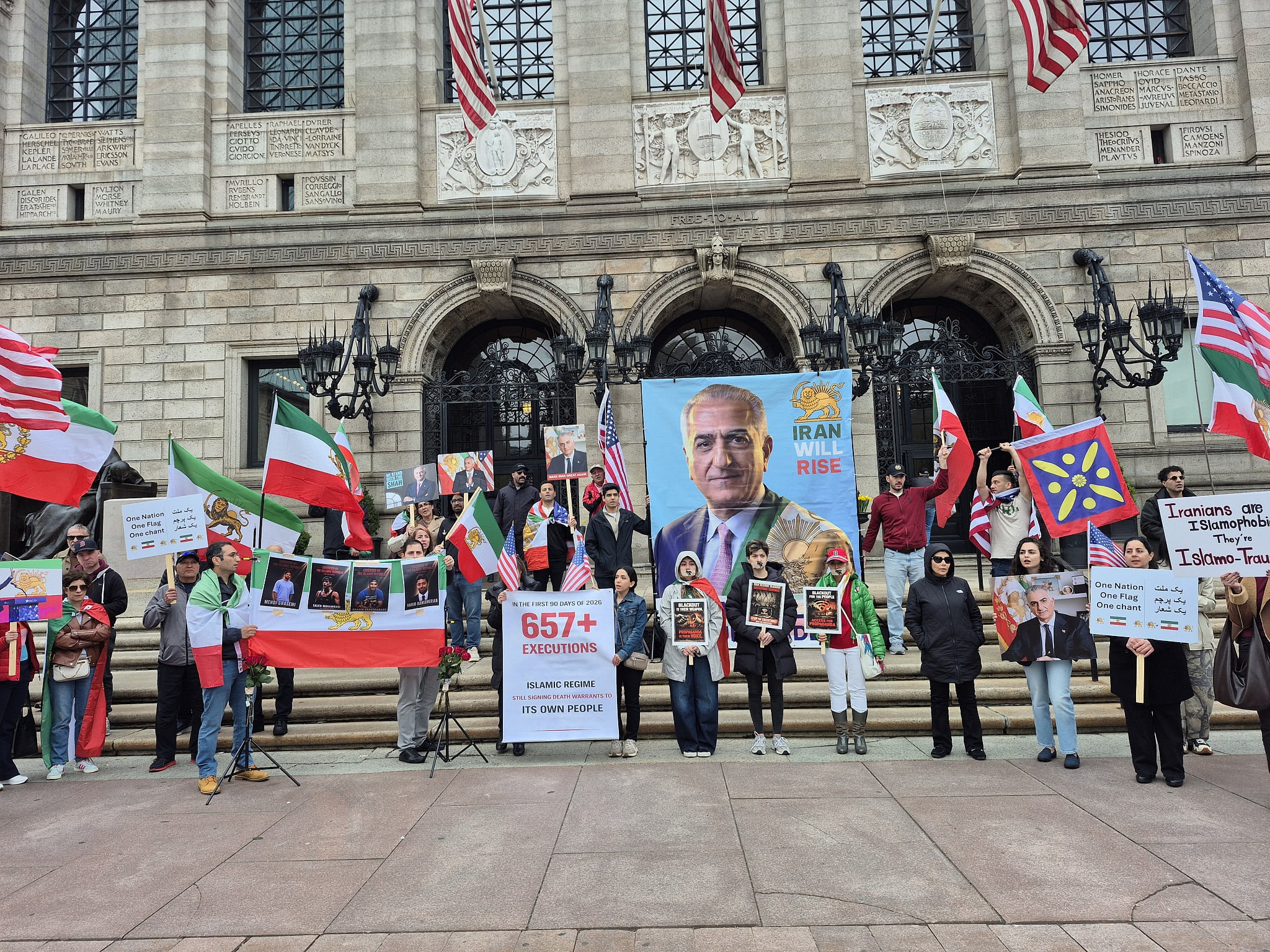
Since January, I have attended numerous protests, panel discussions, and private meetings with Iranian activists, analysts, scholars, and organizers across the political spectrum within the diaspora. Although the diaspora is ideologically diverse, many discussions tend to revolve around two broad political camps: a conservative pro-Pahlavi movement and a fragmented coalition of secular republicans, leftists, and other anti-monarchist groups. While both camps seek the end of the Islamic Republic and claim to support democracy in Iran, there often appears to be deep distrust between them, accompanied by a reluctance to view the opposing side as a legitimate participant in Iran’s political future.
This distrust frequently extends beyond ordinary political disagreement. For example, when I raise the possibility of Reza Pahlavi II serving as a temporary transitional figure with some left-leaning Iranians, many immediately express fears that he would ultimately use such a position to restore dynastic rule and reestablish an authoritarian monarchy. Conversely, when I discuss non-monarchist opposition groups with some pro-Pahlavi activists, they often accuse those groups of being apologists for the Islamic Republic and wanting it to stay in power.
Such reactions reflect more than ideological disagreement. They reveal a deeper crisis of mutual legitimacy, in which rival factions increasingly view one another not as democratic competitors, but as existential threats. It is precisely this breakdown in trust that makes democratic transitions so fragile.
And yet, despite these divisions, there are also signs that some within the Iranian diaspora recognize the necessity of building a broader democratic coalition.
In an effort to better understand how these divides might be reconciled, I spoke with activists associated with both camps about whether cooperation between monarchist and non-monarchist opposition groups is possible.
I first discussed the issue with Iranian historian Arash Azizi, who is broadly associated with non-monarchist opposition circles. Azizi attended the launch of the Iran Freedom Congress in London earlier this year, where several republican and left-leaning Iranian opposition groups articulated a shared vision for Iran’s future.
When I asked Azizi how such groups could hypothetically reconcile with the pro-Pahlavi movement, he emphasized the importance of shared democratic principles over ideological uniformity: “We can build a broad unity of Iranian opposition on the basis of shared principles… democracy, territorial integrity, and human rights.”
I heard a remarkably similar sentiment from Sanaz Bagheri, a leader within the Iranian protest movement in Boston whose circles include many pro-Pahlavi activists. Although she identifies as a monarchist, Bagheri said she is willing to work with both parties, monarchists and republicans alike, despite their differences for the sake of Iran’s democracy:
“I don’t think the goal should be to erase our differences. The goal is to agree on what comes first…the common ground is simple: the future of Iran must be decided by Iranians themselves, both inside the country and across the diaspora, through a free vote. Whether Iran becomes a constitutional monarchy or a republic is not something any single faction should impose. It is for the people to choose.”
She continued:
“Our immediate priority, monarchist and republican alike, is to stand with the people of Iran and to keep pressure on the Islamic Republic. The debate over what comes after can wait for the day when Iranians are finally free to have it. If we cannot sit at the same table now, around that one shared goal, then we are not yet ready for the democracy we say we want.”
Bagheri also explained that her organization has attempted to model this kind of broad coalition-building in practice:
“Boston for Iran is not simply a pro-Pahlavi group. We started these gatherings around a single idea: to support the people of Iran and to carry their voice to the wider community here in Boston… Among us, both organizers and participants, we have monarchists and republicans alike, and that diversity has always been there.”
Ultimately, the future of democracy in Iran may depend not only on the collapse of the Islamic Republic, but also on whether Iranians themselves — both inside the country and throughout the diaspora — can develop the democratic habits necessary to sustain political pluralism afterward. In this critical time of Iranian history, we need to build bridges with ideological rivals, tolerate disagreement, and remain committed to shared institutions even amid profound political division, not only to present a united front against the Islamic Republic, but also because it will lay the foundation for the democratic culture we one day hope to create.