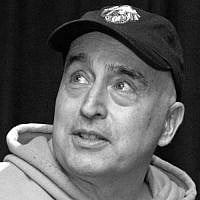
"I'm the spokesman for the OK Boomer generation"
Democracy, Monarchy, and the Crisis of Political Leadership

Photo: Tony Senatore: all rights reserved
Yesterday, I was talking to my mom. Although we disagree on many political issues, we share a growing disillusionment with virtually every aspect of the political process. We see a mass media that takes sides, promotes certain candidates, and works against others, while politicians either dismiss legitimate public concerns as nascent communism or obscure how bad things have become in America and around the world by dividing us over increasingly meaningless issues.
Mom jokingly suggested it might be time to replace an elected president with a king. We both laughed when she brought up Trump and the whole “No Kings” controversy. But we agreed on one thing: Trump is no king, despite the image he projects. He seems more like someone carrying out the wishes of powerful interests behind the scenes, though it remains an open question whose wishes.
I told Mom that the idea of a king was hardly new. Plato envisioned a society governed by philosopher-kings: rulers whose wisdom, education, and commitment to justice would qualify them to govern. He argued that political power should belong to those who understand what is genuinely good for society, not simply to those best at persuading the public to vote for them. The challenge, of course, is determining who has such wisdom and preventing those who claim it from abusing their power.
I also told her about Hans-Hermann Hoppe’s controversial book, Democracy: The God That Failed. Hoppe argues that monarchy, despite its imperfections, can have advantages over democracy. He argues that a hereditary monarch who regards a kingdom as his own property has an incentive to preserve its wealth and value over generations. An elected president, by contrast, is more like a temporary caretaker who can enjoy the benefits of office today while leaving the costs of his decisions to future administrations and generations.
Hoppe’s argument raises an uncomfortable question: Does a political system that rewards politicians for winning the next election necessarily encourage them to make the best long-term decisions for the country?
Consider the incentives. An elected official may be tempted to accumulate debt, distribute benefits to politically influential constituencies, or pursue policies that produce immediate gains at the expense of future taxpayers. In Hoppe’s model, a monarch has a greater personal stake in preserving the productive wealth of the territory he rules. The distinction is between a temporary administrator and an owner who expects to pass his inheritance to the next generation.
But this comparison has an obvious problem. A monarch may also wage disastrous wars, confiscate property, burden his subjects with taxes, or indulge his own interests without facing meaningful opposition. A king does not automatically possess wisdom, virtue, or a long-term outlook simply because he inherits a crown. His incentive to preserve his kingdom can just as easily become an incentive to exploit it.
The American Founding Fathers understood many of the dangers of political power, though they did not all agree on how best to constrain it. The Constitution established a republic with checks and balances, originally provided for senators to be selected by state legislatures, and created an Electoral College for presidential elections rather than a direct national popular vote. In Federalist No. 10, James Madison warned about the dangers of factions, while Federalist No. 51 emphasized the need to divide governmental power so that ambition would counteract ambition.
The founders did not advocate unrestricted majority rule. They sought to filter popular passions through representative institutions and constitutional restraints. Yet it would be inaccurate to suggest that they all favored government by a permanent elite, much less monarchy. They fought a revolution against hereditary rule, and the Constitution they created was designed to prevent political power from becoming a ruler’s personal possession.
This is where I think Hoppe’s argument is strongest: he forces us to examine the incentives built into political institutions rather than assume that democratic elections automatically produce good government. Elections can reward short-term thinking, political theater, demagoguery, and the cultivation of special interests. Winning a majority does not prove wisdom, integrity, or competence. Nor does a politician’s claim to represent the people necessarily mean his decisions benefit them.
Where Hoppe’s argument is weakest is in treating ownership as a reliable substitute for accountability. A monarch may have a long-term interest in his kingdom’s prosperity, but his subjects have an interest in their own liberty, property, and well-being. Those interests do not always coincide. Democracy, for all its shortcomings, offers citizens a peaceful mechanism to remove bad leaders. Constitutional government also provides protections that neither a monarch’s goodwill nor a philosopher-king’s supposed wisdom can reliably guarantee.
The deeper issue, then, is not simply whether monarchy is better than democracy. It is whether any political system can work well when power is concentrated in the hands of people who face insufficient restraints on their authority. A virtuous ruler would be preferable to a corrupt one, whether elected or hereditary. But because virtue cannot be guaranteed, a sound political system must account for human weakness as well as human potential.
Perhaps the most important lesson is that we should stop confusing election mechanics with the actual practice of self-government. A country can hold elections and still allow powerful interests, political parties, bureaucracies, and media institutions to shape the choices available to the public. Conversely, democracy’s imperfections do not mean hereditary rule would be better.
My conversation with Mom reminded me that many Americans’ frustration transcends traditional political divisions. People who disagree about policies can still recognize that the system often seems more responsive to those who wield influence than to those who must live with the consequences.
Winston Churchill’s famous observation about democracy has endured for a reason. Speaking in the House of Commons on November 11, 1947, he said:
“Democracy is the worst form of Government except for all those other forms that have been tried from time to time.”
Churchill’s point was not that democracy is inherently wise or that we should trust elected leaders unquestioningly. It was that the alternatives have generally proved worse.
Perhaps, instead of looking for a king, we should look for something more difficult to achieve: leaders of genuine character, institutions that restrain their power, and citizens who demand more than slogans, partisan loyalties, and political theater. The real test of government is not whether a leader wears a crown, wins an election, or claims to speak for the people. It is whether those who govern serve the public good and whether the public can hold them accountable.
Related Topics