

Democracy’s Race Against Time
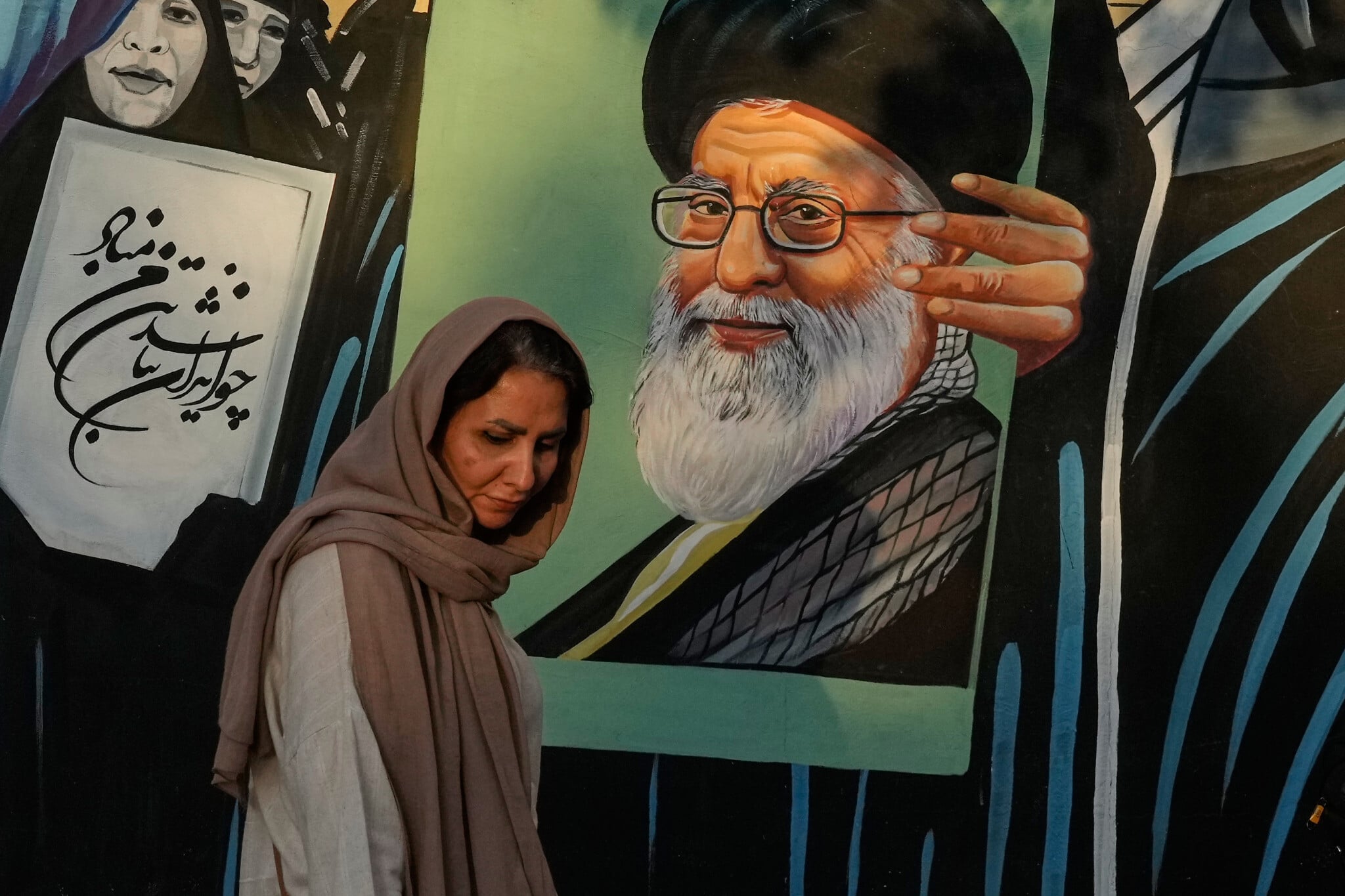
A woman walks past a mural depicting a portrait of the late Iranian Supreme Leader Ayatollah Ali Khamenei, who was killed in the US and Israel strike on February 28, in downtown Tehran, Iran, July 18, 2026 (AP Photo/Vahid Salemi)
Men come and go; ideologies endure.
The Guardians of the Revolution do not need to defeat the United States. They must, above all, resist long enough for America to grow weary.
Men leave, ideologies remain. This dynamic is one key to understanding the confrontation between the United States and the Guardians of the Revolution.
In Washington, presidents come and go. Majorities change, elections approach, public opinion grows tired, and priorities shift. A war may seem necessary today and become politically unsustainable a few months later. Every administration has to show results. It must explain its decisions, justify its spending, and account for its human losses.
The Guardians of the Revolution do not live in the same political time as others.
They do not think in terms of a presidential term, but in terms of the regime’s survival. Their commanders may disappear, their facilities may be destroyed, and their military capabilities weakened. Yet the organization remains. It trains new leaders, sustains its narrative, and transmits its worldview: a lasting confrontation between the Islamic Republic and the West, particularly the United States.
That is why the Guardians probably do not need a conventional military victory. They know that Iran cannot directly confront the world’s foremost military power. Their strategy is rather to remain standing, prolong the confrontation, and make every American decision more costly.
They may lose militarily while hoping to win politically.
For Tehran, survival already becomes a form of victory. Each missile fired shows that Iran retains a capacity for harm. Each energy crisis recalls its geographic importance. Every division in Congress, every demonstration, and every debate about the cost of war may signal weakening American will.
Democracies are powerful, but they doubt, debate, and change leaders. Ideological regimes, on the other hand, can conceal their losses, suppress dissent, and frame their failures as necessary sacrifices. The Guardians of the Revolution have thus come to understand that they do not necessarily need to defeat America. It may be enough to wait until it tires.
But waiting does not mean winning.
Because ideological regimes also have weaknesses. They can conceal their divisions but not make them disappear. They can stifle dissent, but not forever suppress economic difficulties, internal rivalries, or crises of legitimacy. Their apparent stability is sometimes a fragility that no one dares admit.
Democracies, by contrast, display their doubts openly. They debate, change leaders, and acknowledge mistakes. Such behavior sometimes creates an impression of weakness. But this capacity to question themselves also allows them to correct, adapt, and renew themselves.
Time does not necessarily work against them. Provided they define a clear objective, maintain strategic continuity, and avoid confusing patience with abandonment, democracies can also wage a long-term struggle.
Men come and go; ideologies remain. In democracies, however, if men come and go, it is also because institutions endure.
The Guardians of the Revolution can rely on the endurance of their ideology. The United States, in turn, can still rely on the strength of its institutions, its capacity for innovation, and its freedom to correct its own mistakes.
Democracy does not guarantee infallibility. It preserves something more precious: the ability to recognize mistakes and change course in time.