


Diego Fusaro Interview Alexandre Gilbert #305
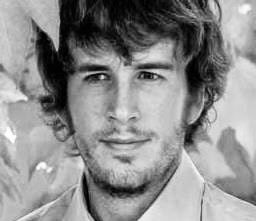
Italian philosopher Diego Fusaro discusses Dan Brown’s The Secret of Secrets, a novel that reinterprets the golem myth through the lens of noetics — blending Prague Ashkenazi mysticism with modern reflections on consciousness, creation, and the limits of human knowledge, in the intellectual lineage of J-L Borges and Umberto Eco.
Dan Brown places “noetics” — consciousness as a transformative power — at the center of his last novel, The Secret of secrets, . Can one conceive of a true “science of consciousness” without falling into mysticism?
Diego Fusaro: One can indeed conceive of a science of consciousness. That was precisely Fichte’s goal with his Doctrine of Science, which was, in fact, a doctrine of consciousness — a systematic study of the acts of the mind. “Look within yourself,” said Fichte, to discover how the I is active, how consciousness operates.
Every consciousness of an object is always consciousness of consciousness itself, which refers to an object. Thus, it is absolutely possible to elaborate a rational science of consciousness, as Fichte masterfully did.
If consciousness is a “secret” to be unveiled, what does this imply about the relationship between subjectivity and objectivity in human knowledge?
Diego Fusaro: Following Fichte again, consciousness would only be a “secret” for those unaware of the active operations of their own mind. The relationship between subject and object is always mediated by consciousness. For Fichte, the world of objects — the objective world — is always a “non-I,” that which consciousness distinguishes from itself as the other of itself. The I posits itself and opposes itself to the non-I. Consciousness, therefore, is the space where the distinction between self and other, subject and object, is constantly being drawn.
In the novel, political powers and secret organizations attempt to control discoveries about consciousness. What connection can be drawn between subversive knowledge and power?
Diego Fusaro: Controlling consciousness is, quite evidently, the ultimate secret of power. Already in Hobbes’s Leviathan, absolute power could control all actions — but not the inner consciousness of individuals. Spinoza too, in the Theological-Political Treatise, declared that no one can alienate their own consciousness — that is, their capacity to think and to speak freely.
Today, however, power seeks to go beyond this limit: to manipulate and domesticate consciousness, to adapt it to the order of things so that it never matures into dissent — or worse, revolution. The final frontier of power, therefore, is to anesthetize and domesticate consciousness itself.
The idea of “hidden truths” accessible only to a chosen few — is it compatible with a democratic philosophy of knowledge?
Diego Fusaro: The notion of hidden truths reserved for the few is ancient in European philosophy. One thinks of the Eleusinian Mysteries, or even of Plato, who, in his dialogues, sowed truths accessible only to those who had attended his lessons — to truly understand them, one had to already know his philosophy.
Yet another model exists: that of democratic knowledge — truths accessible to all who use their natural faculty of reason. Spinoza held that every human being is potentially capable of knowing the truth through the proper use of reason. Hegel likewise affirmed that philosophy is accessible to all, provided one undergoes the necessary apprenticeship — just as one must learn the craft of the shoemaker.
This, I believe, is the model we should follow today: the Spinozist and Hegelian one.
Codes, riddles, and symbols mediate access to truth. Is a truth revealed through mediation any “less true” than a scientific or philosophical one?
Diego Fusaro: The great error of Enlightenment and modern scientistic positivism is to think that truth can be reduced to scientific certainty. Yet there exists, as Hans Blumenberg called it, an inconceptual domain — that which cannot be reduced to scientific certitude.
It is in this space that myth, metaphor, and symbolic expression operate. Symbols, riddles, and codes do not contradict reason; rather, they open a broader field where reason can function more profoundly.
The “secret of secrets” refers to a forbidden or lost form of knowledge. Can this theme of loss and recovery be interpreted philosophically through a Hegelian or Fusarian lens?
Diego Fusaro: Yes — the “secret of secrets” is a profoundly philosophical theme. It suggests that truth must first be grasped as a principle in order to be understood in its fullness. From Plato to Hegel, philosophy has sought the arché, the origin of all things. For Hegel, understanding the totality requires following its movement of development. In this sense, philosophy has always been the search for that first principle — the “secret of secrets.”
The narrative structure is one of quest — the protagonist searches for a lost manuscript. Is this merely an adventure, or can it be read as a metaphor for the philosophical pursuit of truth?
Diego Fusaro: The search for the lost manuscript can indeed be read as a metaphor for the philosophical pursuit of truth. Philosophy — the only discipline that contains “love” in its very name — is, as Plato said in the Symposium, a movement of seeking. The philosopher, like the lover, pursues what he does not yet possess.
Philosophy is therefore an erotics of knowledge: to love and to philosophize coincide, for to love is to move toward the object of one’s desire — and the philosopher loves truth, which he does not yet know, and seeks it passionately.
The novel attempts to reconcile science and spirituality. How might such a synthesis be assessed from a Marxist, Hegelian, or Fusarian critical standpoint?
Diego Fusaro: The paradox of technique is that it promises to expand our consciousness but often achieves the opposite effect. The more we delegate our faculties to technology, the more we are deprived of them.
Thus, the promise of progress often conceals a regression — particularly in reference to consciousness. Artificial intelligence illustrates this perfectly: the more we delegate to machines, the more we lose the essential human faculties of feeling and thinking.
Technologies capable of capturing or revealing consciousness play a central role. What philosophical status should be granted to technology when it claims to “enhance” consciousness?
Diego Fusaro: Our civilization — what Spengler called Faustian civilization — pretends to know everything through the scientific model, as if the world were nothing but number, quantity, and calculable data. But there exists an entire dimension that escapes these parameters — the realm of mystery or the secret.
Science cannot reach this dimension; only dialectical reason, as Hegel called it, can approach what is mysterious. Gabriel Marcel distinguished between problem and mystery: science deals with objective problems, while mystery involves the totality of our being.
The “secret” stands at the core of the future envisioned in the novel. How can this obsession with secrecy be reconciled with the social need for transparency, emancipation, and the critique of ideological concealment?
Diego Fusaro: Recognizing that there exists a sphere of mystery is the first necessary step toward critiquing today’s religion of scientism — the belief that science can solve all problems. Even if we were to solve every practical problem, we would still not have touched the realm of the secret and the mysterious.
Acknowledging this irreducible mystery is thus an act of philosophical resistance against the totalizing ideology of technical-scientific rationality.