

Digital Engagement and International Cooperation: The Somaliland–Taiwan Case
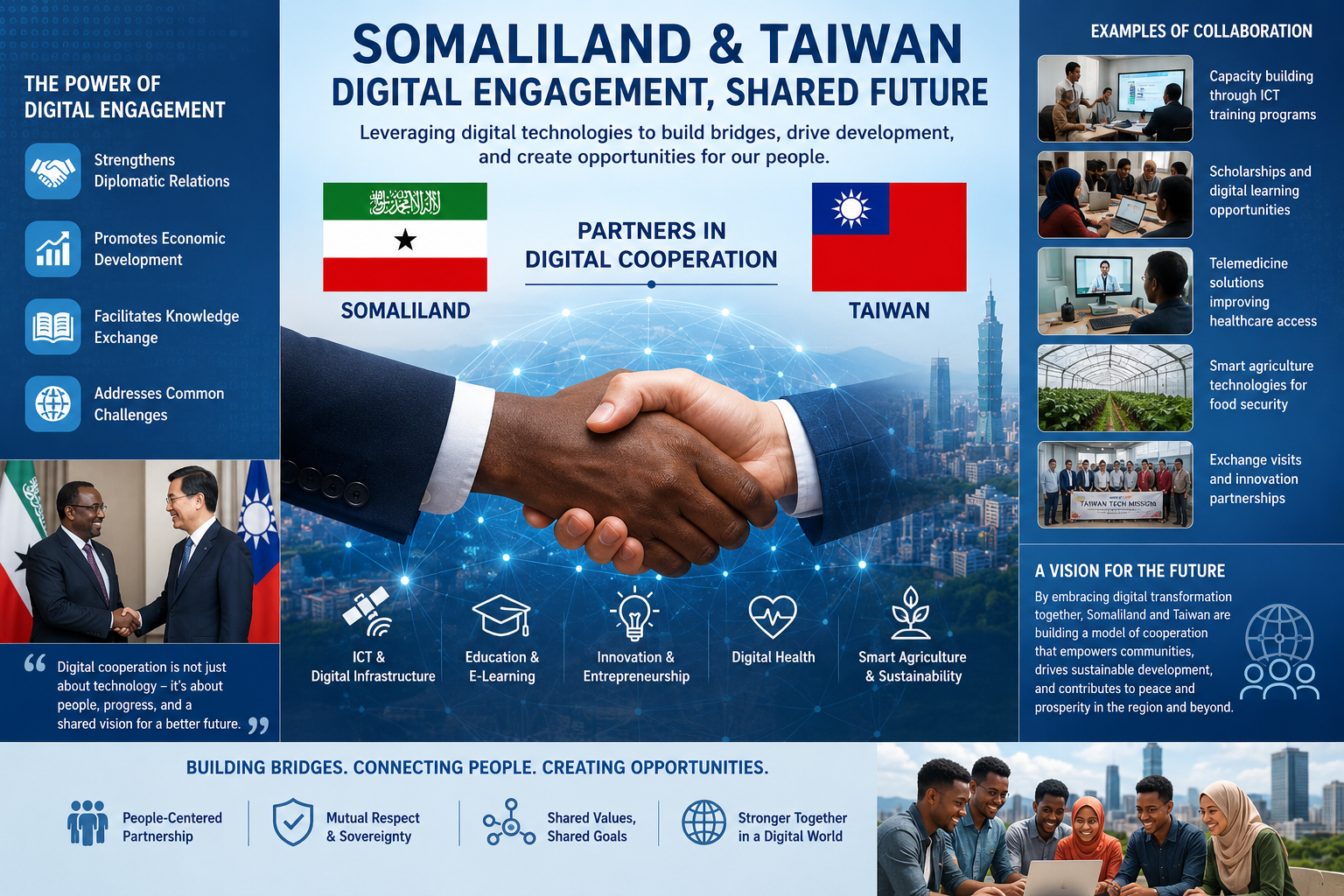
As the world becomes more interconnected, digital engagement has become an essential mechanism for fostering international cooperation. Governments, organizations, and communities increasingly utilize digital technologies to enhance diplomatic ties, stimulate economic growth, encourage the exchange of knowledge, and tackle shared challenges. The expanding relationship between Somaliland and Taiwan illustrates how digital engagement can advance international collaboration, especially for partners seeking innovative approaches to strengthen global connections and promote sustainable development.
The partnership between Somaliland and Taiwan was officially initiated in 2020 through the opening of representative offices in Hargeisa and Taipei. Despite facing limited international diplomatic recognition, both parties have cultivated a practical and mutually advantageous relationship grounded in common interests, democratic values, and aspirations for economic and technological progress. From the outset, digital engagement has served as a key driver of cooperation, enabling collaboration across a wide range of sectors.
A key feature of Somaliland–Taiwan cooperation is the strategic use of digital technologies to strengthen communication and diplomatic engagement. Virtual meetings, online forums, and digital communication platforms have enabled officials from both sides to sustain regular interactions despite the physical distance between them. These technologies have helped lower costs, increase efficiency, and facilitate ongoing collaboration in areas such as policy development, institutional partnerships, and development initiatives. The importance of digital diplomacy became even more evident during the COVID-19 pandemic, when travel restrictions made virtual platforms essential for maintaining dialogue and advancing joint projects.
Digital engagement has further strengthened cooperation in education and capacity development between Somaliland and Taiwan. Through scholarships, academic partnerships, and technical training programs, Taiwan has provided opportunities that increasingly utilize digital learning tools and online platforms. These initiatives have enabled Somaliland’s students, researchers, and professionals to access virtual learning environments, digital resources, and collaborative research networks that might otherwise be beyond reach. As a result, such programs contribute to the development of human capital and equip individuals with the knowledge and skills necessary to thrive in an increasingly digital and interconnected global economy.
Another significant area of collaboration between Somaliland and Taiwan is the development of information and communication technology (ICT). Drawing on its experience as a highly advanced digital economy, Taiwan offers valuable expertise that can support Somaliland’s efforts to strengthen its digital infrastructure and modernize public services. Through technical assistance, knowledge exchange, and capacity-building initiatives, Taiwan can contribute to the advancement of digital governance, cybersecurity capabilities, and innovation-driven ecosystems. Enhanced ICT infrastructure not only supports economic development and competitiveness but also improves the efficiency of public service delivery, promotes transparency and accountability, and encourages greater citizen engagement in governance processes.
The healthcare sector provides another clear example of how digital engagement has enhanced cooperation between Somaliland and Taiwan. Through initiatives such as telemedicine, digital health platforms, and online medical training programs, healthcare professionals from both sides can share knowledge, exchange expertise, and improve the quality of healthcare services. These digital solutions help address resource constraints, particularly in regions where access to specialized medical skills and advanced healthcare facilities is limited. By enabling virtual consultations, remote learning, and continuous professional development, digital technologies make healthcare collaboration more effective, accessible, and sustainable.
Economic collaboration between Somaliland and Taiwan has been further reinforced through the use of digital platforms. Tools such as e-commerce systems, digital trade channels, and online business networking enable entrepreneurs and investors from both sides to engage more easily in commercial activities. Small and medium-sized enterprises, in particular, benefit from these technologies by gaining access to wider markets, essential information, and potential partners without relying heavily on physical infrastructure. In an increasingly digital global economy, this form of engagement contributes to stronger economic resilience and improved competitiveness.
Furthermore, digital engagement supports people-to-people diplomacy by connecting communities beyond official government channels. Social media platforms, virtual cultural exchanges, and online forums enable citizens from Somaliland and Taiwan to learn about each other’s societies, cultures, and development experiences. These interactions help build mutual understanding and trust, which are essential foundations for long-term international cooperation. Digital communication thus complements formal diplomatic efforts by fostering relationships at the societal level.
Despite these progressions, several challenges continue to affect digital cooperation. Effective digital engagement relies on stable internet connectivity, sufficient infrastructure, and a population with strong digital literacy skills. Somaliland still encounters limitations linked to technological capacity and resource availability. Overcoming these barriers will require ongoing investment, supportive policy frameworks, and joint initiatives designed to broaden access to digital tools and services. In addition, as digital cooperation expands, issues such as cybersecurity and data protection become increasingly important and must be addressed to ensure safe and sustainable collaboration.
The Somaliland–Taiwan partnership illustrates how digital engagement can function as a strong instrument for international cooperation in the twenty-first century. Through initiatives in digital diplomacy, academic exchange, technological cooperation, healthcare collaboration, and economic networking, both sides have built a relationship that overcomes the constraints of geographic distance and limited international recognition. Their experience underscores the transformative role of digital technologies in fostering new opportunities for collaboration, development, and global interconnectedness.
As digital transformation continues to reshape international relations, the Somaliland–Taiwan partnership provides valuable insights into how emerging and non-traditional actors can leverage digital engagement to build meaningful and productive international partnerships. In doing so, it offers a model for innovative cooperation in an increasingly digital world.