

Dina D’Malkhuta: Why Rabbis Belong in the Public Square
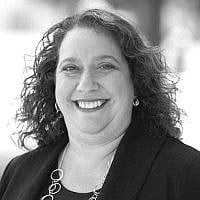
I am a rabbi, and I am an elected trustee of my school board. People assume those two facts are connected in an obvious way. People question, can a rabbi serve in local office? Is there a conflict of interest? I am here because, yes, being a rabbi is directly connected to my public service, just not the way you might think. I did not run to bring Judaism into the boardroom. I ran because I am committed to the children in my district, and because I believe their education is our promise to the future of our democracy. It sounds lofty, and it is. But I believe that each small act of kindness, of caring, of belonging, lays a brick in the house where democracy lives.
This week, Americans went to the polls, and wherever our hearts lean about the results, one thing remains true the decisions that touch our neighbors most closely will be made in rooms like mine. School boards. Library boards. Town councils. In those rooms the question is not who won Congress or the White House, but whether the budget balances and every child has a seat. Those rooms are better, and so are we, when committed people choose to fill them.
What drew me in to my work in the Public Square were the habits my rabbinic training built into muscle memory: look at the world, identify the need, recognize what you can do and what is beyond you, and take action. Those skills serve my rabbinate, and they carry me into public service.
Hevu metunim badin. Be deliberate, and listen before you speak.
Al tifrosh min hatzibur. Take responsibility for the people who are not in the room.
Ha’amidu talmidim harbeh. Raise up many students, and care about the generation that follows.
Those habits pulled me toward public service. This is the framing that allows me to serve in civic duty.
When our board considered adding a day off to the district calendar, I could explain why Eid wanders through the seasons, arriving earlier each year because the Islamic calendar follows the moon. As a rabbi I understood the cultural underpinning; as a neighbor who had learned to be curious about the diverse people in my community I could translate one culture for another. That small act of translation serves the free, equal education every child deserves, and my religion never casts a vote.
There are heavier moments. After a terrible shooting in America, our board paused for a moment of silence, and then for a reckoning. I spoke in a pastoral voice. I named the heroism of our teachers, who chose to be in our classrooms to raise a generation of literate, responsible human beings, and who now find themselves on the front lines of defending innocent lives. Knowing how to name people’s need, in joy and in grief is a gift I learned as clergy, and as a caring Trustee, I bring to our board.
And with antisemitism rising, it matters to have a voice at the table that can both explain how symbols of hatred wound, bridge school districts and organizations that educate against hate, and spotlight the activities of a district that is successfully educating to combat hatred of every kind, antisemitism included. I speak as a trustee for every child, never for one community alone.
That separation is sacred to me, and it rests on a distinction worth stating plainly: bringing one’s values into public service is not the same as claiming authority over others because of one’s religious position. A rabbi who serves in civil office serves the public, not only the members of a particular faith community. Religious conviction can inform a person’s sense of duty without determining the rights or obligations of everyone else. That distinction protects my district, and it protects my integrity. My neighbors did not elect a rabbi. They elected a trustee, and they deserve one.
Jewish tradition gave me language for why this matters. For centuries, Jews have lived in nations where we held no sovereignty, often after being driven from our native homeland. Within the framework of our religious codes, we had to work out what we owed the societies in which we lived. Dina d’malkhuta dina, “the law of the land is the law,” is one such code. It became shorthand in religious Jewish circles for the idea that where the law of the land and Jewish law differ, the law of the land takes precedence and is equally binding. Its focus was fiscal: pay your taxes. Yet in modern democracies this idea still teaches that we owe a shared commitment to the society around us, for the good of its people.
I have come to read it as something larger, and I think Jeremiah would agree. To the exiles in Babylon he wrote, “seek the welfare of the city where you live, and pray on its behalf, for in its welfare you will find your own.” Notice the verbs. Not only obey, but seek, and pray. If compliance is the floor, participation is how we build upward from it. Paying our taxes honors the society. Helping to run its schools, its libraries, and its councils loves it.
Here is what I have learned about local office: it is where coalitions get built the old-fashioned way. Budgets and bus routes are not red or blue. At a local table, neighbors who voted differently on Tuesday still have to sit together on Wednesday and decide how to care for the same children. That is where trust is rebuilt, one agenda item at a time, and where “bipartisan” stops being a slogan and becomes people who keep showing up for one another.
Pastors across the country understand this. In many communities, especially in the South, they serve on school boards and in local government, carrying the trust they have built into public life while keeping pulpit and dais distinct. So why not rabbis? Elected leadership remains strikingly rare in our ranks, even as trust in public systems thins and formal affiliation declines. Yet our relational influence remains powerful, and underused. We hold what civic life needs: credibility built over years, networks that reach far beyond the synagogue, and a habit of showing up for people whether or not they share our beliefs.
As this election season closes, I find myself asking how a rabbinate can widen its civic engagement by working across layers of relational intensity: from the deep bonds of congregational life to the low-barrier connections that reach into civic spaces. How do we build on the credibility we have already earned, and extend our networks outward, so that congregants and community see this as an enhancement of the job, not an abandonment of the role? And how does a rabbinate form leaders who move fluidly and confidently between the local religious community and the public square? Our congregants need not see this as leaving the rabbinate. It is the rabbinate, stretched wide enough to hold the whole town.
Hillel reminds us, al tifrosh min hatzibur: do not separate yourself from the community. I no longer think of civic service as an optional extra for rabbis with spare time. I think it is closer to an imperative. This work is #WhatRabbisDo. The question isn’t whether rabbis should impose their religion on public life. We shouldn’t, and I don’t. No clergy should; that is the cornerstone of the separation of church and state. But that does not mean sitting on the sidelines and watching the process unfold. Rabbis, like other clergy and like other members of local communities, can offer their expertise and their voice, and can answer the call to serve in our home communities, with our neighbors. Democracy depends on it.