


Dior’s Forgotten Holocaust Survivor
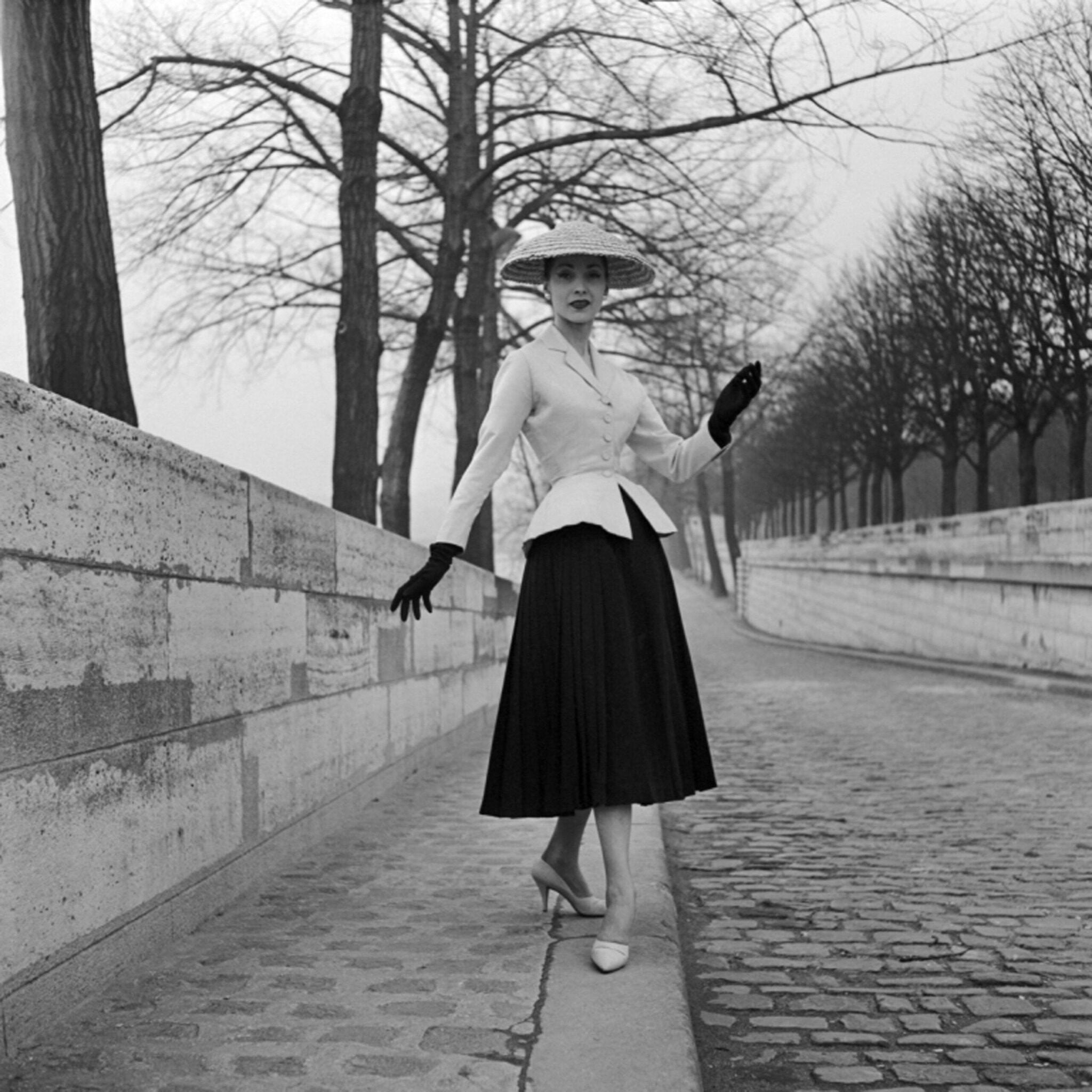
Two designers worked at the House of Dior. One became internationally notorious for his antisemitic remarks. The other was a Jewish Holocaust survivor who helped shape one of the most iconic silhouettes in fashion history.
One is John Galliano. The other is Emeric Imre Partos.
Chances are, you’ve only heard of one of them.
This summer, when the Metropolitan Museum of Art announced plans for a major 2027 retrospective devoted to Galliano, the fashion world once again found itself debating his extraordinary creative legacy and his history of antisemitism.
The controversy was particularly painful because May 3, the date of the 2027 Met Gala, also marks the beginning of Yom HaShoah, Holocaust Remembrance Day.
Following mounting criticism and discussions between Galliano and the museum, the exhibition was canceled. The Met has since announced a new exhibition, extraORDINARY: Fashion and the Poetics of the Everyday.
But while the fashion world debated whether Galliano deserved an exhibition, I found myself wondering why so few people knew the story of another designer whose work the very same museum already preserves.
Long before he helped shape the future of fashion, Emeric Imre Partos was fighting for his own survival.
A Hungarian-born Jewish fashion designer living in France during World War II, Partos served in the French Army and became involved with the French Resistance. During the Holocaust, he and fellow Jewish designer Alex Maguy hid from the Nazis in the attic of a farmhouse in the French countryside.
He survived and returned to fashion.
In 1947, Partos joined the newly established house of Christian Dior. That same year, Dior introduced the collection that became known as the “New Look,” characterized by cinched waists and enormous, sculptural skirts. The silhouette revolutionized postwar fashion and established Dior as one of the most influential names in the industry.
Partos has been credited with developing the crinoline understructures that gave those extraordinary skirts their volume and shape.
After leaving Dior in 1950, Partos moved to New York City, where he eventually became a celebrated fur designer at Bergdorf Goodman. His innovative designs challenged traditional notions of luxury fur. In 1955, The New Yorker described his first Bergdorf Goodman collection as “breathtaking.” Two years later, he received a prestigious Coty American Fashion Critics’ Special Award for his fur designs.
Today, several of his designs are held in the Metropolitan Museum of Art’s Costume Institute collection.
I knew Dior. I knew the New Look. I knew John Galliano. Yet until I began researching Jewish contributions to fashion, I had never heard of Emeric Imre Partos.
How could someone who contributed to such a defining moment in fashion history remain so unfamiliar?
That question is part of what inspired me to curate Threads of Survival: Holocaust Survivors and Their Legacy in Fashion, an exhibition highlighting thirteen Holocaust survivors, refugees and their descendants who helped shape the fashion industry.
During the Holocaust, clothing was used to strip Jews of their individuality, dignity and identity. Yet for some survivors, fashion later became a means of reclaiming what had been taken from them. That extraordinary transformation is at the heart of Threads of Survival.
Long before the Galliano controversy, I emailed Andrew Bolton, curator in charge of the Costume Institute, proposing an exhibition exploring the Jewish contribution to American fashion.
I had become fascinated by how many influential figures in the industry were Jewish immigrants, refugees, Holocaust survivors or their descendants, yet how rarely their stories were told together.
I never received a response. Eventually, on a much smaller scale, I decided to tell some of those stories myself.
My exhibition is scheduled to open at my synagogue on the Upper East Side, on May 3, 2027 — the evening Yom HaShoah begins and the same day the Met Gala will take place.
The coincidence is difficult to ignore.
Just blocks away, the fashion world will gather at a museum that had planned a major retrospective devoted to John Galliano and that already preserves the work of Emeric Partos.
Galliano’s influence on fashion is undeniable. Some have accepted his expressions of remorse following his antisemitic remarks, while others have questioned whether a major museum exhibition honoring him was appropriate.
But for me, the controversy raises a larger question: Who does fashion choose to remember?
Sometimes, when researching Jewish figures in fashion, I think about a line from one of my favorite songs in Hamilton: “Who lives, who dies, who tells your story?”
The more I uncover about these remarkable individuals, the more I feel a responsibility to tell their stories. Fashion history should encompass not only the garments that transformed the industry, but also the lives of the people who helped create them.
On May 3, while the fashion world turns its attention to the steps of the Metropolitan Museum of Art, I will be just blocks away, telling the stories of people who helped shape the very industry being celebrated that evening.
Among them is Emeric Imre Partos. A Jewish designer. A member of the French Resistance. A Holocaust survivor who helped give shape to fashion’s New Look.
Nearly eight decades later, fashion still remembers the silhouette.
It’s time to remember the man who helped create it.