


Diplomacy Against Peace: Do Not Appease Iran’s Clerical Regime
Three decades of Western and Arab engagement and accommodation with Iran’s Islamic regime have repeatedly produced the same pattern: each round of concessions has not moderated the regime’s behaviour, but instead given it time and space to rebuild and consolidate its power. What is now unfolding in Europe — particularly in Austria and Greece — and in several Arab capitals is merely the latest iteration of this old pattern.
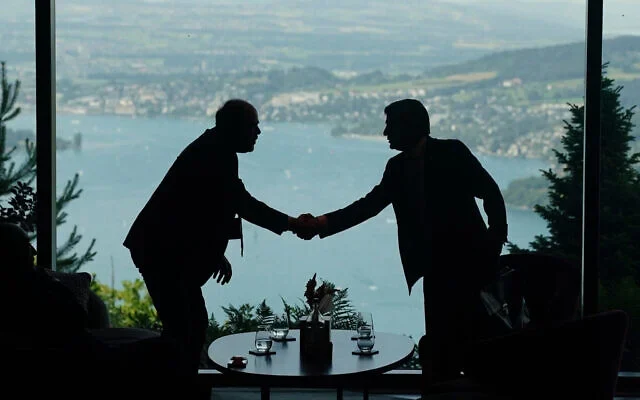
The fundamental assumption behind appeasement-driven diplomacy is that conceding to some of Tehran’s demands will moderate the regime’s behaviour. Yet experience suggests precisely the opposite: each concession has served not as the end of one crisis, but as the prelude to the next.
In recent days, amid the US-Iran war and with the Strait of Hormuz effectively remaining closed,
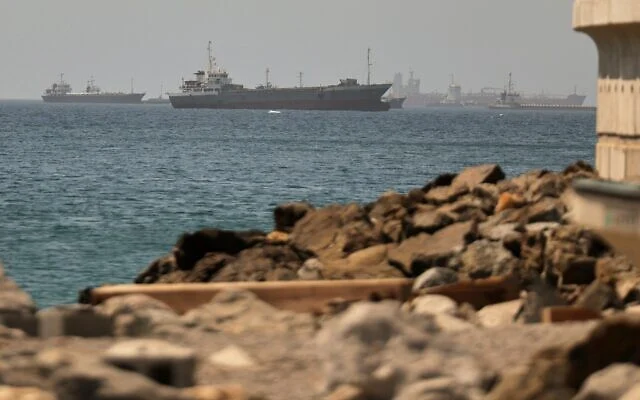
the foreign ministers of Austria and Greece have spoken with Marco Rubio, Secretary of State in the Trump administration, in an effort to find a diplomatic path forward. At the same time, Pakistan and several other countries in the region have been seeking to mediate in pursuit of an accommodation with Tehran.
These contacts took place even though official statements from Washington made no reference to Iran. The foreign ministries of Austria, Greece and Iran, however, all confirmed that the war and efforts to bring it to an end were at the heart of the discussions.
Analysts view the European diplomatic activity as reflecting a desperate attempt at accommodation aimed at stopping the conflict rather than a formal mediation effort. As senior experts at the International Crisis Group have observed, all sides are essentially urging the two parties to “stop this dangerous game”. What is particularly noteworthy is that the European countries involved have significant regional interests of their own: Vienna because of its historic role in nuclear negotiations, and Athens because of its shipping interests in the Strait of Hormuz. They are therefore among those with the strongest economic incentives to favour a softer approach towards Tehran — an incentive critics see as yet another example of commercial interests being placed ahead of strategic resolve.
Regional Pressure to Rein In Trump
Alongside Europe’s diplomatic efforts, a number of US allies and regional powers have repeatedly sought to dissuade the Trump administration from escalating military operations against Iran and to create more space for diplomacy. In early August, Trump publicly said that he had abandoned plans for an attack he himself described as the “largest since World War II” following appeals from Gulf leaders, including Saudi Crown Prince Mohammed bin Salman, and had instead given diplomacy more time. Reports indicated that Qatar and the United Arab Emirates also played a role in these diplomatic efforts.
This was not the first such intervention. In January, Saudi Arabia, Qatar, Oman and Turkey, concerned about the prospect of a wider war and its consequences for regional stability and global energy markets, also urged Washington to exercise restraint. Reports at the time suggested that these diplomatic interventions played a role in Trump’s decision to temporarily step back from the military option.
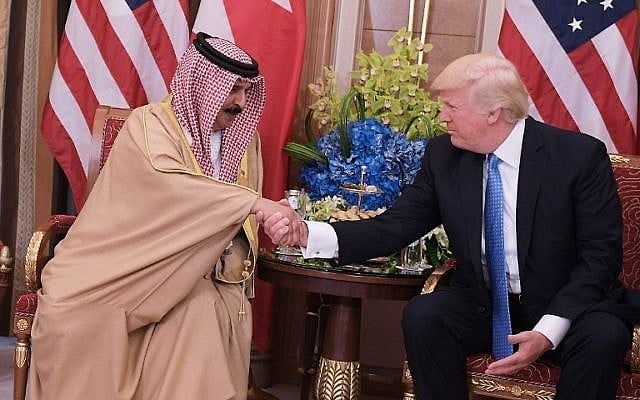
Pakistan, meanwhile, has emerged in recent months as one of the most active regional players seeking to mediate between Tehran and Washington. Islamabad has openly sought to preserve channels of communication between the two sides, with Pakistani officials presenting their role in direct contacts with Tehran as one of facilitating de-escalation. Turkey, building on its earlier efforts to prevent the conflict from widening, has likewise advocated dialogue and mediation.
Taken together, these developments suggest that pressure to restrain American military resolve is not emanating from Europe alone. A group of Arab governments, alongside Turkey and Pakistan, have — for differing reasons, ranging from fears of direct Iranian retaliation and threats to energy infrastructure to concerns over regional stability and economic interests — sought to prevent further military escalation against Tehran. Iran itself has also appealed directly to some regional governments to persuade Washington against further strikes, while warning that regional infrastructure could face retaliation in the event of renewed attacks.
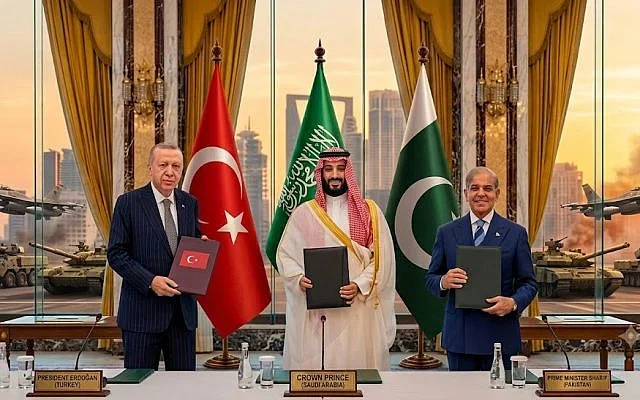
For critics of appeasement, this is precisely where the problem lies. Even if these governments are motivated by a genuine desire to prevent a wider war, the practical effect of such pressure may be to ease the pressure on Tehran at precisely the moment when the regime most needs time, breathing space and an opportunity to rebuild. From this perspective, regional diplomacy pursued without meaningful leverage or clearly defined conditions risks inadvertently reinforcing the very cycle that has, for years, allowed Tehran to weather crises, regroup and eventually return to the negotiating table from a stronger position.
Diplomacy Against Stability
What emerges from these two fronts — an accommodating Europe and cautious Arab states — is a phenomenon that might be described as the counterproductive use of diplomacy: diplomacy that, instead of reducing danger, merely postpones it while increasing its eventual cost.
Each time military or economic pressure is eased in favour of “more time for dialogue”, the regime gains time to rebuild its proxy networks and military capabilities, while turning the Strait of Hormuz into an instrument of leverage. The ultimate result is not a durable settlement, but a cycle of recurring crises, each carrying a heavier price for the free world — precisely the opposite of what those who regard accommodation through diplomacy as the solution had hoped to achieve.
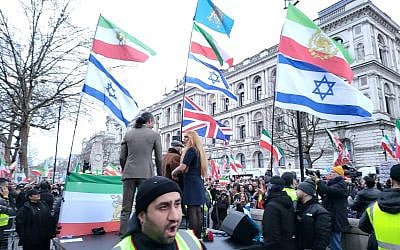
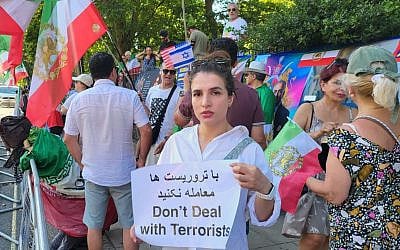
For years, Iranians opposed to the Islamic Republic have warned, marched, issued statements and signed petitions arguing that the regime in Tehran — whether represented by its so-called reformist, hardline or pragmatic factions — is deceptive and fundamentally untrustworthy.
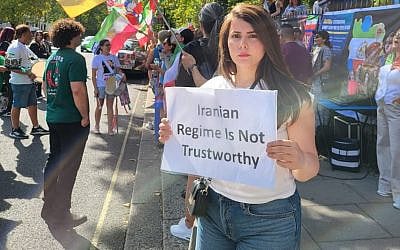
They have argued that it is prepared to disregard ethical principles and international commitments in pursuit of its overriding objectives: preserving its own survival and exporting violence and terrorism. In their view, events over the years have repeatedly vindicated that warning.
Living Proof of Diplomacy’s Failure
But why should Tehran not be trusted as a negotiating partner? Three documented episodes support the argument that attempting to negotiate and reach agreements with a regime dominated by the Islamic Revolutionary Guard Corps is, in practical terms, an exercise in futility.
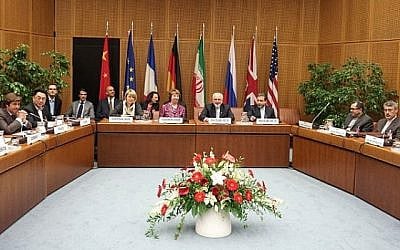
First, the nuclear archive obtained from Tehran in 2018 showed that Iran had for years provided misleading information about its nuclear programme to the international community, particularly the P5+1. From 2019 onwards, the International Atomic Energy Agency formally confirmed that Iran had exceeded limits established under the Joint Comprehensive Plan of Action (JCPOA).
Second, in 2021, then Foreign Minister Mohammad Javad Zarif publicly welcomed Ali Khamenei’s warning against “protracted negotiations” and described “negotiations for the sake of negotiations” as a failed experience — an acknowledgement that sheds light on the tactical, rather than principled, role negotiations can play in Tehran’s calculations.
Finally, after remaining compliant with the JCPOA for a year following the US withdrawal, Iran began unilaterally abandoning parts of its commitments once the balance of pressure shifted.
Taken together, these three examples — alongside the latest return of European accommodation, particularly from Austria and Greece, and the caution shown by Arab states in the face of Trump’s more forceful approach — point to a broader reality: diplomacy with a regime that has itself treated negotiations as a means of buying time does not necessarily moderate its behaviour. Instead, it can provide an opportunity to regroup, rebuild and repeat the same cycle at an even greater cost to the free world.
The free world, the peoples of the region and the wider international community must recognise that dialogue, negotiation and accommodation with the corrupt networks and ruling oligarchies in Tehran and Moscow are futile.
They merely give malign actors more time and opportunity to darken the future.