Director Marilia Neustein Presents the Jewish Museum of São Paulo
The world is undergoing an unprecedented transformation in economic, political, and military agreements. Since the terrorist attack of October 7 — considered one of the largest in modern history — a strategic tightening between the United States and Israel has been observed, with the potential to redefine contemporary geopolitics. This alignment has triggered an unparalleled collapse in the financing networks of groups such as Hezbollah and Hamas, profoundly altering the balance in the Middle East.
The conflict, however, extends beyond the military sphere. It unfolds across economic, political, and religious dimensions, placing the U.S. and Israel in direct confrontation with Iran, while even straining Washington’s relationship with NATO. Among the visible side effects in Western countries are the rise of antisemitism and significant shifts in the global economy.
In Brazil, the 2025 Annual Report on Antisemitism, released by the Brazilian Israelite Confederation (CONIB), recorded 989 formal incidents throughout the year. Although this figure is lower than the peak of 1,700 attacks in 2024, the phenomenon has stabilized at a level 149% higher than in 2022, when 397 incidents were reported. The document defines this reality as a troubling “new normal,” reinforcing the need for public policies and cultural initiatives aimed at combating hate.
In this context, museums play an essential role in education and the preservation of memory. They are spaces that not only disseminate knowledge but also contribute to building a more conscious society, resilient against prejudice.
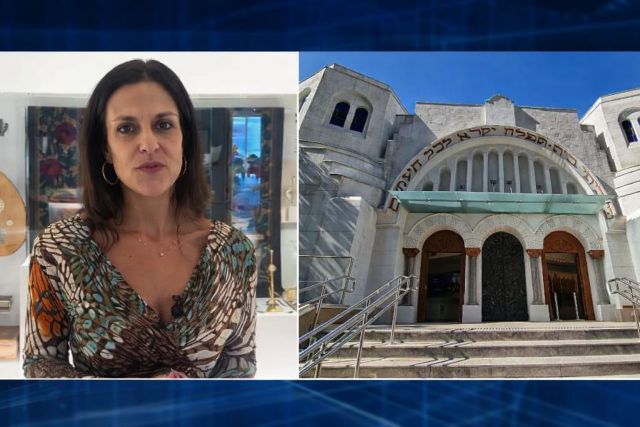
Among them, the Jewish Museum of São Paulo (MUJ) stands out, under the executive direction of Marilia Neustein. The museum showcases to the public the richness and depth of Jewish culture, bringing together traditions and histories from diverse communities. In an institutional video (portuguese), Neustein guides visitors through the exhibitions, highlighting the importance of each space in valuing memory and confronting antisemitism.