
Disarmament and Governance in Focus: Analyzing Gaza Peace Plan Phase Two
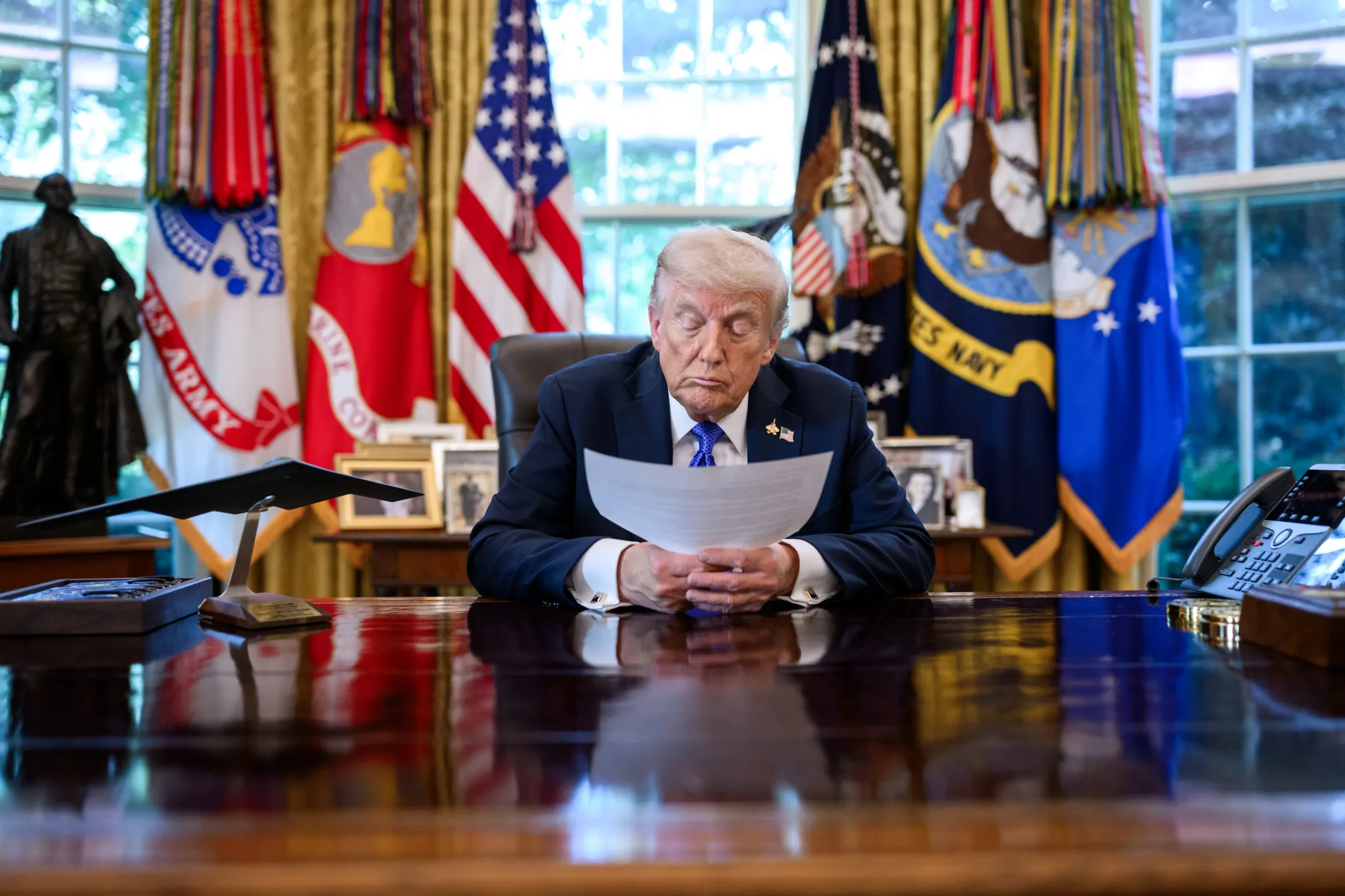
By the end of December, Gaza could find itself at a pivotal diplomatic juncture, the most significant since the ceasefire took hold nearly two months ago. With President Donald Trump gearing up to reveal the long-awaited “Board of Peace” and move Washington’s Gaza plan into its next phase, the upcoming weeks will challenge not just American strategy but also the political boundaries of every player involved, from Israel and Hamas to Arab allies and European partners.
In this second phase, disarmament and governance are not just footnotes—they’re the pivotal elements that could either help the region rebuild or send it spiraling back to where it started. With the UN’s support from last November and some fresh diplomatic encouragement, there’s a sense of cautious optimism in the air. However, the underlying geopolitical tensions are making everything feel a bit shaky.
Israeli Prime Minister Benjamin Netanyahu’s upcoming meeting with Trump on December 29 highlights the importance of this moment. Netanyahu’s trip to the U.S. is set to include a meeting with President Trump at his Mar-a-Lago resort in Florida, where he’ll also engage in several other high-level discussions, as the American administration seeks to advance the developing Gaza framework, according to a report.
The report indicates that the White House is aiming to bring Egyptian President Abdel-Fattah el-Sissi to the Mar-a-Lago meeting to help secure Israeli backing for a strategic arrangement concerning Gaza with Cairo.
Netanyahu is expected to spend eight days in Florida, during which he will have two meetings with Trump, along with discussions with Vice President JD Vance, Secretary of State Marco Rubio, and Defense Secretary Pete Hegseth.
This week, standing alongside German Chancellor Friedrich Merz earlier, Netanyahu declared the first stage of the ceasefire nearly complete, with a “more difficult” second phase approaching rapidly—one centered on dismantling Hamas’s military control and setting the groundwork for a new governing order in Gaza.
???? Netanyahu: We soon expect to enter phase two of the Gaza plan, which is more difficult
— i24NEWS English (@i24NEWS_EN) December 7, 2025
“We’re about to finish the first stage,” Netanyahu said. “But we have to make sure that we achieve the same results in the second stage, and that’s something I look forward to discussing with President Trump.” Those comments reveal a critical truth: phase two is not just a technical step in an agreement—it is the political heart of the entire Gaza transition.
Prime Minister Benjamin Netanyahu met today, at his Jerusalem office, with the U.S. Ambassador to the United Nations @USAmbUN, Mike Waltz @michaelgwaltz. pic.twitter.com/9Ss7krIczy
— Prime Minister of Israel (@IsraeliPM) December 8, 2025
A Governance Architecture Built on High Ambition
The “Board of Peace” is anticipated to bring together about ten leaders from both Arab and Western backgrounds, and it’s being set up as the main oversight authority for Gaza’s future after the conflict. Below it, there’s an executive board that includes prominent figures like former U.K. Prime Minister Tony Blair, Jared Kushner, envoy Steve Witkoff, and senior officials from the nations involved.
Hamas has publicly stated its refusal of foreign oversight and any expectation of disarmament. Israel, for its part, is not in favor of the U.S. suggestion for a gradual surrender of weapons and insists on complete disarmament before any withdrawal takes place.
Moreover, many Arab partners are hesitant to be seen as part of a U.S.-Israeli plan unless Hamas is decisively constrained. This encapsulates the main strategic issue: the Board of Peace needs a political environment that simply isn’t there at the moment.
Netanyahu’s Phase Two: Disarmament First, Governance Second
Netanyahu’s comments in Tel Aviv suggest he’s set on a strict order of operations: disarmament must come before any governance. He describes the second phase as “significantly more challenging” than the ceasefire phase, hinting at the political battles that lie ahead—not military ones.
His insistence that Hamas must meet its “commitment” to disarm shows Israel’s take on the agreement: no governance structure, no technocratic committee, and no stabilization force will be established until Hamas is genuinely disarmed. Meanwhile, Washington is trying to push both tracks forward at the same time.
Germany is already sending officers and diplomats to the U.S.-led coordination center in southern Israel. Merz has even backed Netanyahu’s long-term plan—first demilitarization (phase two), followed by deradicalization (phase three), which Netanyahu compares to the post-war transformations seen in Germany, Japan, and the Gulf states.
However, none of this can move forward as long as Hamas continues to ignore even the basic requirements of phase one. According to the agreement, Hamas must return all living and deceased hostages. The first stage can’t officially conclude until the last body—Master Sgt. Ran Gvili—is returned. Hamas has already missed several deadlines.
Prime Minister Benjamin Netanyahu's remarks today, at the joint press conference with German Chancellor Friedrich Merz >>https://t.co/gigkgXaMpy pic.twitter.com/EGnW5NNW9F
— Prime Minister of Israel (@IsraeliPM) December 7, 2025
Core Pillars: Disarmament and Governance
Breakdown Phase Two revolves around two key challenges that are deeply connected: disarming and establishing a reliable governing authority. For disarmament, Hamas is expected to hand over its weapons, with an International Stabilization Force (ISF) stepping in as the IDF withdraws.
There’s also a discussion about sending 1,000 Palestinian officers trained in Egypt and Jordan to help maintain order. Initially, Israel may keep a presence in eastern Gaza, controlling over half the area after Phase One, while pulling back from other regions like the “yellow” zone.
On the governance front, things are just as challenging. The plan proposes a U.S.-supported Board of Peace—with President Trump leading the charge—to appoint a neutral, tech-savvy group to manage daily operations. This group is meant to reform the Palestinian Authority (PA), reduce corruption, and set the stage for statehood.
However, the plan lacks detailed specifics, raising questions about its practicality. Reconstruction is also part of the picture, with Trump’s vision of a “Riviera of the Middle East” aimed at boosting the economy through infrastructure improvements. Phase Three would focus on deradicalization, but achieving that depends on solidifying the foundations laid in Phase Two.
Hamas Responds With Rejection, Ideology, and Escalation
If Netanyahu’s framing stresses complexity, Hamas’s latest messaging makes the challenge even starker. Khaled Mashaal’s fiery video address from Istanbul was not merely a rejection of Trump’s plan—it was a declaration that Hamas views the entire diplomatic architecture as illegitimate.
He dismissed demilitarization outright: “The resistance and its weapons are the ummah’s honor.”
He framed the conflict as religious destiny: the “cleansing” of Al-Aqsa.
He urged global activism, legal warfare, and a campaign to isolate Israel internationally.
And he openly mocked the transitional governance structure, including the International Stabilization Force and the Board of Peace already approved by the U.N. Security Council.
For Washington and Israel, these statements confirm what they long suspected: Hamas sees the ceasefire not as a pathway to political resolution but as a breathing space within a larger confrontation.
Israel’s Foreign Ministry put it bluntly: Hamas is “mocking” the U.S. plan while violating the terms of the ceasefire it agreed to.
Israel inches toward the next phase of a U.S.-brokered Gaza peace plan but disarmament hurdles and political tensions keep the path uncertain.
Link to full article: https://t.co/UFU5kxgj73#Israel #Gaza #Ceasefire #MiddleEast #PeaceTalks #Hamas #Trump #Netanyahu #Geopolitics…
— B2B News (@B2B_NZ) December 10, 2025
A Moving Timeline, A Fragile Ceasefire
U.S. officials say the Trump administration hopes to announce the shift to phase two within two weeks. But the truth is that Washington is racing not only against the calendar, but against the region’s volatility. On Sunday, the IDF reported that a terrorist crossed Gaza’s “Yellow Line,” breaching the ceasefire boundaries before being neutralized. These incidents, small as they may seem, have the potential to unravel months of painstaking diplomacy.
The International Stabilization Force—slated for potential deployment in early 2026—remains a delicate component. Indonesia and Azerbaijan are being considered as contributors, but Israel has categorically rejected Turkish involvement, despite Washington’s insistence that Ankara’s participation could deter Hamas from attacking the ISF.
This illustrates a broader pattern: every structural element of the plan—from troop composition to technocratic committees—exists within competing interests that Washington cannot fully reconcile.
Technocratic Governance:
The U.S. blueprint envisions a team of 12–15 Palestinian technocrats with no ties to Hamas or Fatah running daily administration under international supervision. In theory, this bypasses factionalism and allows for a professional, corruption-resistant system.
But it raises fundamental questions:
Who grants these technocrats legitimacy?
What happens when their decisions clash with entrenched local networks?
And how long can such a system function without political ownership from within Gaza?
Technocracy cannot replace politics forever. And Gaza’s politics cannot simply be reengineered from abroad.
Netanyahu’s Domestic Balancing Act
Netanyahu’s refusal to entertain any pardon discussion—and his condemnation of the ICC arrest warrant—reflects a leader determined to project strength amid unprecedented legal and political pressure. His inability to visit Germany due to the ICC warrant—even as Germany affirms unwavering support for Israel—highlights the odd, sometimes contradictory intersections of law, diplomacy, and war.
At the same time, Netanyahu is positioning himself as the central architect of Israel’s postwar strategy, ensuring that when he meets Trump on December 29, he is seen not as a defendant under scrutiny but as a decisive wartime leader shaping the region’s security future.
The Real Decision Point
When a senior U.S. official declares, “we will reach the moment of truth,” you can bet that phrase is loaded with meaning—and, in many ways, it’s a hopeful sign. It reflects Washington’s belief that a mix of pressure, incentives, and a clear path forward can nudge all parties toward decisions they’ve been dodging for too long.
The U.S. is essentially banking on the idea that, even in a world filled with distrust and past traumas, structured diplomacy can pry open doors that once felt permanently shut. Sure, Hamas’s recent statements come off as more defiant than flexible. Yes, Israel is still cautious about gradual disarmament. And it’s true that Arab partners are treading carefully as the ceasefire faces its ups and downs. But none of these hurdles negate the significant shift happening: for the first time in years, key regional and international players are united around a common goal—keeping Gaza from slipping back into endless conflict.
Trump’s plan is undeniably ambitious: it’s grand in vision, thorough in execution, and built on the belief that strategic collaboration can transform even the toughest realities in the region. While sheer ambition can’t wipe away deep-seated ideologies or distrust, it can certainly build momentum, especially when backed by a coalition that includes Arab nations, Western allies, and regional players ready to invest political capital in a brighter future.
We might see phase two rolled out in the next few weeks. If that happens, it won’t just be a procedural step—it’ll be the first genuine effort in years to align competing interests into a cohesive, internationally supported framework.
The challenges ahead are significant, but so are the possibilities. If the involved parties choose to engage rather than obstruct, Gaza’s transition could break free from the pile of forgotten plans and become a rare success story of diplomacy achieving what conflict never could: a lasting escape from a cycle that has dragged on for far too long.