
Journalist, Commentator on Middle East Issues
Disarmament on Paper, Doubt in Reality
Wikipedia -public domain
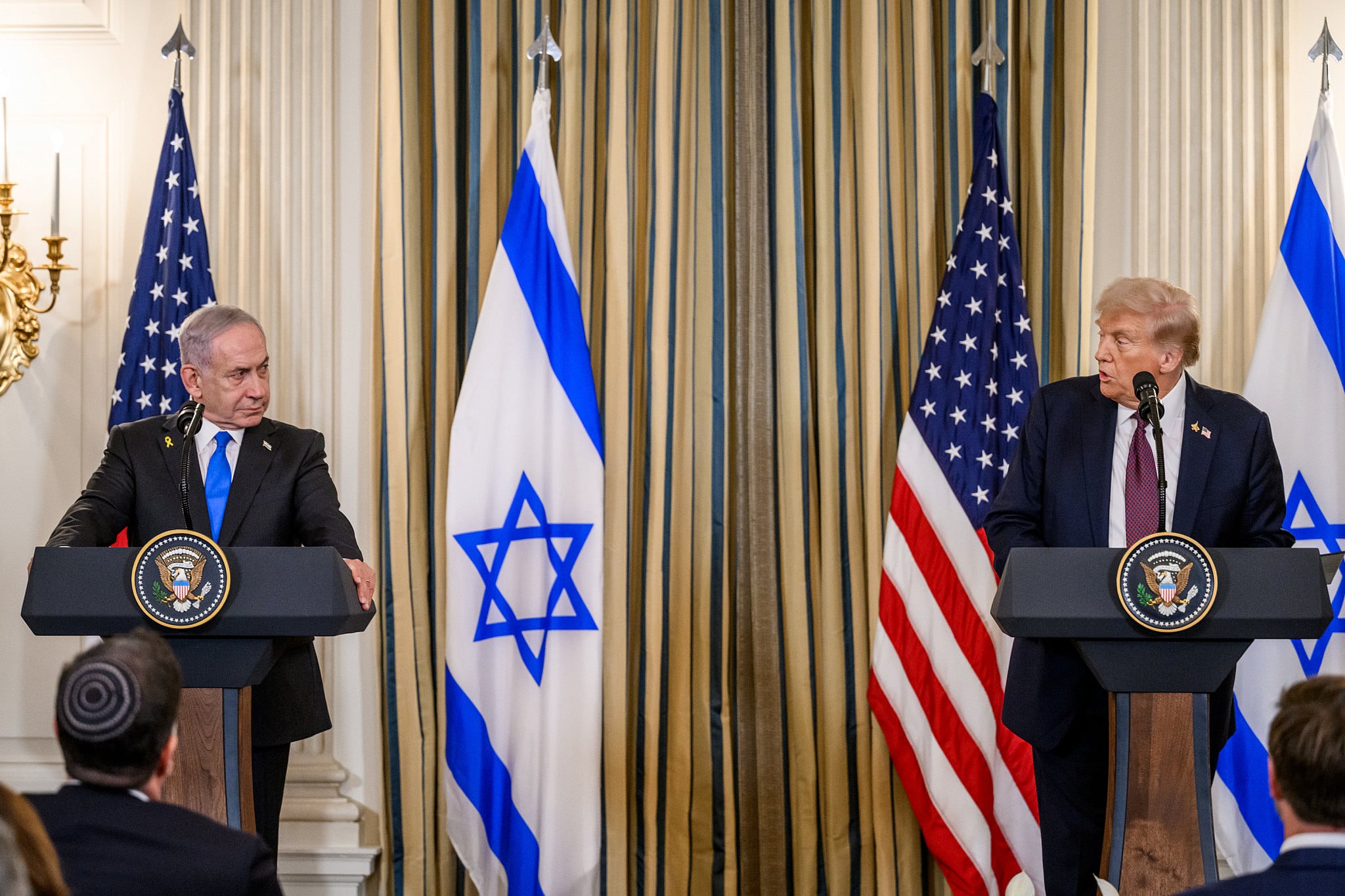
(Official White House Photo by Joyce N. Boghosian)
U.S. President Donald Trump announced over the weekend what he described as a “historic agreement” to disarm Hamas under the framework of the “Peace Council” he established as part of his “20-Point Plan.” The announcement, published on Truth Social, was framed in the President’s characteristic superlatives as “a tremendous step toward lasting peace and security.” Yet beneath the dramatic headline lies a far more complex reality, raising serious doubts as to whether the term “historic” will still be applicable a few months from now.
Israel’s Position: Acceptance Coupled with Deep Skepticism
Jerusalem has neither rejected the agreement nor embraced it enthusiastically. Israeli diplomatic officials have made it clear that the current draft does not adequately address Israel’s core security requirements, and that Israel has conveyed its reservations to the envoy Tony Blair.
Moreover, an Israeli political source emphasized that there will be no Israeli withdrawal from the “Yellow Line” in Gaza before Hamas has been fully disarmed and the Strip completely demilitarized. In other words, Israel is conditioning any territorial withdrawal on actual implementation, not on declarations or promises.
A senior US official also openly acknowledged that Israeli leaders remain skeptical that Hamas will genuinely relinquish its weapons, adding that Washington “intends to ensure that Israel fulfills its commitments.” The inclusion of Qatar and Turkey on the governing board of the Peace Council has also generated unease in Jerusalem. There is good reason to believe that Israel might have rejected the agreement outright were it not for its desire to avoid a direct confrontation with President Trump, who is well known for his impatience with political opposition.
Hamas and Disarmament: The Gap Between Declarations and Reality
This is where the central point of contention lies. According to a Hamas source quoted by Reuters, the draft agreement stipulates that heavy weapons would be stored under the supervision of a Palestinian administrative authority rather than transferred to Israel. This represents a fundamental distinction between genuine disarmament and supervised storage, which effectively leaves the weapons within Hamas’s reach.
Hamas’s history over the past two decades, since seizing control of Gaza in 2007, has been one of organizational survival above all else. The movement has endured numerous military campaigns, large-scale Israeli operations, and prolonged economic isolation without ever voluntarily surrendering what it considers its principal strategic asset: its arsenal. Even after Operations Cast Lead, Protective Edge, and the Swords of Iron war, despite extensive destruction and significant losses, Hamas consistently rebuilt its military capabilities, albeit sometimes at a slower pace.
The plan envisions transferring civilian governance to a new Palestinian administration supported by a police force and an international stabilization mission. However, past experience suggests that Hamas is willing to cooperate with alternative governing mechanisms only as long as they do not threaten its true power base, its military wing. Previous agreements, including the 2005 arrangements and multiple Palestinian reconciliation efforts, demonstrated the organization’s ability to agree in principle while delaying, diluting, or circumventing implementation.
Conclusion
Trump’s announcement undoubtedly represents a significant diplomatic and media achievement, one that creates genuine international momentum. Nevertheless, the gap between a framework agreement and full implementation, including real disarmament, the transfer of authority, and the deployment of an international force, remains substantial.
The success or failure of this initiative will ultimately be judged not by its language but by developments on the ground in the weeks and months ahead. Hamas’s history warrants considerable caution and skepticism. Israel’s position, reserved yet not dismissive, reflects precisely that skepticism.
Related Topics