


Don’t be naïve. They want you dead.
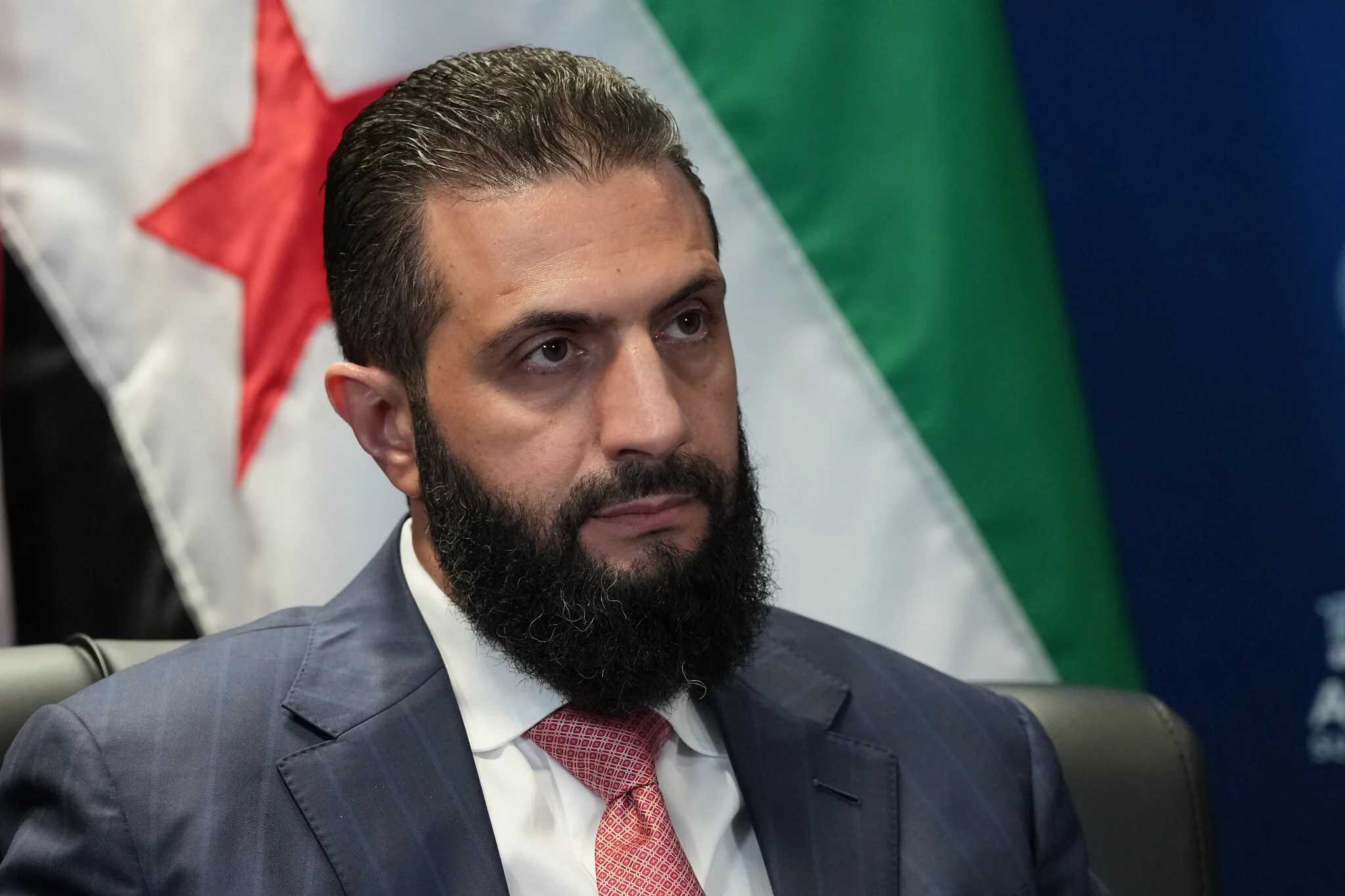
When future doctors chant that Jewish blood will flow “like rivers,” the issue is no longer Jolani’s suit. It is a society still steeped in hatred.
I have always told my Israeli friends: don’t be naïve. They want you dead.
In Syria, it is not only Jolani’s fighters who chant “Death to the Jews.” A few days ago another video circulated. This time the voices were not those of soldiers lined up by a citadel. They were future doctors — medical students at the University of Aleppo — chanting: “We are coming, Jew. We will make your blood flow like rivers.”
This is where a society still soaked in hatred stands.
When I dwell on that hatred in my book A Syrian in Israel, I am sometimes accused of giving it too much space — as if it were an obsession, an obstacle to the “new Syria,” an inconvenient memory to be set aside so that we may talk reconstruction, sanctions relief, and peace. The video explains why I write about it. The hatred is real. And it is not confined to the Islamist militias now in power.
Jolani’s Islamists did not invent it. They stoke it and keep it alive. As under Assad’s dictatorship, Jew-hatred remains a political commodity. It is also the stock-in-trade of too many merchants of the Palestinian cause, who need an eternally guilty Jew to hold their story together.
I think of the useful idiots of Islamism — above all in the West — who whitewash Syria’s new regime, who genuinely believe Jolani has become a “pragmatist,” and that his Syria is already fit to be removed from the company of states tied to terrorism. Look at this hatred and you will see the problem. Even without officially sponsoring terrorism, a power that allows such an imaginary to flourish is preparing new generations — new martyrs of hatred, ready to devote themselves to it and to die for it.
This naiveté is not Israeli. It is Western. It lives in chancelleries, in parts of the press, on campuses, in think tanks that mistake a suit for a conversion. In Israel it appears only in one or two analysts who defend it, justify it, and assure us that tomorrow’s Syria is already ready for peace.
Jolani and his militias have not changed doctrine. They have changed strategy. That is the distinction. Their ideological project, and their hostility toward Israel and the Jews, remain, in my view, deeply rooted.
This is not an abstraction. It is my childhood.
I grew up in Syria, in a communist family that claimed humanism. I was taught the universal. I was also taught, not always in so many words, that the Israeli did not fully belong to the human. A relative who called himself a humanist once explained that if a four-year-old Israeli child were dying at his feet, he would not save him. The child was Israeli. That was enough.
Years later, after a detour through Paris, I went to Israel. In the north, in the Galilee, I met a religious Jewish family. We spoke about the war in Syria, about wounded Syrians treated in Israeli hospitals, about children. The mother’s eyes filled with tears. She told me she had gone toward the border, looked at that devastated Syria — the country of my birth — and wept and prayed for the Syrians.
That woman belonged to the people I had been taught to hate. And she wept for mine.
I refuse to generalize. Hatred exists everywhere. So does empathy. But the asymmetry is brutal: on one side, a proclaimed humanism that stops at a child’s identity; on the other, a religious woman, caricatured in my education as fanaticism itself, praying for a people arrayed against hers.
The Aleppo video brings that asymmetry back into the present. You can train doctors. You can teach them to save lives. You can put a wartime commander in a suit, send him to the UN, talk investment, reconstruction, “pragmatism.” None of it erases an imaginary in which the Jew is not a neighbor with whom one negotiates, but a target whose blood must flow “like rivers.”
Western naiveté is not a virtue. It is a misreading. It confuses the diplomatic language of a regime seeking legitimacy with the doctrine that still shapes its students, its militiamen, sometimes its future physicians. It takes a change of tactics for a change of soul.
I am not asking anyone to hate Syrians. I am Syrian. I know what my people have suffered, and I have seen, in Israel itself, Jewish faces weep for them. I say this to my Israeli friends not because they are naïve, but because they are the target: stop listening to those, especially in the West, who pretend not to see. Hatred of Jews in Syria is not a militia accident. It is a cultural, political, and religious reserve that dictatorships and Islamists have taken turns exploiting.
So, for the thousandth time, I say what I wrote in A Syrian in Israel:
Don’t be naïve. They want you dead.