
‘Don’t Eat From the Tree of Knowledge’: Does God Want Us to Be Ignorant?
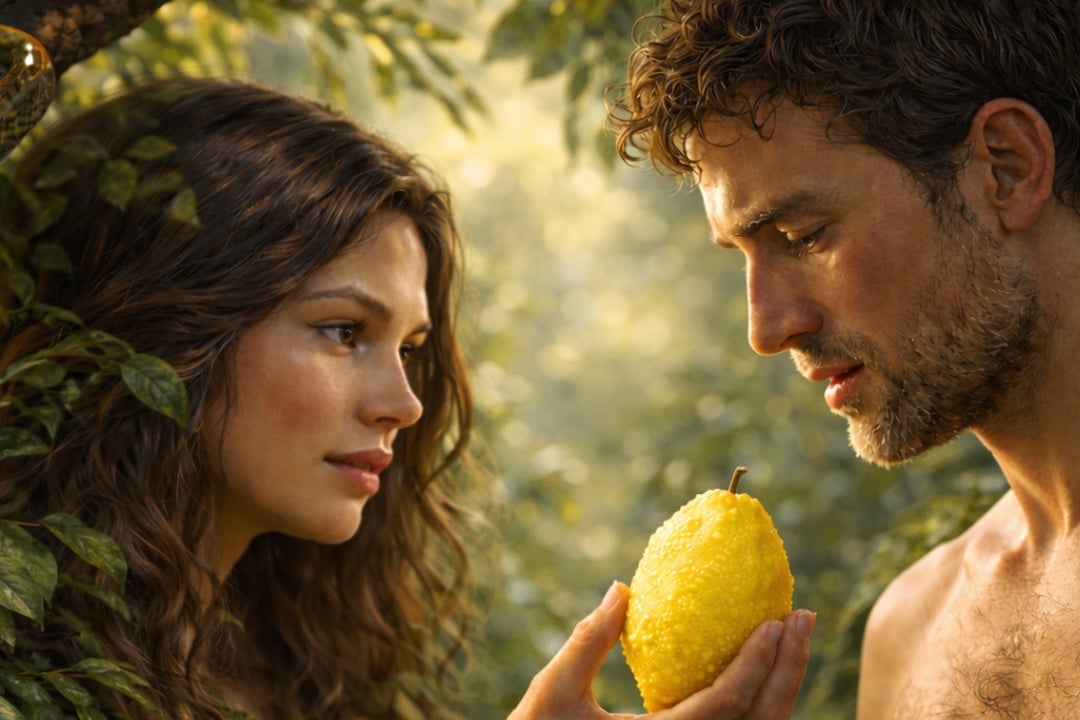
“Of the Tree of Knowledge of good and evil you shall not eat” (Genesis 2:17).
On this verse, the Alter Rebbe asks a puzzling question: Why did God forbid Adam and Eve from eating of the tree of knowledge? Isn’t knowledge a good and valuable thing? Wouldn’t it be important for mankind to understand good and evil so that they could know what to pursue – good – and what to avoid – evil? If one does not know the difference between the two, then might it not be more difficult to choose wisely and properly between them?
We are assuming here that the “knowledge of good and evil” connotes that one has gained some understanding that enables him to differentiate between these two polar forces. In fact, the Alter Rebbe teaches, tasting the fruit and internalizing this “knowledge” had quite the opposite effect.
“Daas/knowledge” in Torah is not simply a cerebral and intellectual comprehension. To “know biblically” is a euphemism for intercourse and coupling. This is derived from the verse, “And Adam KNEW his wife Eve, and she conceived” (Genesis 4:1). To “know” something in Torah parlance is to join with it and to create an intermingling or fusion.
Understood in this way, the “knowledge of good and evil” is not an ability to distinguish between them, but rather a process through which they become mixed together and difficult to separate. Prior to eating the fruit, both good and evil existed in the garden, but they were wholly distinct from one another. Adam and Eve had no illicit desire and no shame about their nakedness because evil did not exist within them.
Yet the serpent – the external embodiment of evil – penetrated Eve (some say figuratively and some say literally) and implanted some of his evil within her. With the subsequent eating of the fruit, both she and Adam had now fully internalized the darkness that had previously been distinct from them. They caused a confluence and nexus of good and evil, and we, their children, have been struggling to disentangle them ever since.
Knowledge in the intellectual sense is beneficial and praiseworthy. We are expected to learn and grow every day so that we can better understand our world and our place and purpose in it. God’s warning to Adam and Eve was not a desire for ignorance. It was an attempt to protect them from the struggle that they would face if evil became absorbed and intermingled within them. Because they did not heed His warning, we know this struggle intimately. We are all virtuous at times, and we are tempted and overcome at others.
We therefore work daily on “birurim/separation,” the process of extracting the sparks of goodness and Godliness from the shells of corruption and concealment that surround and contain them. Our cumulative efforts throughout history will precipitate the messianic age when the admixture of good and evil that Adam and Eve initiated will finally be sorted out. At that time, “the spirit of impurity will be removed from the earth” (Zechariah 13:2), and like Eden before the fall, we will once again be able to experience unadulterated good without a contrary and concomitant inclination toward evil.
–
Pnei Hashem is an introduction to the deepest depths of the human experience based on the esoteric teachings of Torah. www.pneihashem.com