
Don’t Let Iranian Terrorists Buy American Support
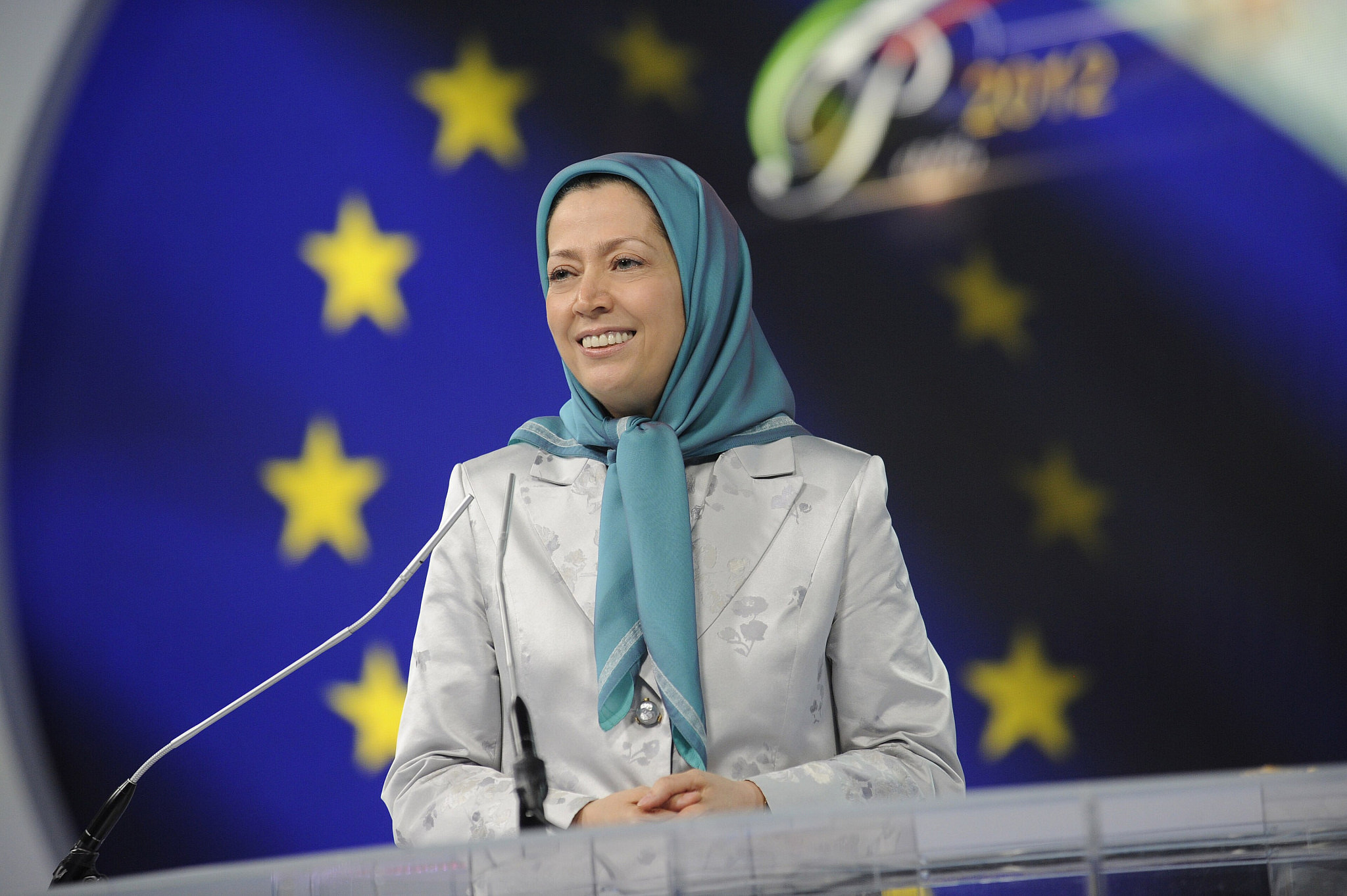
A mere hours after US-Israeli strikes killed Iranian Supreme Leader Ali Khamenei, the question of what would come next for the country has become the most consequential for the region—and, unfortunately, a well-funded lobbying operation that has been buying Washington’s support for decades saw its moment. Former secretary of state Mike Pompeo took to social media to champion the “democratic opposition,” which is, in his view, “ready to step up and lead.” Rudy Giuliani piled in a day later, promoting an “exclusive message” from the group’s leader.
While a domestic opposition group might sound great, the organization they were actually championing should alarm Americans across the political spectrum. The Mujahedin-e Khalq, or MEK, an exiled Iranian militant group that assassinated six Americans, including US military officers and civilian contractors during the 1970s and was previously a member of the State Department’s Foreign Terrorist Organization list alongside the likes of Hamas and Hezbollah.
The group had spent 15 years on that list for good reason. MEK operatives assassinated six Americans in Iran during the 1970s—killings that their own newspaper, Mojahed, claimed credit for in 1980. After a violent break with Khomeini’s regime, they relocated to Iraq, where they allied with Saddam Hussein during a war that killed hundreds of thousands of Iranians. Saddam provided tanks, artillery, and military training, in exchange for MEK assistance in conducting cross-border raids into their own country and—according to an Iraqi warrant issued against 39 members—aided in violently suppressing Kurdish and Shiite uprisings.
Despite all of this, Secretary of State Hillary Clinton removed the MEK from the terror list in September 2012, citing assurances that the group had renounced violence and had not committed terrorist acts in a decade. In other words, they said sorry.
This delisting came amidst highly problematic backdrops though, including an extraordinary lobbying blitz that featured $1.5 million in fees to Washington firms in a single year, and a court battle in which the DC Circuit issued what was described as the first writ of mandamus against a Secretary of State in nearly 200 years. Even while signing off on the removal, the State Department made a point of adding that it did “not see the MEK as a viable democratic opposition movement.”
That note has clearly been lost on Secretary Pompeo, who, despite ordering his own diplomats in January 2020 not to meet with the MEK on the grounds that they “have previously or are currently using violent means”—has since visited their headquarters in Albania to heap praise on their leader, saying she is “laying the groundwork for a free, sovereign, and democratic republic in Iran.”
Unfortunately, he’s not alone in his ties to the group: former Vice President Mike Pence collected $430,000 from the group, John Bolton received $40,000 for a single rally, and former governor Ed Rendell allegedly cashed in over $150,000 for speeches advocating their removal—payment brazen enough that the Treasury Department actually launched an investigation into them before the delisting conveniently killed it.
Giuliani, for his part, has collected $20,000 or more per appearance on the group’s circuit for over a decade, and former Trump Transportation Secretary Elaine Chao disclosed $50,000 for a single 2015 MEK-associated speech.
Inside Iran, the group is extremely unpopular and would have essentially zero credibility to stand on as a successor to the Islamic Republic. Analysis published by the Dutch Clingendael Institute concluded that the MEK is “despised by much of the population” of Iran.
As for the assurances of reform that underpinned the delisting—well, they weren’t exactly as transformative as was hoped. In June 2023, nearly 1,000 Albanian police officers stormed the MEK’s compound in the country over allegations of conducting cyber attacks, money laundering, and operating an organized criminal group. Officers seized 96 computers and 49 laptops, and the investigation remains ongoing.
Iran has been the single largest state sponsor of terrorism throughout the region for decades at this point, and we are on the cusp of seeing the Islamic Republic’s days finally come to an end. While some of the support for the MEK historically may have come from politicians who were desperate to find any opposition to Khamenei’s rule, replacing one terrorist with another would do no good for either the people of Iran or American interests in the region—and former secretaries of state really ought to know better.
Iran’s genuine opposition leader is Crown Prince Reza Pahlavi, who is the leading opposition figure both among Iranians at home and in the diaspora. President Trump has been busy cleaning up the disastrous implications of years of weak foreign policy towards Tehran—it’s high time to recognize that Hillary Clinton’s decision to delist the MEK was one of these mistakes, and the Trump administration should correct it and put them back on the terror list.
When regimes fall, they tend to fall quickly. The widespread uncertainty about Iran’s future—including from the Trump administration itself—has created precisely the environment that decades of MEK lobbying were designed to position themselves for. No amount of money should buy this organization a seat at the table.