Don’t Say No, Say How
Discovering Personal and Community Resilience at the Summit of Kilimanjaro
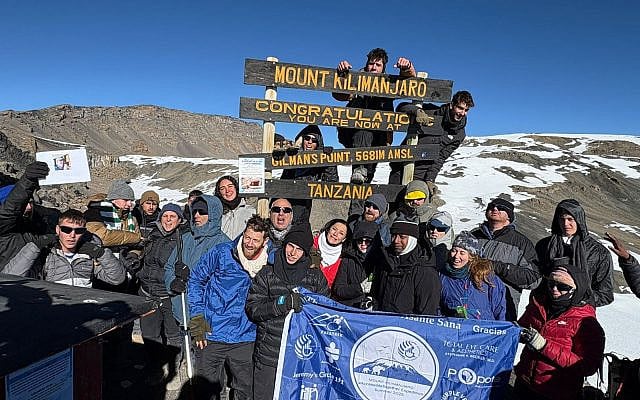
It was 1 AM, below freezing, and every breath took effort as we inched upward. The summit of Kilimanjaro felt impossibly far away. The air was thin, our legs heavy, and each step demanded more strength than we thought we had left. But what seemed impossible alone became achievable together.
For three days, we climbed toward the 5,685-meter summit – hours of hiking in thin mountain air and nights in crowded, basic lodges with no showers, just a bowl of hot water twice a day for “wash wash.”
Cell service was rare. While being unplugged might be considered a hardship, for some of us it was a welcome break from the relentless news cycle at home.
Not everyone reached the summit. A few were forced to turn back due to altitude sickness — a real and serious risk on Kilimanjaro. Their journey transformed into a breathtaking helicopter ride over the slopes. It was a reminder that each person’s path is unique — and that there is more than one way to experience the mountain.
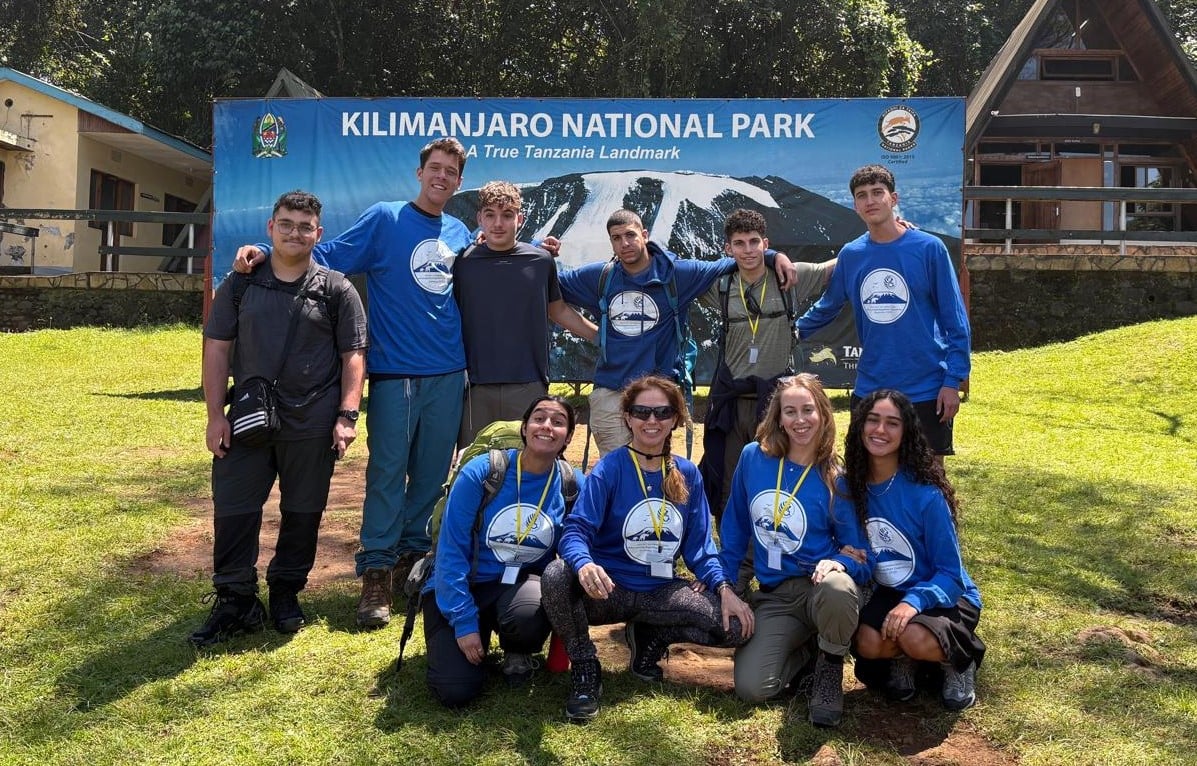
We began this journey as 48 hikers — including eight teens from Jeremy’s Circle — brought together by Accessibility Accelerator (USA) and Access Israel to Kilimanjaro, the highest mountain in Africa and the tallest free-standing volcanic mountain in the world.
Among us were women in wheelchairs, climbers with partial or full blindness, participants wounded in the Swords of Iron war, others living with PTSD, some on the Autism spectrum, and more. Some relied on innovative adaptive trekkers designed by Paratrek and modified by Adaptive Design, which allowed them to tackle rocky slopes through teamwork, trust, and determination.
From the north of Israel came seven teens displaced or living under fire, soon to enlist in the IDF. From Jeremy’s Circle came teens coping with a double burden: growing up with cancer in their young families, while also carrying the weight of war and uncertainty.
How This Journey Came Together
So how did such a diverse group come together on one mountain? The idea began with Jeremy’s Circle’s new Board Chair, Dr. Stephanie Becker, an experienced adventure traveler who had climbed Kilimanjaro before. Wanting to give the teens this extraordinary challenge, she mentioned the idea to fellow Ramaz High School alum Jamie Lassner, Executive Director of Accessibility Accelerator. Together, they brought Israelis and Americans, teens and adults, people with and without disabilities, onto one mountain — each carrying their own story and struggle.
Trust, Empathy, and Strength on the Mountain
What struck me most was the trust. People who are fiercely independent in daily life put their safety in the hands of others. Our teens noticed and stepped in, helping with the climb, and even learning firsthand what it felt like to hike blindfolded and rely completely on another.
They discovered that resilience doesn’t mean doing everything alone. It can mean standing side by side, giving support when needed, and finding strength in each other.
As one Jeremy’s Circle teen put it:
Every time it was difficult for me, I saw my friends with disabilities continuing without giving up, and that gave me strength to continue.
Another stated:
I came to the expedition without knowing everyone, but I left with a feeling of a new family.
From Supported to Supporting
For our teens, the climb was more than a physical challenge. It was a chance to move from the supported side to the supporting side — to discover new inner strengths, grow in empathy, and build confidence for the road ahead.
Both they and their parents later told me, publicly and privately, how transformative the experience was. The lessons they learned — about resilience, empathy, and the power of community — will carry with them into the army, into national service, and into life.
As one teen said simply:
Thanks to the journey, I became a better person. The power of the group was enormous — each and every one committed to the mission, and that encouraged me to continue to the summit. I felt like we were a family.
Don’t Say No, Say How
On Kilimanjaro, the phrase that guided us was clear: don’t say no, say how.
Whether climbing in a wheelchair, carrying invisible wounds, or walking with physical injuries, the question was never if — it was always how.
That spirit carried us to the top. Through shared determination and mutual support, we became more than a group of hikers — we became a community where individual uniqueness became collective strength.
One Jeremy’s Circle teen told me on the way down:
I only made it to the top because I had the support of my new friends.
Looking Forward
For the teens, this was more than a climb – it was a life lesson in resilience, empathy, and community. For me, as CEO of Jeremy’s Circle and as a parent, it reaffirmed what I deeply believe: resilience grows through inclusion, partnership, and mutual support.
As Jamie Lassner, CEO of Accessibility Accelerator, said:
This expedition is much more than climbing – it’s a declaration about building an accessible world for everyone. Our mission is clear: to prove that when there is unity, empowerment, and accessibility, nothing is out of reach. The summit belongs to everyone.
We are deeply grateful to Accessibility Accelerator, Access Israel, and the private donor who made it possible for Jeremy’s Circle teens to join this inspiring expedition.
The climb to the summit of Kilimanjaro may be behind us, but the personal journeys of each and every one of us continue. And as we’ve learned on the mountain, no challenge is too great when we face it together.