Like sheep or like soldiers?
When I was 12, I dreamed of becoming a lawyer — the kind who would stride into a courtroom, deliver dramatic speeches, and win over the jury.
That fascination never became a career, though my love of legal dramas endures.
But as the High Holidays approach, that courtroom fascination takes on a deeper meaning. I’ve learned that my love of courts and trials stops at the defendant’s table.
Few of us want to be on trial. There is no glamour there — only dread.
That is what the days before Rosh Hashana feel like: a race toward a trial we cannot delay or escape. The One who created us, governs every facet of our being, knows past and future, and dwarfs the universe, before whom our lives are but a blink, will sit in judgment.
The courtroom opens, the Judge takes His seat, and God looks at all we are and are not — who we’ve become, how we’ve failed and succeeded — and judges us.
And yet this reality still grants us a choice. Not about whether or by whom we’ll be judged, but about how we will stand in judgment.
* * *
This Shabbat, on the eve of Rosh Hashanah, we read Parshat Nitzavim. It brims with pathos and speaks directly to this moment. It proclaims teshuvah — return and repair — and assures us God longs for our return.
Moses addresses the children of those he led from Egypt, telling them they are standing — nitzavim — before him to renew their covenant with God.
This covenant is not their parents’ alone. It did not begin or end at Sinai. It is theirs, their children’s, and their children’s after them. It is eternal, precious, and belongs to all.
The word nitzavim itself is powerful. It carries a firmer, more intentional sense than the ordinary word for standing, omdim. Nitzavim means not just to stand, but to stand firmly. The people are not merely present; they are poised and taking a stand in covenant.
Rabbi Benny Lau teaches that this purposeful standing offers a key to Rosh Hashanah. We cannot opt out of judgment, but we can choose our posture — how we stand before God.
The Mishnah teaches that on Rosh Hashanah all humanity passes before God: “On Rosh Hashanah all mortal creatures pass before Him kivnei maron.” What is kivnei maron? Its most common interpretation is “like sheep,” passing one by one. But some manuscripts read kivenumeron, “like a regimental inspection.” These two images are powerful — and they are not the same.
To stand like sheep is to come in brokenness. Sheep shuffle forward one by one—vulnerable, unable to hide, exposed before the shepherd. This posture confesses dependence. It is humility, fear, and a plea for mercy. We stand as creatures before our Creator, conscious of how small and fragile we are, asking for mercy from within our vulnerability.
To stand like soldiers is to come in strength. Soldiers march in formation, shoulders squared, uniforms polished. This posture projects dignity and resolve — discipline, accountability, and pride in what we have built.
We stand as loyal servants before our King, ready to display our faithfulness, our values, and the battles we have fought — to prove our worth.
So which should we be — sheep or soldiers?
* * *
I remember a rabbi in seminary teaching that the only way to merit a good judgment on Rosh Hashanah was to prove to God that we were a good investment — to stand like a soldier and argue that God’s work in this world needed us.
For years, I tried to adopt that posture.
Then came the years I faltered. I could imagine God looking at the record of my year with serious objections — asking hard questions about whether His investment in me had been well used.
It was in those years that I discovered the power of the sheep metaphor: that there is holiness in admitting failure, that there is grace in standing flawed, small, ever struggling — and pleading for mercy.
That maybe God doesn’t want my perfection, but my honesty.
Over time, I’ve come to believe both stances are valid. Some years, we are sheep, some years, soldiers.
What matters most is not which one we choose, but that we choose at all. That we refuse indifference. That we approach Rosh Hashanah with intention, awake to the fact that judgment is imminent. Apathy is the real danger — not fear, not pride, but apathy.
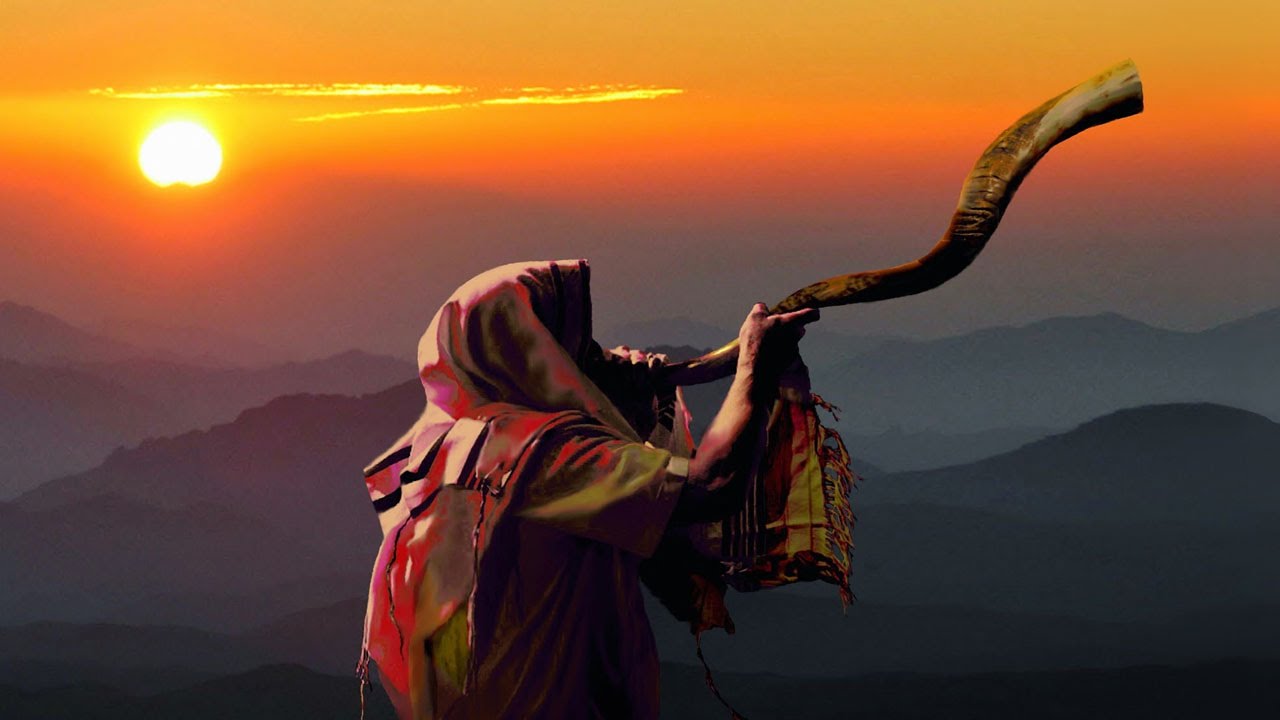
The Hasidic masters tell a story of a rebbe searching for someone to blow the shofar. He listens to the most skilled, the most righteous. And then he chooses the one who comes forward with tears, offering his whole heart.
Because God doesn’t ask for perfection. God asks for honest and intentional presence.
That is the gift of Rosh Hashanah: the chance to stand before God as we really are — sheep or soldier, broken or strong — and to let the shofar cut through our numbness and call us back to life.
The trial is already set. The Judge is already seated. Our only task is to stand.