
Leadership With Heart
Don’t Wait Until Death to Learn How to Live
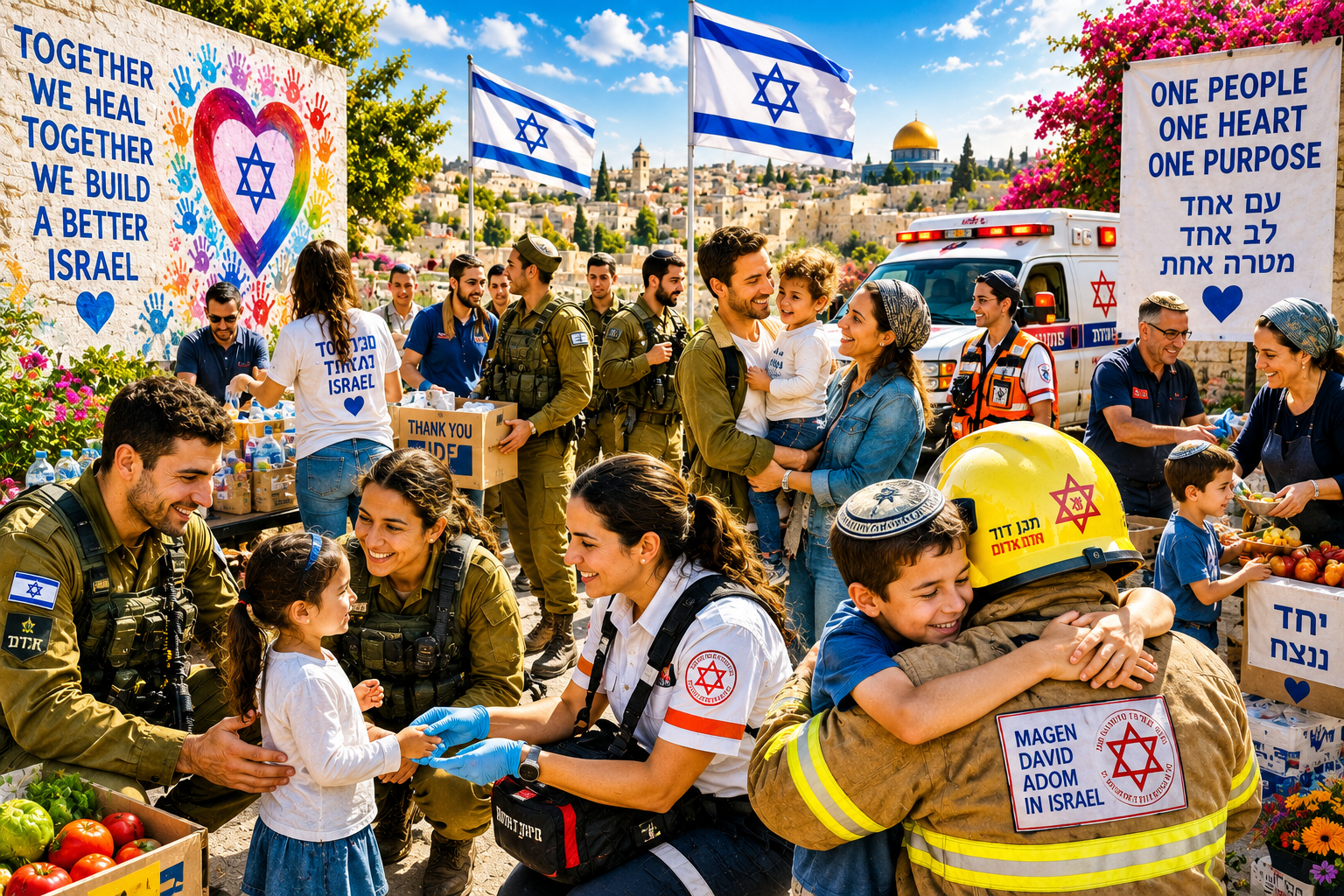
AI generated image
Mitch Albom’s The Five People You Meet in Heaven is a novel about Eddie, an aging amusement-park maintenance worker who dies trying to save a child and then meets five people in heaven. Each encounter helps him understand a different part of his life. Read through a Jewish lens, the story becomes a meditation on responsibility, sacrifice, forgiveness, love, and purpose—five enduring lessons about how to live.
Its deepest message echoes a Jewish idea that has endured for centuries: every person is connected to others, and every action leaves a trace. In a time of war, hostage anguish, political exhaustion, and private grief, that is not sentimental language. It is a moral fact.
Albom’s five encounters aren’t just plot devices—each one teaches something essential about being human. We learn that our lives are quietly connected to strangers in ways we never see, that giving something up for someone else has real meaning, that holding onto anger only hurts us, that love doesn’t end with death, and that every life has a purpose. Seen through a Jewish lens, these aren’t just lessons from a novel—they echo something Judaism has taught for centuries: no one lives for himself alone, and no life is ever wasted.
1. Responsibility (Arvut)
The first lesson is not merely that people need community. It is that we live in arvut—mutual responsibility—and that no life is sealed off from another. A single choice, a careless word, a hidden act of cruelty, or an unexpected kindness can travel farther than we ever know, touching strangers and shaping consequences long after the moment has passed. Jewish tradition understands this with unusual clarity: our actions have consequences far beyond the moment in which we act, and both harm and goodness continue to ripple outward long after we are gone.
That is why Kol Yisrael arevim zeh bazeh—all Israel are responsible for one another—is more than a slogan. It means that what one person does can bless or burden others in unseen ways, and that none of us lives sealed off from the rest. In Israel’s current reality, that truth feels painfully concrete: families, soldiers, hostages, rescuers, and ordinary civilians are bound together in ways that no rhetoric can fully capture.
2. Sacrifice (Korban)
The second lesson is the one modern culture resists most. We are trained to treat sacrifice as loss, inconvenience, or even pathology. But Jewish life has never been built on the fantasy that fulfillment comes from maximizing the self. It is built on covenant, duty, and the understanding that meaningful lives are shaped by the difficult choices we make, what we give up for others, and who we choose to become.
In Torah, korban means drawing near: true sacrifice is not loss for its own sake, but the willingness to pay a price in order to do what is right and come closer to God. That idea resonates sharply in Israel today, where sacrifice is not theoretical. It is found in reserve duty, family separation, exhausted medical teams, volunteers, emergency responders, and ordinary citizens carrying burdens they did not ask for. Albom’s point is that sacrifice does not only cost; it confers shape and dignity. Torah says something similar, though more demanding: holiness sometimes requires real sacrifice.
3. Forgiveness (Teshuvah)
The third lesson—that anger corrodes and forgiveness liberates—is difficult to hear in a season when Jewish anger is rooted in real trauma. Still, Judaism insists that resentment cannot be allowed to become identity. Rage may be understandable, even justified, but it cannot be a permanent place to live. Torah and Jewish tradition alike point toward teshuvah, return, as a way out of moral captivity.
Teshuvah is not only remorse. It is return: back to truth, back to responsibility, back to the self one is meant to become. That is why Albom’s lesson lands so powerfully. If the past can be repaired, then a wounded person is not condemned to live forever inside damage. A nation, too, must believe that return is possible—return to moral clarity, healing, and the patient work of building a stronger future.
4. Love (Ahavah)
The fourth lesson is gentler but just as important. Love doesn’t disappear when someone dies—it changes shape. Albom imagines loved ones reuniting in heaven, but Jewish tradition teaches something related and, in a way, more demanding: the dead stay present through what the living carry forward—memory, ritual, and duty. We say Kaddish, mark yahrzeits, name children after those we’ve lost, and carry on the values they lived by. In this sense, love isn’t erased by death; it becomes something we do, generation after generation, like a promise kept.
That is the Torah’s deeper meaning of ahavah: not sentiment, but faithful giving. V’ahavta l’re’acha kamocha—love your neighbor as yourself—is not a command to feel the right emotion on cue; it is a demand to act with loyalty, care, and moral seriousness. In that sense, love is not less than feeling—it is more. It is the willingness to hold another person’s life as part of one’s own responsibility.
5. Purpose (Avodah)
The fifth lesson may be the most comforting and the most challenging: Eddie’s life mattered more than he knew. That is a profoundly Jewish claim. Life is a journey of growth—to learn, to mature, to help others do the same, and to return to Hashem having refined the soul rather than merely endured the years.
This is why Torah morality matters. We are not passive creatures carried by fate, but free and responsible moral agents, given the dignity—and the burden—of choosing between good and evil. That freedom is what makes our lives spiritually serious: each decision can lift the world, or diminish it; each act can become part of our avodah—service, work, and worship—or a step away from it. Meaning is not reserved for the celebrated, the brilliant, or the powerful. It belongs to the ordinary human being who shows up, helps, builds, and becomes.
That is why Albom’s novel still resonates. It speaks to a generation tempted by cynicism, numbness, and the sense that history is too violent to be redeemed. But the book refuses nihilism. It insists that every act leaves a trace, every person matters, every loss is seen, and every life is part of a larger design, even when that design is hidden from us while we live.
The Jewish Bottom Line
If that sounds like a Jewish message, it is because it is. Torah never promises a painless world. It promises a meaningful one. In Israel, and across Jewish life, that may be the most important message now: we are bound to one another, we are accountable to one another, and even in a fractured age, our lives can still become instruments of blessing.
Related Topics
Related Posts