


D’var Torah: Ha’azinu – Hope Amid Atrocities
This week’s Torah portion, Ha’azinu, is Moses’ final song—a lament for the consequences of forgetting God, a recounting of hardship, but also a profound message of hope. It is read just before Rosh Hashanah, and its words feel especially relevant and eerily so this year.
I write from a place of vulnerability. I am seeking answers where there seem to be none. As a proud American citizen, proud Jew, and an ardent Zionist, I’m deeply concerned by the rise of antisemitism in our own backyard. In 2024, the Anti-Defamation League (ADL) recorded 9,354 antisemitic incidents across the United States—a staggering 5% increase from the previous year and the highest level since the ADL began tracking this data in 1979. These incidents include harassment, vandalism, and assault, averaging more than 25 targeted anti-Jewish incidents per day. Notably, for the first time, a majority (58%) of these acts were tied to opposition to Israel and Zionism, amid widespread campus and street protests, especially after the October 2023 Hamas attack on Israel.
Some of the most shocking acts of violence occurred in cities like Boulder and Washington, D.C. In Washington, there was a brutal murder of a Jewish couple leaving an event at the Capital Jewish Museum. On May 21, 2025, Yaron Lischinsky, a German-Israeli staff member at the Israeli Embassy, and Sarah Milgrim, a 26-year-old American Jew also working in embassy public diplomacy, were fatally shot. They were reportedly planning to become engaged. The suspect, Elias Rodriguez, a 30-year-old man from Chicago, was apprehended at the scene. He allegedly shouted “Free, free Palestine!” during the attack and later admitted to the killings, stating he did it “for Gaza.”
Meanwhile, in Israel, the situation remains dire. Terrorist attacks persist, and rockets continue to be launched—not only from civilian areas in Gaza, but also from Yemen—into the heart of Israel. Hamas deliberately hides among women, children, schools, mosques, and hospitals to use innocent people as human shields. Tunnels are dug beneath residential buildings, shelters, and hospitals, placing the most vulnerable in harm’s way. The terror has torn the fabric of communities, leaving grief, fear, and anger in its wake.
How can we possibly be hopeful when innocent people are being murdered, hostages held, and families shattered? The grief feels overwhelming, the fear unrelenting, the anger consuming.
And yet, when I think about Ha’azinu, I personally see hope—quiet, but real. Moses reminds us that God’s portion is His people, and Jacob is the lot of His inheritance. Even when we fail, even when we stumble, God’s care doesn’t go away. The portion points toward eventual restoration and justice, showing that suffering isn’t the final word. For me, the hope in Ha’azinu is in knowing that we endure, that redemption is possible, and that even after hardship, life, courage, and the possibility of renewal remain.
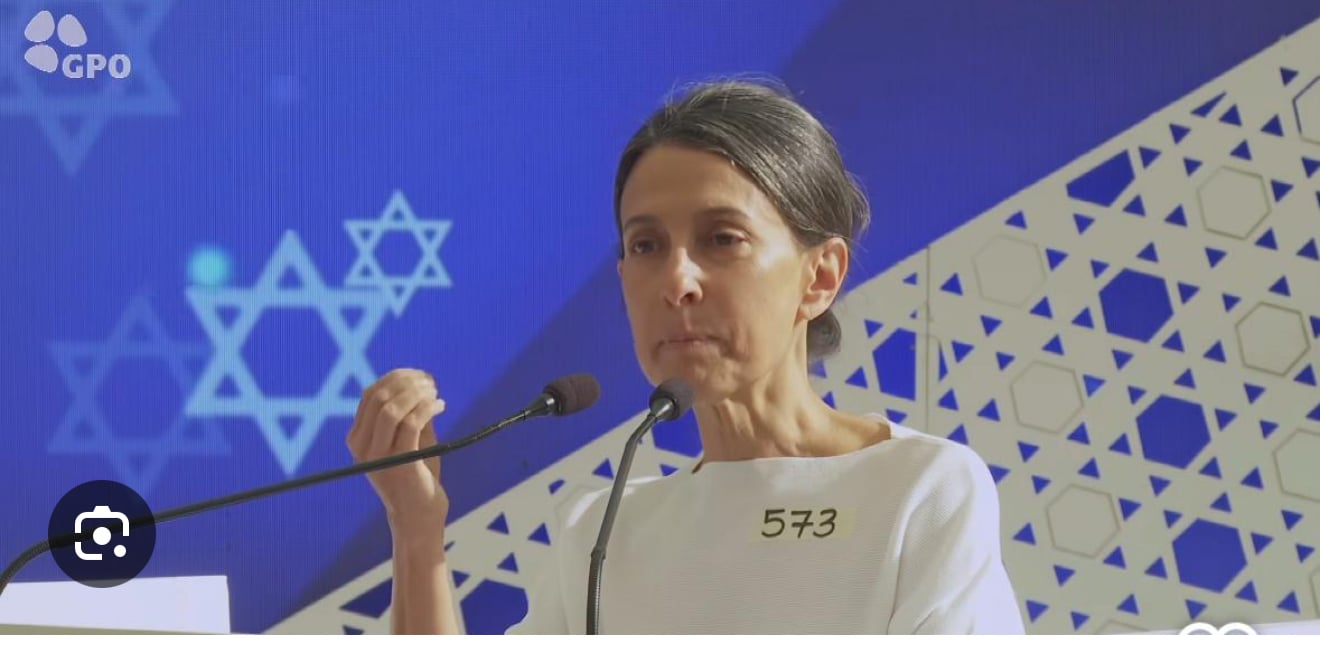
I see that hope alive in the courage of women who have faced unimaginable trauma yet continue to act, lead, and advocate for life and justice. One such woman is Rachel Goldberg-Polin, whose son, Hersh Goldberg-Polin, was taken hostage by Hamas during the October 7, 2023 attacks. After enduring 328 days of captivity, during which he was tortured and starved, he was brutally murdered on August 29, 2024. His body, along with those of five other hostages, was discovered in a Hamas tunnel in Rafah, Gaza. An autopsy indicated that all six were executed from close range just 1–2 days before their bodies were found.
Despite her unimaginable pain, Rachel has become a global advocate for raising awareness and seeking justice for the victims, meeting with world leaders, speaking at the United Nations, and tirelessly working to honor her son’s memory. Her strength and resilience remind us that human beings are capable of extraordinary courage, and that light persists even in darkness.
Another example is Emily Damari, a young woman who was shot in her hand and leg when Hamas abducted her during the October 7 attacks. She lost two fingers but survived. After enduring months of captivity, Emily was released and has since become a symbol of resilience, advocating for hostages still held and raising awareness of the atrocities committed by Hamas. Her story demonstrates the human capacity for courage and action even after unimaginable suffering.
These women are just remarkable, and their stories are only a glimpse of the countless people I’ve seen in Israel who, despite unimaginable circumstances, rise above their own suffering to give strength to others. Volunteers flood hospitals, shelters, and community organizations, helping to save lives, care for the injured, and support orphans and families shattered by terror. Their courage, compassion, and determination are living examples of hope in action—they remind me that even in the darkest moments, human beings can choose to protect, heal, and rebuild.
Perhaps that is exactly why Rosh Hashanah comes before Yom Kippur. We cannot repair ourselves, or the world, from a place of hopelessness. First, we must hold hope—even tremblingly, even reluctantly. Hope allows us to face reality honestly, to grieve fully, and then to move toward t’shuva—return, repair, and renewal.
All I can do is hope and pray—for our people, for the hostages, for the families living in fear, and for the world—that truth, goodness, and kindness will ultimately override evil. That one day, we will live in peace in our homes, in our communities, and in the world.
Ha’azinu teaches that hope comes first, even before t’shuva. It is the spark that allows us to endure, to mourn, to rebuild, and to believe in life, justice, and renewal. Even as terror and hatred rage, even as grief threatens to overwhelm us, hope is the lifeline that lets us keep moving forward, together, as a people, toward a future of safety, peace, and redemption.