
Author, Educator and Father - Brother to All
Educating on Israel: The Power of Nuanced Teaching
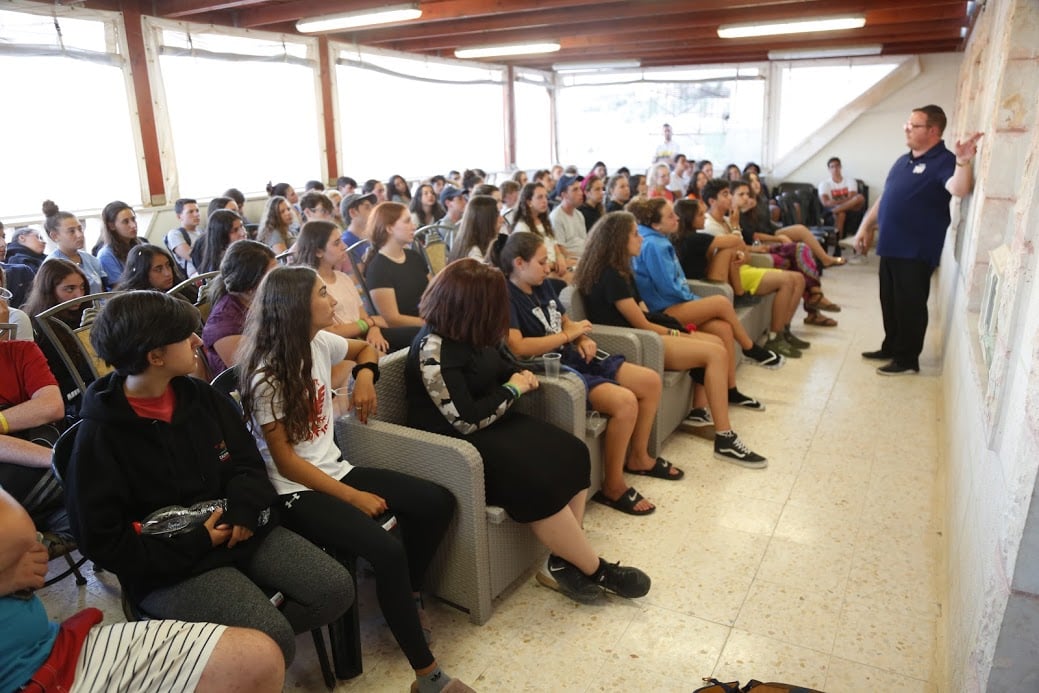
Rabbi Uri Pilichowski Teaching a Nuanced Lesson. (Credit: Gila Pilichowski)
In too many Jewish classrooms, Israel is taught like a cause that demands blind loyalty. Wave the flag, repeat the approved lines, and never acknowledge the hard questions. This approach feels safe because it builds solidarity. Yet after years of teaching Torah, Zionism, and Israeli history to students across the world, I’ve come to believe this approach sells our young people short.
We don’t need to pick sides on every Zionist issue. In fact, rushing to do so often harms the very education we’re trying to provide. Real teaching means facing complexity where it exists and holding firm ground where it doesn’t. That is how we raise Zionist Jews who understand Israel not with slogans, but with appreciation earned through honest struggle.
Many of the most crucial questions demand nuance more than narrative.
Take settlements versus territorial compromise. For some, every community in Judea and Samaria represents the fulfillment of biblical promise and a vital security asset. Others see repeated offers of land for peace as the only realistic path out of endless conflict. Both positions draw on history, security data, and Jewish texts. Students need to encounter the depth of feeling on each side. They need to understand the of those who view settlement as the continuation of Zionism, and the pragmatic worry of those who fear perpetual conflict. Shielding students from one side or the other leaves them unprepared for the real debate.
The same holds for the theological meaning of the State. Many religious Zionists experience 1948 and 1967 as the “beginning of the flowering of our redemption.” Yet significant voices within tradition see the state as a remarkable but still human achievement, not yet carrying messianic weight. Our students should study both perspectives. They should learn how different readings of Jewish history shape how we live in this era. Suppressing the tension weakens Zionist fervor and our goal is to teach that fervor.
A last example is Israel’s relationship with its Arab population. The facts are impressive, Arab citizens vote, serve in the Knesset, study in universities, and receive medical care far beyond what is available in neighboring countries. At the same time, the demands of security, checkpoints, barriers, military operations, create genuine pain and raise difficult questions about balancing democracy with survival. A teacher who offers only celebration or only criticism distorts reality. The truth sits in the tension of Israel striving to be both a Jewish homeland and a decent society under constant threat. Letting students feel that tension builds deeper appreciation.
Other questions, however, do not call for balance. They require moral clarity, even as we examine the opposing claim so our students can understand the flaws of its positions.
Does Israel have a right to exist? Yes, unequivocally. Three thousand years of Jewish history, continuous presence, and international recognition affirm it. The counter-narrative of dispossession must be studied, so it can be answered with facts.
Does Israel seek a “Greater Israel” from the river to the sea, or beyond? No. Mainstream Israeli governments have repeatedly offered compromise. While some voices on the fringe dream of maximal borders, state policy has consistently chosen pragmatism over ideology. Students should know the fringe voices exist, and understand why Israel as a whole rejects them.
Is Israel a colonial, genocidal state? The accusation collapses under scrutiny. Jews are returning to their indigenous homeland, not imposing foreign rule. In every conflict, Israel has taken measures to protect civilians that no other army in similar circumstances matches. Teach the libel in full, then dismantle it with evidence. Young people who see the accusation exposed become more knowledgeable Zionists than those who were simply told to reject it.
Calling for nuance is a call for intellectual honesty. Jewish tradition, from Beit Hillel in the Mishna to today’s great Zionist scholars have always marked serious Jewish thought. The Talmud is built on argument not singular viewpoints. Zionism itself emerged from unflinching analysis of Jewish reality. Israel educators’ classrooms should reflect that spirit.
In an age when anti-Israel voices flood campuses and social media, simplistic training fails. Students armed only with talking points falter when challenged. Those who have wrestled with complexity stand firmer. They understand Israel because they have come to see its truth for themselves.
Jewish educators carry a sacred responsibility. In our classrooms, the next generation’s relationship with Israel takes shape. Where questions allow for honest disagreement, educators need to teach both sides with respect and depth. Where the moral lines are clear, hold them without apology. If we do this well we will raise Zionist Jews who engage the world thoughtfully, passionately, and with integrity. That kind of education strengthen the Zionist dream.
Related Topics
Related Posts