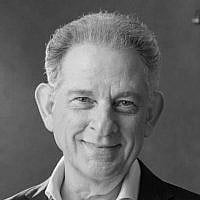
Einat Wilf – The Woman Who Assaulted My Assumptions
Yom Kippur is coming soon. After that, the Israeli election. It’s possible the order should be reversed, we’ll see.
In any case, as with every year, I’ll have plenty of sins to repent for. My ribs may break from being beaten. Tellingly, though, we Jews atone collectively, the confessional is in the plural. I’m not sure if “imperialism” is in the Al Chait, but — especially since October 7 — it should be, because we are indeed imperialists, just not in the way the kaffiyeh-clad students at Columbia claim.
No, we’re intellectual imperialists. Our sin is the arrogance of our assumptions, the notion that others, specifically the Palestinians, think like we do, want what we want, and have the same priorities.
Wrong. On all fronts.
So hopefully by Neilah this year my old illusions will slumber behind closing gates. If so, my primary “agent of awakening” will be Einat Wilf, former Member of Knesset from Labor, having served Shimon Peres, Ehud Barak, and Yossi Beilin, architect of the Oslo Accords. Now Wilf is a roving — though never raving — advocate of “let’s get real” with regard to the conflict.
Joining her as co-author of some of her books (the latest, October Return) is Adi Schwartz, who used to write and edit for Haaretz, no less. In other words, if Israel held a “fallen leftists” competition, these two would top the podium.
And what was the cliff they fell off of? The belief that there were Palestinian moderates, of which there may be a few, but not many, or not nearly enough, which was proven not so much by the murderers and rapists and flesh-burners of October 7 — we knew Hamas was barbaric — but by the jubilation and ululations that greeted the terrorists when they returned to Gaza’s streets, and the relative silence, later lamely broken, by the Palestinian Authority in Ramallah.
And so, a reckoning is called for, a reordering of things. To that end, Einat Wilf has formed the Oz Party (in Hebrew “oz” means boldness, courage) and is standing for election in the coming cycle. I hope they win seats but, being American, I can’t vote.
What I can do is confess my sins of credulity, the things I once believed in but no longer do. I do this not as a personal catharsis, but because many of the misconceptions I held dear are still subscribed to by millions of Jews, both in the diaspora and in Israel, where they CAN vote.
I do it, further, to call attention to Wilf’s clarity of perception, which I believe is a core element of leadership. To me, Einat embodies the name of her party. Mercilessly — yet smilingly, somehow — she interrogates our shibboleths, of which, around her, few survive.
To wit, two examples.
We assumed that —
1. Both parties to the conflict have the same priorities.
Wrong. Oddly, the most correct assessment of Palestinian sentiment came from a Brit who (per Einat) had “no love of Jews.”
In 1947, as Britain washed its hands of the Mandate, Ernest Bevin, then Secretary of State for Foreign Affairs, told the House of Commons:
“For the Jews the essential point of principle is the creation of a sovereign Jewish State. For the Arabs, the essential point of principle is to resist to the last the establishment of Jewish sovereignty in any part of Palestine.”
He was right. This was an “all or nothing” game from the start, there was no parity of priorities. We wanted a state of our own, they wanted us NOT to have a state of our own…MORE than they wanted a state of their own!
That may sound bizarre, but it’s true: Palestinian deliverance was always based on Israel’s destruction, meaning ANY Jewish sovereignty between the river and the sea was not only unjust, it was a sacrilege, even if it was the size of a postage stamp in the sand.
And why was this? For a very deep reason which, again, eludes most in the West. We all thought —
2. This is essentially a territorial dispute, to be resolved by drawing borders on a map.
Wrong. When it’s “all or nothing,” lines and partitions are pathetically useless. I used the word “sacrilege” above for a reason: for the Palestinians this was — and remains — a “holy war.” Just ask Sinwar (thankfully, you can’t). He didn’t call the massacre the “kibbutzim flood” or the “mutilate-kids-at-a-rave-flood.”
He called it the “Al Aqsa Flood,” invoking the third-holiest site in Islam. To understand the power of that symbol, you have to know how Islam viewed the Jews. Here’s the world’s shortest history:
Mohammad didn’t know what to do with the children of Isaac. On the one hand, Jews were infidels (kafirs) and should have faced “conversion or the sword.” On the other hand, they were cousins, and (like Christians) “people of the book,” and Mohammad revered those books.
What resolved the dilemma? “Dhimmi status,” a policy that essentially told Jews, “you have a place if you stay in your place.” In other words, Jews were protected, but subjugated, second class.
What did “protected” mean? Jews could own property, practice Judaism (discreetly), maintain their own religious courts and were even exempted from serving in Islam’s campaigns of conquests, by paying the “jizya” tax.
On the “subjugated side,” Jewish buildings couldn’t be higher than Muslim ones, that “jizya” tax was involuntary, Jews couldn’t bear arms, and they were expressly forbidden from riding horses, though they could ride donkeys, but only sidesaddle.
You might think my last sentence was a joke but, as Einat often recounts, it became anything but funny. As Jews began to return to their ancestral homeland in greater numbers, there were skirmishes in which the Arabs saw Jews riding horses, facing forward and shooting guns.
This was an astonishment, an outrage. Worse, it seemed to herald further horrors to come, and…
It did.
In 1949, a ragtag army of Jews, many bearing Nazi tattoos on their arms, won a war against five Arab armies and solidified a claim for a nation state within the Muslim Middle East.
This was unthinkable. The dhimmis had dominated, the subjects were now sovereign. The existential humiliation of this — and not just the exodus of Palestinians, however tragic — was the deeper “nakba,” the deeper catastrophe, a dagger at the heart of Islam itself.
This is why so many Arab countries closed their doors to their kith and kin. Resettling them would have conceded Israel’s place and ratified nothing less than a cosmic crime.
What to do? Develop selective historical amnesia. Deny that Jews had roots in the region and, therefore, rights in the region. Paint Zionism as a colonial cancer and keep the tumor before the eyes of the world.
In this context, those who fled Palestine, whether by choice or by force, became not only persons adrift, but symbols of an obscenely enduring injustice, a status that would define them for generations.
What would right the wrong? Only one thing: return.
And who would the Palestinians be in the meantime?
Refugees, no matter where they were or how long they had been there.
– – – –
I will pause here. While Einat and Adi have revolutionized my understanding of history, elections are about the future, not the past. Except, as William Faulkner noted, “the past is never dead, it’s not even past.”
In the context of the conflict, it means that Wilf and Schwartz are profoundly correct that “refugee-hood” and “return” aren’t peripheral to the matter, they’re its essence, and the reason why “the peace process” has never progressed.
This shifts my gaze to the future. We need leaders who perceive, and don’t ignore, core issues. We need people of vision in both senses of the word: they see clearly and have a plan for next steps.
That, to me, is Einat Wilf. I wish her every success.
It’s a tough time for Jews everywhere now. I believe we all need “oz,” the characteristic.
And I believe the Knesset needs OZ, the party, too.
PS. Einat has generously made the manuscript of October Return available at her website: https://www.ozparty.co.il/en