


Examining Extremism, Identity, and Influence
Ekta Diwas: Why Sardar Patel’s Vision of a United India Still Matters
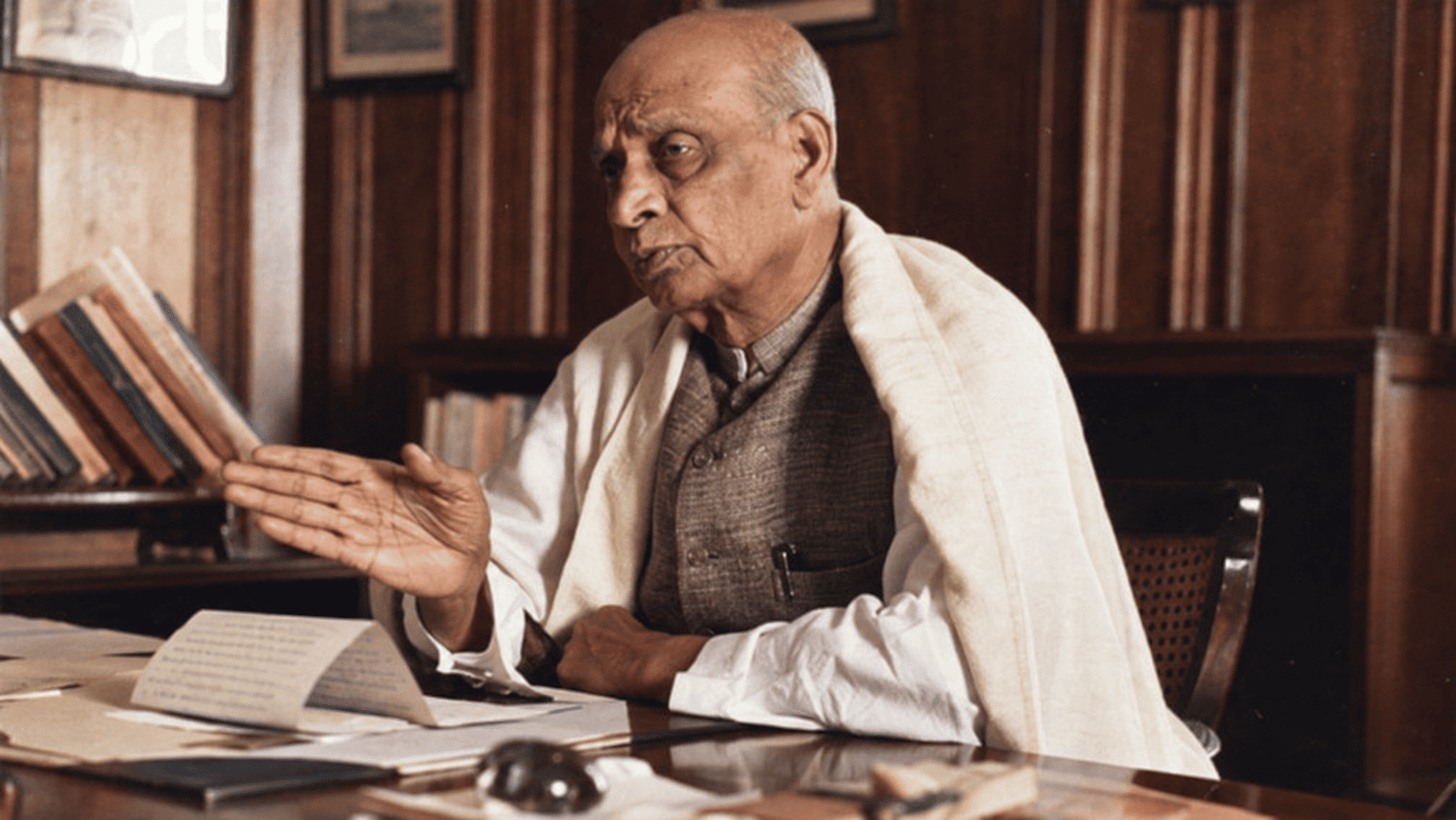
Photo: Sardar Vallabhbhai Patel | Archival photograph, colourised and digitally restored.
India’s National Unity Day is a reminder of one of the most difficult tasks the country faced after independence: bringing hundreds of princely states together and building a nation out of a deeply divided political landscape. Sardar Vallabhbhai Patel was at the centre of that effort.
On October 31, India observes Rashtriya Ekta Diwas, or National Unity Day, marking the birth anniversary of Sardar Vallabhbhai Patel, the country’s first Deputy Prime Minister and Home Minister. For most Indians, Patel is remembered as the man who helped bring the princely states into the Indian Union. But his contribution was much bigger than that. He was dealing with a country whose political future was far from certain, barely weeks after the British had left.
When India became independent in August 1947, it inherited a complicated political map. Alongside the territories directly administered by the British were 565 princely states, each ruled by its own monarch and enjoying varying degrees of autonomy. With British paramountcy coming to an end, their rulers were left to decide what came next. Some entertained the idea of independence, while others were uncertain about joining India or Pakistan.
For the new Indian leadership, this was more than an administrative headache. A country that had just won its freedom risked breaking into smaller political units before it had even found its feet.
Patel recognized the danger early. Working closely with V.P. Menon, who headed the States Department, he set about persuading the rulers to join the Indian Union. Negotiations were often difficult, and not every ruler was willing to cooperate. More than 560 princely states eventually became part of India, although a handful of cases required much more than diplomacy.
Junagadh and Hyderabad were among the most difficult. Hyderabad, in particular, remained outside the Indian Union until September 1948, when the Indian government launched Operation Polo. The operation ended the Nizam’s rule and brought the state into India. It was a reminder that Patel’s approach was not based on persuasion alone. He was prepared to take decisive action when he believed the country’s territorial integrity was at stake.
Patel was the political figure who gave the integration effort its direction and determination. Without that leadership, the process could have been considerably more difficult.
Why Patel’s legacy is being revisited
Patel’s place in India’s political history has become a subject of renewed attention over the past decade. In 2014, the government introduced Rashtriya Ekta Diwas, and in 2018, the 182-metre Statue of Unity was inaugurated in Gujarat. It is now the tallest statue in the world.
The renewed focus has also brought back an old debate about how India remembers its founding leaders. Jawaharlal Nehru occupied a prominent place in the country’s post-independence political narrative, while Patel’s admirers have long argued that his contribution to national integration did not receive the recognition it deserved.
What makes Patel particularly important is that he understood the practical challenges of running a newly independent country. Freedom from colonial rule was only the first step. India needed a functioning administration, strong institutions and a government capable of exercising authority across an enormous and diverse territory. Patel’s work in integrating the princely states was central to that effort.