

Energy Without Geopolitics: The West Misreads Iran
In a world where energy security is more intertwined than ever with national security and political stability, separating energy economics from geopolitical realities can become a costly strategic mistake. The experience of recent decades in the Middle East has shown that oil, gas, and energy transit routes are only part of the equation. The other part concerns the political, security, and ideological structures that dominate these resources and vital chokepoints.
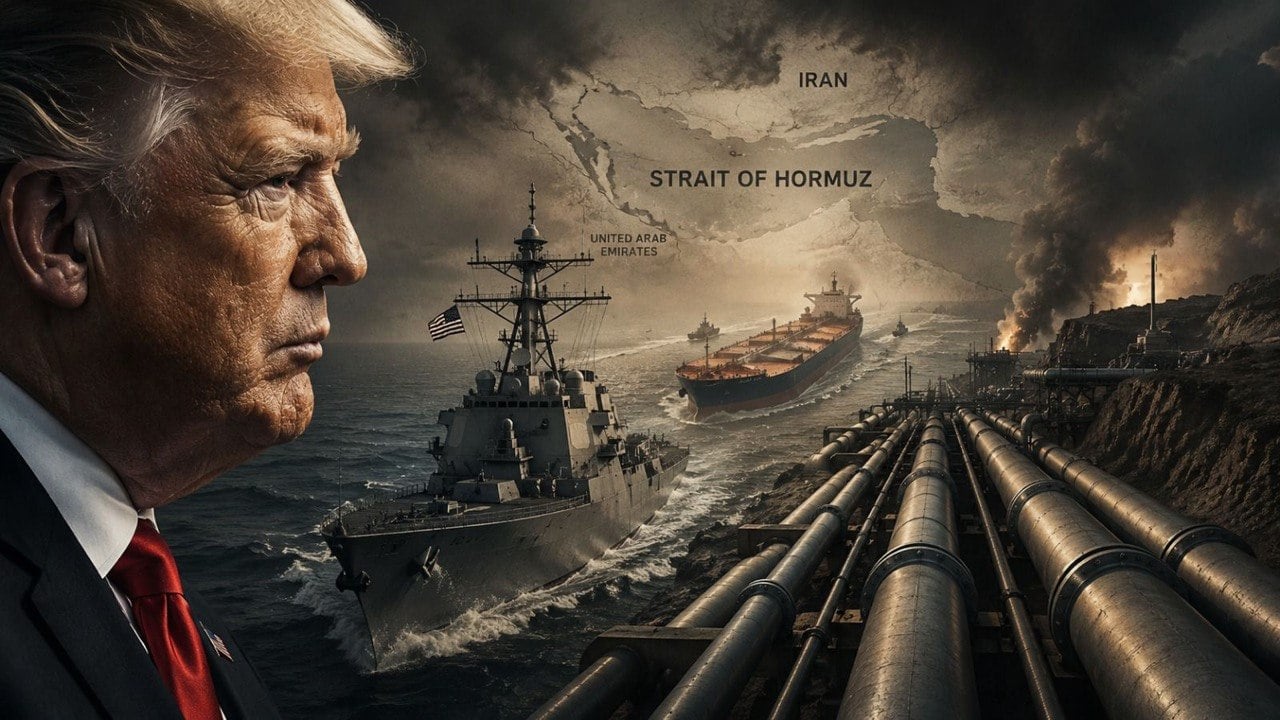
The Strait of Hormuz is one of the clearest examples of this reality. This narrow waterway, which connects the Persian Gulf to the open seas, serves as the main artery for global energy transit. According to international estimates, approximately 20% of the world’s consumed oil and nearly 25% of global liquefied natural gas (LNG) trade passes through the Strait of Hormuz. Therefore, any threat to the security of this passageway is not merely a regional issue but can have far-reaching consequences for the global economy.
Over the past four decades, the Islamic Republic has repeatedly threatened to close the Strait of Hormuz or disrupt energy flows through it in the event of heightened tensions. Many Western governments have viewed these threats as part of Tehran’s deterrence rhetoric and have rarely seen them as signs of a deeper problem. However, the reality is that the dependence of a significant portion of the global economy on a chokepoint constantly exposed to geopolitical tensions constitutes a strategic vulnerability in itself.
The main flaw in Western policy toward the Islamic Republic has been defining energy security primarily in terms of supply and demand. Discussions have often focused on oil production capacity, export volumes, strategic reserves, and alternative transportation routes, while insufficient attention has been paid to a far more decisive factor: the political and security nature of an ideological, apocalyptic regime that controls one of the world’s most sensitive geopolitical points.
As Ariel Cohen pointed out in his analysis in The Hill, any sustainable strategy toward Iran must take into account the role of the Strait of Hormuz in global energy security, but even that view remains incomplete without considering one key element.
For decades, the Iranian people have witnessed Western policy oscillate between pressuring the Islamic Republic and negotiating with it. In this process, Iranian society has often been treated as a secondary variable, whereas developments in recent years have shown that the Iranian people themselves are one of the most important determinants of the country’s and the region’s future. Millions of Iranians, both inside and outside the country, have repeatedly expressed their desire for political freedoms, the rule of law, economic development, an end to the Islamic Republic, and the normalisation of Iran’s relations with the world.
This reality cannot be ignored: the future of Iran will not be determined solely in negotiation rooms between governments. As the experience of many countries has shown, lasting stability emerges only when there is a degree of legitimacy and alignment between the government and society. Without such legitimacy, diplomatic agreements may postpone crises but will not necessarily resolve them.
Within this framework, if negotiations are to be held regarding Iran’s future, the security of the Strait of Hormuz, and the stability of the global energy market, the question will also arise: who possesses the necessary legitimacy and social backing to participate in such negotiations? From the perspective of advocates of transitioning away from the Islamic Republic, Crown Prince Reza Pahlavi is the only political figure who currently enjoys such backing. This issue has been raised in recent years in political circles and in discussions with international policymakers and decision-makers. Supporters of this view believe that his participation in any negotiation or power-transition process could pave the way for political stability in Iran, a reduction in regional tensions, and greater confidence for the international community in the areas of security and energy. According to this perspective, any sustainable solution for Iran’s future must be based on the will of the people and representatives who enjoy sufficient legitimacy and popular support, something that, in the view of many supporters of this approach, is embodied in the political position of Crown Prince Reza Pahlavi.
Meanwhile, as one of the most prominent faces of the Iranian opposition, Crown Prince Reza Pahlavi has in recent years sought to present a vision of a secular, democratic Iran that contributes to regional stability after the Islamic Republic. In his speeches, international conferences, and meetings with Western politicians, he has argued that many crises in the Middle East cannot be properly analysed without considering the destructive role of the Islamic Republic in regional dynamics.
He recently emphasised this point on May 30, 2026, at the Black Sea Security Forum in Odesa, Ukraine. In this gathering, which focused on common security challenges facing countries in the region and the free world, he argued that an independent Ukraine and a free Iran could become factors of stability and regional cooperation instead of centers of crisis. The main message of his speech was that lasting peace is only possible through accountable governments that possess popular legitimacy and are committed to international cooperation.
The importance of this issue has been magnified in the context of developments following the war in Ukraine. Russia’s invasion of Ukraine forced Europe to reduce its historical dependence on Russian energy and seek alternative sources of oil and gas. As a result, the Middle East has once again become one of the world’s most critical regions for energy security.
At the same time, military cooperation between Tehran and Moscow including the use of Iranian drones in the war in Ukraine, has placed the Islamic Republic even more prominently in the focus of European security circles. In such circumstances, internal developments in Iran are no longer merely a regional issue but have become part of Europe’s and the world’s security equations.
From the viewpoint of many Western analysts and available evidence, the Islamic Republic has spent recent years attempting to preserve and expand its regional influence through a network of proxies, including the terrorist groups Hamas and Hezbollah and other aligned actors in the Middle East, with the aim of destroying Israel and promoting antisemitism. Critics of these policies argue that the result has been increased regional tensions and the spread of instability.
This issue is not limited to Middle East security. Houthi attacks on shipping routes in the Red Sea and repeated concerns about the security of the Strait of Hormuz have shown that disruptions in these routes can rapidly affect energy prices, global trade, and supply chains.
For this reason, Israel’s security, Europe’s energy stability, Asia’s economic security, and the strategic competition between Russia and the West are no longer separate files. These issues are increasingly interconnected, and any major development in one can have broad repercussions for the others.
From a strategic standpoint, the main question is not whether to negotiate with the Islamic Republic or not. The central question is whether negotiating with a regime that lacks popular support can, by itself, eliminate the root causes of instability. The experience of the past four decades shows that short-term agreements may reduce tensions, but if the underlying factors of the crisis do not change, the likelihood of the same challenges returning remains high.
Sustainable energy security cannot be achieved merely by increasing oil production or creating alternative transit routes. Real security emerges only when the political and security environment of key energy production and transit regions also enjoys stability and predictability.
Therefore, an energy policy without geopolitics is an incomplete strategy. Just as geopolitics without considering the Iranian people cannot provide a complete picture of the region’s future. Any long-term policy toward Iran must recognise that energy security, regional stability, and Iran’s political future are not separate issues, they are components of a single equation.
Perhaps the time has come for Western policymakers, alongside traditional economic and security calculations, to also answer this fundamental question: Can the world’s energy security be guaranteed without a free, stable, and domestically legitimate Iran?