Engineering for Compassion
Jerusalem is a city filled with history, holiness, and humanity. Among its many organizations dedicated to public service, few stand out as profoundly as ZAKA. Volunteering at their national headquarters has been one of the most humbling and meaningful experiences of my life — a chance to apply my engineering background not just to technology, but to a cause rooted in dignity, respect, and unwavering dedication to life.
What is ZAKA?
ZAKA, an acronym for Zihuy Korbanot Ason (Disaster Victim Identification), is an Israeli volunteer-based organization internationally recognized for its work in emergency response, rescue and recovery, and, most notably, its sacred task of honoring the dead. Founded in the 1990s, ZAKA grew from the work of a handful of volunteers who began responding to terror attacks to ensure that all human remains — even the smallest fragments — were treated with respect and given proper Jewish burial.
Today, ZAKA has expanded into a network of professionally trained volunteers operating throughout Israel and internationally, responding not only to terror attacks and accidents but also natural disasters worldwide. Whether it’s the aftermath of an earthquake in Haiti, a tsunami in Asia, or a mass casualty incident closer to home, ZAKA’s teams are often the first to arrive — and the last to leave.
The Sacred and Delicate Nature of the Work
ZAKA’s mission is not only logistical but spiritual. Their guiding principle is chesed shel emet — the ultimate act of kindness, carried out for those who can never repay it. This involves handling scenes of disaster with reverence and care, collecting every trace of a person’s remains, identifying victims, and ensuring they are buried with dignity. The emotional weight of this work is immense, and it demands both mental fortitude and deep compassion.
Witnessing the environment in which this happens — up close — has given me a new appreciation for what “service” truly means. It’s not glamorous. It’s not easy. But it is profoundly human.
My Role: Engineering Embedded Vehicle Systems
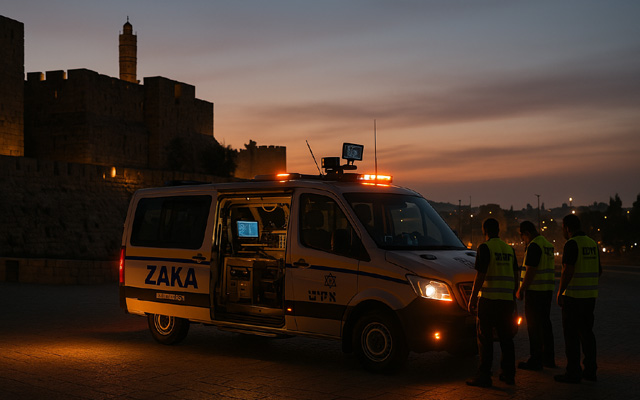
With a background in engineering, my contribution has been focused on ZAKA’s embedded vehicle systems. Their response units are equipped with advanced, customized vehicles designed for rapid deployment, communications, and recovery. These mobile command centers and field units require robust, reliable, and often innovative systems to support their unique operations.
I’ve had the opportunity to assist in prototyping new embedded systems, working on the electronics and firmware that power communications, navigation, lighting, and onboard control systems. In this environment, every second matters — and the systems built must be failproof.
What’s especially meaningful is knowing that the work I do behind the scenes has a direct impact in the field. When a ZAKA responder arrives at a scene, they’re relying on this equipment not only to perform their duties but to preserve human dignity under the most difficult conditions. There is no room for error — and that gives the work gravity and purpose.
The People Behind the Mission
What struck me most from the beginning was the culture at ZAKA headquarters. The people here — staff, volunteers, dispatchers, engineers, medics — are deeply committed and surprisingly warm. Despite the heavy nature of the work, the atmosphere is one of camaraderie and quiet determination. I was welcomed into the team as more than just a technical contributor; I was treated like a partner in a mission that transcends professional boundaries.
In our conversations over coffee I’ve learned from veterans of the field who have responded to some of the most devastating events in recent Israeli history. And yet, their strength is always balanced by humility and empathy. There is no ego here — only a drive to serve.
Why It Matters
Volunteering at ZAKA has taught me that engineering doesn’t always mean innovation for comfort or profit. Sometimes it means designing tools that allow people to do incredibly hard, incredibly important things in the most painful of moments. It means building systems that function in chaos, in trauma, and under the weight of unbearable loss — and still perform with grace and reliability.
Most of all, it means contributing in a way that supports life, dignity, and memory. In a place where death is too often encountered, ZAKA affirms the value of every human soul, Jewish or not, victim or stranger. That’s a mission worth engineering for.