
Writer covering Israel–Africa, Jewish affairs, and Israel worldwide
Enough With the So-Called ‘Cycle of Violence’
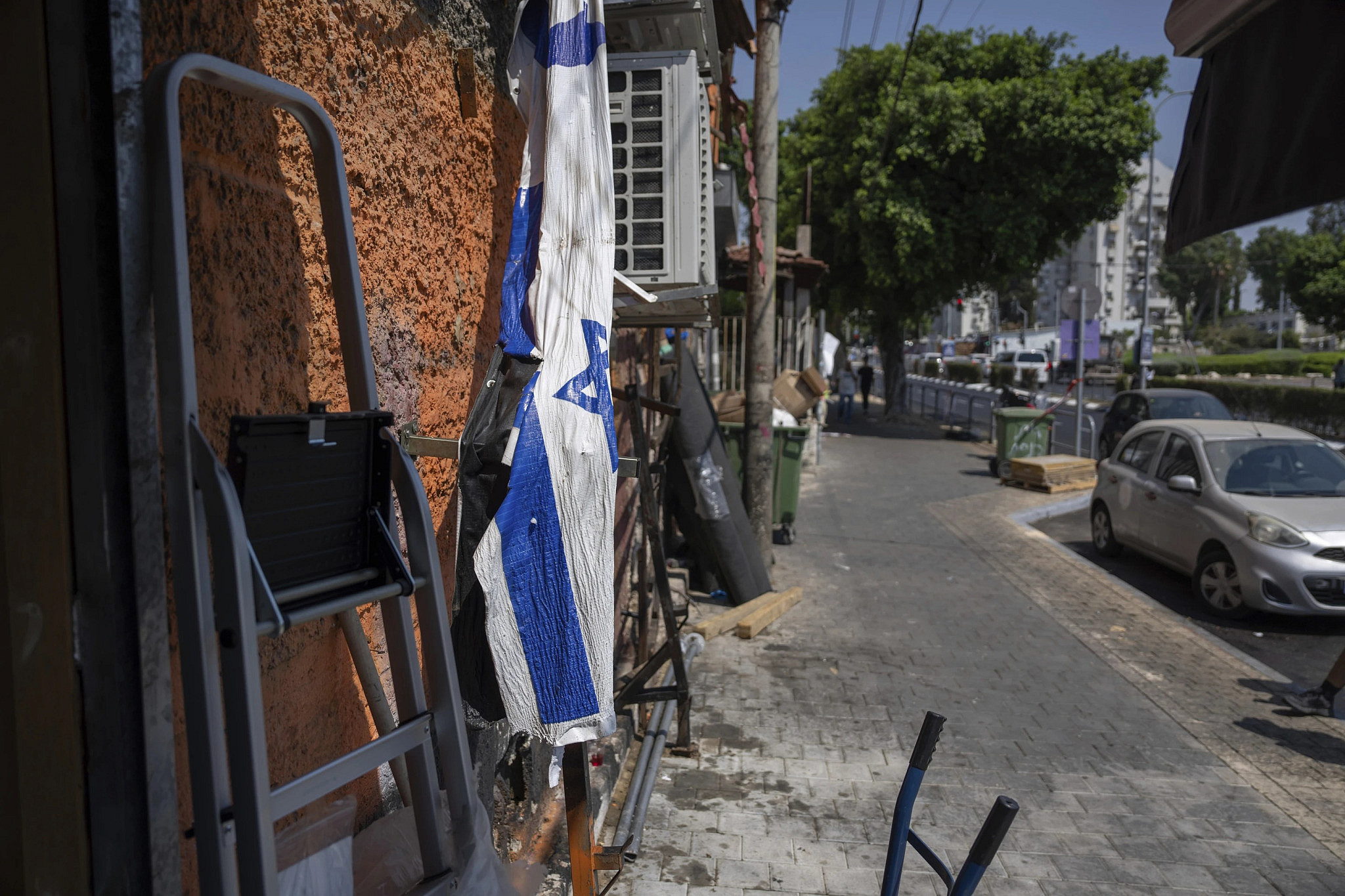
The street after a bomb explosion in Tel Aviv, Israel, Monday, Aug. 19, 2024. (AP Photo/Ohad Zwigenberg)
The most effective weapon ever deployed against Israel wasn’t smuggled through a tunnel or fired from Gaza. It was introduced at a press conference, wrapped in diplomatic language, and christened “the cycle of violence”. Nobody starts anything. Nobody chooses anything. Violence, we are told, simply happens.
For decades, the United Nations, foreign governments, NGOs and the professional activist class have responded to Palestinian terrorism with the same weary refrain: both sides must show restraint, both sides must de-escalate, both sides must break the cycle of violence. It sounds wonderfully balanced until one asks a rather impolite question: what exactly is the “other side” of blowing up a bus full of civilians?
During the Second Intifada, more than 1,200 Israelis were murdered and thousands more injured in a relentless campaign of suicide bombings, shootings and terrorist attacks deliberately aimed at cafés, restaurants, buses and shopping malls. It was the murder of ordinary civilians going about ordinary lives.
When Israel responded by pursuing the planners, dismantling terrorist networks and raiding the villages and cities where those responsible operated, civilian casualties sometimes occurred—as they tragically do in urban warfare. Yet almost immediately, the world reached for its favorite euphemism. A suicide bomber walking into a Tel Aviv café and detonating himself among families somehow became morally intertwined with Israeli soldiers hunting down the men who planned it. One was terrorism. The other was counterterrorism. But through the art of moral laundering, both were transformed into a regrettable “cycle.”
Like many international double standards, it somehow applies only to the world’s only Jewish state.
After September 11, no one described al-Qaeda’s attacks and America’s response as a “cycle of violence.” After ISIS butchered civilians across Iraq and Syria, nobody lectured Iraqi forces about participating in a cycle alongside the terrorists. Nobody watched Boko Haram kidnap schoolgirls and concluded that Nigeria and Boko Haram simply needed to “show equal restraint.”
Apparently, terrorism graduates into moral ambiguity only when its victims happen to speak Hebrew.
This is not neutrality. It is the deliberate removal of moral agency. The phrase “cycle of violence” performs a remarkable trick. It erases the aggressor, dilutes the victim and replaces both with an abstract process. Terrorism ceases to be a choice made by terrorists and instead becomes one unfortunate stage in an endless loop for which everyone shares equal responsibility.
October 7 exposed this habit with almost comic predictability. Hamas terrorists crossed into Israel, butchered entire families, raped women, burned homes, murdered young people at a music festival and dragged hostages back into Gaza. It was the largest massacre of Jews since the Holocaust.
Within days—indeed, in some cases almost immediately—the familiar chorus returned. Both sides should exercise restraint. Both sides should de-escalate. Both sides should end the cycle of violence. One could almost admire the efficiency. It scarcely mattered that one side had just committed an atrocity that would have horrified any civilized society. The moral software had already loaded its default settings.
Exactly what restraint was Israel expected to display? Was it supposed to leave Hamas intact? Decline to rescue its hostages? Announce that massacring Israeli families was unfortunate but understandable? Every sovereign nation on earth reserves the right to defend its citizens against terrorism. Israel alone is expected to defend itself in a manner that offends nobody—not even the terrorists.
None of this means every Israeli military decision is beyond criticism. Democracies should be scrutinized precisely because they are democracies. But criticism requires precision, not euphemism. Civilian casualties during operations against terrorists are not morally identical to deliberately targeting civilians. International law itself distinguishes between the two. So does common sense. So does every serious military doctrine. Only the slogan does not.
Why, then, cling so stubbornly to this fiction?
Because admitting that Israelis are often the primary victims of terrorism complicates a narrative many have spent decades constructing. If Israel is defending itself against organizations openly committed to its destruction, then the comforting picture of permanent Israeli aggression becomes rather more difficult to sustain. The phrase “cycle of violence” solves this problem beautifully. It redistributes responsibility so evenly that nobody bears much responsibility at all.
That is why this phrase persists. Not because it explains reality, but because it protects a preferred interpretation of reality.
The next time someone gravely informs you that Israelis and Palestinians are trapped in a “cycle of violence,” Ask only this: who murdered civilians, and who is trying to ensure there is no next massacre? The answer is usually omitted for the very reason it matters most.
The world should retire this phrase to the same graveyard reserved for every other political euphemism that mistakes moral confusion for wisdom. Terrorism is not one half of a cycle. It is the crime that begins one. And if refusing to pretend otherwise makes me unfashionable, I’ll wear that distinction with considerably more pride than any badge awarded for mastering the art of moral equivalence.
Enough with the “cycle of violence.” Call terrorism what it is, and self-defense what it must be.
Related Topics
Related Posts