


Entebbe at 50: The soldier who came to celebrate life
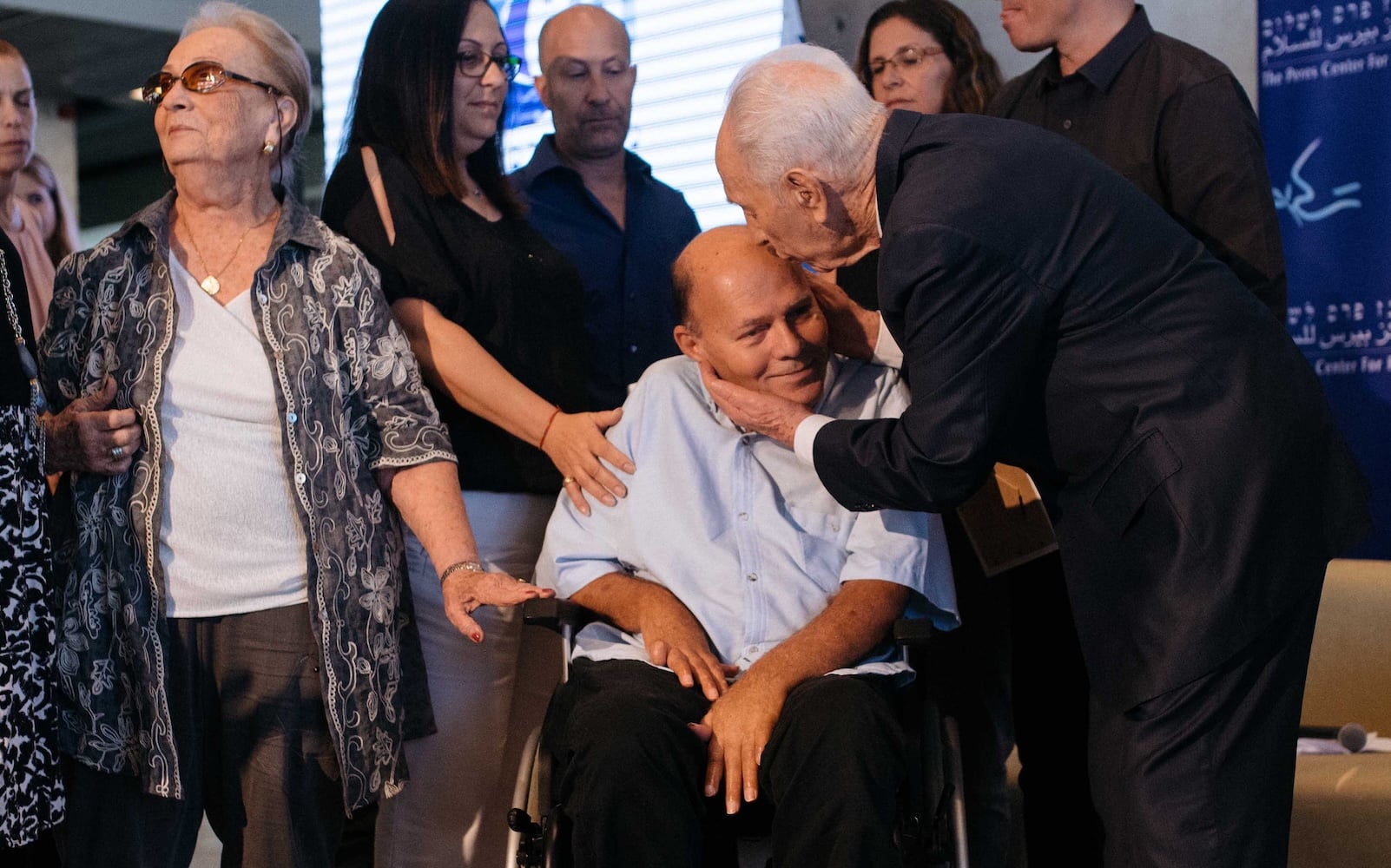
As a young boy growing up in Antwerp, Belgium, one of my closest friends invited me to his older brother’s bar mitzvah.
Among the guests was a young Israeli whom I had never met. He was confined to a wheelchair, yet he was one of the happiest people in the room. His smile was infectious. He laughed with the family, celebrated with genuine joy, and seemed completely at home despite having traveled all the way from Israel.
I knew right away that I was in the presence of one of the heroes of the Entebbe rescue. Yet, as a child, I could never have imagined just how profoundly that night had shaped his life—or mine.
My friend’s parents had been among the Jewish hostages aboard the Air France flight hijacked to Entebbe in June 1976. Throughout the years, they recounted the miraculous rescue that had saved their lives. Whenever they told the story, one name was always mentioned with profound gratitude: Surin Hershko.
They told me that during the daring rescue operation, Surin Hershko personally escorted them toward one of the waiting Hercules transport aircraft. A minute or two later, he was struck by Ugandan gunfire. The bullet severed his spinal cord, leaving the twenty-one-year-old paratrooper permanently paralyzed.
He had surrendered the future he had imagined so that another Jewish family could continue theirs.
He never seemed to dwell on what he had lost.
Instead, he celebrated what they had gained.
At the time, I knew I was meeting a hero.
It took me many years to understand just how extraordinary a man he was.
This week marks the fiftieth anniversary of Operation Entebbe, one of the most daring military operations in modern history. Much has rightly been written about Lt. Col. Yonatan “Yoni” Netanyahu, the commander of the assault force whose death became synonymous with the mission. His courage, leadership, and ultimate sacrifice deserve every tribute they have received over the past fifty years.
But anniversaries are also an opportunity to remember those whose sacrifices did not end on the airport tarmac.
Surin Hershko’s story deserves to be remembered alongside Yoni’s.
Over the past fifty years, Entebbe has inspired books, documentaries, and feature films. They have rightly immortalized Yoni Netanyahu and the breathtaking success of the operation. Yet the story of Surin Hershko—the young paratrooper whose sacrifice continued long after the last Hercules left Uganda—has remained largely untold. His is the kind of quiet heroism that rarely becomes the subject of movies, yet without which history could never have been written.
Born in Romania, Surin Hershko immigrated to Israel with his family at the age of twelve. The adjustment was not easy. A few years later, his father died of cancer, leaving the family to rebuild their lives in a new country. Like so many young immigrants, Surin wanted not merely to live in Israel, but to help write its story. He volunteered for the Paratroopers, later recalling that earning the coveted red beret made him feel truly Israeli. Ironically, Entebbe was supposed to be his last day in uniform. He had already returned much of his military equipment and was preparing to begin civilian life and university studies.
History had other plans.
When his commander called, he did not hesitate.
He boarded one of the Hercules aircraft believing he was embarking on one final mission before beginning the next chapter of his life.
That mission changed his life forever.
As Surin lay in the hospital, struggling to comprehend injuries that would leave him paralyzed for the rest of his life, another family was enduring unimaginable grief.
Yoni Netanyahu had been laid to rest.
Surin later recalled that after completing shiva for Yoni, Benzion and Tzila Netanyahu ob”m visited him in the hospital.
One family had lost a son.
The other had watched their son’s future disappear.
Bound forever by Entebbe, they found solace in one another’s sacrifice.
That quiet visit tells us as much about Israel as the rescue itself.
Yet what has remained with me all these years is not only Surin Hershko’s heroism during those extraordinary minutes in Uganda. It is what he did afterward.
The family whose lives he helped save never forgot him.
Nor did he ever forget them.
Despite the devastating injury that confined him to a wheelchair, he accepted invitations to their family celebrations. Time and again, he traveled from Israel to Belgium—not because anyone expected him to, nor because he sought recognition, but because he genuinely rejoiced in seeing a family flourish whose future he had helped preserve.
As a youngster, I simply saw a smiling Israeli soldier in a wheelchair.
Today I understand that I was witnessing something profoundly Jewish.
A soldier risked everything to rescue complete strangers.
The family he had rescued embraced him as one of their own.
The parents of a fallen commander found the strength to comfort one of their son’s wounded soldiers.
No contract bound them.
No obligation required any of it.
Only the timeless understanding that the fate of one Jew is bound to the fate of another.
That is the deeper legacy of Entebbe.
Operation Entebbe was not merely a military triumph. It was the living embodiment of the ancient Jewish principle of Kol Yisrael Arevim Zeh Bazeh—all Jews are responsible for one another.
For nearly two thousand years, Jews lived with the painful reality that when they were singled out for persecution, there was often no sovereign nation capable of coming to their rescue.
Entebbe changed that forever.
Thousands of miles from home, Jewish hostages were separated from the other passengers simply because they were Jews.
Israel answered by crossing continents to bring them home.
It declared to the world that no distance was too great and no obstacle too daunting when Jewish lives were at stake.
Fifty years later, that message remains every bit as relevant.
The methods of terror have evolved, but the hatred has not.
Nearly half a century separates Entebbe from October 7, yet both were driven by the same hatred: the belief that Jews can once again be isolated, terrorized, and abandoned.
Entebbe answered that hatred fifty years ago. Israel continues to answer it today.
History has repeatedly proven them wrong.
Israel is far from perfect. Like every democracy, it argues with itself, questions itself, and struggles with difficult decisions.
But on one fundamental principle it has never wavered.
When Jewish lives are in danger, Israel comes.
Whether across continents, across hostile borders, or through seemingly impossible odds, the Jewish state has demonstrated time and again that it will not abandon its people.
For Jews around the world, that is something our grandparents could scarcely have imagined.
Whenever I think about Entebbe, I do not first picture the black Mercedes racing across the Ugandan runway or the Hercules aircraft disappearing into the African night.
I picture a smiling Israeli in a wheelchair at a bar mitzvah in Antwerp.
As a child, I knew I was meeting a hero.
Only later did I understand that I was witnessing something even greater: the enduring covenant between those who risk everything for the Jewish people and those whose lives they save.
For fifty years, Entebbe has been retold through books, documentaries, and films. We remember the black Mercedes, the Hercules aircraft, and Yoni Netanyahu. We should.
But fifty years later, we should also remember Surin Hershko.
The Romanian immigrant who volunteered for one last mission.
The paratrooper whose sacrifice did not end on the runway in Uganda.
Surin Hershko—the soldier who came to celebrate life.