

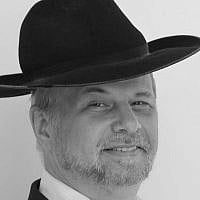
Rabbi, Special Operations Police Officer, Award Winning Filmmaker
Entering the Public Arena: What I Learned from Mayor Eli Abutbul about Israeli Leadership
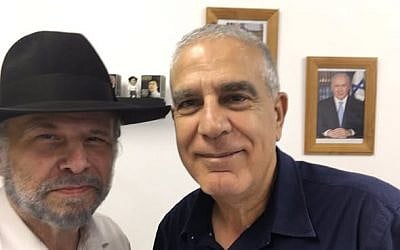
Last week, I walked into the mayor’s office expecting a simple meeting. Instead, I stepped into a master class in leadership.
For the past year, I have been quietly working to understand the deeper architecture of Israeli public life — not through theory, and not from a distance, but through direct engagement with those shaping the civic future of our communities. That journey led me to an extraordinary conversation with Eli Abutbul, the Mayor of Zichron Yaacov, a man whose insights into leadership go far beyond politics.
Politics Begins — and Ends — With People
Mayor Abutbul emphasized a truth that many overlook:
Politics is not ideology. Politics is relationships.
He explained that there are generally two ways to enter Israeli political life: rise within an established faction, or build an independent political movement. But the pathway is secondary. The foundation is always the same:
A genuine, sincere connection with the community.
“Show the people that they matter,” he told me. “Show up, listen, and be real. Trust begins there.”
The Responsibility of Appearance
I raised a question that many religious leaders confront silently but seldom voice openly:
How will different segments of Israeli society perceive me as a black-hat rabbi entering public life?
The mayor was clear.
My appearance creates both bridges and boundaries:
-
The Haredi world sees me as one of their own.
-
The broader Orthodox community sees me differently.
-
The secular public may perceive me through yet another lens.
But he stressed that sincerity can cut through every barrier.
Authentic engagement can reshape perception.
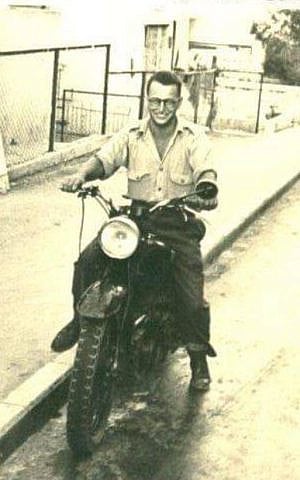
In fact, he pointed out that my background — raised by a Palmach Harel Portzim war hero, educated in both the yeshiva world and the university world, holding BA and MA degrees, working on a PhD, and spending years as a filmmaker — uniquely positions me to serve as a bridge between religious and secular Israel.
That bridge is desperately needed.
A Leader With Many Hats
In addition to my rabbinic identity, I carry a spectrum of roles that allow me to connect with different layers of Israeli society. I am a filmmaker, a writer, and a public speaker — someone who can appear as a black-hat rabbi in the beit midrash or arrive with a baseball cap on set, collaborating with actors, artists, and creatives. These worlds do not contradict each other; they enrich each other. They give me the ability to speak with Torah scholars, thinkers, teachers, soldiers, entrepreneurs, and youth, each in their own language.
At the same time, I serve as a Second Sergeant in a Special Operations unit of the Israeli Police, working in the field during real emergencies and complex missions. This is not symbolic service. It demands courage, bravery, discipline, responsibility, and unwavering loyalty to the citizens of Israel. It means standing on the front line when others step back. It means acting with precision and compassion toward all citizens — including every minority community — qualities that define true public service,
Together, these roles — rabbi, filmmaker, storyteller, academic, and frontline responder — create a unique form of social and political capital. They demonstrate that my commitment to Israel is not theoretical or abstract. It is lived. It is practiced. It is proven. And it builds trust because people see that I am not merely speaking about community — I am serving the community, standing with the community, and protecting the community in every arena of Israeli life.
Community First. Politics Second.
The mayor returned repeatedly to one principle:
A political leader must first be a community leader.
Attend community events.
Listen to people’s needs.
See individuals, not demographics.
Lift people’s dignity, not your own status.
If one does this sincerely, trust begins to form. And as he emphasized — trust is the true currency of politics.
Ideology can build walls.
Relationships build a country.
People want to live, work, raise their families, and feel respected.
That is where leadership begins.
How a Leader Faces Criticism
One of the most powerful teachings the mayor offered was about conflict.
If a political figure is criticized or attacked, he said, he should not respond with anger, humiliation, or defensiveness. Instead, he should see it as a message from Heaven — a sign that something must be repaired. That a relationship must be mended. That someone feels unseen or unheard.
“Criticism,” he told me, “is not an enemy. It’s a direction.”
Many leaders collapse under pressure.
Great leaders refine themselves through it.
Strengthening the Anglo Community of Zichron
As an English speaker living in Zichron, the mayor encouraged me to take on a meaningful mission:
to build a stronger, more connected Anglo community.
He explained that this community holds remarkable cultural depth, creativity, and influence. Many Anglos feel caught between worlds — not fully Israeli, yet no longer fully foreign. A leader who understands both sides can help them find their voice and belonging within Israeli civic life.
A Vision of Service
Leadership, he stressed, is not about imposing one’s agenda.
It is about elevating lives.
A mayor, councilmember, or Knesset representative serves not to dominate, but to uplift — to see individuals, to listen to them, to advocate for them, and to improve their day-to-day existence.
This is leadership not as ambition,
but as responsibility.
A New Beginning
I left my meeting with Mayor Abutbul with clarity and purpose.
If I continue into the political arena, I must do so not as a man seeking power, but as a man seeking to serve — a bridge between secular and religious Israel, between communities, between individuals.
Not through ideology,
but through humanity.
Not through speeches,
but through presence.
Not through titles,
but through trust.
This meeting was more than mentorship.
It was a doorway.
And for me — it is only the beginning.
My sincere thanks to Mayor Eli Abutbul for his wisdom, guidance, mentorship, and belief in the power of community.