Evaluating Sustainable Wellness Hospitality
Eshkol: Where Israel’s Food Grows and Families Heal
NOOR Glamping, Ostrich Farm hospitality
Three years after October 7, the farmers and hosts of the western Negev are opening their greenhouses, glamping tents and a former ostrich farm to families.
Most of the vegetables on Israeli tables start out in the Eshkol Regional Council, along the Gaza border. The tomato shows it best. Its price sets the tone for the whole vegetable market in Israeli supermarkets, so a good or bad season in Eshkol ends up on grocery bills across the country.
 Over Hanukkah, December 7 to 12, the region will celebrate that link at the Or VaAdama (Light and Earth) Festival, an agritourism festival built around Eshkol’s farms, local produce, food and tourism.
“We are the granary of the State of Israel,” says our host, Eli Mizrahi. “Agriculture in Eshkol contributes greatly to the food security of the entire country.”
Eshkol was hit harder than any other council on October 7, 2023. It has the longest stretch of the Gaza border and the largest number of communities that were attacked, and the Nova festival, where hundreds of young people were murdered, took place on its land. After months of evacuation in Eilat and Netivot, nearly all of its families have come home, and new ones are moving in.
I wanted to find out whether a family weekend here could also be a weekend of healing.
Our host: a mission from the heart
Eli, a father of three, lives on Kibbutz Ein HaShlosha. He trained as an educator and historian and was recently appointed head of tourism for the council. “It’s not a job for me, it’s a mission,” he says. “I work from the heart. I do this only for them [the family business owners and growers], so we can rebuild this place.”
He is working on a tourism product for the western Negev, and for Eshkol in particular, that gives people a reason to come, stay the night and get to know the farms, the people, the food, the heritage and the open spaces. “We are an end-of-the-line council. Whoever doesn’t come to us doesn’t pass through us,” he says.
The farmers, he explains, want visitors to see how far agriculture here has come, with its technology and new ideas, and above all how farming helped them get back on their feet after October 7.
 NOOR: a family oasis on an old ostrich farm
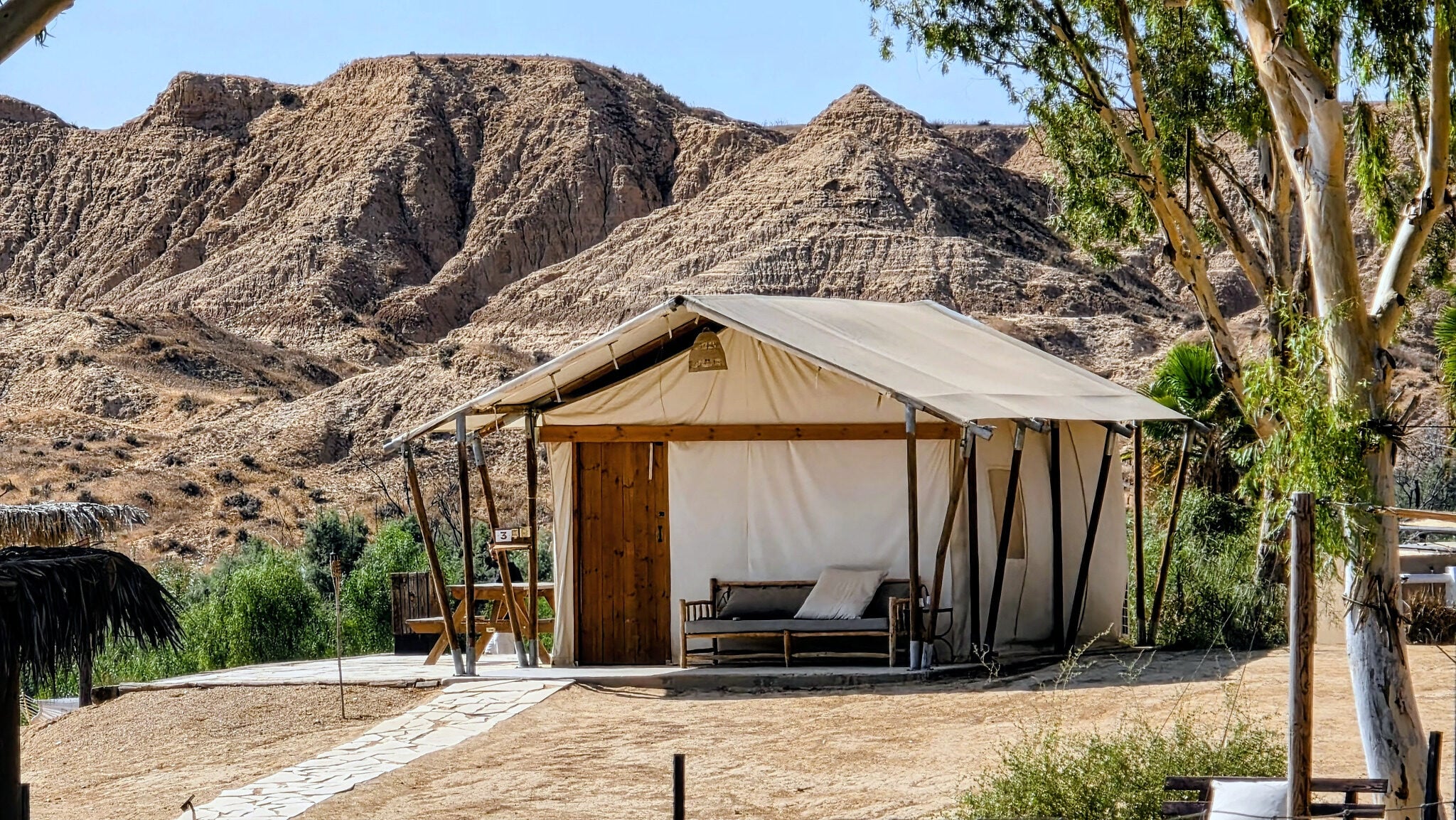
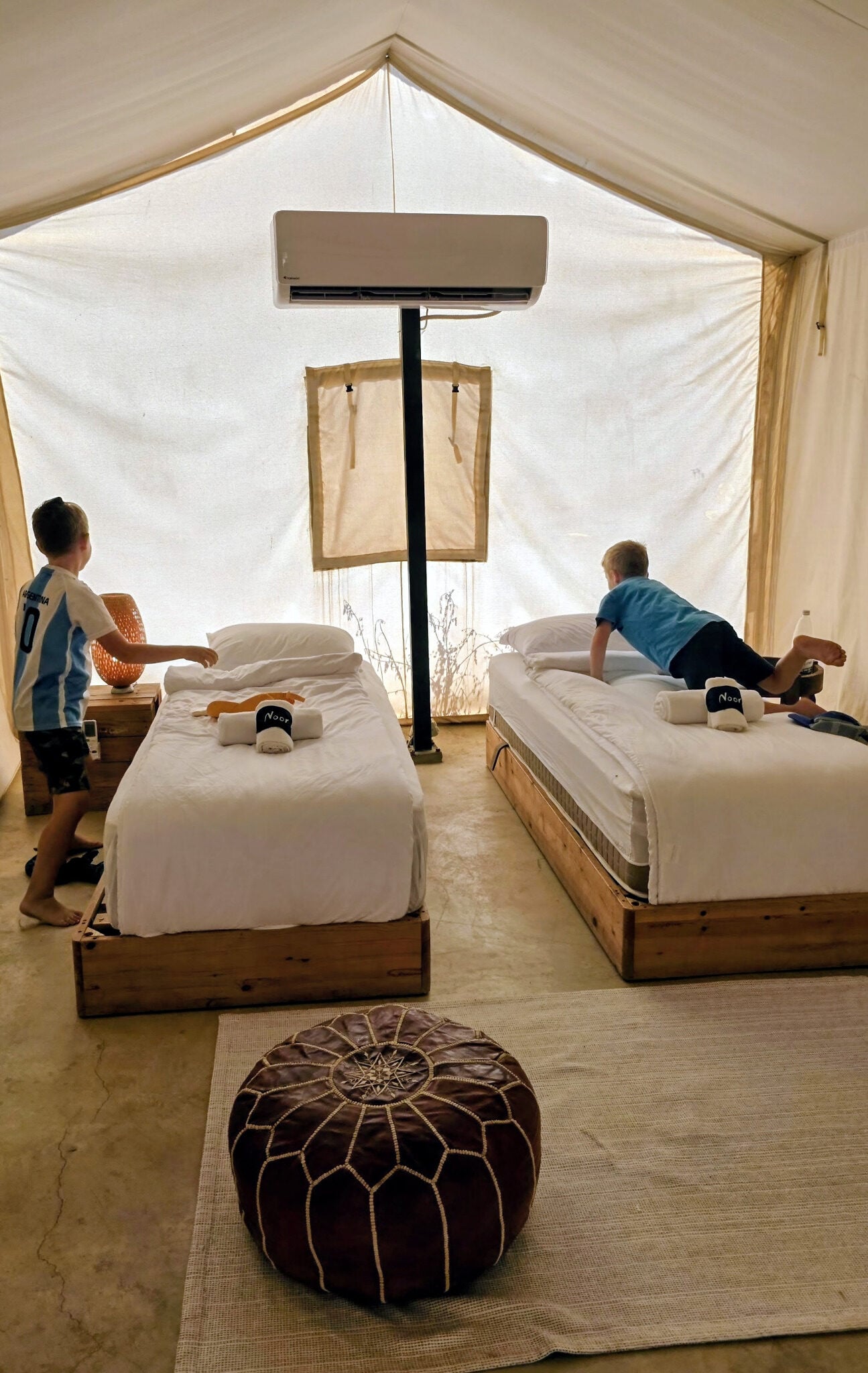
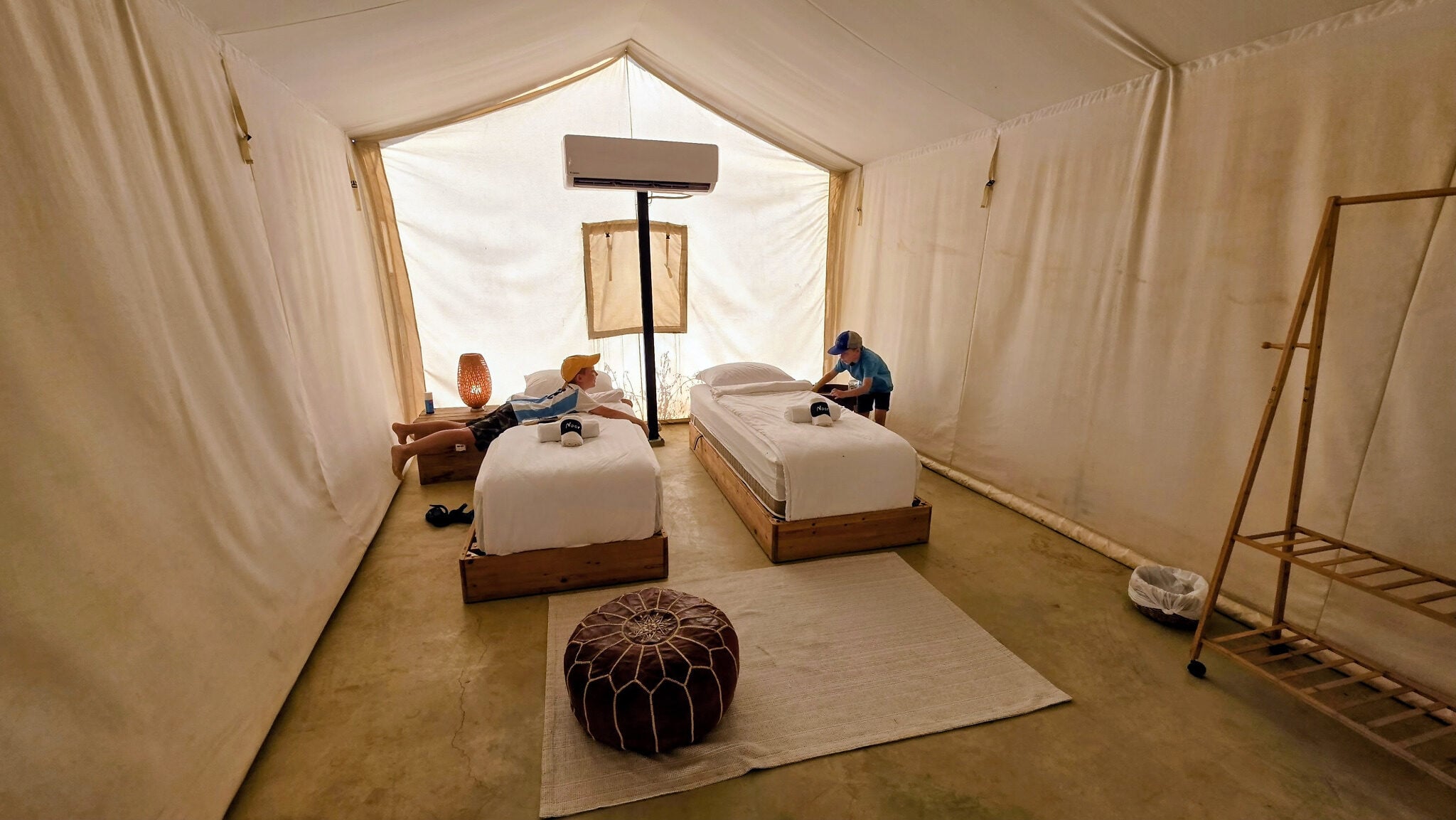
Our base was NOOR, a glamping compound on the Ostrich Farm in Moshav Ein HaBesor, near the springs of Nahal Besor. My wife and I had stayed here once before, for a summer night in one of the eight private suites that face the desert. On the drive home, we agreed to come back with our boys, Lavie, 10, and Eitam, 7.
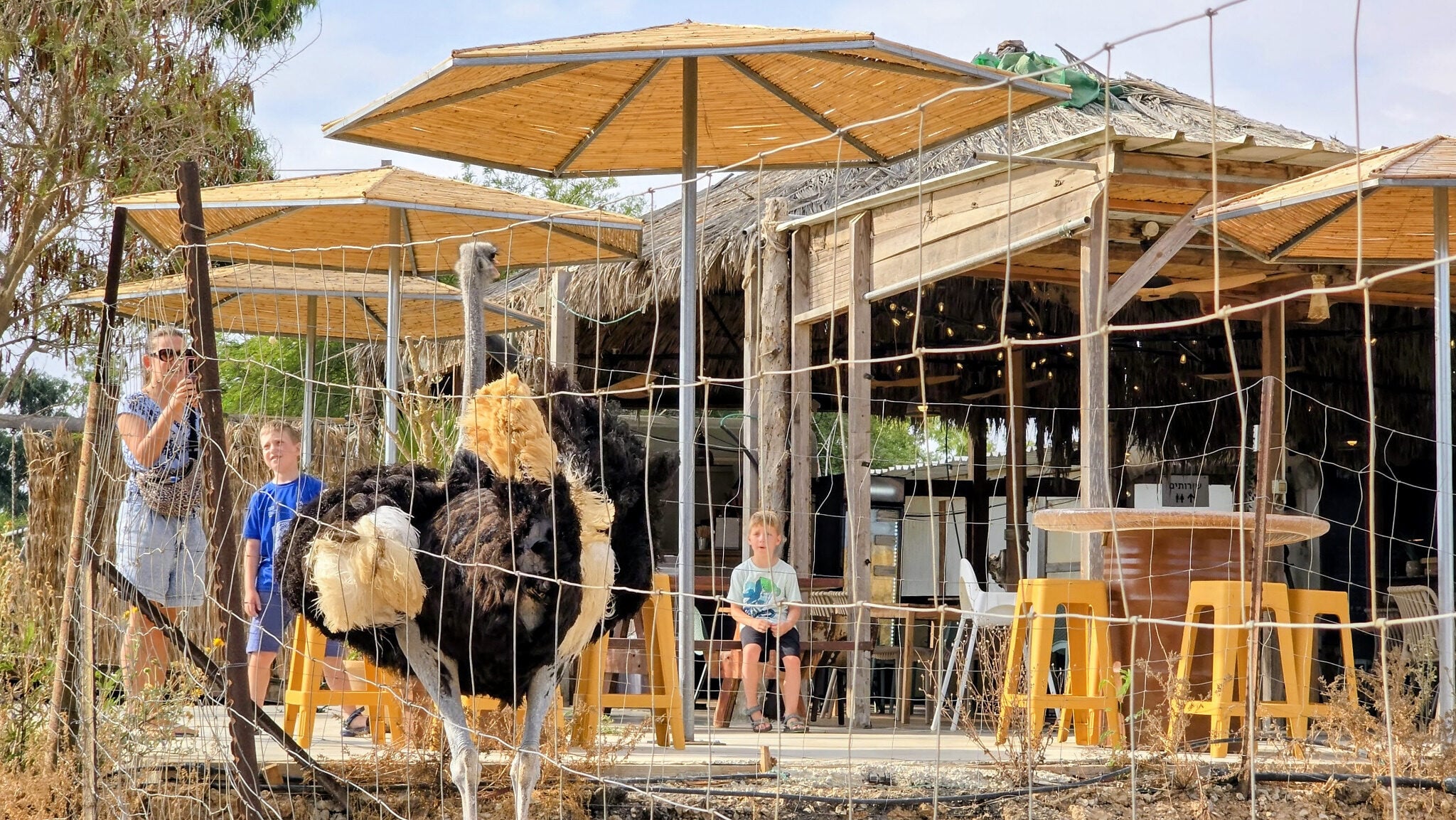
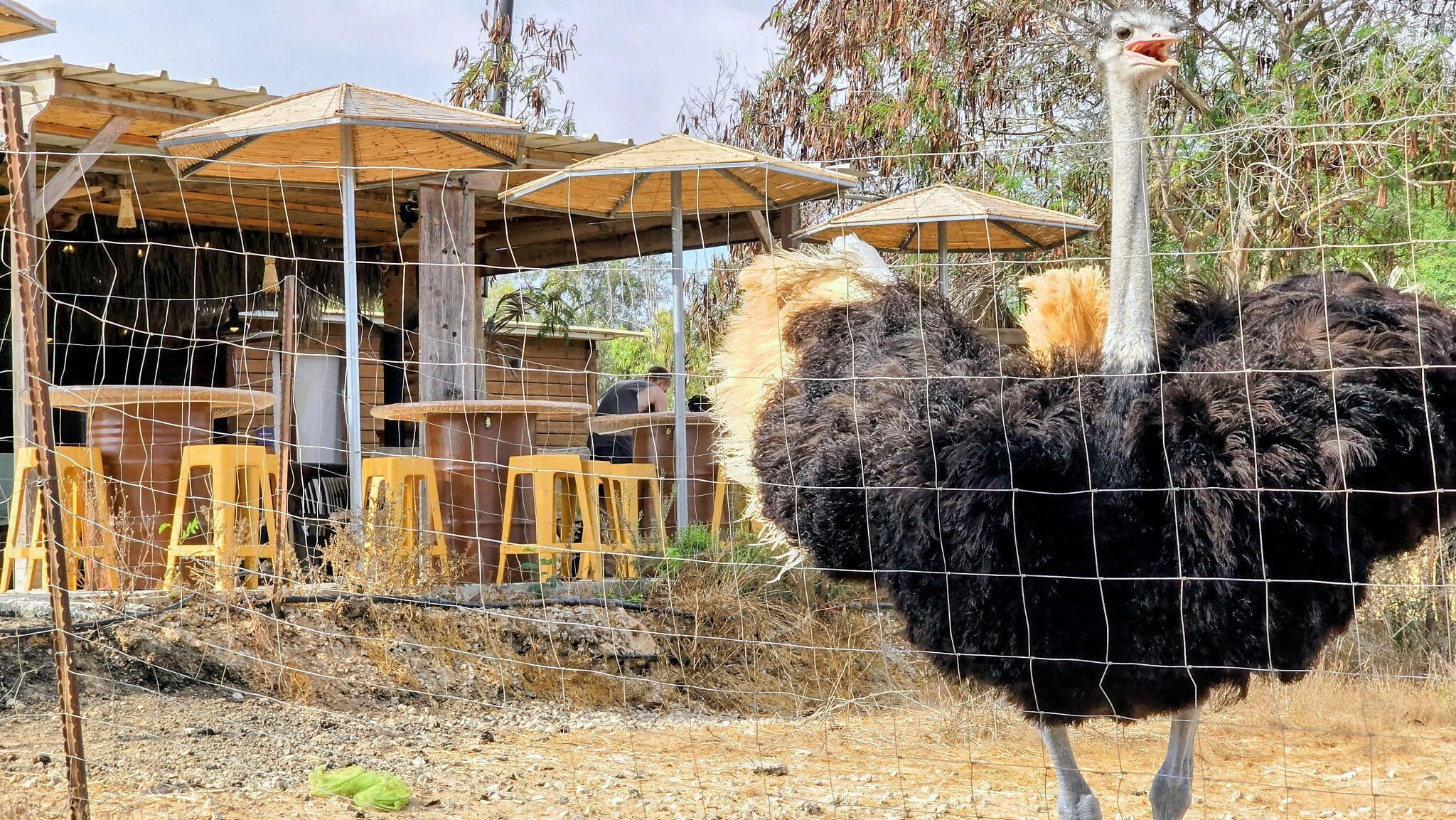
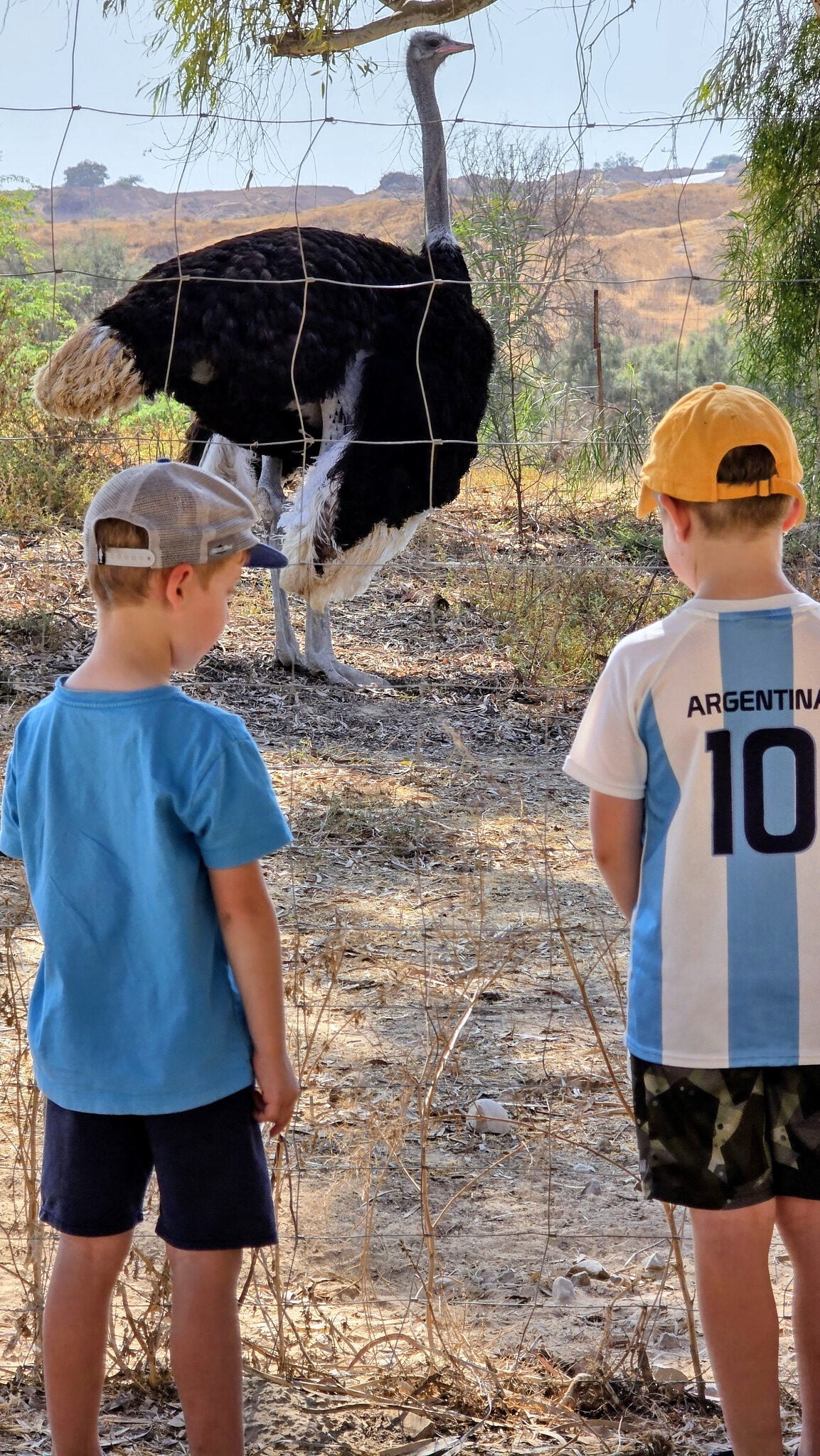
Tzofia and Mike Van Herbenbroek started raising ostriches here in the early 1980s, and the farm grew into the largest ostrich farm in the Middle East. The industry shut down when the ostrich was declared a protected animal. Goats, emus, horses and the last two ostriches in Israel still live next to the tents, and children can walk over to see them.
Omer Peled, 41, a former Special Units officer and father of three, built the hospitality side and runs it. It started almost by chance, with one unit listed on Booking. “We said there’s no chance a story will come of this, but let’s put it out there and see,” he recalls. After October 7, up to 600 soldiers lived on the farm. “In 2024 we came back,” he says. “On Passover there were families here from all over the country.”
 Built for families
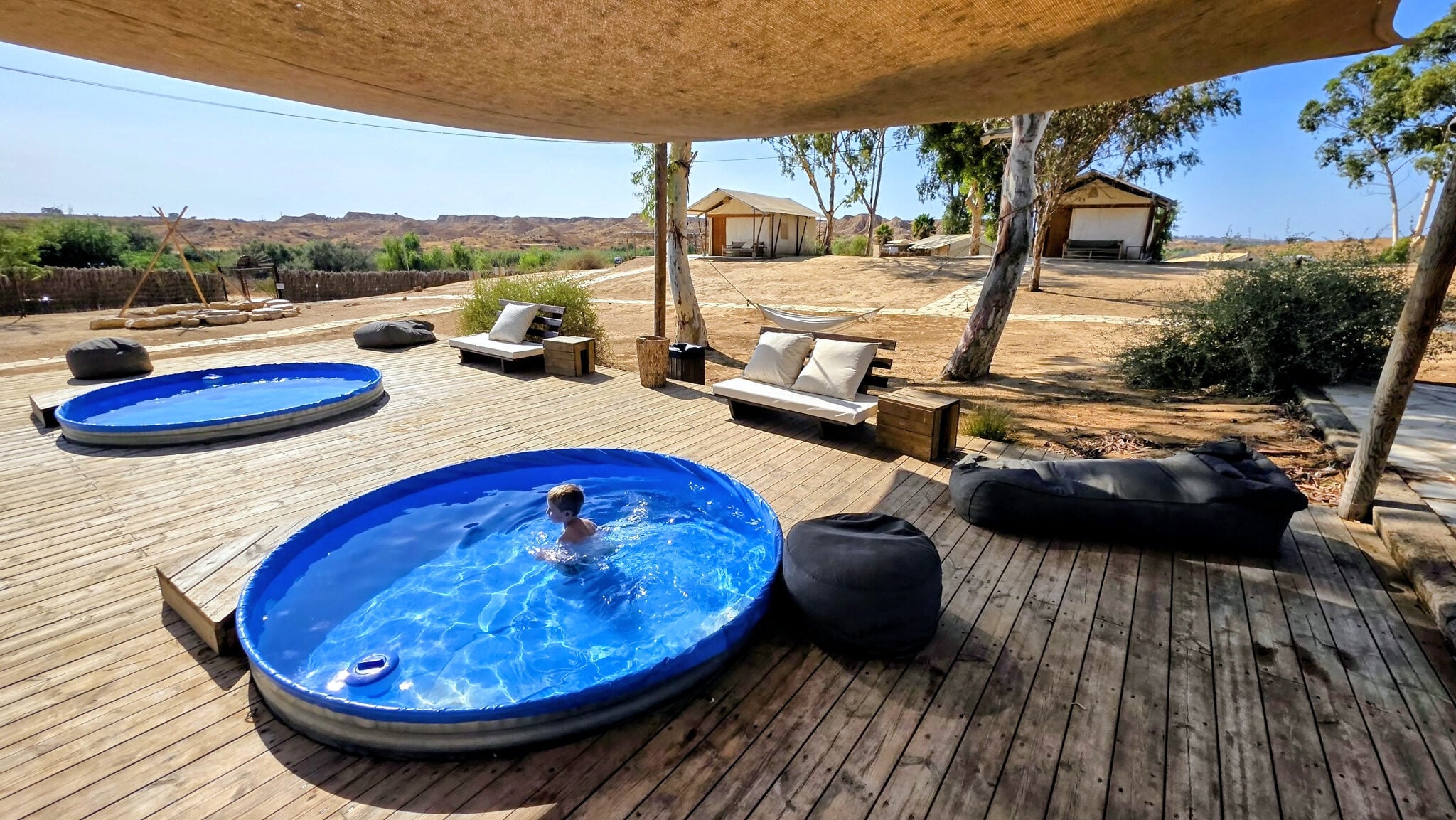
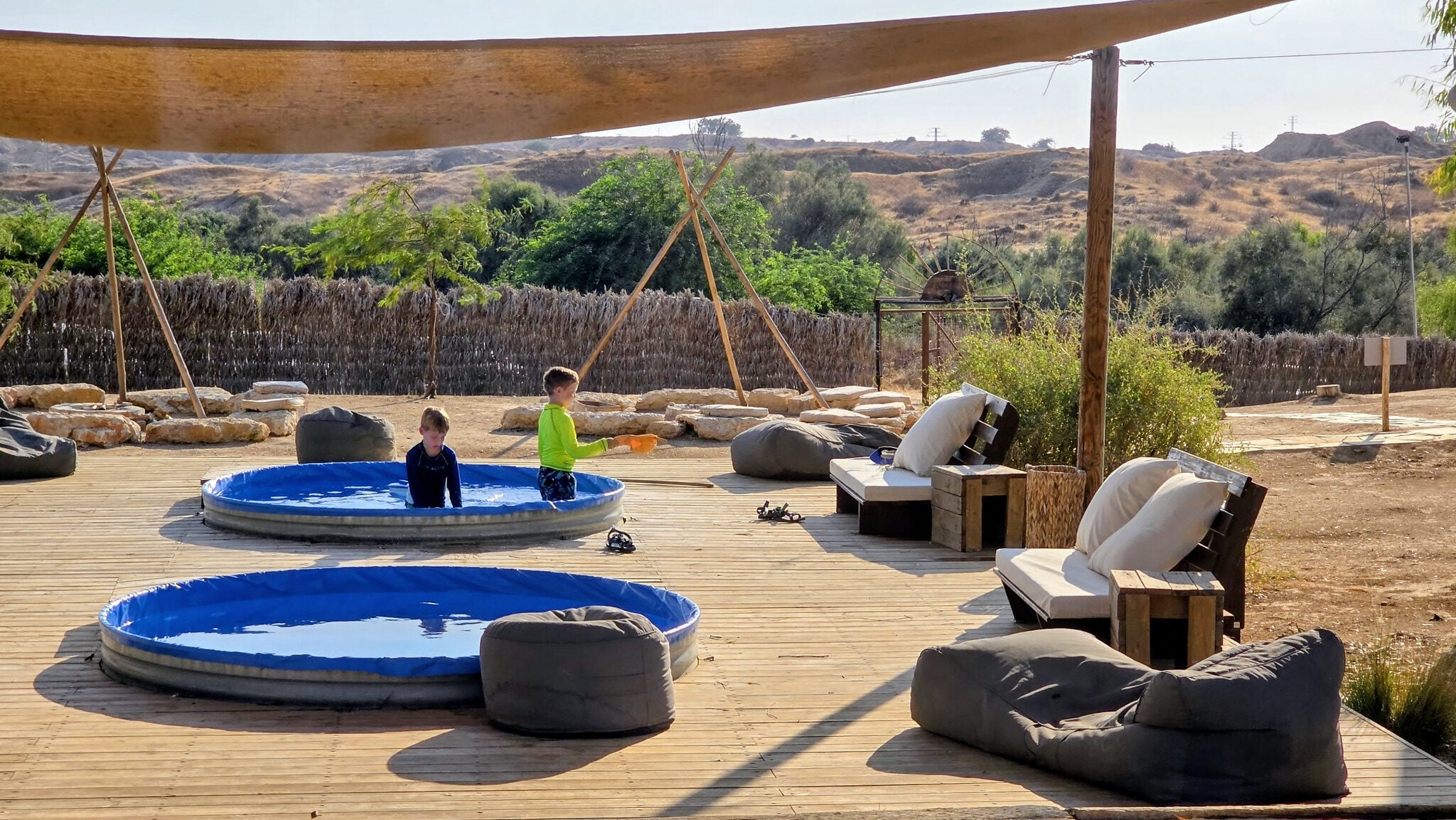
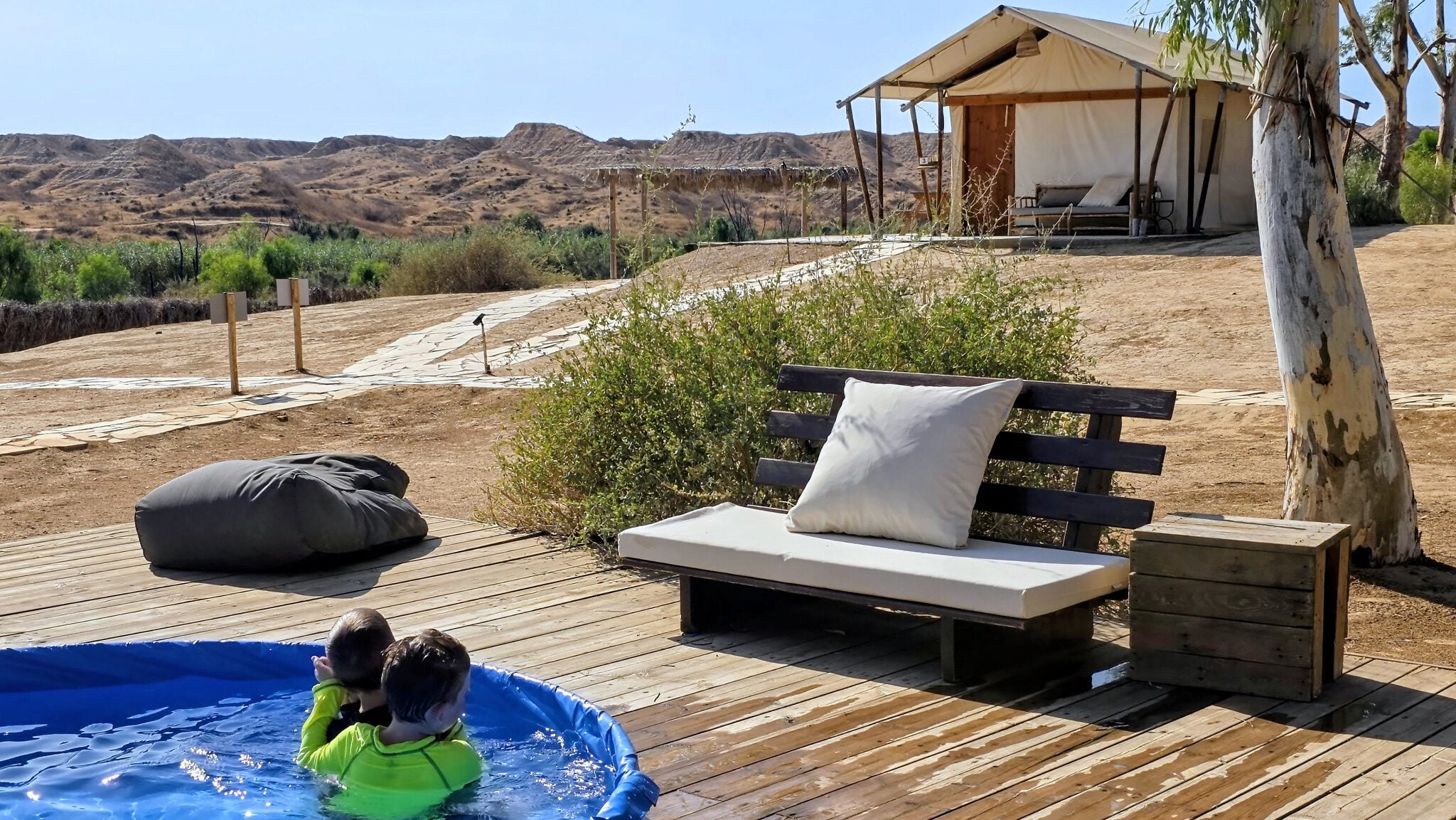
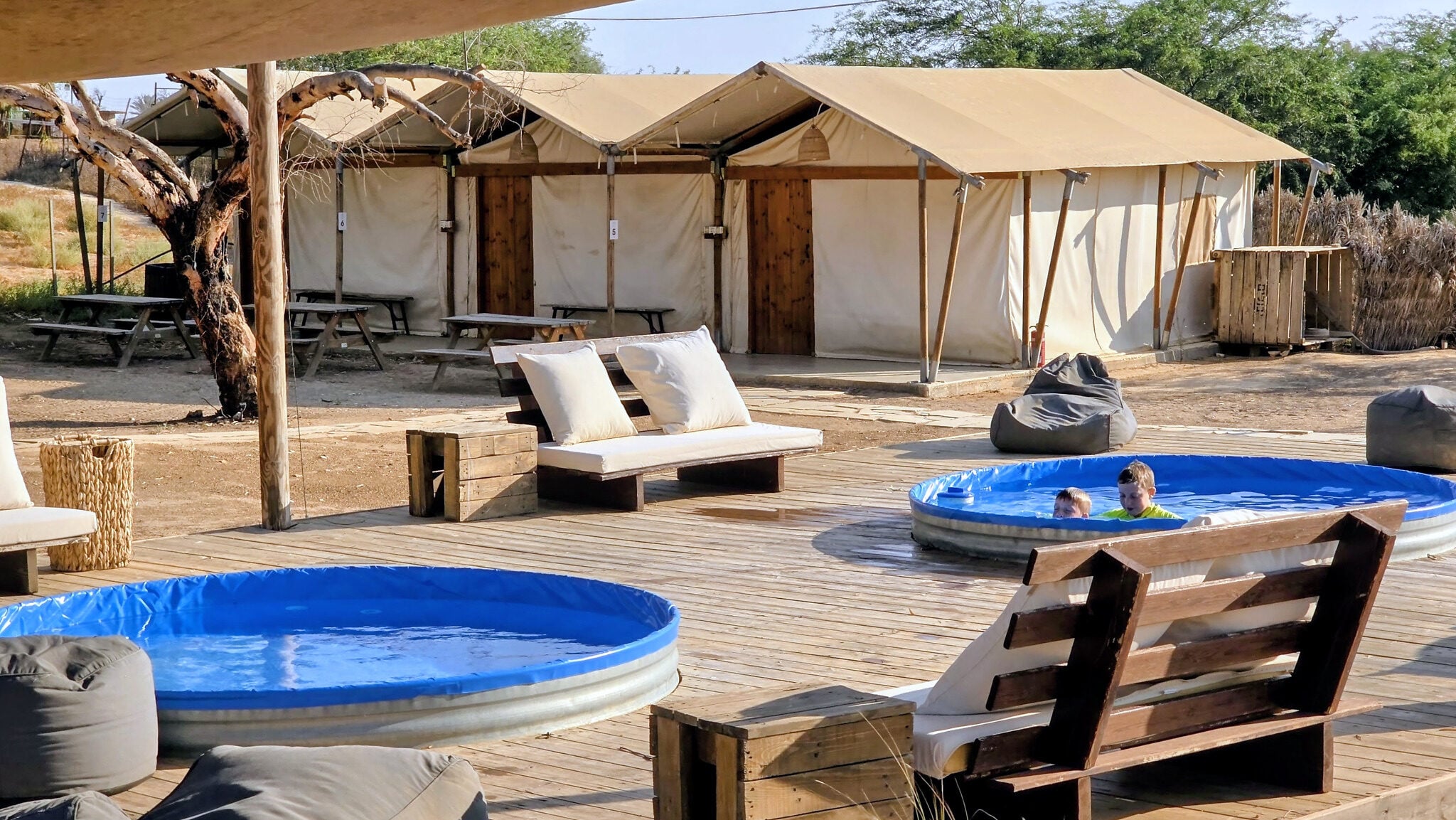
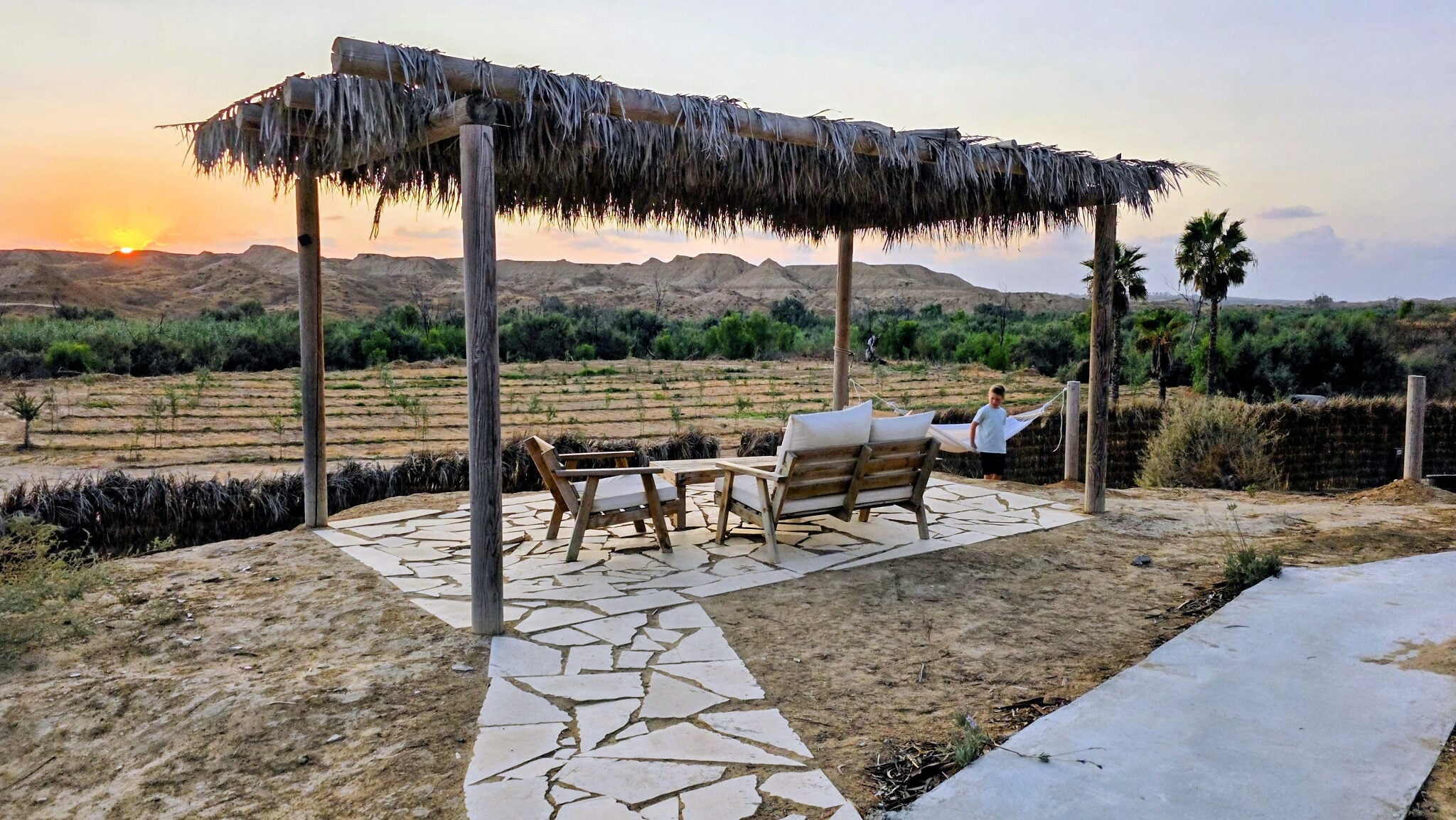
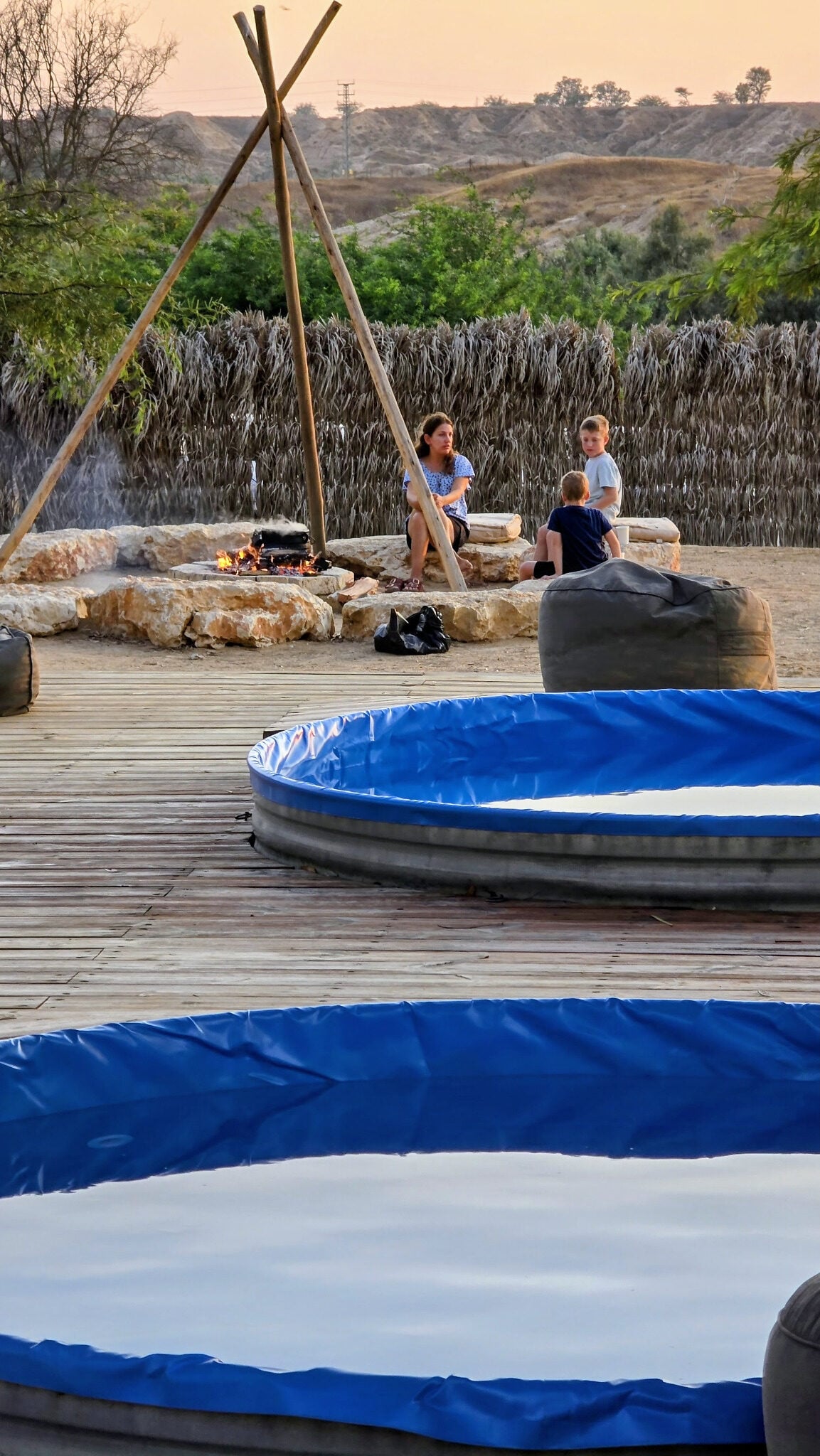
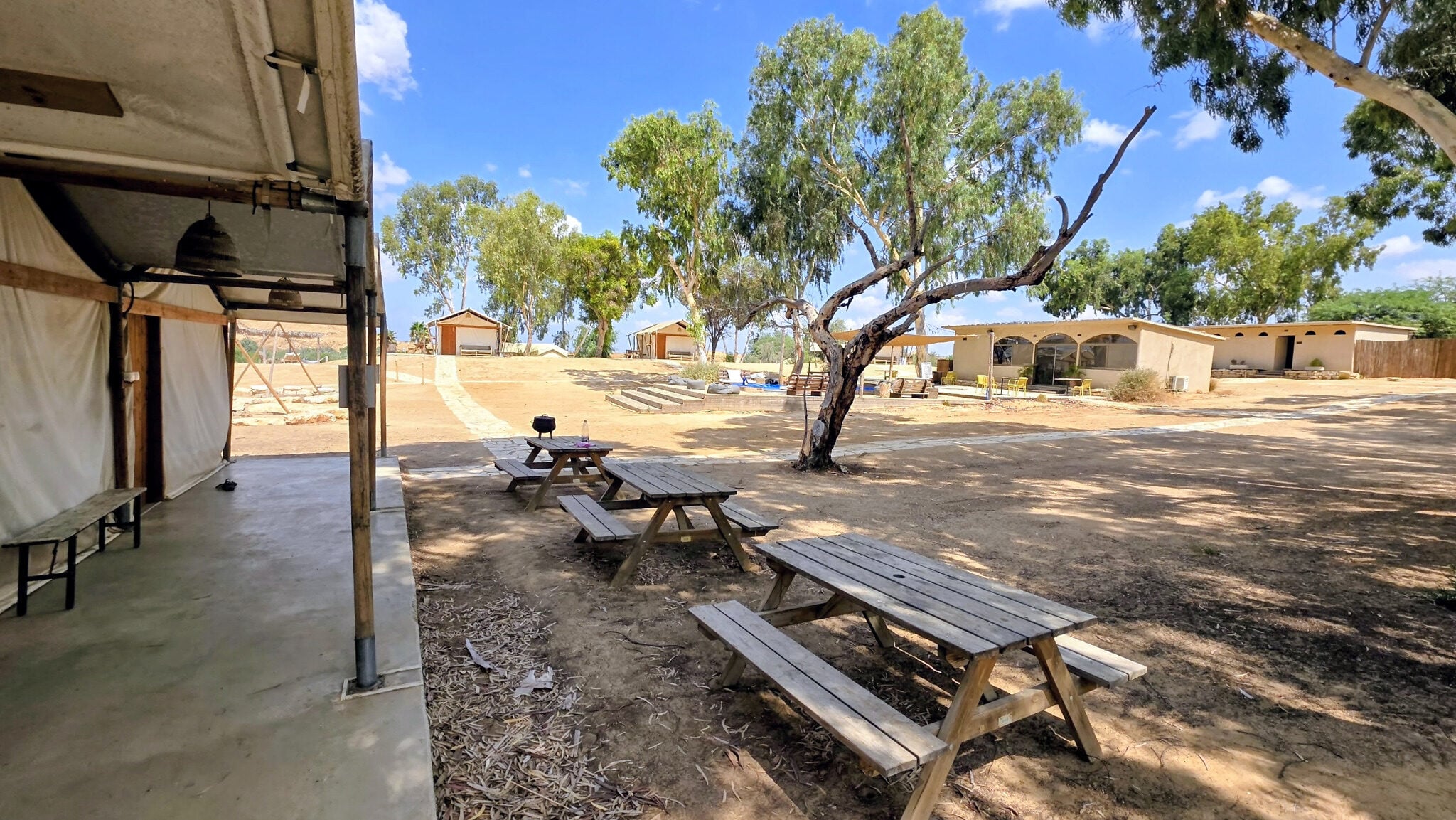
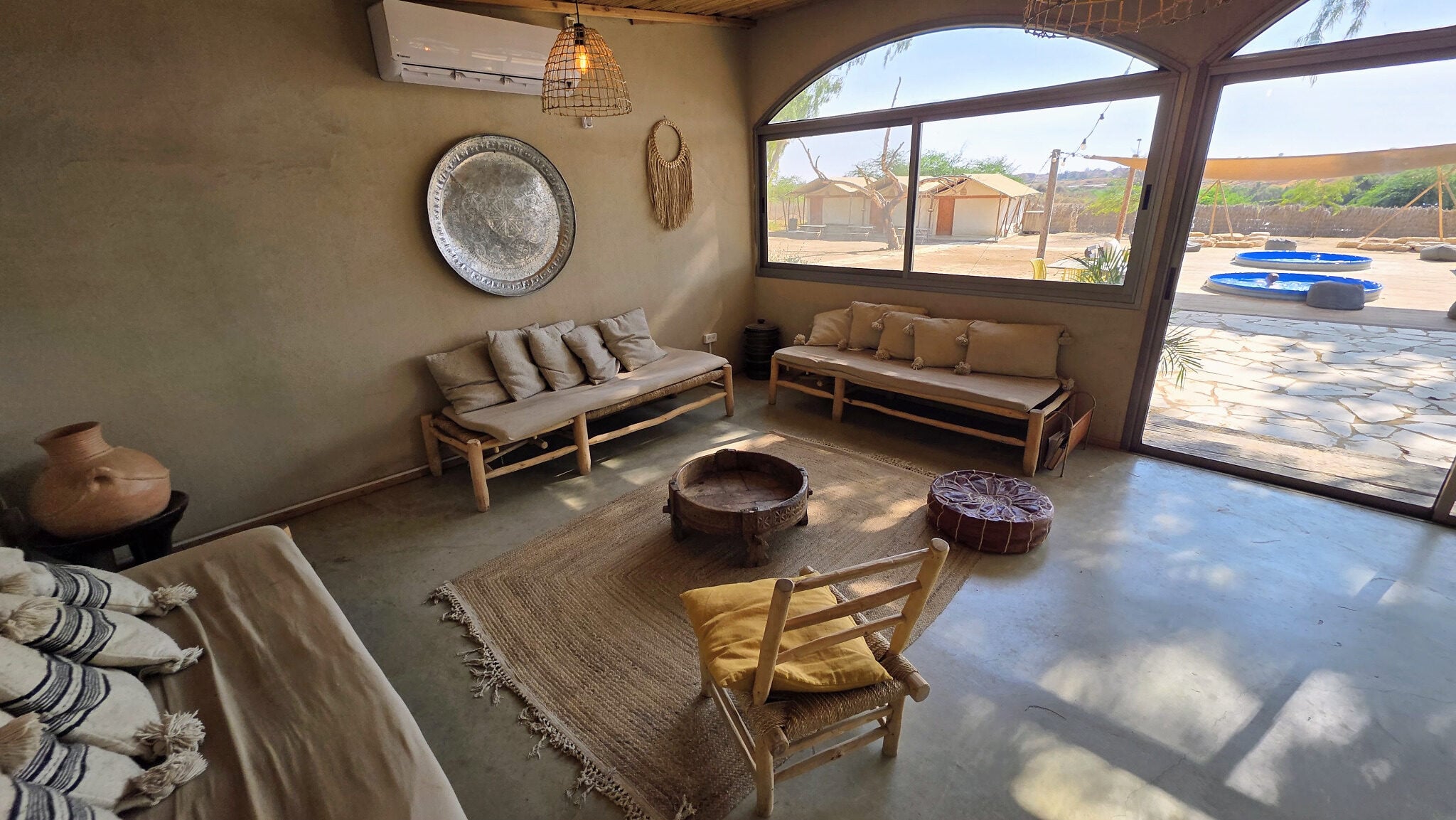
The suites are for couples. Families stay in the lower compound, in seven air-conditioned tents set around a shared lounge and kitchen, hammocks and heated plunge pools. The two areas face in opposite directions, so the suites stay quiet even when the family side is busy.
Evenings center on the poike, a heavy cast-iron pot. Parents and kids gather wood and build a fire between two tall tipi poles, then peel and chop chicken, root vegetables and herbs and layer them in the pot with sauce. It cooks over the coals for about an hour before the lid comes off.
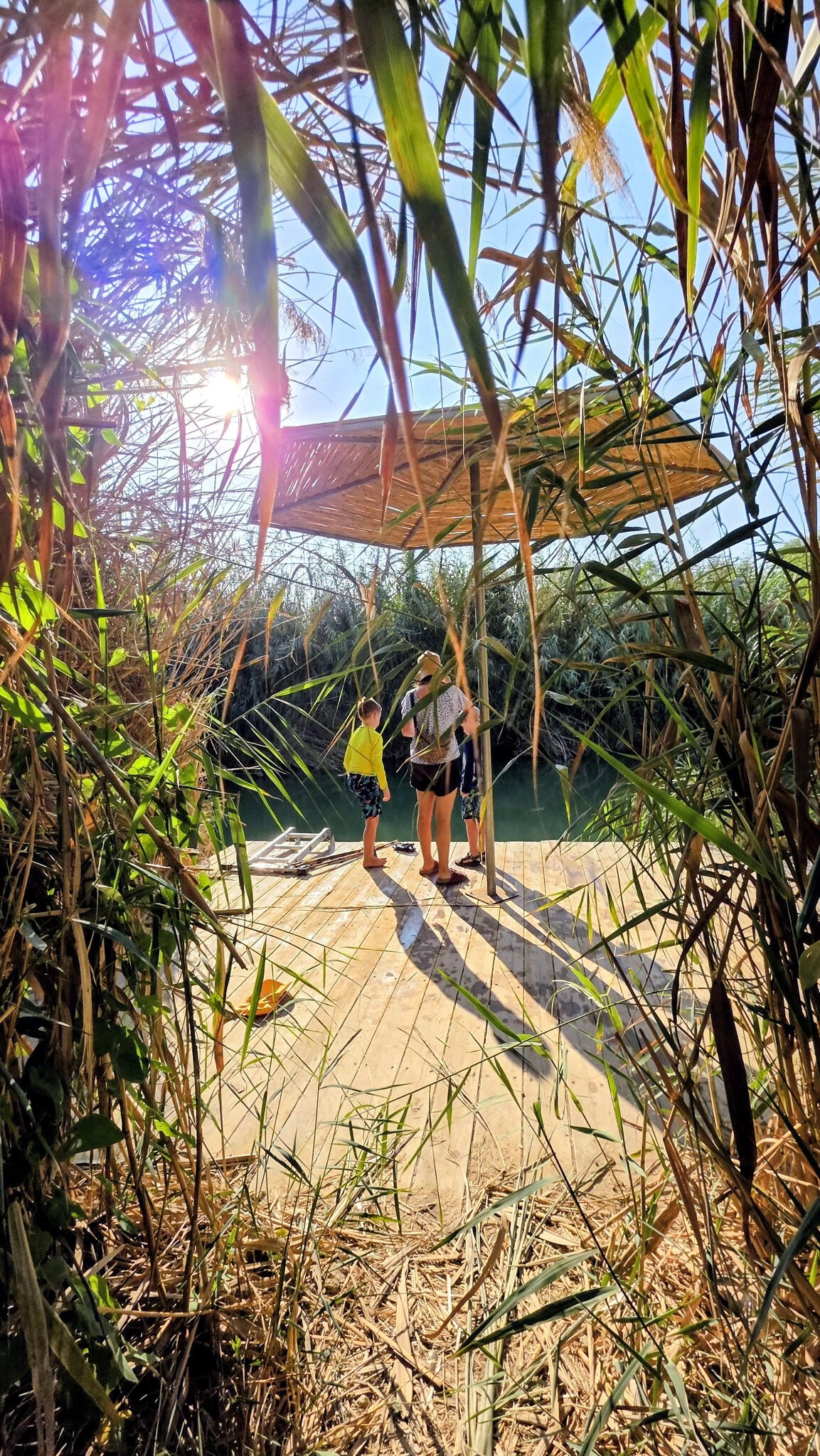
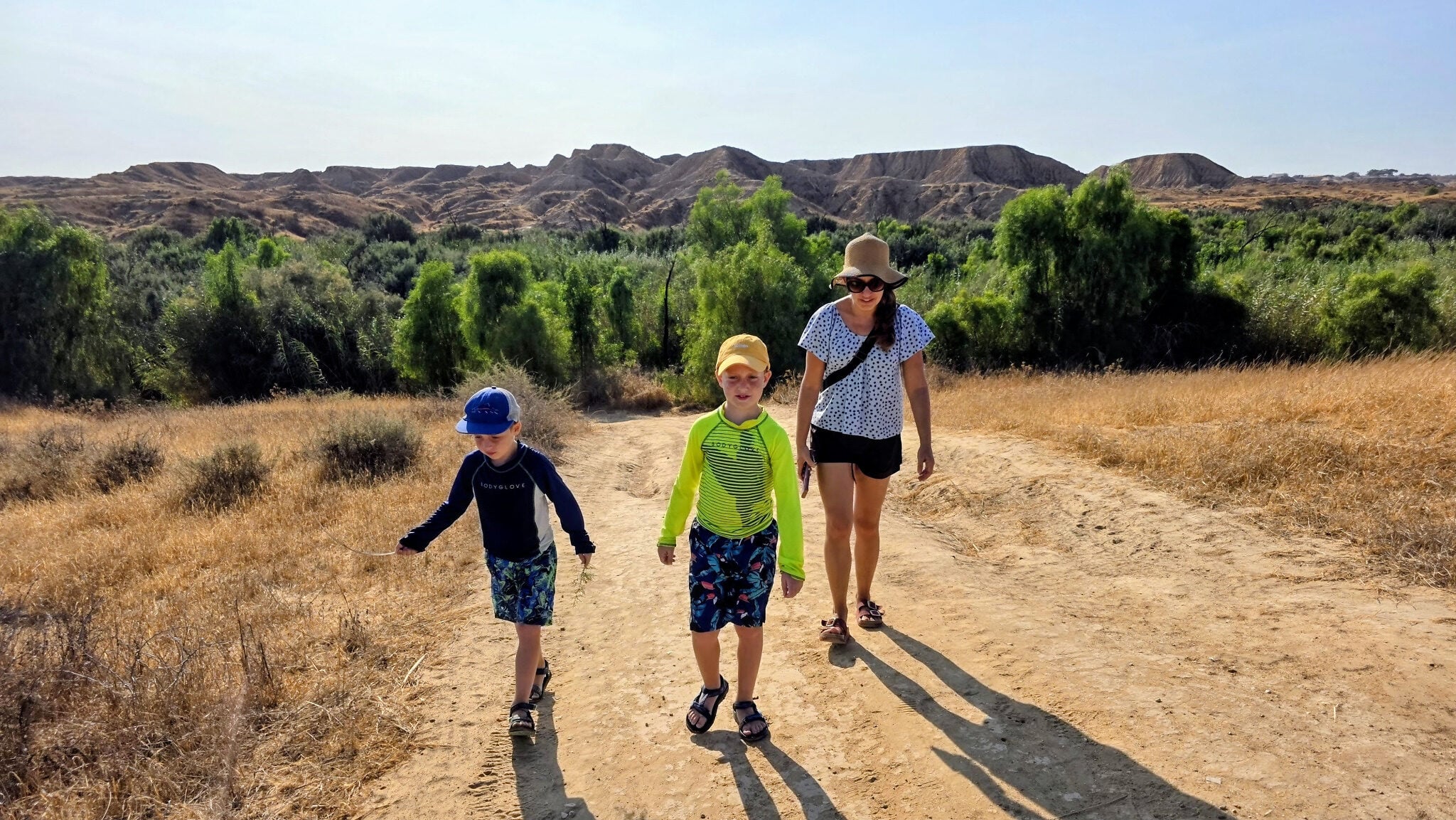
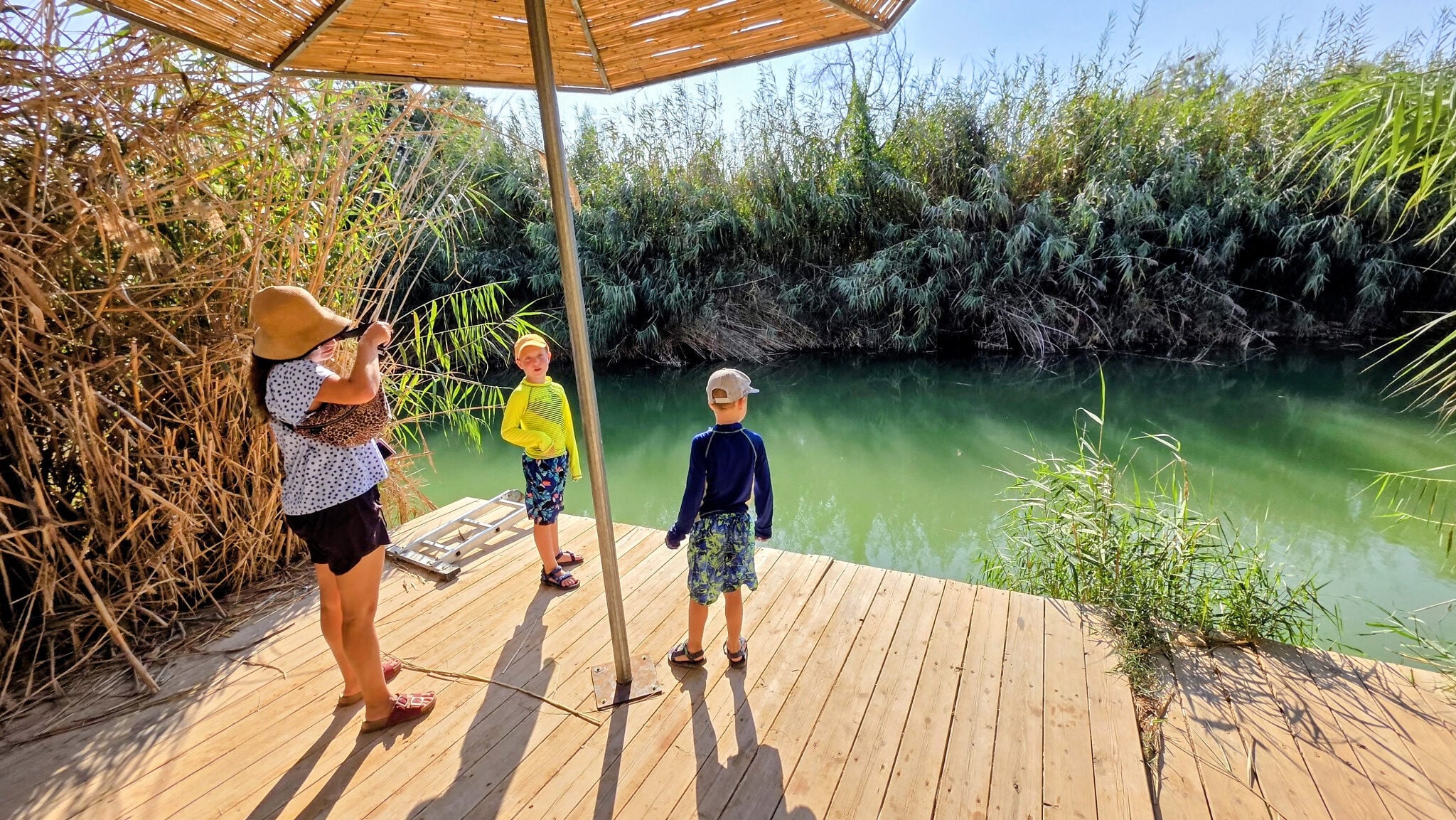
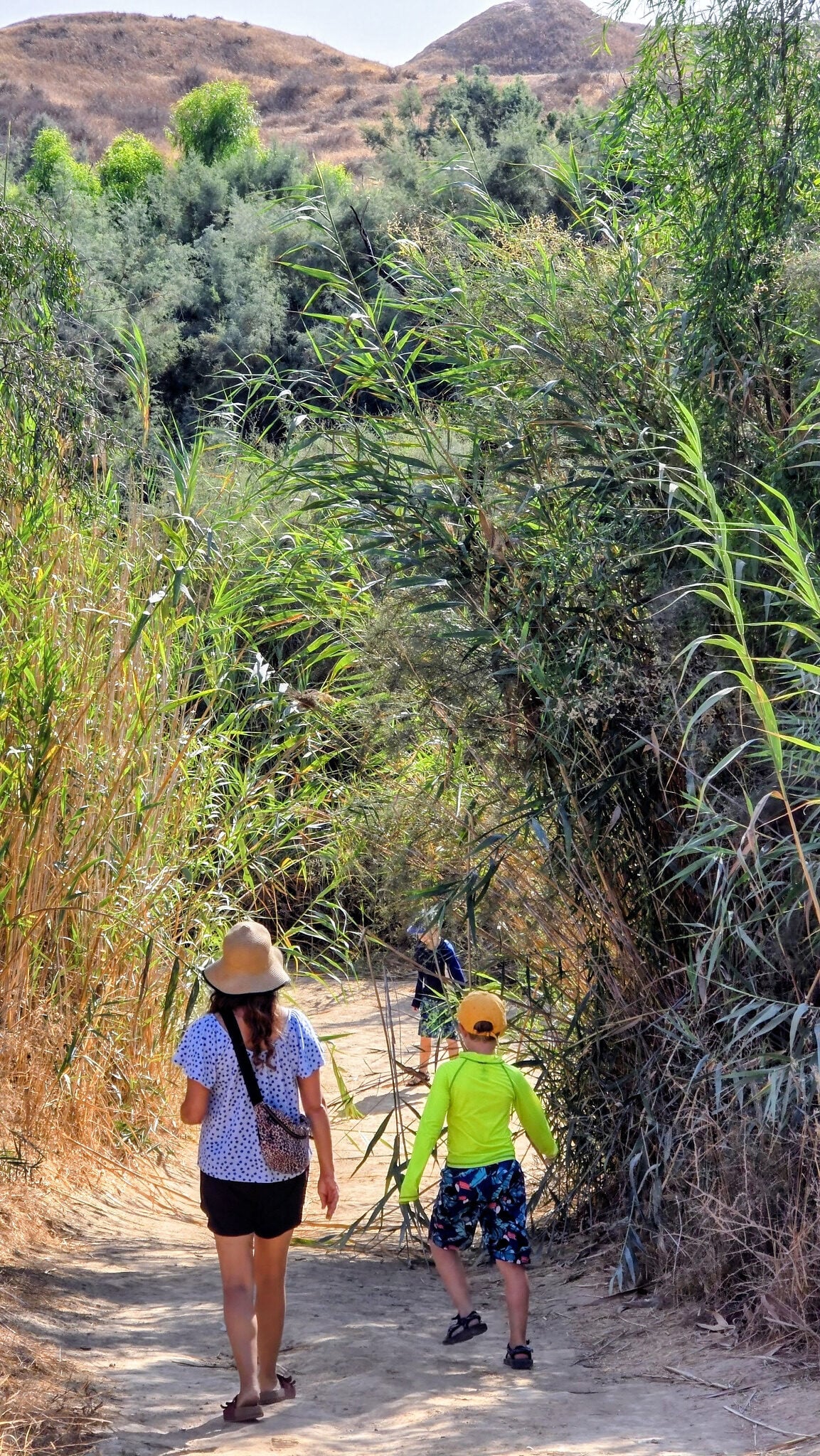
During the day, a seven-minute path through tall reeds leads to the Besor spring. Near the entrance is OPA, a coffee truck named for Mike; opa means grandfather in Dutch. A sign beside it says the family will carry on his story “with coffee, gathering, nature, earth and connection between people.”
 Healing that grows from the earth
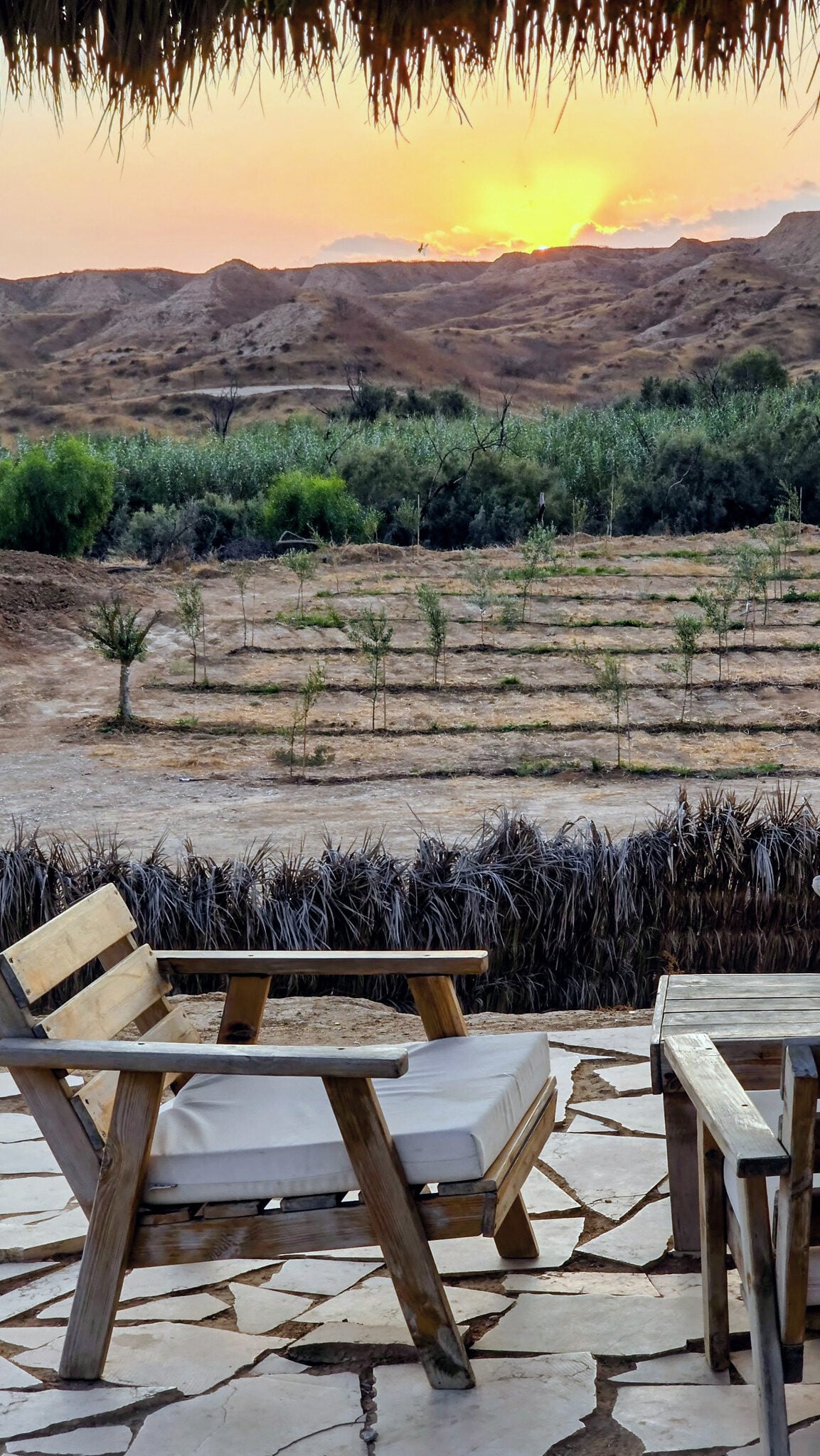
NOOR’s 100 dunams border some 1,200 dunams of open desert, and the team believes the quiet makes it a good site for one of the Negev’s first healing villages. Omer has replanted about 100 olive trees. “Touching the earth is incredible healing,” he says. Since October 7, the farm has hosted Nova survivors, bereaved families, police officers and IDF units at no charge.
Much of that work is led by Rani, founder of the Nahari Or association for holistic resilience, through meditation and breathing. His aim is “to create that space between stimulus and response so the trigger doesn’t run you.” The New Land Now association, which is working to build a network of healing villages across the Negev, is a key partner, and David Gabay and Aviv Ratzman lead its project here. “From the first day we said, ‘We need a healing village here,'” they recall. Shir, the operations manager, remembers her first visit: “I opened the door and said: an amazing place, impossible not to.”
 Yair Diner: the pepper that brought a man back to life
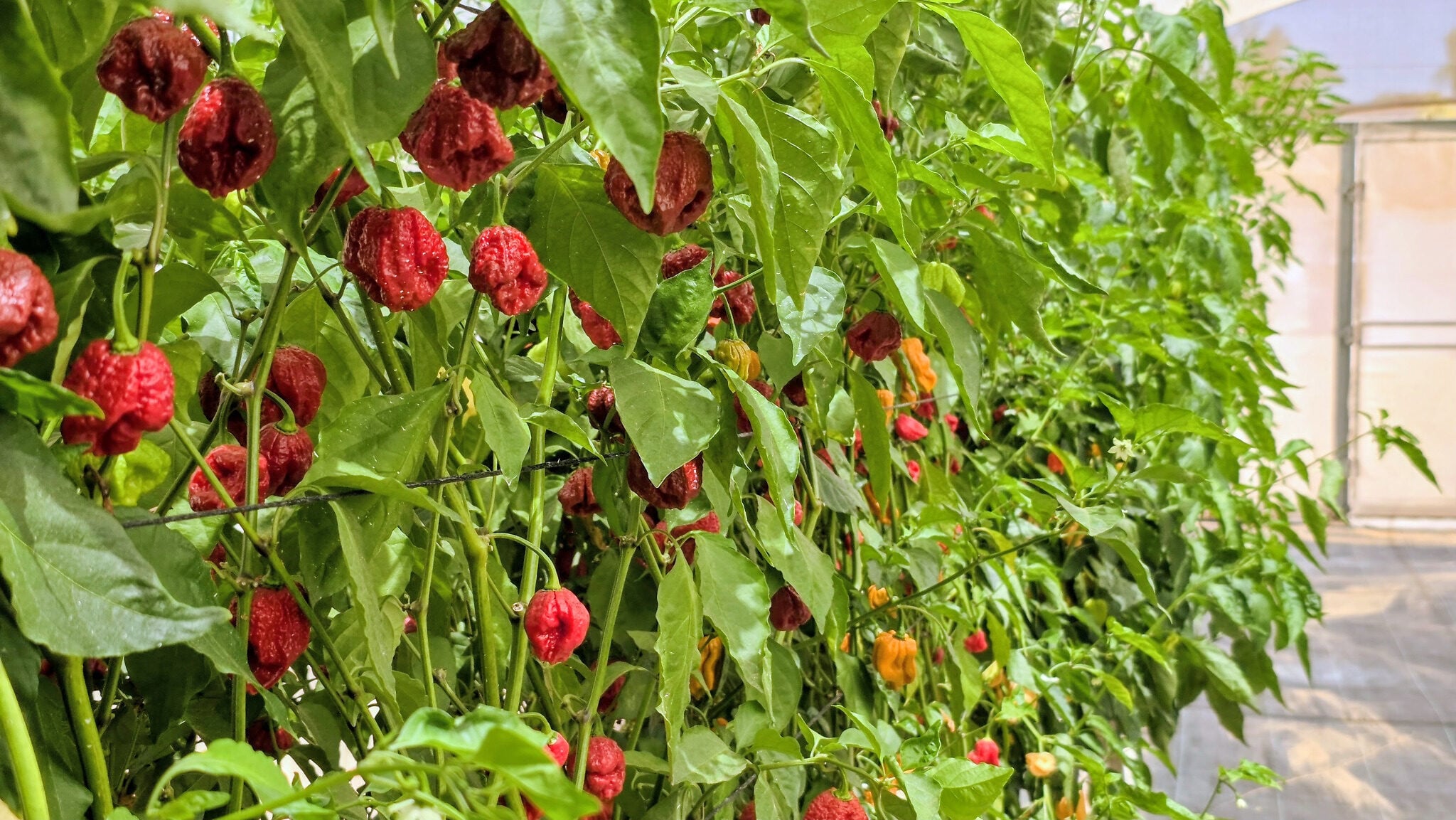
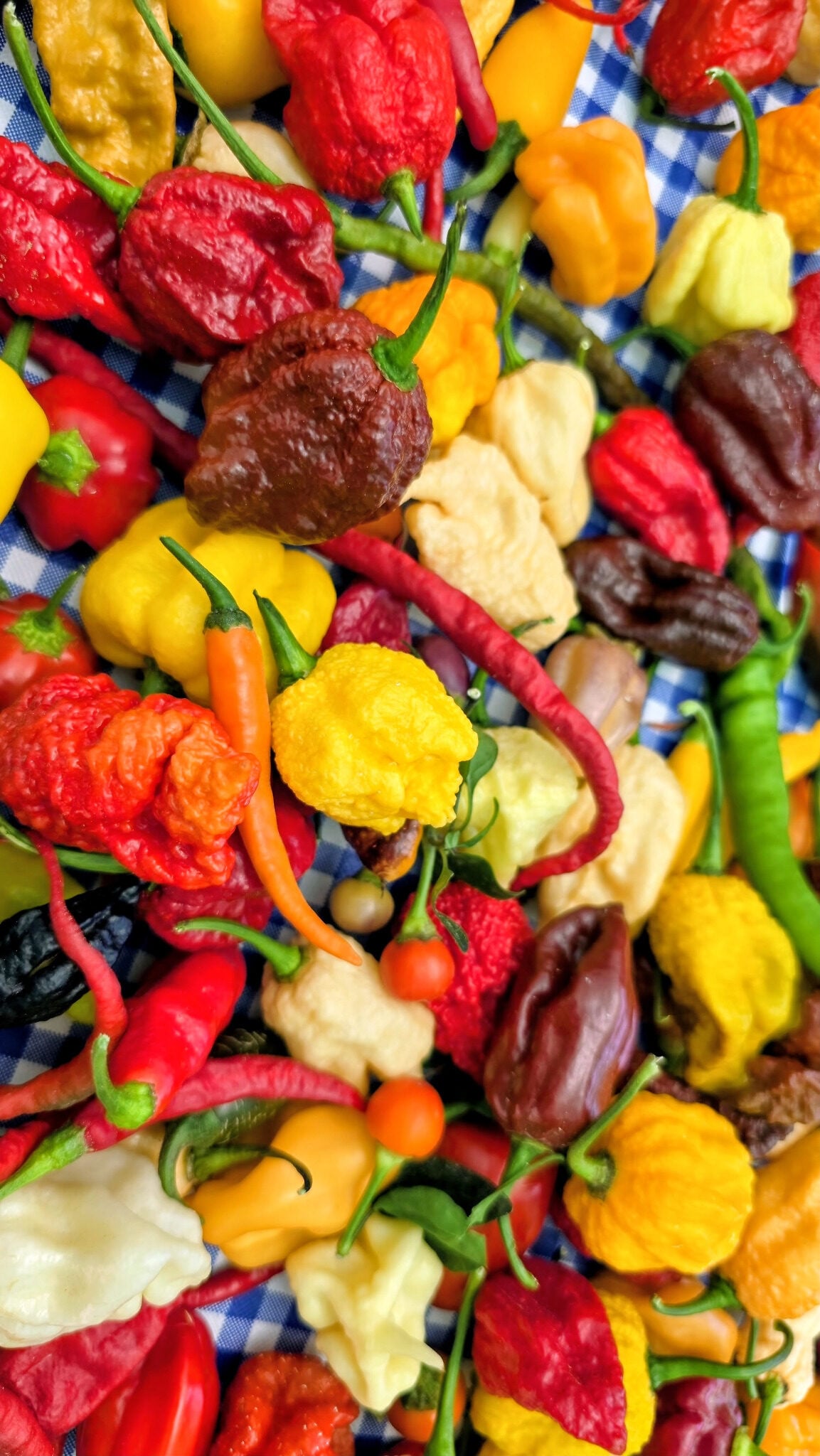
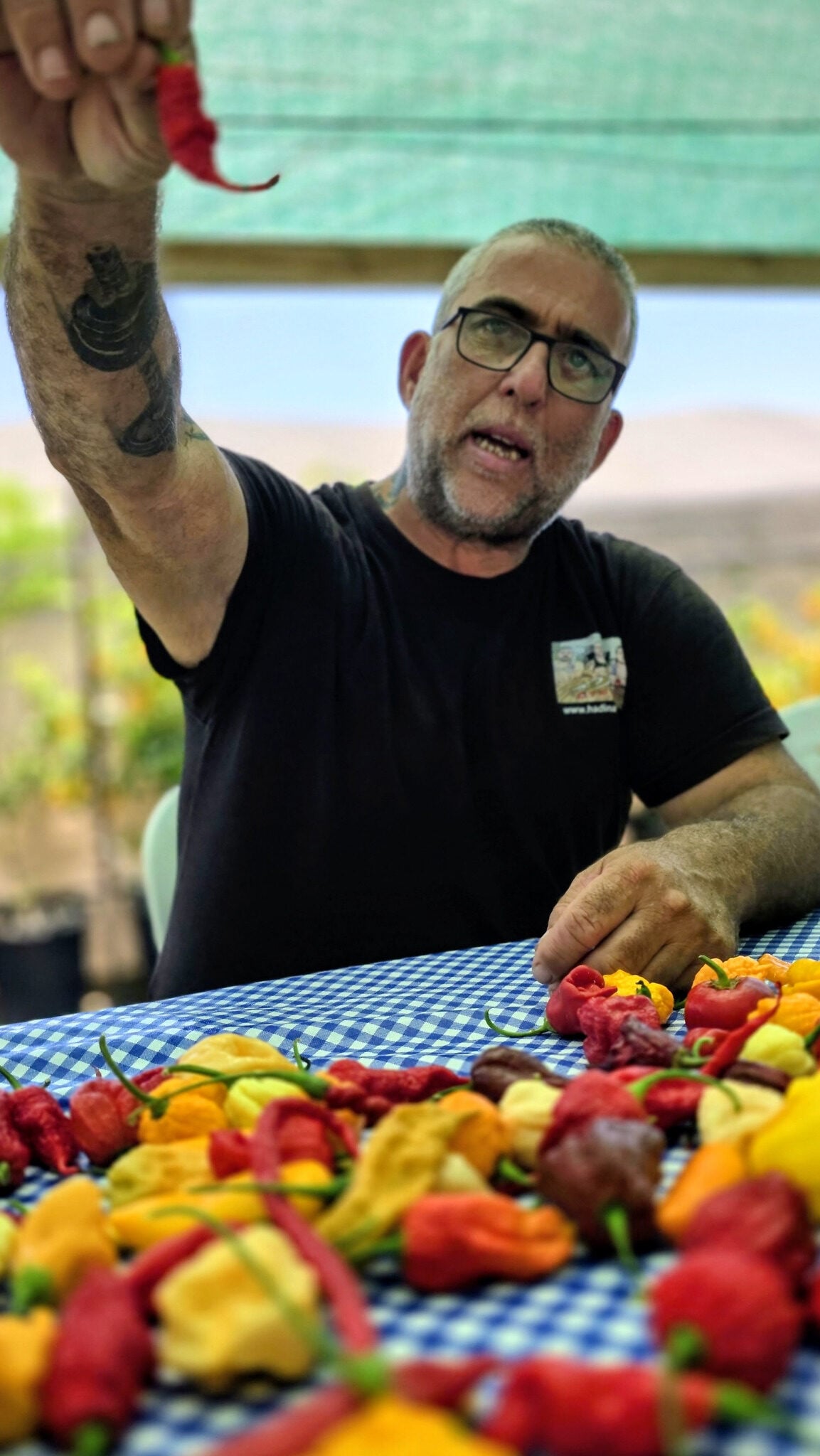
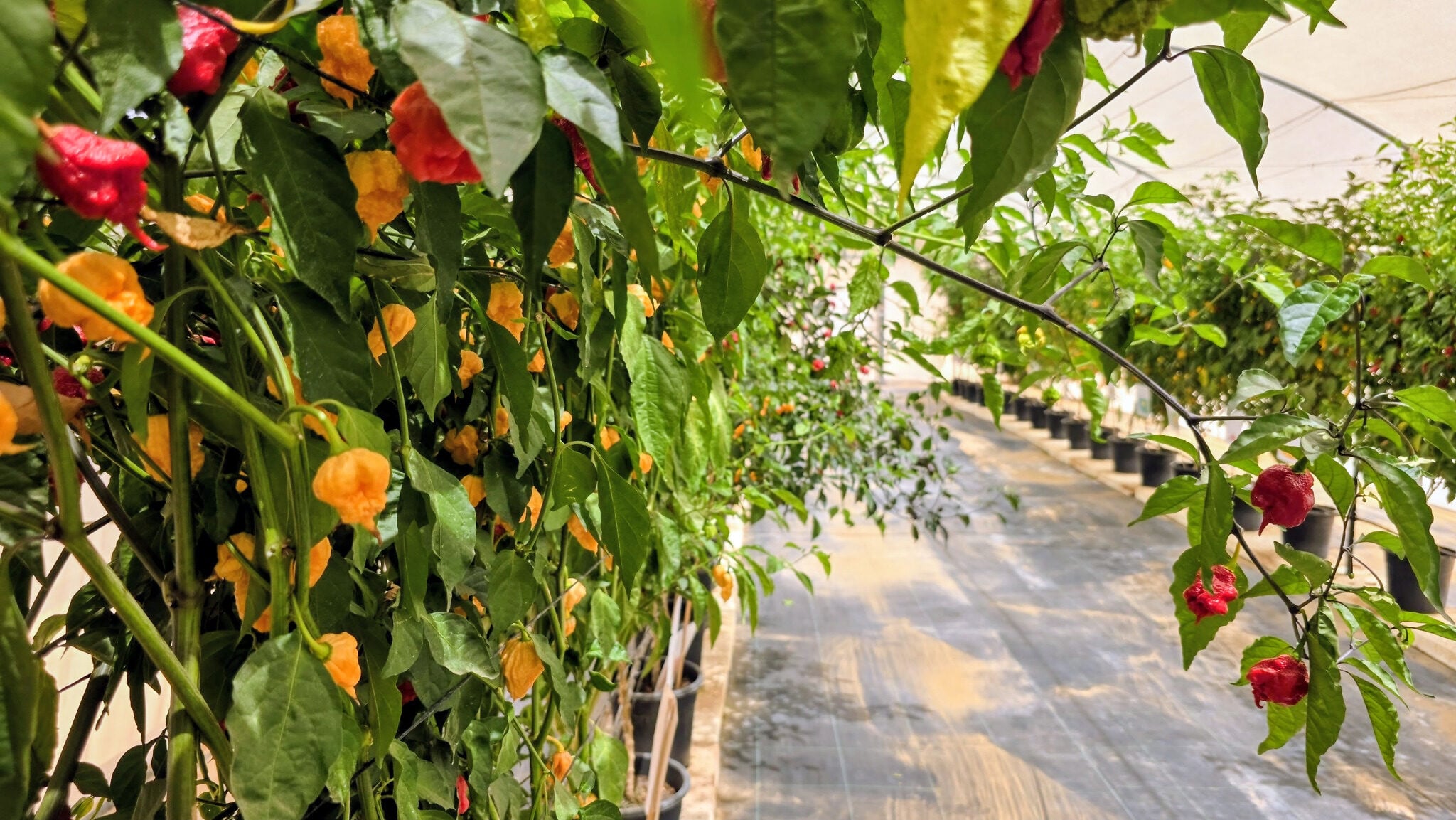
Yair Diner used to drive a truck and barely spoke to anyone. After a painful family loss, he says, “I was a walking dead man living on sleeping pills, and this magic brought me back to life.” The magic started with a few hot pepper seedlings his son brought home. Today Yair grows about 230 varieties by himself.
Visits start with his talk on hot peppers: the types and varieties, how heat is measured and what makes one pepper different from another. Then visitors taste the products of Dinerim, Beit Shel Harif (“a house of hot”), his family’s line of spicy jams, spreads, sauces and chocolates, which are a big part of any visit. When the first hostages came home, he grew his fields from two dunams to six. “Whoever wanted to weaken me got me a hundred times stronger,” he says. He plans to name a new pepper after Rimon Kirsht’s late husband, who was released from captivity.
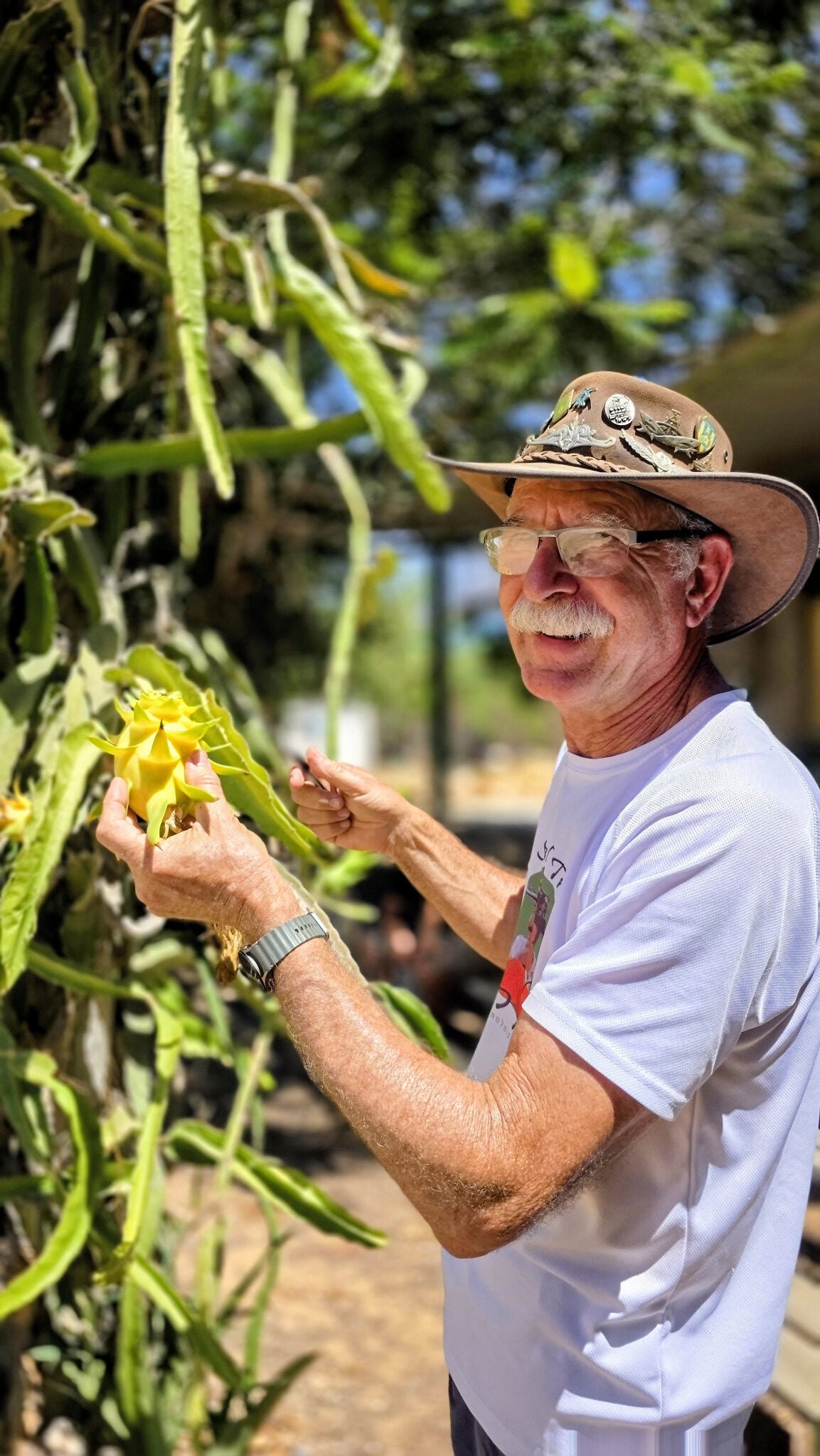 The Salad Trail: high-tech in the desert
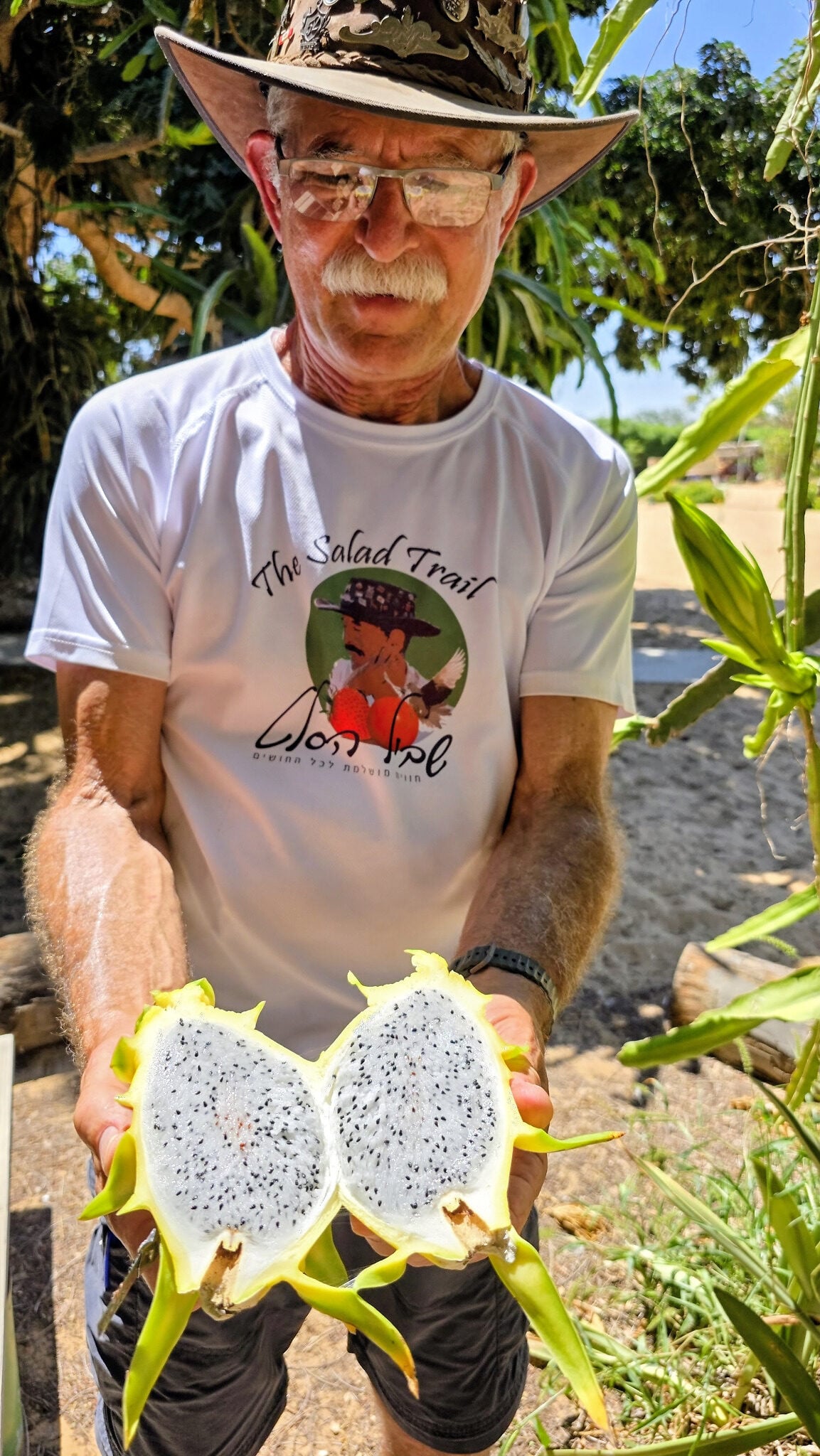
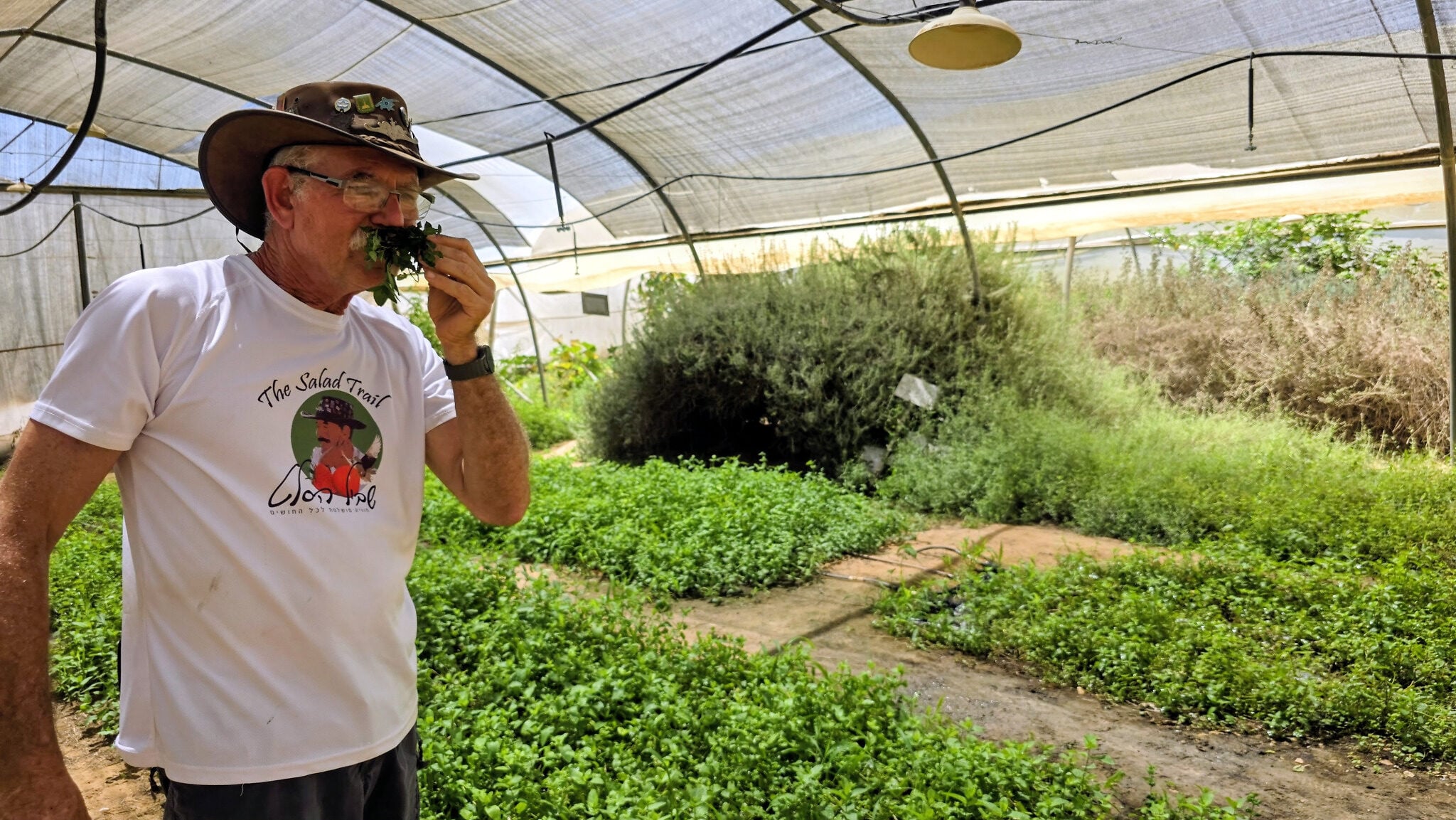
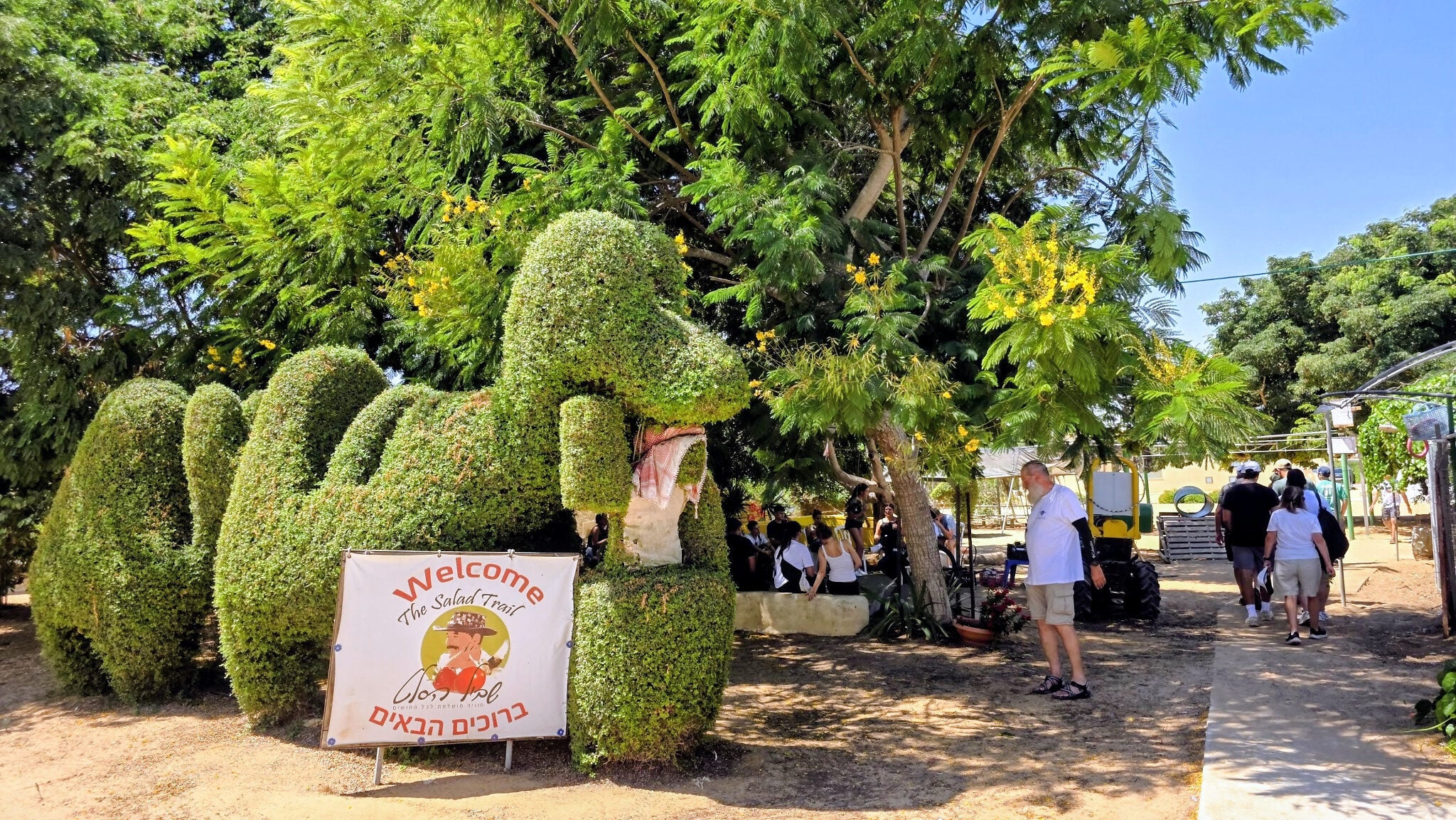
When agronomist Uri Alon came to Moshav Talmei Yosef in 1988, “all I saw was sand,” he told Tablet Magazine. In 2004, he and his wife, Shuli, opened the Salad Trail, a farm that grows only for visitors. “55,000 people come to us a year,” Uri says. “It’s the second-largest site in the Negev after Masada.” Kids pick strawberries from hanging planters and try chocolate-colored tomatoes. Uri wants “to teach them that you can do high-tech in the desert.”
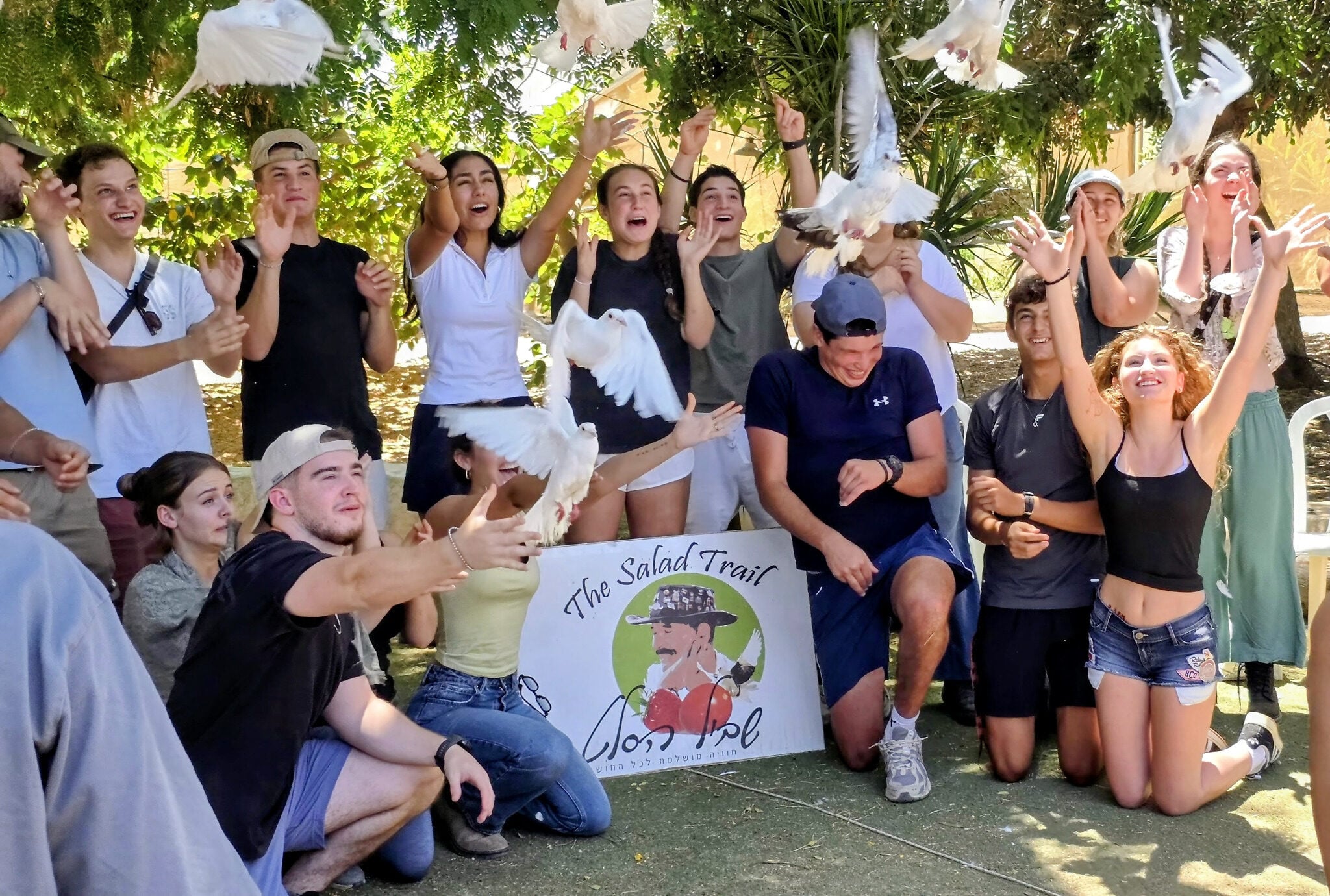
In a normal year, about 60 percent of his visitors come from abroad, and groups like Taglit-Birthright, Ramah and Young Judaea have been coming for more than 20 years. When I lived in Sderot, I hosted some of those same Taglit groups. One greenhouse now honors a guide from the farm who was murdered on October 7 while trying to save his granddaughter. Each visit ends with everyone releasing white homing pigeons at once, on the count of “one, two, shalom.”
 Gevulot: first to settle, first to return
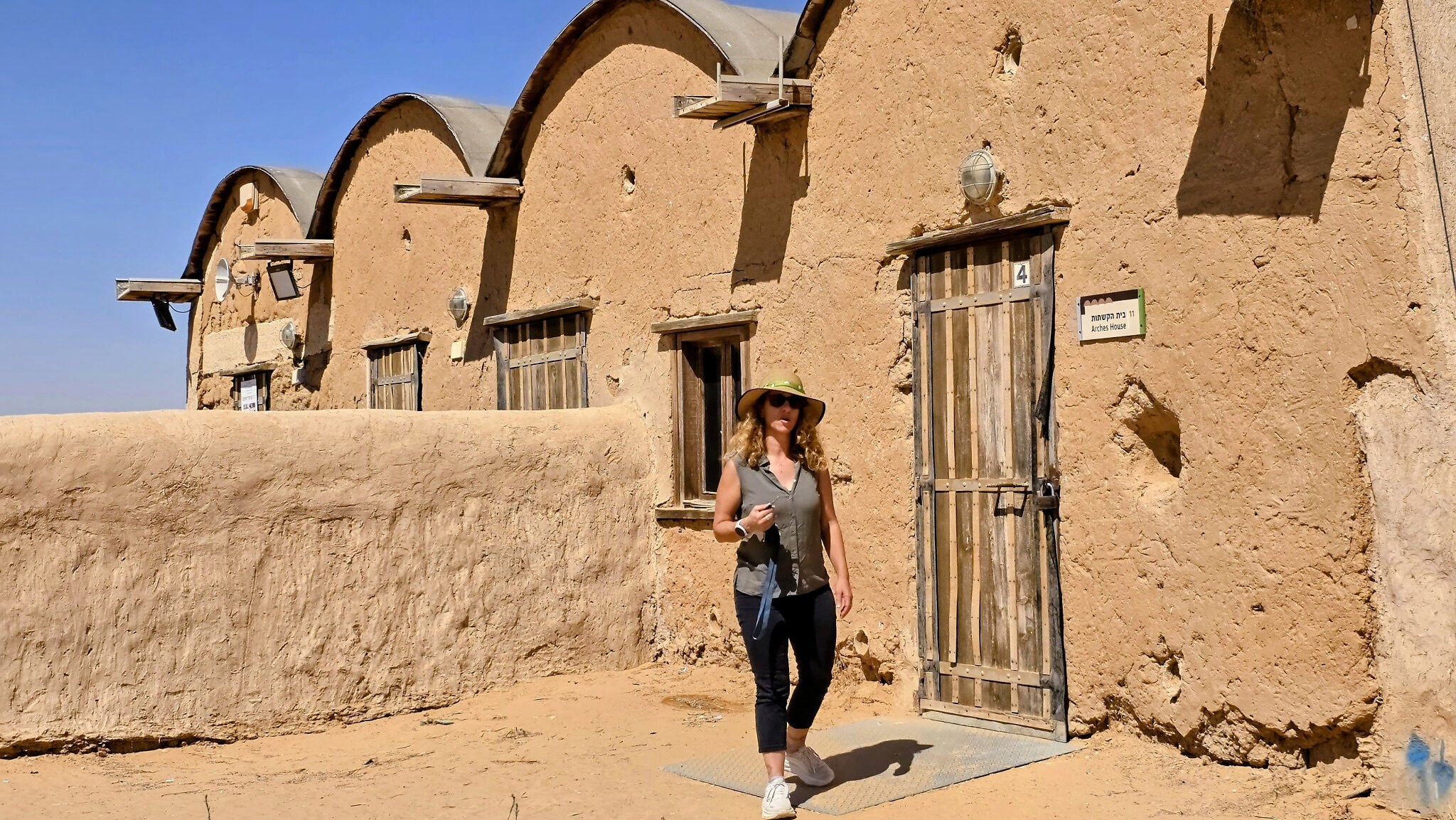
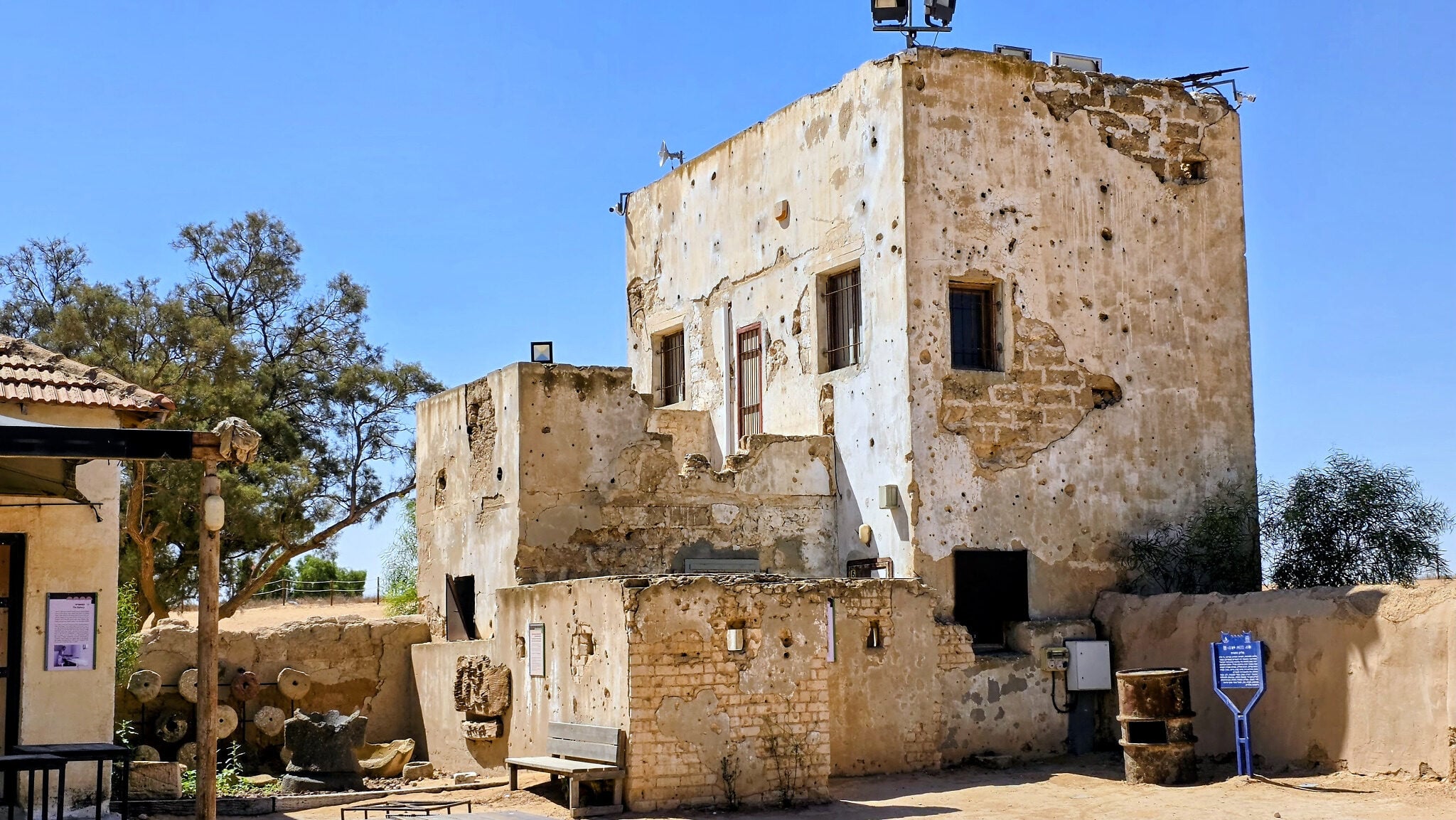
Ronit Dvir has run tourism at Kibbutz Gevulot for 28 years. Mitzpe Gevulot, founded in 1943, was the first of three experimental outposts in the Negev. Its mud-brick buildings include the Negev’s first clinic, once run by Dr. Diamant, and its first bakery, where the clay oven still bakes challah.
After the evacuation, Gevulot was the first community in the region to move back home. A memorial corner with colorful murals honors Tamari Kedem-Siman Tov, her husband and their children, who were murdered on October 7. “This place at night is magic,” Ronit says. “You sit on the swing at sunset with a bottle of beer, and you’re somewhere else entirely.” She also rejects the term “Gaza Envelope.” “We don’t envelop anything. A mother envelops a child. We are the western Negev.”
 Mid-Bar: a kosher table for groups
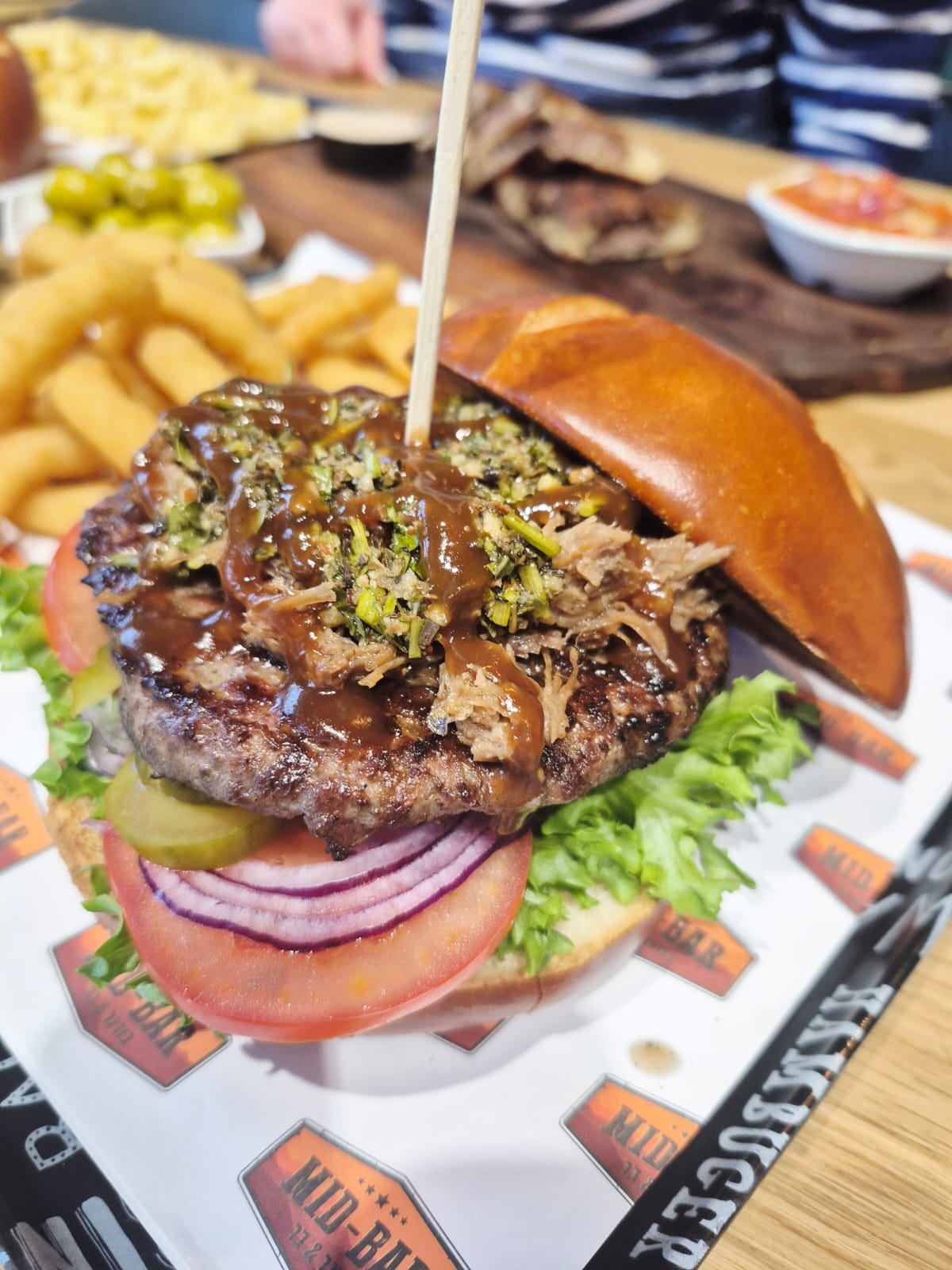
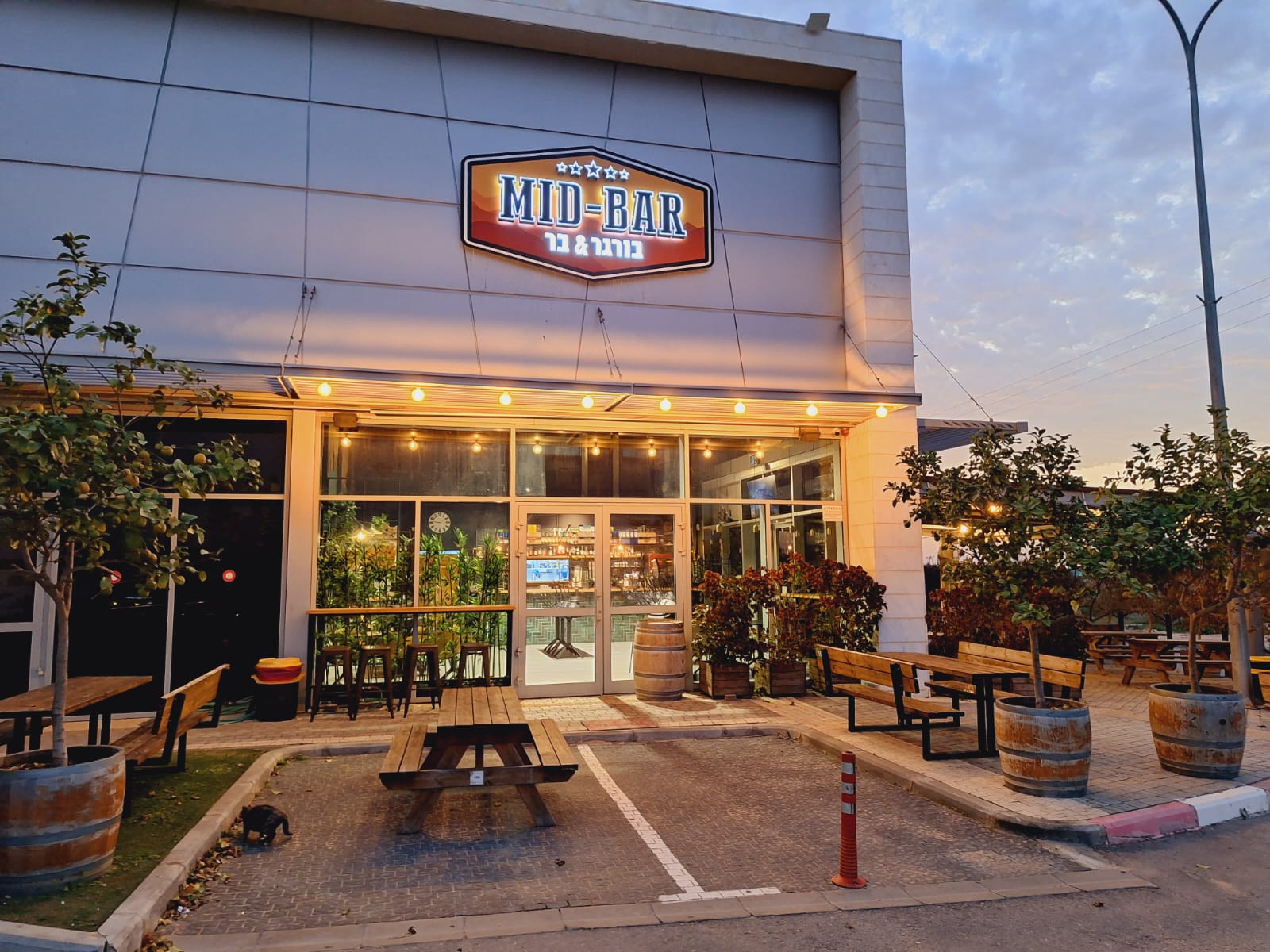
Visitors from abroad need somewhere to eat, and Mid-Bar, a kosher restaurant at the Avshalom Center, can host tour groups, diaspora missions and religious families. The owner, a metalworker from Moshav Yated, opened it with his partner Jenia in April 2021. He rebuilt an empty warehouse himself, and it now seats 45 inside and 50 on a terrace facing the sunset.
Burgers are the main draw, but the menu also has spicy chicken wings, schnitzel strips, fish and chips, sandwiches and tortilla wraps, plus draft beer, coffee and desserts. Patties, chicken livers and wings are made in the kitchen, the vegetables come from Eshkol farmers, and in winter there are home-style stews and arak nights.
On October 7, the couple were at the Nova festival and left early. By November, he had reopened to feed the soldiers in the area. “We didn’t go back to October 6,” he says. “We came back to something that has a future.”
Coming back
Eshkol is a farming region that is alive, changing and proud of what it grows. Its farmers and hosts want people to come, meet them, taste their food and see for themselves how the western Negev is growing again.
Getting there: Eshkol is about a 90-minute drive from Tel Aviv. Autumn, winter, and spring are the best seasons for harvests, flowers, and mild weather.
Directory:
NOOR Glamping, Ostrich Farm hospitality: 050-659-8254
OPA Coffee Truck: 077-729-5743
New Land Now (Eretz Hadasha) Association: www.newlandnow.org
Dinerim, Beit Shel Harif, Yair Diner’s hot pepper farm: 054-561-4539
The Salad Trail, Uri Alon: 050-724-8989
Mid-Bar, local burger bar and meat restaurant: 08-644-1500
Kibbutz Gevulot hospitality: www.gvulotours.com, 054-791-9000
#NatureHealsIsrael