
Europe Talks Tough, Buys Israeli Tech Quietly
Public boycotts, private demand: Europe still courts Israel’s battle-tested defense tech – shaping its security future
Sometimes headlines are theater, necessary theater for protest squares, front pages, and evening newscasts. The longer I watch the churn of “bans” and “embargoes” on Israeli defense firms across parts of Europe, the pattern becomes clear: in public they posture; in private they procure.
I do not write that with cynicism so much as with clarity. I have lost track of how many times I have read that an exhibition stand was covered at the last minute, that an air show “technically reviewed” Israeli companies out of the hall, or that a contract was ceremonially torn up. Then, a week or a month later, I hear the other half of the story: delegations flying in for quiet demos; procurement officers requesting off-site trials; orders routed through subsidiaries in friendlier jurisdictions. When the security briefings get real – drones probing borders, jammers blind-siding airports, hostile cyber suddenly not so hypothetical – necessity overrules performance politics.
This is not a defense of every decision the Israeli government makes, and it is not a dismissal of European concerns. It is a simple observation from the last two years: technological superiority decides outcomes. And in the age we now inhabit – electronic warfare, low-cost munitions, autonomous swarms, space and spectrum contests – the market for proven solutions is brutally honest. If it works on a real battlefield, it will be wanted in real capitals.
I have watched a new layer of Israel’s technology economy rise from the crucible of October 7 and everything that followed. Reservists came home with notebooks full of gaps they had witnessed, workarounds they had improvised, and countless “if only we had had this” moments. Some of those notebooks became companies. Others joined a growing ecosystem of founders building defense tech on fast cycles, testing with units in the field, iterating in days instead of quarters. It is one of the sober silver linings of a dark period: a burst of focused innovation aimed at stopping the next October 7, in Israel or anywhere.
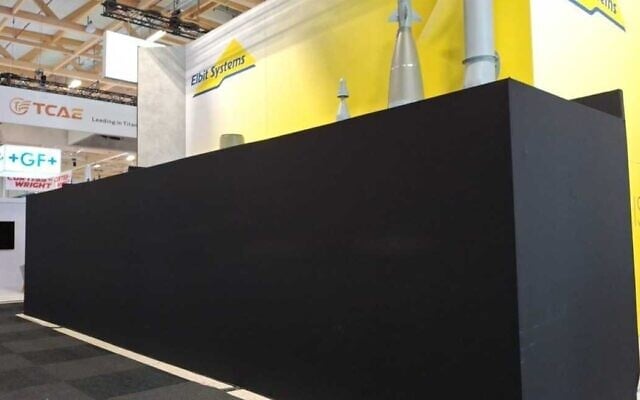
And yet, cue the headlines. Spain cancels a purchase. A Dutch fair disinvites Israeli firms. A Paris venue hides Israeli booths behind black partitions. The UK freezes trade talks. The EU muses about reviews. Each announcement lands with a thud; each becomes a clip for the evening news. Then the quiet work resumes. Because behind the podiums, the same governments face the same map: Russian Shahed drones and Kalibr cruise missiles in their airspace, critical infrastructure probed, airports disrupted, border units under-equipped. When procurement officers are asked, “What keeps you up at night, and what actually fixes it?,” their answers tend to rhyme. Israeli detection, interception, communications software, and decision-support tech appears again and again – not out of sentiment, but because it has been battle-tested in the conditions the rest of the world is suddenly taking seriously.
I have read accounts of founders who laugh wryly at this split-screen reality. Public heat, private haste. A European ministry declares it will “re-evaluate engagement,” then, almost the same week, asks for a field demo, and whispers, “Can you show it under NATO standards?” A customer emails, “We cannot sign with the Israeli mothership right now; can your United States subsidiary paper the deal?” Another asks for a pilot “on neutral soil,” arriving with officers who introduce themselves only by initials. This is not hypocrisy for sport; it is the collision between politics and procurement. The former must satisfy the street. The latter must satisfy the mission.
Meanwhile, Israel’s defense-tech founders carry on with a paradoxical mix of grief and grit. Many spent months on reserve duty. Many missed births, holidays, graduations. Then they came back to labs and hangars and sprinted harder. Some raised rounds from global funds that, yes, still invest in Israel because they prize efficacy over optics. Others bootstrapped and sold directly to units that needed the kit yesterday. A handful of new venture vehicles emerged to back this “Moneyball meets Deep Tech” wave – small, smart, scalable systems integrated with heavier legacy platforms. The story is not mere drones or jammers; it is full-stack: sensing, fusing, deciding, striking, resupplying, hardening, recovering. It is also dual-use: the same communications node that keeps a team connected in a canyon keeps first responders online during a flood.
So what, exactly, is my critique of Europe’s posturing? Not that it raises hard questions — democracies should. Not that it argues about law — we all should. It is that too often it turns into choreography: a performative embargo that exempts the one part no one can do without; a ban from an expo that quietly converts into bilateral testing; a speech decrying “Israeli weapons” followed by a procurement brief requesting “Israeli-style performance.” It is the gap between the moral tone of the press conference and the moral responsibility of actual protection. If Russian drones are violating your airspace, is it more ethical to refuse a sensor that spots them, or to install it?
There is also a practical point that industry veterans keep repeating: supply chains in defense are limited. You cannot swap a battle-tested system with a brochure-ware alternative and expect the same results. There simply are not ten interchangeable options for certain classes of sensors, interceptors, electronic warfare (EW) suites, or high-reliability communications. Certain Israeli capabilities are unique precisely because they have been refined in a real, relentless test range. You do not have to like that reality. But if you are responsible for keeping a city safe, you do not get to pretend it is not real.
Let me add something personal. Every few weeks I visit Those We Have Lost, the Times of Israel memorial. I look at the faces of young soldiers and civilians whose lives were stolen on October 7. I read a paragraph or two and sit there in silence. Then I think about founders I know who named releases after those heroes, or pledged a share of revenue to their causes, or just worked with fiercer focus because of them. That is the well from which this ecosystem draws; it is not triumphalism, but duty. Resilience and renewal are not slogans in Israel; they are operating principles.
Which is why I am oddly joyful even as I write a critique. I am joyful because I have seen this movie before. For decades the world has signaled skepticism with one hand and signed purchase orders with the other. Our job is not to obsess over the hand-wringing; it is to keep building what works. If Israel does that, the demand will outlast the headlines, because threats will outlast the news cycle. The countries that talk loudest today may call quietly tomorrow, and Israel will answer — if they are allies, if their need is genuine, if lives depend on it.
What should Israel do in response to the current round of public-private dissonance?
First, keep innovating the future of Israel — and, where appropriate, Israeli friends’. That means doubling down on dual-use deep tech: power systems that can feed lasers and microgrids, sensing that underpins both civil aviation and air defense, AI that accelerates intelligence with human oversight, and secure communications that ride out jamming and storms. Do not build to the headline; build to the mission.
Second, streamline procurement in Israel. The world is watching how fast Israel can field what it invents. The distance from lab to unit is Israel’s competitive edge. Protect it.
Third, diversify channels. If a fair bars an Israeli booth, demo at a base. If a trade ministry balks, work through an allied integrator. If a contract stalls for optics, offer a pilot that proves value in a week. Israelis are very good at this – quietly excellent, you might say.
Fourth, keep talking to Europe with respect and realism. Some governments posture because they must balance coalitions; some are simply misreading the battlefield. Many are sincere partners facing growing risks, yet few have the courage of conviction to engage Israel openly. Engage them as such. When they ask for help, treat it as an opportunity to save lives and build trust, not to score points.
Will some deals be genuinely canceled? Yes. Will some doors close? Also yes. But look beyond the door and you will often see a side gate opening; opening because the engineer tasked with protecting a power plant does not answer to a press release; she answers to a threat model. In that world, the metric is not the purity of the podium line but the probability of detection, the time-to-intercept, the mean time to restore. On those metrics, Israeli systems are sought after for the simplest possible reason: they do what they say on the tin.
If you sense a thread running through this essay, it is the same thread that runs through Israel: resilience and renewal. Israel mourns, then builds. It is criticized, yet improves. It is blocked, yet finds another way. And out of that rhythm emerges new capability; a new capability that makes skies safer and borders more secure not only for Israelis, but for everyone..
So the next time a headline shouts that Israel has been barred from a show or spurned by a ministry, take a breath. Remember that procurement is a backstage art, and the backstage is crowded. Somewhere, a colonel is writing, “We’ll need the Israeli spec.” Somewhere, a city is installing a sensor that came out of an Israeli lab. Somewhere, a quiet handshake is saving lives.
Publicly, Europe may talk tough. Privately, Europe buys what keeps it safe. Israel’s job is to keep building what the world will need when the speeches are over. And then to show up, humbly or reliably, when the phone rings.