
Europe Wants Israeli Arms
I have watched Israel’s defense story for many years with a mixture of fascination, admiration, and quiet amusement. Not because war is ever something to celebrate. It is not. War is tragic, costly, painful, and morally heavy. But there is something extraordinary about the way Israel, a small country surrounded by determined enemies, repeatedly turns danger into discipline, pressure into invention, and isolation into leverage.
That is why I pay close attention to one particular metric: Israel’s defense exports.
Not slogans. Not speeches. Not angry resolutions. Not diplomatic theatre. Sales.
And when Israel’s Defense Ministry released its latest figures showing that defense exports reached a record $19.2 billion in 2025, up from $14.8 billion in 2024, I smiled quietly. Fifth year in a row. A record again. During war. During diplomatic hostility. During protests. During attempted boycotts. During the Gaza war. During conflict with Iran. During the latest US-Israel military campaign against Iran. During one of the most difficult strategic periods in Israel’s modern history.
Still, Israeli defense exports rose.
That, to me, is not merely a business story. It is a national story. It is a story of resilience and renewal. It is a story of a country that refuses to be defined by the rage of others. It is also a story of the strange, almost comic contradiction at the heart of Europe’s relationship with Israel.
Western Europe may scold Israel in the morning, sanction Israeli firms in the afternoon, and quietly study Israeli military technology by evening.
It may bar Israeli companies from defense exhibitions. It may allow hostile activism to intimidate Israeli-linked businesses. It may issue statements full of moral thunder. Yet when drones appear over airports, when Russia menaces the continent, when Iran’s missiles change the security equation, when European armies suddenly remember that security is not an academic seminar, they still come knocking.
And where do they come?
To Israel.
This is the part I find so fascinating. Europe’s political class often wants the luxury of condemning Israel while enjoying the protection of Israeli innovation. It wants the applause of the activist class and the assurance of Israeli battlefield-tested systems. It wants distance in public and dependence in private.
But defense procurement has a way of exposing truth. Armies do not buy hashtags. They buy what works.
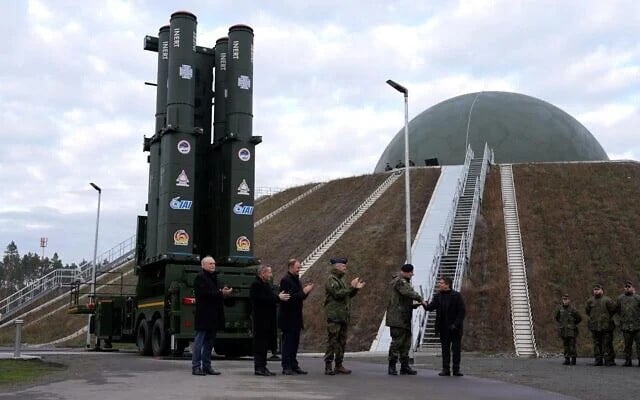
In 2025, Europe remained the largest regional buyer of Israeli defense goods, accounting for 36 percent of total exports, around $6.9 billion. That figure may be down from the extraordinary 2024 spike driven by Germany’s Arrow 3 purchase, but the direction of travel is still unmistakable: Europe cannot afford to ignore Israel’s defense ecosystem.
And why should it?
Israel has become one of the world’s great laboratories of urgent innovation. Again, I use that phrase carefully. Critics often weaponize the phrase “battle-tested” as though Israel invented the cruel reality that wars accelerate military learning. It did not. Every serious military power learns from conflict. Ukraine has become a testing ground for drone warfare. NATO is relearning lessons it neglected after the Cold War. Iran, Russia, China, Turkey, and others are studying every battlefield with cold attention.
The difference is that Israel does not have the luxury of slow learning. Israel must adapt quickly because failure is not theoretical. It is measured in lives, borders, hostages, homes, and sirens.
This is why Israeli systems attract attention. Air defense. Missiles. Rockets. Electronic warfare. Surveillance. Optics. Drones. Counter-drone systems. Command-and-control networks. Integrated battlefield communications. These are not abstract products in a glossy brochure. They are solutions refined under pressure.
That pressure is not pleasant. But Israel has turned it into a strategic advantage.
Take Europe’s current drone anxiety. Airports in Europe have been disrupted by suspicious drone sightings. Military facilities are worried about low-cost unmanned systems. NATO countries are waking up to a battlefield that Israel has already been forced to understand: drones are no longer toys, curiosities, or niche assets. They are central to modern conflict.
Israel has had to detect them, classify them, jam them, shoot them down, integrate them, and use them. It has faced drones from Hamas, Hezbollah, Iran, the Houthis, and other Iranian-backed actors. It has seen the sky become crowded, confusing, and dangerous. So when European governments now ask how to defend airports, bases, cities, and troops, it is no surprise that Israeli answers are attractive.
The same applies to digital battlefield systems. NATO armies spent decades underinvesting after the Cold War, only to discover that modern warfare demands real-time connectivity between commanders, soldiers, vehicles, sensors, drones, and aircraft. Israel has lived this reality for years. Elbit’s digital ground army systems, adapted for NATO architecture and demonstrated in Sweden, point to a larger truth: Israel is not merely selling weapons; it is exporting operational experience.
That is why the latest numbers matter so much. The $19.2 billion record is not just money. It strengthens Israel’s defense budget. It supports the IDF’s force buildup. It keeps production lines alive. It funds research and development. It creates diplomatic leverage. It rewards Israeli engineers, technicians, entrepreneurs, reservists, and soldiers whose experience feeds back into innovation.
This is what I mean by innovating the future of Israel.
A strong defense export sector is not a side hustle. It is part of sovereignty. It gives Israel more room to maneuver in a world where friends can become hesitant, allies can become noisy, and international opinion can shift like sand.
Of course, Israel must continue to export responsibly. Defense technology is serious business. It must be governed by ethics, law, scrutiny, and strategic wisdom. Israel should never allow short-term sales to undermine long-term interests. It must protect its qualitative edge, guard sensitive systems, and be careful about where the most advanced technologies go.
But the bigger picture is undeniable: the world wants Israeli defense technology because the world is becoming more dangerous.
Europe knows this. Germany knows this. NATO knows this. The Gulf knows this. Asia knows this. Even countries that prefer not to say it too loudly know this.
Germany’s Arrow 3 deal remains the great symbol of this new era. Who could have imagined it? A Jewish state, born from the ashes of Jewish catastrophe in Europe, now helping defend Germany and, by extension, Europe. There is something profound, almost biblical, in that reversal. History has a strange way of turning humiliation into dignity.
And Israel, to its credit, does not refuse to help its critics. That is one of the most beautiful and underappreciated things about the Jewish state. It continues to build. It continues to defend. It continues to invent. It continues to share. Even when others lecture it unfairly, Israel often responds not with bitterness, but with capability.
There is a quiet confidence in that.
The countries that attack Israel diplomatically may still need Israeli radar. The governments that grandstand over Gaza may still need Israeli counter-drone systems. The officials who avoid Israeli booths at defense expos may still ask their procurement teams to examine Israeli solutions. The same continent that sometimes treats Israel as a moral inconvenience increasingly treats Israeli technology as a strategic necessity.
That is why I say, with a smile rather than a sneer: see who is laughing now – not crudely, not arrogantly, but with the calm satisfaction of a people whose work speaks louder than the world’s noise.
Israel’s enemies wanted exhaustion. They got adaptation. Its critics expected isolation. They got record exports. Its boycotters wanted decline. They got demand.
The lesson is simple. A country that must survive cannot afford mediocrity. Israel has had to become creative because its enemies are relentless. It has had to become inventive because its margin for error is narrow. It has had to become strong because history taught Jews the terrible cost of weakness.
So yes, I welcome the record defense exports. I welcome them not because I love war, but because I love survival. I welcome them because they show that Israel’s genius is still valued, even by those who pretend otherwise. I welcome them because they strengthen the industries that help protect Israeli children, Israeli cities, and Israeli skies.
And I welcome them because they remind us that resilience and renewal are not poetic slogans. In Israel, they are production lines, laboratories, command centers, radar screens, startups, factories, and soldiers returning from the front with lessons that become tomorrow’s systems.
Europe may continue to loathe Israel in public. But when danger comes flying low, fast, cheap, and deadly, Europe still knows where to look.
To Israel.