Exclusive: Anelise Froés on Brazil, Education and Antisemitism – Part II
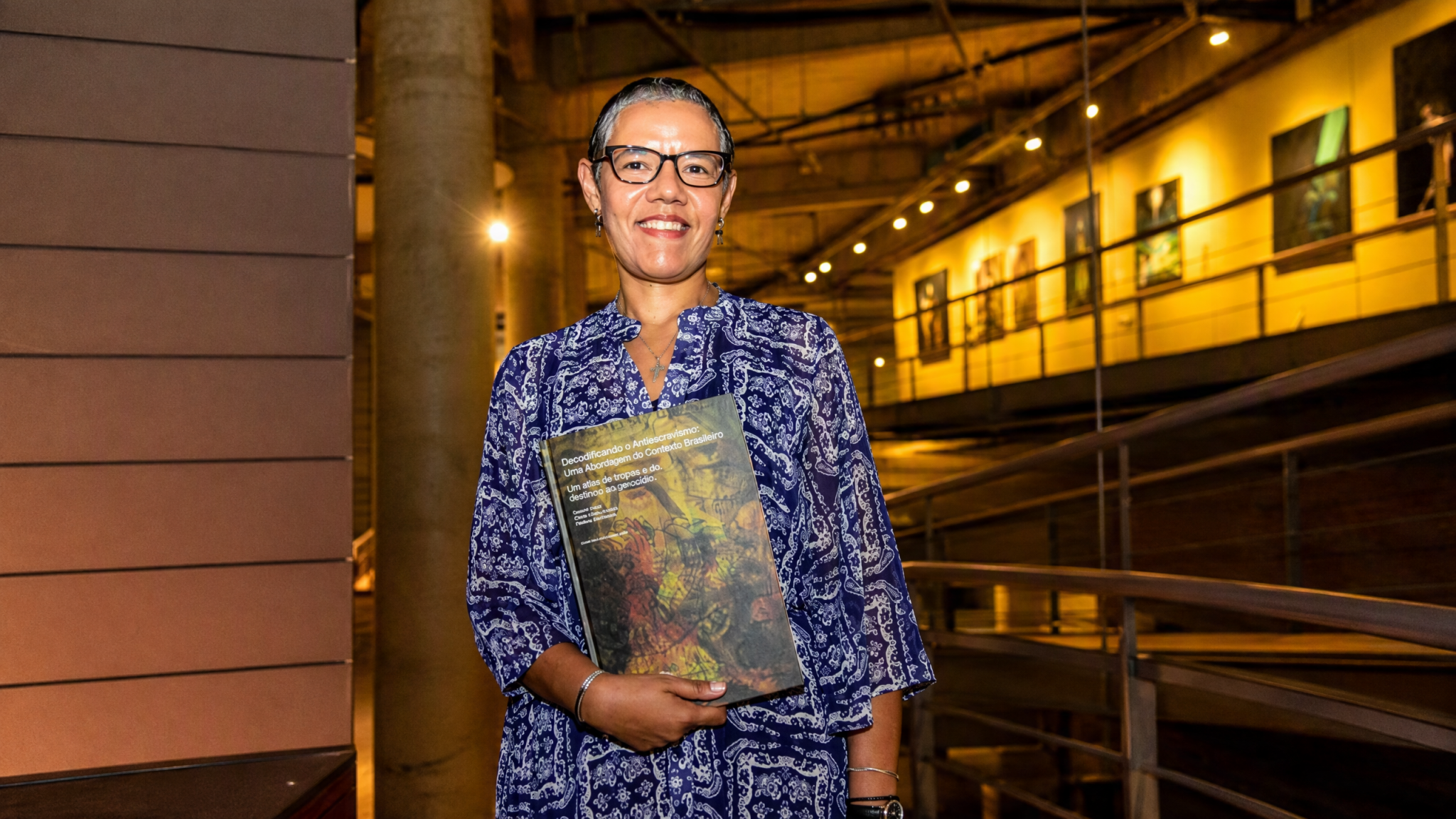
In the first part of this exclusive interview, Brazilian anthropologist Dr. Anelise Froés reflected on her personal and academic journey, her early encounters with Jewish memory, the legacy of Anne Frank, and the global rise of antisemitism. She emphasized how memory and history intertwine, showing that antisemitism is not confined to the past but constantly adapts to new contexts and languages.
Now, in the second installment, Dr. Froés turns to her relationship with the Jewish community, the Brazilian context of antisemitism, the challenges of Holocaust education, and leaves readers with a powerful message about responsibility, solidarity, and the importance of asking difficult questions.
Installment II
5. Affinity and Empathy
You are not Jewish, yet you show great affection for the Jewish community. Where does this connection come from?
I would perhaps begin by slightly adjusting the very idea of “identification.” There is, without doubt, a very deep affection for the Jewish community, built over more than three decades of coexistence, friendships, research, and work. But I am not sure I would call it identification. I am not Jewish, and I do not need to imagine myself as Jewish to recognize the importance that the Jewish world has acquired in my life.
In fact, my own family history helps explain why this relationship became so intellectually significant for me. My maternal grandmother was a Black, Catholic woman, the daughter of a woman born under slavery in Brazil. She was loving and deeply religious. And it was also through her that I first encountered, as a child, an old Christian antisemitic representation: the idea that Jews were responsible for the death of Jesus.
That memory has stayed with me because it contains an important lesson about prejudice. My grandmother certainly did not think of herself as someone who hated Jews. She was transmitting something she had received as part of a religious and cultural tradition. Many years later, when I began studying the history of antisemitism, I understood that this seemingly simple phrase carried centuries of elaboration of the deicide trope and had produced very concrete consequences for Jewish populations.
Perhaps this also explains why I am so interested in understanding the mechanisms of transmission of antisemitism. Prejudice is not reproduced only by people who consciously hate a particular group. It can also survive in family stories, expressions, images, religious teachings, jokes, and cultural conventions that seem natural precisely because their origin has been forgotten. Realizing that I myself had received one of these representations in childhood made it impossible for me to study the phenomenon as if it always belonged to “others.”
At the same time, my relationship with Jewish life was built through real people. Friends took me to a synagogue for the first time, introduced me to celebrations and traditions, welcomed me into their homes, and allowed me to know a community not as an object of study but through living together. Later came decades of research and work, new friendships, and professional ties. Naturally, some Jewish references also became part of my daily life.
But I think it is important not to turn this affection into idealization. Philosemitism and antisemitism may seem like opposites, but both can reduce real people to an essentialized image of what “the Jew” would be. Jews do not need to be idealized for antisemitism to be confronted. They are diverse individuals and communities, marked by religious, political, cultural, national, and generational differences—and, like any other human group, by agreements and conflicts.
That is why I would describe this relationship less as identification and more as affective belonging built through coexistence, accompanied by intellectual responsibility. I remain a non-Jewish woman who had the privilege of being welcomed for many years into Jewish spaces and of building very important relationships there. This allows me to be close, but also obliges me to recognize that certain experiences are not mine.
And I believe there is something very simple at the center of all this: one does not need to belong to a group to consider that prejudice directed against it also concerns us. Confronting antisemitism cannot be the exclusive responsibility of Jews, just as confronting racism should not belong exclusively to its victims. Solidarity does not require identity. It requires listening, knowledge, and the willingness to assume responsibility for the world we share.
6. Brazil and the Challenges
In your view, what is the situation of Jews in Brazil today? Is there a risk of following the path of countries like France and England?
I would separate two important dimensions: material security and social environment. Comparatively, Brazil is still a safe country for Jewish life in a very concrete sense. We have not observed here, on a recurring basis, the kind of antisemitic physical violence that has become a reality in other countries: lethal attacks, frequent assaults against identifiable Jews in the streets, or terrorist attacks against synagogues. This difference is very important and should not be erased by an alarmist narrative.
But recognizing this does not mean we do not have a serious antisemitism problem. Brazilian data show a more complex situation. In 2025, 989 antisemitic incidents were validated in the country. This represents a significant reduction compared to the 1,788 recorded in 2024, but it is still 149% higher than in 2022, before October 7. Therefore, we are not facing a curve that simply keeps rising; we are facing something that concerns me in another way: after the enormous growth of 2023 and 2024, the phenomenon receded but stabilized at a much higher level than we had previously. Conceptually, we have adopted this as a “new normal.”
Moreover, the Brazilian profile is markedly digital. More than 80% of validated incidents in 2025 occurred online. They include insults, threats, conspiracy theories, trivialization or glorification of violence, antisemitic images and memes, as well as more coded forms of hostility. These produce real effects even when they do not end in physical violence. The digital environment helps establish what a society comes to consider acceptable to say about a particular group.
That is why I would be cautious both with alarmism and with excessive reassurance. I do not think it is correct to say that Brazil is simply reproducing the trajectory of European countries. Historical, demographic, political, and institutional contexts are different, as are the forms antisemitism takes. In the United Kingdom, for example, 2025 ended with 3,700 incidents recorded by the Community Security Trust, including physical assaults and a fatal terrorist attack against a synagogue in Manchester. That is not the Brazilian reality.
At the same time, it would be a mistake to use the absence of that level of physical violence as a sufficient measure of security. Between a healthy social environment and an assault in the street lies a long chain of processes: normalization of stereotypes, growing tolerance of hate speech, threats, harassment, exclusion, and the perception by victims themselves that certain signs of their identity must be hidden.
This intermediate zone is what worries me in Brazil. When antisemitism becomes routine on social networks, when a Jewish person is blamed for decisions of the Israeli government, when Jewish institutions receive threats, or when certain discourses stop producing social embarrassment, a process of deterioration is underway—even if it is not accompanied by systematic physical violence.
I also do not consider it inevitable that this deterioration will end in the scenario we observe in other countries. Societies do not follow an automatic sequence that begins with speech and necessarily ends in violence. Precisely for this reason, there is room for prevention. Education, knowledge production, monitoring, legal accountability, and institutional capacity to recognize antisemitism before it reaches its most extreme manifestations make a difference.
So, if I had to summarize the Brazilian situation, I would say we have a combination that requires attention: relatively high material security and persistently elevated antisemitism, especially in the digital environment. It is possible to recognize both at the same time. We do not need to claim that Jews today live under generalized physical threat in Brazil to take seriously the signs of deterioration already shown by the data.
Perhaps the most useful question is not whether Brazil “will become” France or the United Kingdom. It is what we can do now to ensure that forms of hostility already present here do not normalize or advance. And it is precisely in this interval—before violence becomes part of everyday life—that education, research, and prevention have the greatest chance of producing results.
7. Knowledge of the Holocaust
The survey “Knowledge of the Holocaust in Brazil” shows that only 38.5% of respondents identified Auschwitz-Birkenau as an extermination camp, while 51.6% did not know how to respond. In your opinion, how can we expand knowledge of the Holocaust in Brazil?
These numbers are worrying, but I think it is also important to ask what we mean by “knowing the Holocaust.” Recognizing the name Auschwitz-Birkenau is certainly a relevant indicator, but historical knowledge cannot be limited to the ability to identify camps, dates, numbers, or figures. The challenge is to ensure that people understand the process that made the Holocaust possible.
Auschwitz did not emerge in a vacuum. The Shoah was the result of a historical process involving a long tradition of antisemitism, its racial and political transformation, the rise of Nazism, the progressive withdrawal of rights, segregation, persecution, deportation, and finally systematic extermination. If we teach only the last stage of this history, we risk presenting the Holocaust as a kind of incomprehensible catastrophe produced by exceptionally monstrous individuals, and we lose precisely what history can teach us about the social processes that precede extreme violence.
Therefore, expanding knowledge of the Holocaust in Brazil requires, above all, consistent investment in historical education. This involves schools, of course, but also teacher training. It is not enough to establish that certain content must be taught if educators lack training, bibliography, sources, and adequate pedagogical tools to work with such a complex subject.
I also consider it essential to bring students closer to individual trajectories. Here we return to what Anne Frank represents so well: numbers are indispensable to understand the scale of the crime, but names, photographs, letters, diaries, documents, and testimonies restore to victims their condition as historical subjects. When we teach only “six million,” we may inadvertently turn people into statistics. When we know some of those lives, we better understand what it means to say that millions were destroyed.
There is another contemporary challenge: teaching how to deal with information. Young people encounter history not only through books and teachers, but through short videos, social media, search engines, and increasingly, content produced or mediated by artificial intelligence. In this environment, excellent educational initiatives circulate alongside simplifications, historical errors, conspiracy theories, relativization, and Holocaust denial. Historical education today must include the ability to ask where information comes from, who produced it, what its sources are, and how to verify its reliability.
In Brazil, there is also important work of connection. The Holocaust is often perceived as an exclusively European and distant story. But Brazil received survivors, refugees, and different waves of Jewish immigration; it had debates about immigration and state policies that affected Jews; it has communities, archives, museums, testimonies, and family histories that show this memory also has Brazilian connections. Bringing these closer to students helps remove the subject from an abstract geography.
At the same time, studying the Holocaust should not mean turning it into a metaphor for any violence. Historical comparisons can be intellectually productive, including with other experiences of persecution and mass violence, as long as we preserve contexts, differences, and specificities. When every violence is called a Holocaust or every political adversary a Nazi, these words lose precisely what they should help us understand.
Perhaps, therefore, our greatest challenge is to move from an education based only on memory to an education that articulates memory and history. We must preserve testimonies, names, and individual experiences—especially as fewer survivors remain able to narrate them in the first person. But we must also provide tools to understand structures, ideas, institutions, and human choices.
Knowing the Holocaust is not only knowing what happened at Auschwitz. It is understanding how Auschwitz became possible. And that may be one of the most important contributions historical knowledge can offer new generations.
8. Message to the Readers
What message would you like to leave for the readers of The Times of Israel?
Perhaps I would begin by saying something very simple: antisemitism concerns Jews, but it does not concern only Jews. They are the ones who experience its consequences, of course, but understanding and confronting this prejudice is a responsibility that must be shared by society as a whole.
After so many years working with Jewish memory and, more recently, dedicating much of my research to antisemitism, I have also learned to be wary of overly simple answers. Long-standing prejudices do not survive because they remain the same. They survive because they manage to change, adapt their language, combine old ideas with contemporary events, and often circulate without being immediately recognized.
That is why one of the things I most hope our work produces is curiosity before certainty. Before repeating an image, an accusation, or an explanation about Jews, Israel, or Zionism, it may be worth asking: Where does this idea come from? What is its history? What exactly am I claiming? Is there evidence for it? Am I speaking about a person, a government, a state, a religion, a community—or am I collapsing all of these into the same thing?
These questions are not meant to restrict debate. They are meant to qualify it. We live in a moment when extremely serious words circulate with enormous ease, and when historical and legal categories can quickly lose precision through indiscriminate use. Preserving distinctions between concepts is not academic pedantry. It is a way of preserving our ability to understand the world, and also to recognize racism, antisemitism, genocide, authoritarianism, or any other form of violence when we are truly confronted with them.
At the same time, I would like Jewish readers to know that there are many people outside the Jewish community who are interested in listening, studying, and assuming part of this responsibility. Not because they intend to speak on behalf of Jews, and certainly not because they idealize Judaism or Jewish communities, but because a democratic society cannot demand that the victims of prejudice also be the only ones responsible for explaining and combating it.
Perhaps this is what my own journey has taught me most deeply. I entered this universe first through reading, then through friendship, through living together, and finally through research. I remain in it because there is still so much I do not know, and because I have learned that knowing history is one of the best ways to distrust easy certainties.
If I could leave a single message, therefore, it would be less an assertion than an invitation: that we continue asking difficult questions, preserving the distinctions that make words meaningful, and refusing easy explanations for complex phenomena. Knowledge does not eliminate prejudice by itself, but it makes us far less defenseless against the languages through which prejudice seeks to become normal.
Interviews conducted by Liane G. Zaidler and Silas Anastácio