
Exclusive: Anelise Froés Reflects on Jewish Memory and Antisemitism – Part I
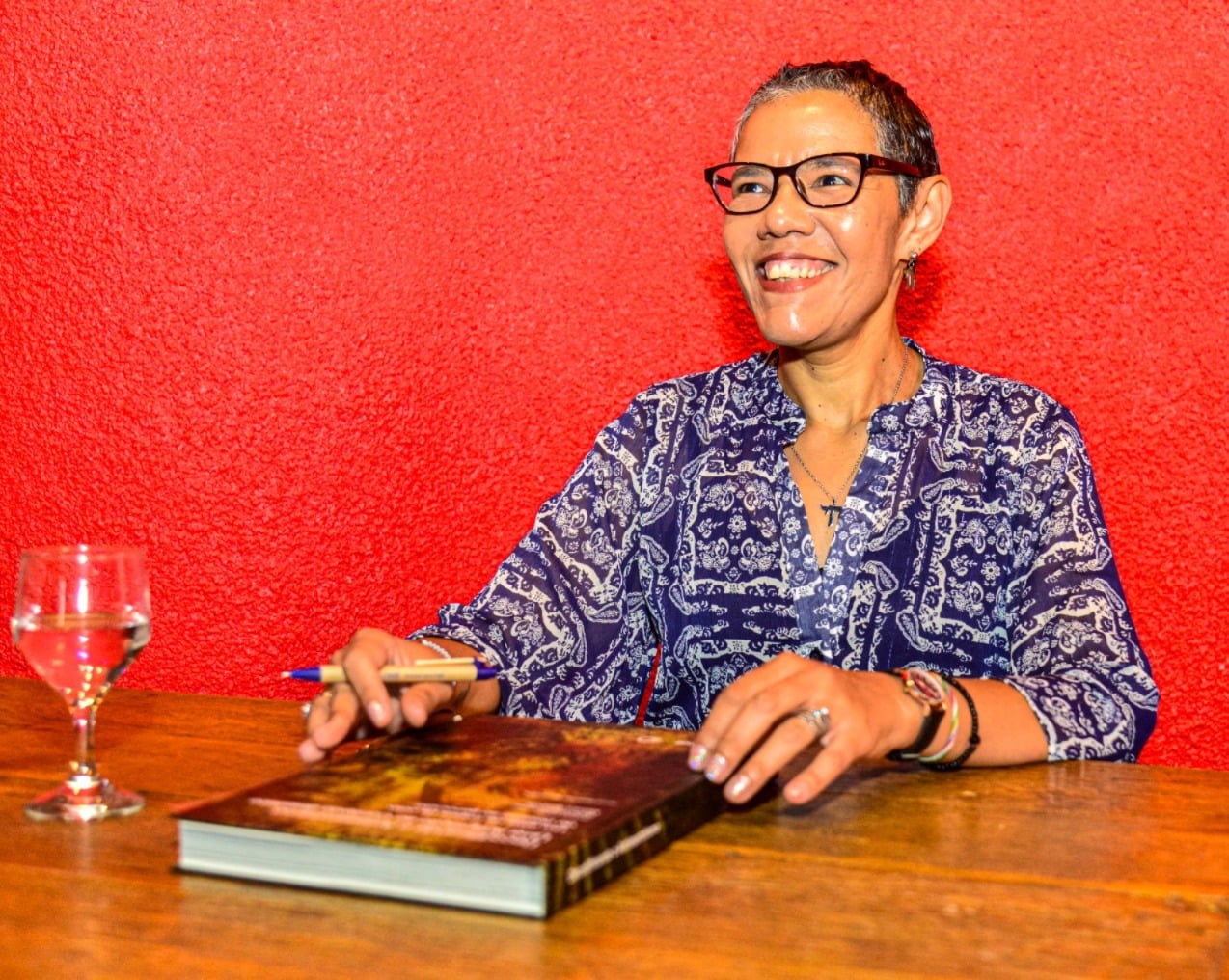
Presentation
In times marked by polarization, disinformation, and the resurgence of old prejudices in new forms, the voice of researchers who dedicate themselves to understanding these phenomena becomes indispensable. Dr. Anelise Froés da Silva, a Brazilian anthropologist with a career deeply committed to the study of memory, diaspora, and the fight against racism, antisemitism, and xenophobia, is one of those voices.
Her academic journey—spanning institutions such as UFRGS, UFSC, and UFRJ—has been shaped by investigations into Jewish memory and diaspora, including sensitive topics like the trafficking of Jewish women to the Americas between the 19th and 20th centuries. More recently, her postdoctoral research at Labô (PUC-SP) has focused on how hate speech accelerates in digital environments, a theme that resonates strongly in today’s world.
In this interview, Dr. Froés reflects on her personal and academic trajectory, the global and Brazilian dimensions of antisemitism, the role of memory and figures like Anne Frank, and the challenges of preserving historical knowledge in the digital age. Her insights invite us not only to understand antisemitism as a prejudice that concerns Jews, but also as a societal responsibility that demands collective engagement.
Installment I of II
This exclusive interview with Brazilian anthropologist Dr. Anelise Froés will be published in two parts.
- Part I (Questions 1–4): Dr. Froés reflects on her personal and academic journey, Jewish memory, the legacy of Anne Frank, and the global rise of antisemitism.
- Part II (Questions 5–8): She discusses her relationship with the Jewish community, the Brazilian context, Holocaust education, and offers a powerful message to readers.
Together, these installments provide a comprehensive look at how memory, history, and contemporary challenges intersect in the fight against antisemitism.
About Dr. Anelise Froés
Anelise Fróes da Silva is a Brazilian anthropologist whose academic and professional journey is deeply intertwined with the commitment to understanding and confronting contemporary forms of racism, antisemitism, and xenophobia. She holds a PhD in Social Anthropology from the Federal University of Rio Grande do Sul (UFRGS), with academic experiences at the Federal University of Santa Catarina and the Federal University of Rio de Janeiro. Her research has been built around Jewish memory and diaspora, addressing sensitive topics such as the trafficking of Jewish women to the Americas between the 19th and 20th centuries.
Between 2023 and 2024, she completed a postdoctoral fellowship at Labô – the Laboratory of Politics, Behavior and Media at FUNDASP/PUC-SP, focusing on racism, antisemitism, and xenophobia in contemporary Brazil, with particular attention to the acceleration of hate speech in online environments. Since 2023, she has coordinated the research group “Diaspora Dialogues – Racism and Antisemitism” at Labô. From 2019 to 2025, she was a researcher and later coordinator of the “New Forms of Antisemitism” Laboratory at IBI no Campus. Since 2025, she has been part of the Antisemitism Confrontation Project of the Brazilian Israelite Confederation, assuming its technical coordination in 2026. Her work extends beyond academia: she has participated in social management projects in Rio de Janeiro communities and collaborated on research with the United Nations Development Programme (UNDP) and Brazil’s National Council of Justice.
1. Roots and Pathways
How did your personal and academic journey lead you to study Jewish memory and antisemitism?
My connection with Jewish memory began long before it became an academic subject. There’s even a curious story in my own name: my father chose Anelise in reference to Annelies Marie Frank, Anne Frank. Around the age of 11, he gave me The Diary of Anne Frank. At that time, of course, I couldn’t imagine that decades later I would be working with Jewish memory and antisemitism, but that was one of my first encounters with the lived experience of someone persecuted by antisemitism and the Shoah.
A few years later, as a teenager, I had my first Jewish friend. Through that friendship, I met his grandfather, a Holocaust survivor. I vividly remember seeing the number tattooed on his arm. It’s a powerful memory, though I avoid retrospectively turning it into a kind of “founding moment” of my career. At that time, I was simply a teenager confronted with something I had only known from books, suddenly acquiring a very concrete human dimension.
In 1993, another friendship, with a Jewish woman, brought me closer to Jewish community life in everyday ways. That was when I first visited Jewish spaces: a synagogue, a cemetery, celebrations, rituals, and forms of sociability. Gradually, Judaism stopped appearing to me solely in connection with the Shoah and became also culture, religion, family memory, belonging, and community life.
Research came later. My training in Anthropology gave me the tools to transform questions that had long accompanied me into objects of investigation. I began working with memory, diaspora, and Jewish experiences, including my research on Jewish women trafficked to the Americas between the 19th and 20th centuries. The study of antisemitism necessarily emerged along this path—first as part of the historical understanding of these trajectories, and progressively as a research problem in its own right.
Perhaps that is why I have never been able to think of antisemitism merely as an abstract phenomenon or something confined to the past. My journey was built in layers: first came the narratives, then the encounters and relationships; later came research, documentation, and analysis. Today, these dimensions converge in my work. Studying Jewish memory and antisemitism, for me, means understanding both the historical persistence of certain prejudices and the transformations that allow them to reappear in new languages and contexts.
2. Antisemitism in Global Perspective
After the events of October 7, antisemitism gained strength in many parts of the world. How do you interpret this phenomenon?
I would be cautious with the idea that October 7 produced the antisemitism we see today. What happened after the attacks was an extraordinary acceleration of a phenomenon that was already growing and evolving. International data show that in several countries, antisemitic incidents were already increasing before October 2023. October 7 functioned, in my view, simultaneously as a catalyst and as a revealer.
Catalyst, because the war that followed the attacks created an environment of extreme polarization, in which hate speech found new opportunities to circulate. And revealer, because it exposed antisemitic repertoires that had not disappeared: conspiracy theories, collective blame of Jews, demonization, denial or relativization of violence against Jews, and the automatic transfer of responsibility for the decisions of the State of Israel to Jewish communities in different countries.
Here lies a crucial point. Criticizing Israel, its government, or its military operations is not, by definition, antisemitism. These criticisms belong to the political debate and must be possible, even in strong terms. The problem begins when analysis of concrete policies and actions is abandoned, and Jews are collectively blamed, required to take positions not demanded of other citizens, Jewish institutions are attacked for events in the Middle East, or old stereotypes are reactivated using Israel as a new language to express them.
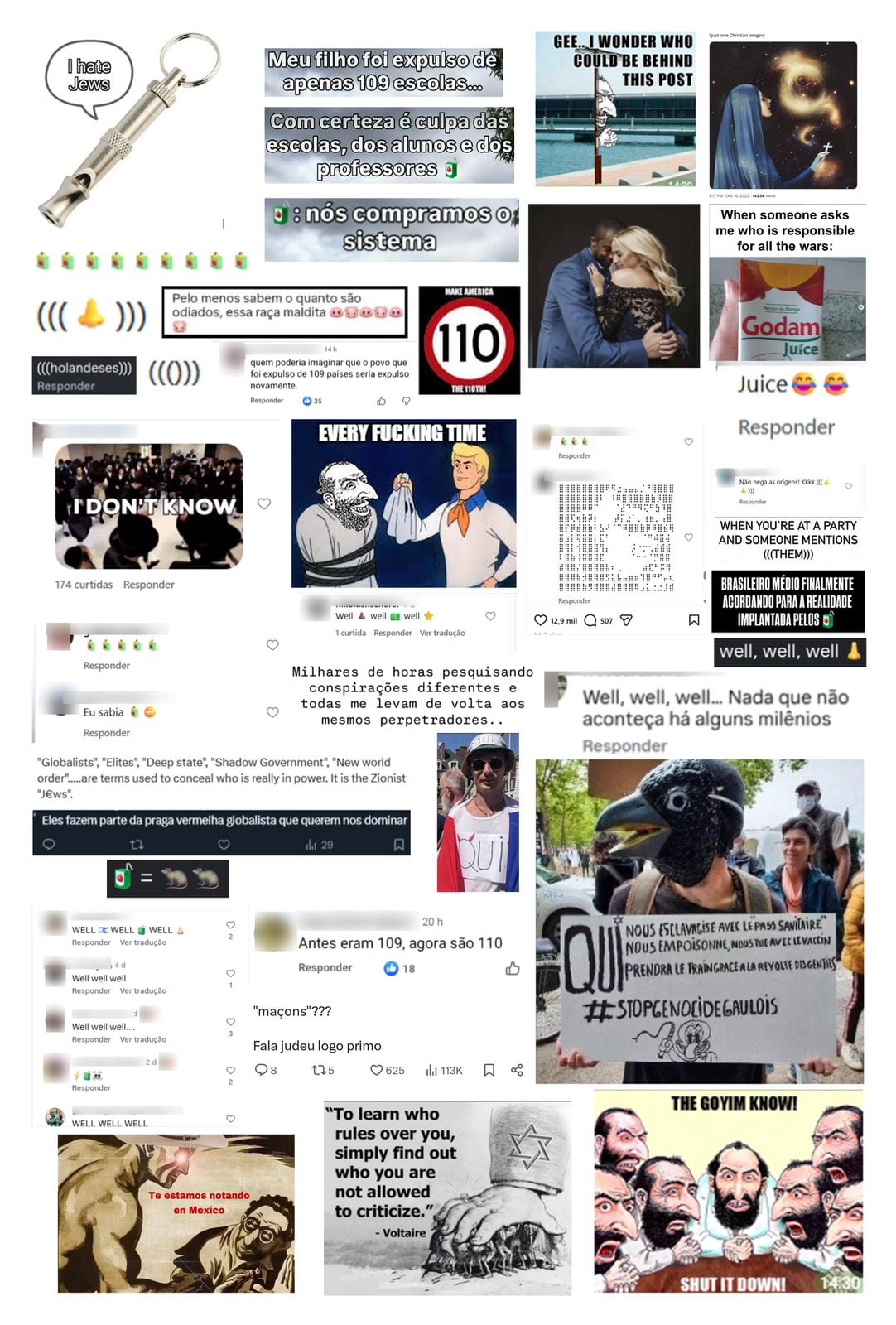
Another dimension I consider particularly important is the digital environment, which has altered the speed, scale, and often the form of circulation of these repertoires. A very old prejudice can now appear condensed in an image, a meme, an emoji, a word, or a combination of references understandable to certain groups and almost invisible to those unfamiliar with its history. This is one of the reasons we have insisted so much on the need to learn how to decode contemporary antisemitism.
Almost three years after October 7, indicators show that we are not dealing merely with an episodic reaction to the first months of the war. There has been some reduction in certain types of incidents and in some contexts, but levels remain far higher than those observed before 2023, and antisemitic violence continues to be a serious concern. This suggests that something deeper has occurred: certain discursive boundaries have shifted, and certain forms of hostility against Jews have regained greater social permissiveness.
For this reason, I interpret the post-October 7 period less as the birth of a “new antisemitism” and more as a moment when old and contemporary forms of prejudice began to combine with extraordinary intensity. Understanding this combination is essential both to confronting antisemitism and to preserving the space for legitimate political criticism. If we confuse these two things, we lose the ability to do either with rigor.
3. Anne Frank and the Power of Memory
What role does Anne Frank’s story play in your research and in how you understand antisemitism?
Anne Frank holds a very particular place in my journey, including because of the biographical coincidence I mentioned earlier: my father chose my name, Anelise, in reference to Annelies Marie Frank. When he gave me The Diary at around age 11, I did not yet have the tools to understand the Shoah or antisemitism historically. What I had before me was the voice of a girl. And perhaps that is part of Anne Frank’s extraordinary strength: she restores individuality to a history that, when presented only through numbers, risks becoming abstract.
Millions of victims is a historical dimension we must know; one person, with a name, a face, desires, contradictions, and interrupted projects, is something we can imagine. Anne wrote about fear and persecution, but also about family conflicts, discoveries, affections, expectations, and the future she envisioned for herself. Knowing what happened to her afterward forces us to confront the fact that the Holocaust did not destroy an abstraction called “six million Jews”: it destroyed, one by one, millions of singular lives.
At the same time, as I became a researcher, I also began to notice the risks in the way Anne’s story is often remembered. There is a tendency to universalize it so much that her specifically Jewish condition and the antisemitism that determined her fate end up being pushed into the background. Anne can, of course, teach us about intolerance, persecution, authoritarianism, and dehumanization in a broad sense. But she had to hide because she was Jewish. She was deported because she was Jewish. And she died in the Nazi concentration system because she belonged to the group the regime decided to eliminate as a priority.
This awareness became very important to how I think about memory. Universalizing an experience can broaden its communicative power, but if we strip away what historically made it possible, we risk producing memory without history. In Anne Frank’s case, remembering her humanity does not require erasing her Jewish identity; on the contrary, both dimensions must remain together.
This also shapes how I understand contemporary antisemitism. Antisemitism does not begin with extreme violence. Before deportation, camps, and mass murder, there were language, stereotypes, conspiracy theories, social exclusion, discrimination, and a progressive normalization of the idea that Jews constituted a problem. As a researcher, I am interested precisely in understanding these processes: how prejudices are constructed, how they are transmitted, how they adapt to different times, and how certain representations stop provoking estrangement.
Perhaps that is why Anne Frank remains such an important reference for me after so many years. The girl I first met through the pages of a diary also taught me one of the central questions of my work: memory only fully fulfills its function when it does not allow us to forget either the humanity of the victims or the historical mechanisms that made them victims.
4. Israel and the Academic Debate
What motivated you and the other authors to write Decoding Antisemitism?
The starting point was a concern we all shared: antisemitism is an extraordinarily adaptable prejudice. Some of its representations have persisted for centuries, but they do not necessarily circulate today with the same appearance, vocabulary, or in the same environments in which they first emerged. To recognize the contemporary phenomenon, therefore, it is not enough to look for swastikas, explicit insults, or open declarations of hatred toward Jews. It is also necessary to understand how old repertoires can be updated, recombined, and translated into new languages.
This was the question that gave rise to Decoding Antisemitism. A Brazilian Adaptation: An Atlas of Tropes of Hate, from Deicide to Genocide. The title itself expresses what we intended to do: to trace historically certain tropes—recurring structures of representation of Jews—and show how they emerge, transform, and, in some cases, reappear centuries later in completely different contexts.
Our work was directly inspired by Decoding Antisemitism: A Guide to Identifying Antisemitism Online, a project conceived by Matthias J. Becker and developed with his team at the Center for Research on Antisemitism at the Technical University of Berlin. From that reference, we built an adaptation to the Brazilian context, incorporating its history and specific repertoires.
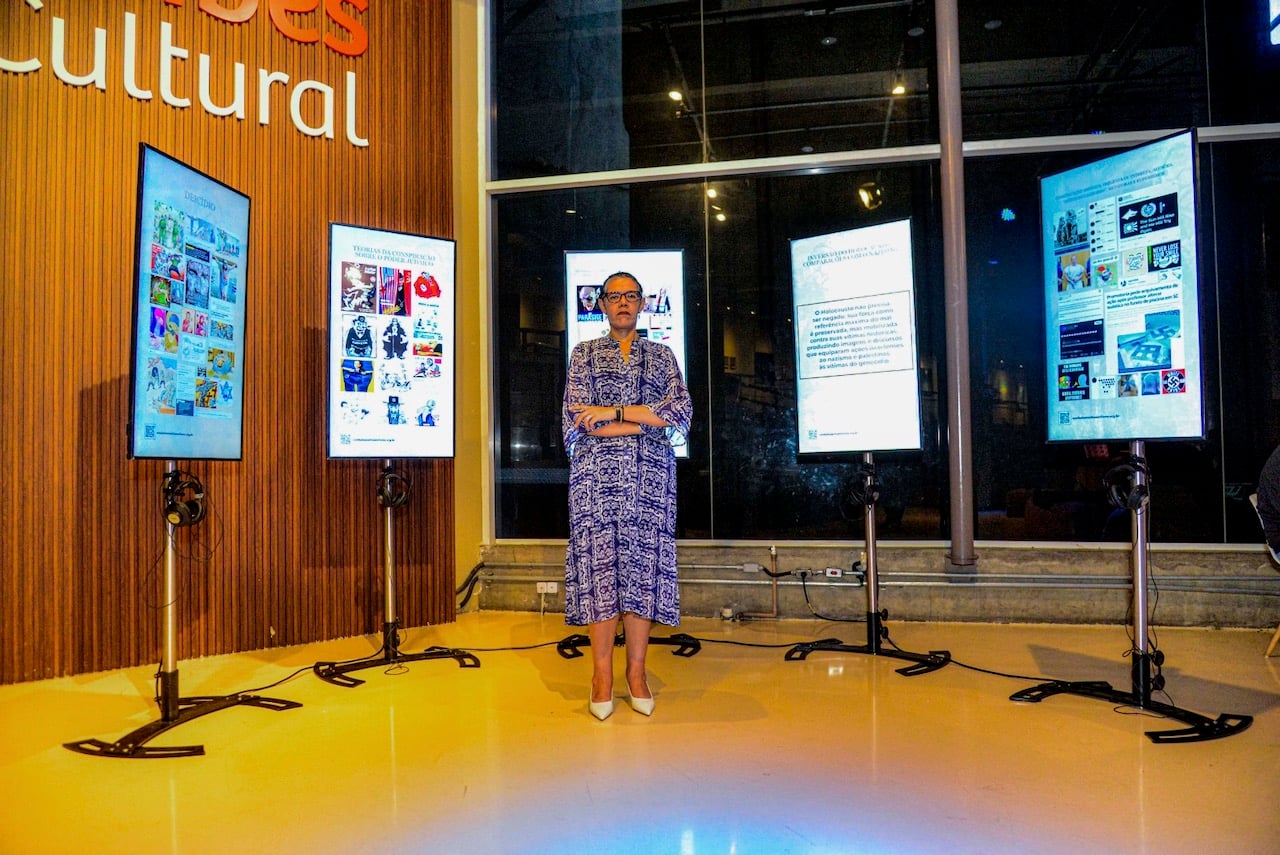
The Atlas brings together 39 tropes organized into five major sections. We begin with very old representations, such as deicide and ritual murder, move through constructions related to power, money, conspiracy, race, and dehumanization, and arrive at contemporary forms in which Israel and Zionism can, in certain contexts, serve as new vehicles for older antisemitic repertoires. The goal is not to claim that all criticism of Israel is antisemitic—quite the opposite. One of the central concerns of the project is precisely to provide tools to distinguish legitimate political criticism from situations where demonization, collective blame, double standards, or the reactivation of historically antisemitic stereotypes appear.
This concern became even more urgent after October 7. The massive circulation of content on social media confronted us with a problem that was not only quantitative. Often, we were observing extremely condensed languages: memes, emojis, images, expressions, or references whose meaning depends on a shared repertoire. An apparently banal image can carry a long antisemitic genealogy, but this only becomes perceptible when we know its history and analyze the context in which it is being used.
That is why we insist so much on the word “decoding.” The Atlas is not meant to function as a catalog of forbidden words or images, nor as a dictionary where one looks up a symbol to automatically obtain the answer “antisemitic” or “not antisemitic.” That would be intellectually mistaken and would trivialize the very concept of antisemitism. The same word or image can acquire different meanings depending on who uses it, against whom, in what context, and in association with which other elements.
There is also a dimension I consider essential: the book was not created to conclude a research project. It is part of a broader educational and antisemitism-confrontation initiative developed by CONIB. The Atlas organizes historical knowledge and offers interpretive tools, while the platform created with the project expands access to this content and allows us to monitor a phenomenon that continues to evolve. In other words, we did not want to produce only a diagnosis; we wanted to build instruments that could be used by educators, researchers, journalists, legal professionals, and the general public.
Perhaps the project’s main contribution lies precisely there. Combating antisemitism does not mean endlessly expanding what we call antisemitism. It means learning to recognize it with greater precision. The more rigorous we are in identifying its mechanisms, the more capable we will also be of preserving legitimate political criticism, academic debate, and freedom of expression. For us, these things are not contradictory. They are part of the same commitment.
Interviews conducted by Liane G. Zaidler and Silas Anastácio