Founder | Children’s Book Author | Empowering Women and Girls & Supporter of Global Peace Initiatives | Mom | Yema
Existence First, Coexistence Later
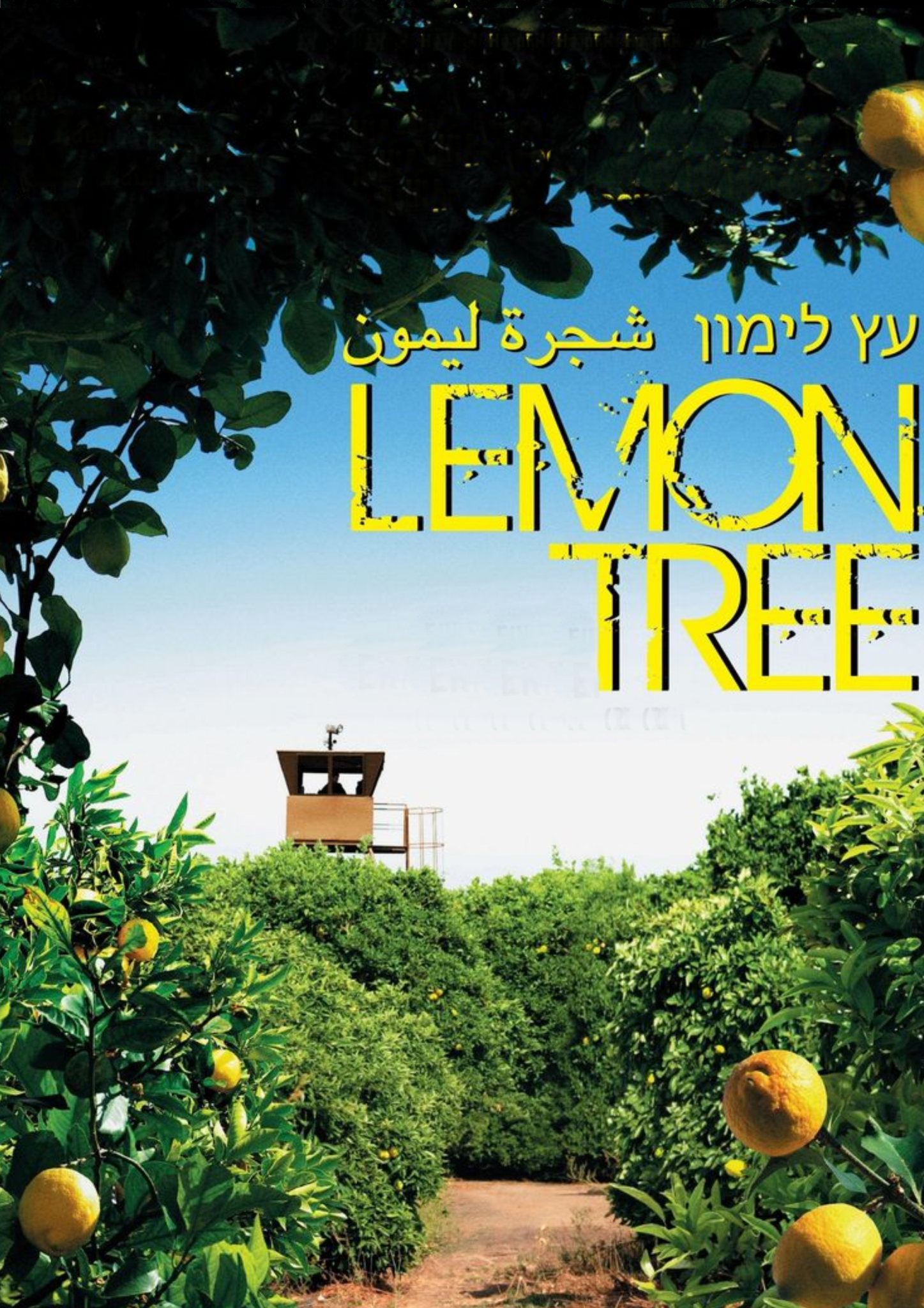
LEMON TREE (2008) -Original title: ETZ LIMON-, directed by ERAN RIKLIS. Credit: ERAN RIKLIS PROD./HEIMATFILM/MACT PROD./RIVA (Almay)
I’m a proud Jewish Israeli American advocate. I refuse to give up hope for peace between Israelis and Palestinians. That refusal sometimes gets me in trouble. Some think I’m betraying my own people when I voice criticism of government policy. But protecting our humanity means we don’t look away from hard reality. We confront it fully.
I visited Dachau in 1987. I stood in the courtyard, looking at the sign that read “Never Again.” To me, it meant never again for anyone, especially the people with the least power to protect themselves.
That word, “never,” came back to me recently when a friend described how scary it was to see a banner reading “Destroy Israel,” unfurled before thousands at the San Fermín festival in Pamplona, Spain. It made me wonder whether European Jews will ever truly be safe. I suggested that perhaps rhetoric like that grows out of despair: ongoing wars, civilian casualties, land expropriation in the West Bank, the absence of any political solution for millions of Palestinians. I wasn’t excusing it. I was naming the ground it grows in. My friend recommended I watch Eran Riklis’s Lemon Tree. I went in guarded. I was surprised by what I saw.
There is a scene near the end that I still think about. Defense Minister Israel Navon sits alone in his house, staring out at the wall built to protect him but that ultimately unravels his marriage to Mira. Beyond that same wall, Salma walks alone through her lemon grove, looking at the trees reduced to stumps in the name of his security. The wall promises to protect one man, but it leaves two women carrying its consequences. Riklis has said the film is about solitude, and he’s right. But solitude is only half the story. It’s the half that’s easier to sit with.
Both things are true
Tzrifin, Israel is the place of birth on my passport, where my parents and grandparents came as Jewish refugees from Morocco. Hebrew is still the language I dream in. I’ve felt Israel’s security as physically necessary since I was a kid watching the news for all the wrong reasons. I’ve also spent time volunteering in human rights and women’s empowerment, building bridges with Palestinian women living under a set of rules I didn’t choose and wouldn’t choose for anyone. I don’t experience those two things as a contradiction to resolve. It’s more like a weight I carry. Lemon Tree is one of the only films that’s made me feel less alone carrying it.
The comfort of “if only we could talk”
Salma and Mira never really talk, not the way the marketing for films like this wants you to believe. They exchange looks across a fence, a gesture, a moment of recognition, and it means something. But it doesn’t move the trees. It doesn’t move the Supreme Court. It doesn’t give Salma back her grove, her water, or her right to walk onto her own land without a permit.
I know that warmth myself. I’ve felt it in a room at the UN, sitting with Palestinian women: politicians, activists, mothers. For an hour, the distance between us felt smaller than it usually does. Those moments are real, and they matter. But I’ve learned to be suspicious of how good they feel. That feeling can let me walk out lighter than I have any right to, while nothing about anyone’s actual life has changed.
Existence first
I’ve come to think of it as existence first, coexistence later. Not a rejection of what Lemon Tree offers, but a statement about what has to come first. You can’t ask someone to sit across a table from you in the spirit of shared humanity while their water is rationed, their movement requires a permit, and their trees are treated as a security threat. Coexistence assumes two people meeting as equals. When one person’s daily survival depends on the other’s government, there is no equal footing yet. There’s a fence, and one side decides who stands where.
This is the part of my own identity I find hardest to hold onto honestly. I need Israel’s security to be real, I grew up needing it, and that need isn’t illegitimate. But I’ve also seen how “security” becomes the answer to every question, a word people use to end an argument instead of have one. That’s how it closes around Salma’s grove in the film. I found the Supreme Court’s verdict so hard to process: cruel and reasonable at the same time, inside a system that has already decided whose reasonableness counts.
What the film gets right, and what it can’t do
I don’t think Lemon Tree lets anyone off the hook, even though I understand why some Palestinian viewers might feel otherwise. Riklis made a clear-eyed choice: instead of showing the slow grind of real political negotiations, he found the one story a Western or Israeli audience could sit through, two women, a fence, a grove, and used it to say something true about the whole system.
The lemons at the party, picked without a second thought from a grove the owner isn’t even allowed to enter, might be the image that bothered me most. Nobody in that scene means any harm. That’s the point. You don’t need malice for a system to be unjust. Just enough people, above a certain point of privilege and power, doing something reasonable, one policy at a time, until a woman can’t touch her own trees anymore.
Where I part ways with the film, gently, because I really do like it, is in its ending on solitude. Solitude is safe. It’s something two women can share without anyone in power having to change anything. It’s true and real, and it isn’t justice. A film can take you as far as recognition. It can’t do the work of repair too. As Salma’s attorney says after one more defeat, only American movies get a happy ending.
Where that leaves me
I need Israel to be safe, and I believe safety for one people can’t be built on denying rights to another. I hold both every day. Some days they pull against each other hard enough that I don’t know how to stand.
What I try to hold onto is which one comes first. Existence first, not instead of coexistence, but before it. That’s the order Lemon Tree gets right, even if it never says so out loud. It’s about the water, the permits, the grove, the fence, and the facts that have to change before anything else can mean something.
I keep speaking up because I want my children and grandchild to inherit something better than what was handed to me, my parents, and my grandparents. Where there’s no hope and no rights, extremism finds all the room it needs to grow. People who are angry and afraid reach for something to strike back at, and that reach runs toward more violence, not less.
My advocacy isn’t about convincing people to feel warmly toward each other. Lemon Tree didn’t need Salma and Mira to become friends, either. It’s about saying plainly, to whoever is holding a gun or running a government, that years of war and military force have not brought peace. They have deepened wounds and hardened the ground for the next conflict. What’s left is the harder, slower path: letting people exist first.
Related Topics