


Mathematics Teaching Professor, Author
Exploring the Historic Nidje Israel Synagogue of Mexico City, Mexico
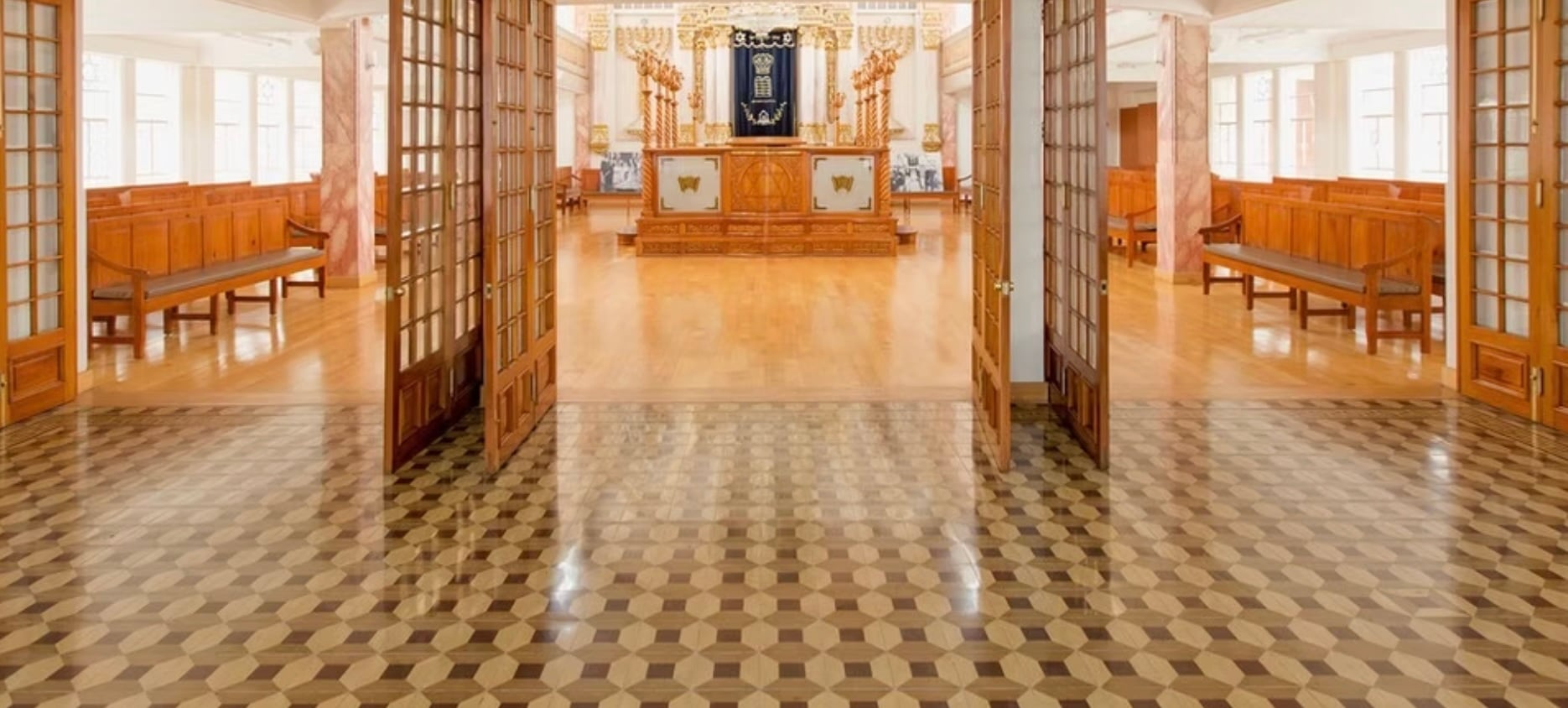
Entrance to the shul or synagogue with the original 1940s floor. (Source: Zony Maya)
The historic Nidje Israel Synagogue is one of the most important landmarks in the story of Jewish life in Mexico City. Located in the heart of the Historic Center, it stands as the first Ashkenazi synagogue in Mexico and a lasting symbol of Eastern European Jewish immigration in the early twentieth century. Beyond its architectural beauty, the synagogue reflects the development of a vibrant community that preserved its religious traditions while adapting to a new homeland.
Today, it functions as a museum and cultural center, offering visitors a window into the experiences, struggles, and contributions of Mexico City’s Jewish population across generations.
I would like to thank the esteemed Mónica Unikel, Directora, Sinagoga Histórica Justo Sierra 71, for her support of this article.
Synagogue
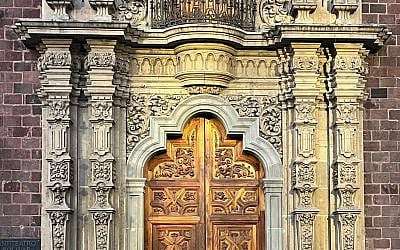
The historic Nidje Israel Synagogue, located at Justo Sierra 71 in the heart of Mexico City’s Historic Center, is one of the most significant landmarks of Jewish heritage in Mexico. Its simple neo-colonial façade fits naturally with the surrounding buildings. It is built with tezontle and cantera stone and has balanced shapes and modest decorative details typical of early twentieth-century Mexican architecture.
Carved Stars of David on the entrance doors subtly announce the building’s Jewish identity. The synagogue was modeled after a synagogue in Šiauliai, Lithuania, reflecting the desire of Eastern European Jewish immigrants to preserve a connection to their homeland. Commissioned by a benefactor from that city, the building stands as a physical reminder of the traditions and memories that immigrants carried with them to their new home in Mexico.
In contrast to its modest exterior, the interior of the synagogue is richly ornamented and reflects the architectural traditions of Eastern European Judaism. The spacious sanctuary features high vaulted ceilings, decorative arches, and colorful geometric and floral motifs that create a sense of warmth and grandeur. Rows of wooden pews face the central bimah, while the elaborately crafted Torah ark serves as the focal point of the prayer hall. Stained-glass windows fill the space with soft natural light, enhancing its contemplative atmosphere.
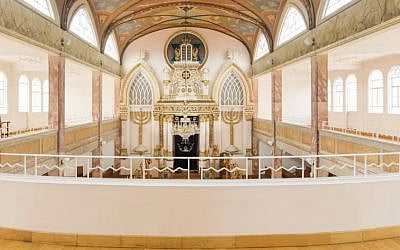
A women’s gallery overlooks the sanctuary, preserving the traditional Orthodox synagogue layout. Together, the intricate decorative elements, historic furnishings, and vibrant colors provide a vivid glimpse into the religious and cultural life of Mexico City’s early Ashkenazi Jewish community.
The Torah
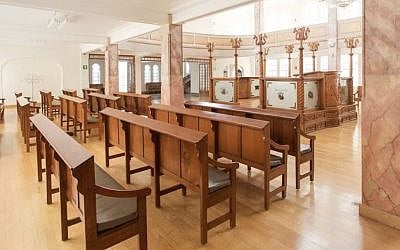
The Torah ark and bimah are among the most striking features of the synagogue. The Torah ark is a richly decorated wooden structure with intricate carvings, arched details, and traditional Jewish symbols, creating an elegant focal point at the front of the sanctuary. Nearby, the bimah is a raised platform enclosed by decorative railings and finished with finely crafted woodwork. Together, the ornate ark and centrally placed bimah stand out against the synagogue’s colorful interior, drawing attention through their craftsmanship and religious significance.
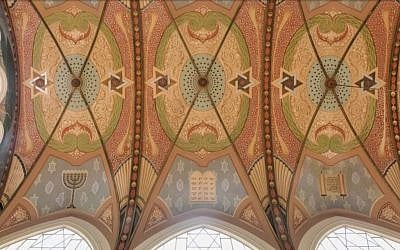
Above them, the spectacular hand-painted ceiling further enriches the space, featuring prominent Jewish symbols such as the Star of David, the Torah, the Menorah, the tallit in the corners, and the Tablets of the Law. The ceiling’s detailed artwork ties the entire sanctuary together, reinforcing the sense of sacred tradition and visual richness
Neighborhood
The historic Nidje Israel Synagogue is located in a fascinating area of Mexico City’s Historic Center, just a few blocks from the Zócalo, in what was once the city’s university district and near the edge of the old La Merced neighborhood, where Lebanese, Armenian, Spanish, Jewish, and many other immigrant communities once converged. Unlike the most tourist-heavy zones, this area retains a more local authentic character.
The synagogue is within walking distance of key cultural landmarks, including the Antiguo Colegio de San Ildefonso, a former Jesuit school now celebrated as a major museum with important mural collections and the Abelardo Rodríguez Market, known for its murals by students of Diego Rivera. It also sits near Loreto Garden and the Manuel Tolsá fountain, adding architectural and historical richness to the surroundings, while nearby streets are lined with small shops selling fabrics, ribbons, and clothing, contributing to the vibrant, lived-in atmosphere of this culturally diverse district.
Congregation
The congregation of the historic Nidje Israel Synagogue was composed primarily of Ashkenazi Jewish immigrants from Eastern Europe who settled in Mexico City during the early twentieth century. As one of the first major synagogues established by this community, it served a growing congregation that numbered in the hundreds and became a focal point for religious, social, and cultural life.
Families gathered there for daily prayers, Sabbath services, weddings, and religious festivals, helping preserve their traditions while adapting to life in Mexico. Although the congregation eventually moved to newer neighborhoods as the Jewish population expanded, the synagogue remains an important symbol of the vibrant and close-knit community that once worshipped within its walls.
Culture and Religious Life
Nidje Israel Synagogue is far more than a place of prayer; it functioned as a vital center of community life and charitable activity for Mexico City’s growing Ashkenazi Jewish population. Beyond daily prayers, Sabbath services, and Torah readings, the building hosted countless weddings, Bar Mitzvahs, and other family and communal celebrations, becoming a space where major life events were shared and traditions were preserved among immigrants who had arrived from Eastern Europe in the early twentieth century.
It also serves as a hub for social support and charitable initiatives aimed at meeting the needs of the community, reinforcing bonds of mutual care and solidarity. While it once stood at the heart of religious and cultural life, the synagogue today functions primarily as a museum and cultural center, yet it continues to symbolize the faith, resilience, and strong communal identity that shaped the early Jewish experience in Mexico City.
The Nidje Israel Synagogue also hosts Reminiscents, a photo exhibition that is the soul of the place, its history, its faces, and its memories. Through photographs spanning from the synagogue’s inauguration in 1941 and the decades that followed, the exhibition captures weddings, Bar Mitzvahs, Kehile leadership meetings, literary and political gatherings, Jewish celebrations, and more. Composed largely of images donated by local families, this collective visual archive has continued to grow since opening in May 2025 as community members contribute newly discovered family photographs.
Cultural Center
Today, the synagogue serves as a museum and cultural center dedicated to preserving and sharing the rich heritage of Mexico’s Jewish community. In addition to guided tours and exhibitions, the synagogue offers lectures, seminars, concerts, theatrical performances, dance events, and educational programs that explore Jewish history, culture, and traditions. One notable initiative is Of Immigrants and Their Stories, a project launched during the COVID-19 pandemic that documents the memories of Jewish community members over the age of eighty.
Through recorded interviews, photographs, and personal documents, the project preserves firsthand accounts of migration, family life, and experiences in Mexico City and beyond. The synagogue also offers walking tours that examine the Jewish presence in the city, drawing on personal testimonies, historical photographs, Yiddish newspaper advertisements, and archival materials to create meaningful connections with the past. Through these cultural and educational activities, the synagogue continues its historic role as a center of learning and community engagement.
Historical Background
In the 16th century, Mexico City underwent a transformation from Tenochtitlán, the capital of the Aztec Empire, a vast city of over 200,000 inhabitants interconnected by canals, causeways, and advanced agricultural systems, into the colonial capital of New Spain.
When Hernán Cortés arrived in 1519, he encountered a highly organized urban center with monumental temples, botanical gardens, zoos, and sanitation systems that impressed the Spanish. After the conquest in 1521, much of the indigenous city was destroyed, its canals were filled in, and Lake Texcoco was gradually drained to make way for a European-style colonial city.
It was also during this early colonial period that the first Jews are believed to have arrived in Mexico City. These early arrivals were Conversos, or crypto-Jews, who accompanied the Spanish conquistadors, including Hernán Cortés, in 1521. Fleeing the Spanish Inquisition in Europe, they were forced to practice Judaism in secrecy, as public observance was forbidden.
During the colonial era from the 16th to 19th centuries, Conversos settled in the region but faced harsh persecution under the Mexican Inquisition, established in Mexico City in 1571. Many were investigated, imprisoned, or executed, reflecting the severe religious intolerance of the period and the dangers faced by those suspected of maintaining Jewish practices.
In the 19th century, Jewish immigration to Mexico expanded significantly following the country’s independence and the establishment of greater religious freedom. During this period, waves of German and French Jews arrived in the 1860s and 1880s, forming some of the earliest formal Jewish congregations in Mexico City and laying the groundwork for organized community life.
The modern era, beginning in 1917 and continuing to the present, saw the largest influx of Jewish immigrants, particularly after the Mexican Constitution of 1917 and restrictive U.S. immigration quotas in the 1920s. Thousands of Ashkenazi, Sephardic, and Mizrahi Jews settled in Mexico City, shaping the diverse Jewish community that exists today.
Which brings us to the historic Nidje Israel Synagogue at Justo Sierra 71.
Nidje Israel Synagogue was built in the late 1930s as the first Ashkenazi synagogue and community center in Mexico, serving Eastern European Jewish immigrants who settled in Mexico City. It is connected to the Ashkenazi Kehilá, founded in 1922, and was officially inaugurated in 1941 during World War II.
For more than two decades, it functioned as the heart of Yiddish-speaking Jewish life in Mexico City, hosting weddings, Bar Mitzvahs, dances, and a wide range of religious and social celebrations. As the community grew and later relocated to neighborhoods such as Hipódromo, Condesa, and Álamos, the synagogue marked an important chapter in the evolution of Jewish communal life in Mexico City.
The restoration of the historic Nidje Israel Synagogue preserved an important Jewish heritage site in Mexico City. After serving as the center of Ashkenazi community life from 1941 to the 1960s and declining in use as families relocated, it underwent restoration from 2008 to 2009 led by the Ashkenazi Kehillah. The synagogue reopened in January 2010 as a museum and cultural center, restoring its architectural beauty and turning it into a space for sharing Jewish history and culture.
The historic Nidje Israel Synagogue stands as a powerful testament to the endurance and evolution of Jewish life in Mexico City. From its origins as the first Ashkenazi synagogue in the country to its role as a vibrant center of worship, celebration, and community gathering, it reflects the journey of Eastern European immigrants who built new lives while preserving their traditions.
Today, as a museum and cultural center, it preserves the memory of early immigrant experiences and ensures that the legacy of faith, resilience, and cultural identity remains alive for future generations.
Contact Information:
Justo Sierra, 71, Historic Center, Mexico City
Email: sinagogajustosierra@gmail.com
Website: sinagogajustosierra.com/en
Facebook: Sinagoga Histórica Justo Sierra
Instagram: @sinagogajustosierra