


Mathematics Teaching Professor, Author
Exploring the Southern Jewish Experience at MSJE in New Orleans
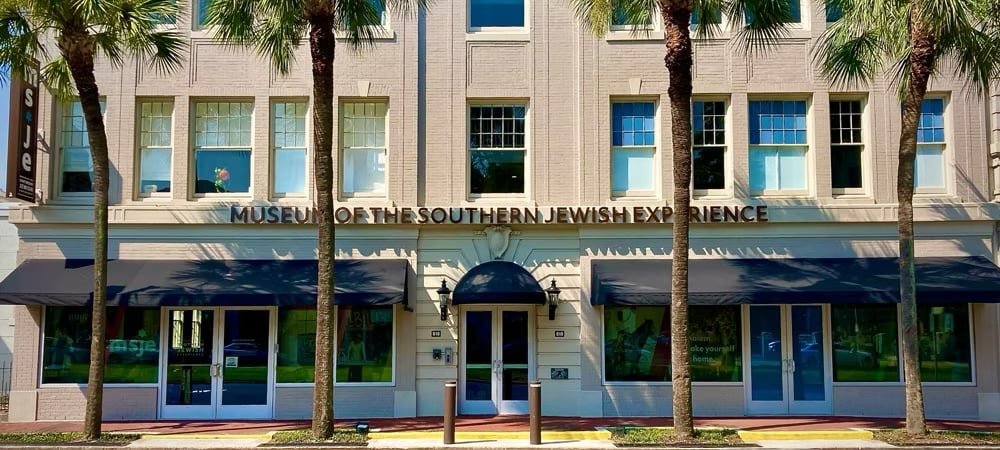
Museum of Southern Jewish Experience exterior (Source: Museum of Southern Jewish Experience of New Orleans)
Located in the heart of New Orleans, Louisiana, the Museum of the Southern Jewish Experience (MSJE) tells the story of Jewish life across the American South. The Museum explores more than three centuries of history, highlighting the experiences of Jewish immigrants, families, businesses, religious communities, and civic leaders who helped shape the region while maintaining their Jewish traditions and identity.
Through its exhibitions, collections, educational programs, research center, and special events, MSJE offers visitors an opportunity to discover the diverse experiences of Southern Jews. From early Jewish settlers and immigrant merchants to the communities of today, the Museum demonstrates how Jewish life became an important part of the cultural, social, and civic history of the American South.
I would like to thank the esteemed Kenneth Hoffman, Executive Director for his support and guidance.
Museum of the Southern Jewish Experience
The Jewish South refers to the history and culture of Jewish communities across thirteen Southern states, including Alabama, Arkansas, Florida, Georgia, Louisiana, Kentucky, Mississippi, North Carolina, Oklahoma, South Carolina, Tennessee, Texas, and Virginia.
The Southern Jewish experience includes immigrant peddlers traveling unpaved roads, small-town merchants balancing business with the Jewish Sabbath, families traveling long distances for religious school, and Jewish students and athletes participating in Southern traditions while maintaining their faith. Although representing less than 2% of Southern states’ population, Southern Jews make up 20% of America’s Jewish population.
Southern Jews have shaped their communities as civic leaders, philanthropists, and public servants. Their experience reflects the balance between preserving Jewish traditions and adapting to Southern culture, while becoming valued members of their communities.
Core Exhibitions
The Museum of the Southern Jewish Experience features 9,000 square feet of permanent exhibition space. Its core exhibitions explore the history and culture of Jewish communities across thirteen Southern states over three hundred years.
The exhibitions highlight the diverse experiences, relationships, and environments of Southern Jews, tracing their lives from the colonial era to the present day. They show how Jewish communities adapted to Southern society while preserving their unique religious and cultural traditions.
Gallery 1: From Immigrants to Southerners
This gallery explores the migration of Jews to the American South beginning in the 1700s. It highlights how Jewish immigrants settled in the region, established businesses and synagogues, and built social and religious communities.
Gallery 2: Foundations of Judaism
Located in the Feil Family Foundation Atrium, this interactive gallery explores Jewish beliefs, traditions, holidays, and life cycle events. It also features reproduction stained-glass windows from nearly twenty synagogues across the American South.
Gallery 3: Entering a New Era
The final gallery examines Southern Jewish experiences during World War II and the Holocaust, the Civil Rights Movement, suburbanization, and Jewish representation in popular culture. It concludes by exploring Southern Jewish life today through the Community Quilt Interactive, where visitors can reflect on their own identities and communities.
Current Special Exhibitions
Holocaust Survivors in a New Land: The New Americans Social Club of New Orleans
This exhibition tells the story of Holocaust survivors who came to the United States after World War II and built new lives in the American South. It explores how local Jewish communities helped survivors settle and rebuild their lives.
With a special focus on the New Americans Social Club in New Orleans, the exhibition highlights the experiences of Holocaust survivors and their contributions to the community. It also connects their immigration stories to broader lessons about welcoming newcomers and building new lives after hardship.
Online Exhibitions
Greetings from Main Street: Southern Jewish Postcards from Our Collection
This online exhibition uses postcards from the museum’s collection to highlight the presence of Jewish communities across the American South. The postcards show how Jewish people and institutions became part of everyday Southern communities and how their non-Jewish neighbors encountered Jewish life.
Jews have lived in the South since colonial times, and these postcards provide a visual record of that history, particularly from the late 19th century onward. Some postcards feature specific Jewish institutions, while others offer a broader glimpse into Jewish life and the communities where Southern Jews lived.
Collections
The Museum of the Southern Jewish Experience has more than 5,000 objects in its collection, including Judaica, household items, business records, photographs, letters, and other historical materials. Together, these objects document the everyday lives, work, traditions, and communities of Southern Jews. Among those are items in the collection are the following.
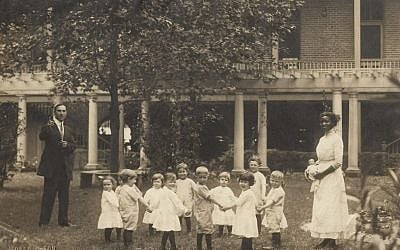
The Jewish Orphans’ Home
This photograph of the Jewish Orphans’ Home in New Orleans dates to around 1915. A handwritten note on the back reads “Our Babies,” possibly written by Rabbi Leon Volmer, who served as the Home’s superintendent from 1911 to 1926.
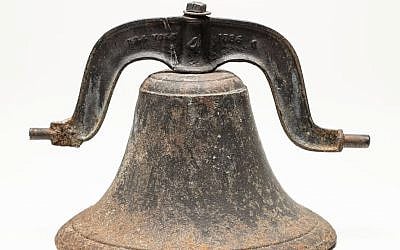
Farm Bell, c. 1900
This farm bell belonged to the Gamm family. Polish immigrant Julius Gamm moved to Louisiana in the 1890s after working as a peddler throughout the South. He later acquired land and operated an 1,800-acre farm where his family raised livestock and grew crops including alfalfa, peanuts, sugar cane, and cotton.
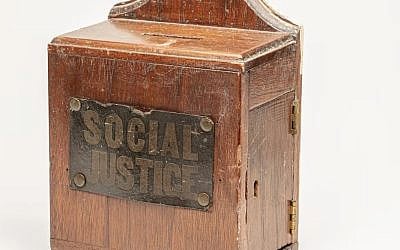
Temple Sinai Tzedakah Box, c. 1960s
This tzedakah box belonged to Temple Sinai in New Orleans. Rabbi Julian Fiebelman, who led the congregation from 1936 to 1957, supported social justice causes, including civil rights initiatives and interfaith dialogue.
Public Programs
Among the public programs at the Museum of the Southern Jewish Experience in New Orleans is the Chapman Family History Center Workshop Series. This recurring series provides participants with the tools they need to explore and preserve their family history. Visitors can attend the workshops in any order or choose the topics that interest them most.
The workshops are offered for free at the museum, with some available in a hybrid format. The museum also offers paid, on-demand group workshops on topics of choice, which typically cost $150. Workshop topics include Cemeteries: Documentation, Preservation, and Research, Jewish Genealogy 101, How to Preserve Your Family Treasures, and Introduction to Oral Histories.
Education
The Museum of the Southern Jewish Experience has collected information about Southern Jewish communities since its founding. This effort expanded when the Museum became part of the Goldring/Woldenberg Institute of Southern Jewish Life (ISJL). Today, the Museum maintains connections with the ISJL by sharing research and resources.
One of its most valuable resources is the Encyclopedia of Southern Jewish Communities, an ongoing project documenting the experiences and histories of Southern Jews in hundreds of towns and cities across the region.
The Museum also offers educational lesson plans for students in grades 3 through 8. “2 Oral Histories, 3 Opinions” helps students work with primary sources, examine bias and historical perspectives, organize information using a Venn diagram, and learn how historians collect oral histories.
For grades 5 through 8, “From Life to Literature: Immortalizing Oral Histories” guides students through four lessons on defining oral history, developing interview questions, conducting interviews, and creatively interpreting the information they collect. The lesson culminates in a final project that preserves these stories and encourages an appreciation for oral and written storytelling.
Chapman Family Research Center
The Chapman Family Research Center is a hands-on resource for researchers, family historians, Museum members, and visitors interested in exploring and preserving Southern Jewish history. With a focus on connections between Jewish families across the South, the Center brings a distinctly Southern perspective to “Jewish Geography.” It supports the Museum’s mission of encouraging greater understanding and appreciation of identity, diversity, acceptance, and the broader American experience.
The Center was made possible through the generosity of Dave and Amy Chapman Fulton and honors Amy’s Southern Jewish ancestors, many of whom lived in Shreveport and Baton Rouge, Louisiana. The Center reflects the importance of family and Jewish traditions in shaping identity and preserving the stories of Southern Jewish communities.
Mezuzah Society
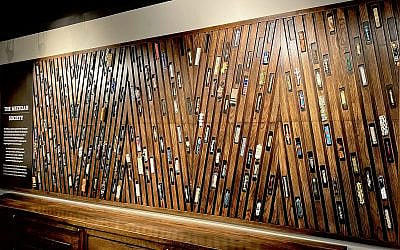
The Mezuzah Society Wall is a beautiful and creative symbol of the founding of the Museum of the Southern Jewish Experience and the people who helped build and sustain it. It represents the Museum’s commitment to preserving history, tradition, culture, and education.
The wall features mezuzahs donated by the Museum’s supporters and donors, honoring their contributions and connection to the Museum’s mission.
Historical Backgrounds
Jews first arrived in Louisiana in 1757, when Isaac Rodriguez Monsanto, a Dutch Sephardic Jewish merchant, arrived in New Orleans. Under French and Spanish rule, including the Code Noir, open settlement by non-Catholics was technically restricted. However, early Sephardic and Dutch Jewish merchants such as Monsanto lived and traded in the city by the mid-1700s.
Following the Louisiana Purchase in 1803, the Jewish population grew significantly as greater religious freedom allowed Jewish communities to establish deeper roots. During the 19th century, New Orleans developed a vibrant Jewish community made up of German and Sephardic immigrants who contributed significantly to the city’s commerce and culture.
From 1900 to 1980, Jewish life in New Orleans was characterized by strong civic involvement, institution-building, and a distinctive combination of Southern culture and Jewish traditions. Early 20th-century Orthodox communities were concentrated around neighborhoods such as Dryades Street, where congregations including Anshe Sfard, founded in 1900, and Chevra Thilim, which built its synagogue in 1915, served local Jewish residents.
Over the decades, Jewish families increasingly moved uptown and into suburban areas, reflecting broader changes in the city. Despite these geographic shifts, Jewish institutions and traditions continued to play an important role in the cultural and civic life of New Orleans.
Which brings us to 1986.
The year 1986 was significant in the United States, marked by major national events, cultural milestones, and political changes under President Ronald Reagan. On January 28, the Space Shuttle Challenger broke apart 73 seconds after liftoff, killing all seven crew members. The first official federal observance of Martin Luther King Jr. Day took place on January 20, and the Rock & Roll Hall of Fame held its first induction ceremony on January 23, honoring artists including Elvis Presley, Chuck Berry, and James Brown.
New Orleans also saw important developments in 1986, including urban growth and major sporting and cultural events. The Louisiana Superdome hosted Super Bowl XX on January 26, where the Chicago Bears defeated the New England Patriots. The Riverwalk Marketplace also opened at Spanish Plaza, attracting an estimated 45,000 visitors on its first day.
It was in this year, 1986, that the Museum of the Southern Jewish Experience was founded. The original Museum opened at Henry S. Jacobs Camp in Utica, Mississippi, with a mission to preserve and celebrate the history and culture of Southern Jews.
Camp director Macy Hart served as the Museum’s founder and executive director, establishing an institution dedicated to collecting, preserving, and sharing the stories of Jewish communities throughout the American South.
In 2000, the Museum expanded its mission through the creation of the Goldring/Woldenberg Institute of Southern Jewish Life (ISJL), supporting Southern Jewish communities through educational programs and rabbinical services. In 2012, the Jacobs Camp museum closed, and its collection was placed in storage.
In 2017, New Orleans became the Museum’s new home, and MSJE became an independent institution. In 2018, MSJE launched The Southern Shmooze newsletter and began developing exhibitions for its new museum. The Museum opened to the public in New Orleans on May 27, 2021, and was named Best New Museum by USA Today. In 2022, MSJE launched its member newsletter, Kibbitz & Grits.
In 2024, the Chapman Family Research Center opened, providing resources for archives, digitization, oral histories, and family history research. In 2025, MSJE celebrated welcoming its 50,000th visitor.
The Museum of the Southern Jewish Experience in New Orleans preserves and shares a unique part of American history, the story of Jewish communities who built their lives, families, businesses, and traditions across the South. Through its exhibitions, collections, educational programs, research resources, and community activities, the Museum shows how Jewish identity and Southern culture have influenced one another over generations.
More than a museum, MSJE provides a place to explore history, identity, diversity, and belonging. By preserving the experiences of Southern Jews and making them accessible to new generations, the Museum helps visitors better understand both the Jewish South and the broader American experience. Its continued growth demonstrates the lasting importance of remembering, sharing, and celebrating these stories.
Contact Information:
Museum of Southern Jewish Experience, 818 Howard Ave, New Orleans, LA 70113
Phone: 504-384-2480 Email: info@msje.org Website: https://www.msje.org/