
Facing the Mirror: Dr. Sherman’s Warnings to Deaf Ears
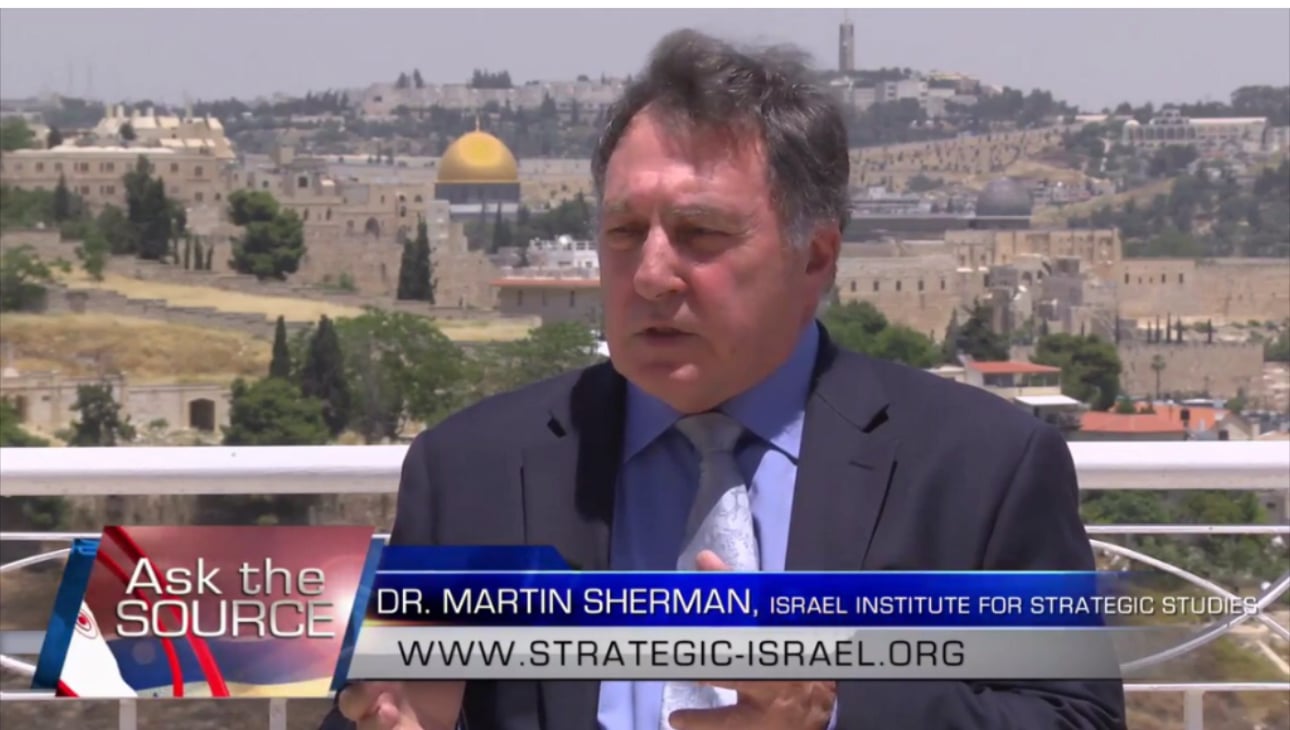
Sherman’s Warnings to Deaf Ears
Introduction
For over a decade I have followed Dr. Martin Sherman’s political analyses with close attention. After carefully reading his earlier articles on Gaza and Palestine, I have come to the unfortunate conclusion that many of his warnings and strategic insights have proven to be correct. As a European, I find it difficult to understand why such a seasoned analyst, who had already earned his place in Israel’s political debate, was not invited by any government body to contribute to shaping the country’s future.
Sherman’s Warnings to Deaf Ears
Long before it became politically fashionable to say so, Dr. Martin Sherman — former adviser to Israel’s government under Prime Minister Yitzhak Shamir — warned that believing in Palestinian moderation was a dangerous self-deception with potentially catastrophic consequences.
Sherman argued repeatedly, in print and interviews, that the assumption of a genuine ideological shift among Israel’s most implacable adversaries was not just naïve, it was suicidal. His central claim: if the core ideology remains unchanged, any perceived moderation is a tactical manoeuvre, not a strategic transformation (Sherman, The Post-Oslo Catastrophe, 2006). In this light, Sherman had already argued in his seminal study Paradigms of Peace for the Middle East (1999) that the two-state formula was inconceivable, since no amount of economic development or territorial concession could override the enduring ideological rejection of Israel.
The Fluctuation Illusion: A Survival Reflex
Polling reality undermines the “moderate majority” myth. Over two decades, surveys have shown a predictable cycle: Support for Hamas temporarily dips under sustained military pressure, only to rebound once the threat recedes. For full historical polling data, see the Palestinian Center for Policy and Survey Research (PCPSR).
Realists saw what in psychology is known as a survival reflex — a shift in tone driven by fear of annihilation, not a rejection of underlying beliefs. It is the conduct of actors who adjust their methods, not their morals and motives. Gaza’s political landscape confirms this: once the immediate threat passes, the same rhetoric, incitement, and violence reappear.
The Left’s Bloody Blindness
What remains baffling is the persistence of the Israeli Left — “the loonies,” as Sherman once bluntly put it (Sherman, The Loonies of the Left, 2012) — in projecting their own moral ideals onto a neighbour whose leadership has never hidden its bloodthirsty intentions.
Even before Oslo was secretly engineered and forced upon Israel without public consent, Sherman warned how dangerous it would be to ‘dump’ Gaza:
“If Israel abandons Gaza, it will not become Singapore, but Somalia.
It will not be a model of prosperity, but a haven for terror.”
— Sherman, Why We Can’t Dump Gaza, Jerusalem Post, 1992 (original on request, recalled in Parading past predictions, 2015).
Oslo and Post-Democracy
Herbert C. Kelman, professor of social psychology at Harvard, himself an expert in negotiation and a WWII refugee, noted the dangers of Oslo’s secret diplomacy without public preparation:
“They didn’t even, when they could have, educate their publics. Rabin wasn’t prepared to say: we are committed to a two-state solution — here is the price we have to pay.” (Kelman interview, 2009).
This aligns with the critique I have made elsewhere regarding Macron’s post-democracy: When leaders implement transformative policy without securing public consensus, it is no longer democracy but post-democracy. This can only lead to disaster — as seen in the political climate preceding Rabin’s assassination. (Wells, Facing the Mirror: Macron’s Post-Democratic France, 2025).
The Peres Legacy in Public Diplomacy Error
Shimon Peres, in his final political acts, sought to bequeath peace to Israel’s youth, as stated in the documentary Never Stop Dreaming. But in error labelling Palestine as a peace partner, he may not have foreseen the long-term effect on the Left’s younger generation — and on the ignorant West.
For much of the Western world, the details of the Middle East are hazy, but a Nobel Peace Prize is instantly recognisable. If Arafat received it for his work for peace, the logic goes, then “Palestine equals peace.” The fact that Peres also received the prize was, in the Western narrative, proof that Israel acknowledged Palestinian virtue — not that both sides had made a gesture. The Sunni Arab world knew better.
Arafat Kept His Johannesburg Promise
At Oslo, Yasser Arafat was elevated to a “peace partner” despite never retracting the PLO Charter clauses calling for Israel’s destruction. Shortly after signing, in Johannesburg, he likened Oslo to the Treaty of Hudaibiyah — a temporary truce in Islamic history, broken once the balance of power shifted. (Washington Post, “Arafat’s Call for ‘Holy War’”, 1994)
His audience understood him. Western diplomats and the political Left chose to ignore it. Besides seeing the betrayal in Arafat’s words, Rabin allowed himself to be swept along by Peres’ left-wing self-deception, projecting peace onto an enemy who never concealed his intent. Only Netanyahu — and perhaps most Israelis — insisted that Johannesburg was not a slip of the tongue but a revelation (Washington Post, “Arafat’s Loose Lips”, 1994).
The many attacks inside Israel by Fatah and Hamas that followed the signature of Oslo — precisely as Arafat foretold — are too often seen in the West as evidence of Israeli failure, rather than the actions of a bloodthirsty opponent bound to its own ideological covenant: the treaty in the call of “from the river to the sea” to eradicate the Jews.
The ignorance of the West in projecting its own Christian roots onto the death-celebrating Palestinians blinds them to the reality.
The ignorance of the West in projecting their own Christian roots onto death‑celebrating Palestinians, blinds them to the reality.
Public Diplomacy: The Missing Front
Sherman has long argued that Israel spends far too little on public diplomacy (Sherman, Public Diplomacy: Israel’s Neglected Front, 2012) — in stark contrast to its adversaries, who saturate social media with emotive images, many of them fabricated or misattributed (NGO Monitor reports, 2014–2020).
“With a billion dollars — about one percent of the state budget — you can change a lot of minds and win a lot of hearts,” Sherman quipped more than once.
In this arena, Hamas and the PLO have outplayed Israel for decades. They understand the Western misguided emotional perception: the picture of a bleeding child will travel further than any fact-check (Sherman, Explaining Israel’s PR Failure, Ynet News, Aug 6, 2008).
The Price of Deafness
Sherman repeatedly warned — in 2003, 2009, and 2014 — that Hamas attacks would not only persist but intensify, both in range and brutality. He cautioned that, without decisive action, Hamas would evolve from striking nearby communities to launching rockets deep into Israel, reaching as far as Tel Aviv and Jerusalem.
These warnings were rooted in his observation of a predictable cycle: Any lull in hostilities was merely tactical, giving the enemy time to regroup and rearm.
His foresight was tragically vindicated on 7 October, when the violence escalated to an unprecedented scale of mass murder, mass rape, mass mutilation and hostage-taking, including babies and toddlers.
More Recent Warnings Before October 7
Sherman’s cautionary voice did not end in 2014. In the years immediately preceding October 7, he continued to insist that Israel’s strategic misconceptions would invite greater bloodshed:
• “Gaza – Déjà vu… all over again?” (May 22, 2021) — Sherman warned that Israel was repeating the same errors in Gaza policy, guaranteeing renewed escalation.
• “Lapid on Gaza – Stupid is as stupid does” (Oct 4, 2021) — He argued that technocratic economic fixes could never change Hamas’ ideological hostility, and that leniency would only trigger harsher violence.
• “The fatal flaw in Israeli strategic thinking” (May 27, 2022) — Sherman insisted that Israel’s conceptualization of the conflict itself was fatally flawed, generating greater danger instead of reducing it.
• “Israel’s paradox: Tactical brilliance vs. strategic imbecility” (Aug 28, 2022) — He cautioned that tactical victories masked a steadily worsening strategic situation, ensuring that attacks would only intensify.
Strategic Timing Turned Against Israel
If there is one strategic principle Sherman emphasized throughout his writings, it is that you strike your enemy when he is weak, not when he has regained strength. On October 7, this logic was turned against Israel itself.
Hamas had been waiting patiently, preparing its assault long in advance. But it chose its moment carefully: when Israel was fractured, when its prime minister was relentlessly shackled by false accusations, and when jealous political rivals within the Left preferred to delegitimize an elected leader rather than allow him to govern. (Sherman, Israel on the cusp of civil war?, 2025 — Jewish Press)
This sustained campaign of lawfare and defamation did not merely weaken Netanyahu — it eroded Israel’s unity in the face of existential threats. (Sherman, Inverted morality: the eclipse of good by evil, 2024 — Arutz Sheva)
In a democracy, opposition can serve as a safeguard, but here it crossed into sabotage. Instead of strengthening the nation in wartime conditions, these factions tied the hands and feet of their own leader, creating exactly the vulnerability Hamas was waiting to exploit. (Taub, The Left’s October 7 Revisionism, 2025 — Tablet Magazine)
In my view, such behavior carries blood on its hands. Those who undermined Israel’s unity at its most perilous hour bear responsibility not only for fracturing democracy but also for the heavy price paid in Jewish lives.
Their cowardice is compounded by their refusal to acknowledge this responsibility, preferring instead to point fingers at the very leader they themselves disabled.
I can imagine Sherman’s deep pain and frustration that, had his advice been heeded within Likud or any ruling party, these horrors might have been prevented. For years, he argued that a two-state solution was impossible, that Gazans should have been peacefully resettled in Sunni states, and that Hamas and its supporters should have been eliminated.
Sources (complete list)
Sherman, The Post-Oslo Catastrophe, 2006
Sherman, Why We Can’t Dump Gaza, Jerusalem Post, 1992 (original on request, recalled in Into the Fray: Parading past predictions, Jerusalem Post, April 3, 2015)
Palestinian Center for Policy and Survey Research (PCPSR)
Sherman, Into the Fray: The Loonies of the Left, 2012
HonestReporting, Pallywood Revisited, 2005
CAMERA, Gaza Photo Analyses, 2012–2015
Kelman interview, 2009
Wells, Facing the Mirror: Macron’s Post-Democratic France, 2025
Sherman, Public Diplomacy: Israel’s Neglected Front, 2012
NGO Monitor reports, 2014–2020
Sherman, Explaining Israel’s PR Failure, Ynet News, Aug 6, 2008
Sherman, Warnings article, 2003
Sherman, The Price of Deafness, 2009
Sherman, Into the Fray: Israel’s Groundhog Day, 2014
Sherman, Let Their People Go, 2010
Peres, Battling for Peace: A Memoir (1995), p. 342–343
Rabin: Knesset Protocols, October 1994
Netanyahu, Benjamin. A Durable Peace: Israel and Its Place Among the Nations. New York: Warner Books, 2000
Sherman, Israel on the cusp of civil war?, 2025 — Jewish Press
Sherman, Inverted morality: the eclipse of good by evil, 2024 — Arutz Sheva
Sherman, Gaza—A sense of Déjà vu, 2024 — Times of Israel Blogs
Sherman, Gaza – Déjà vu… all over again?, 2021 — Israel National News
Sherman, Lapid on Gaza – Stupid is as stupid does, 2021 — Israel National News
Sherman, The fatal flaw in Israeli strategic thinking, 2022 — Israel National News
Sherman, Israel’s paradox: Tactical brilliance vs. strategic imbecility, 2022 — Israel National News
Taub, The Left’s October 7 Revisionism, 2025 — Tablet Magazine