


Husband, father, grandfather, bridge-builder, Zionist
Faux Palestine
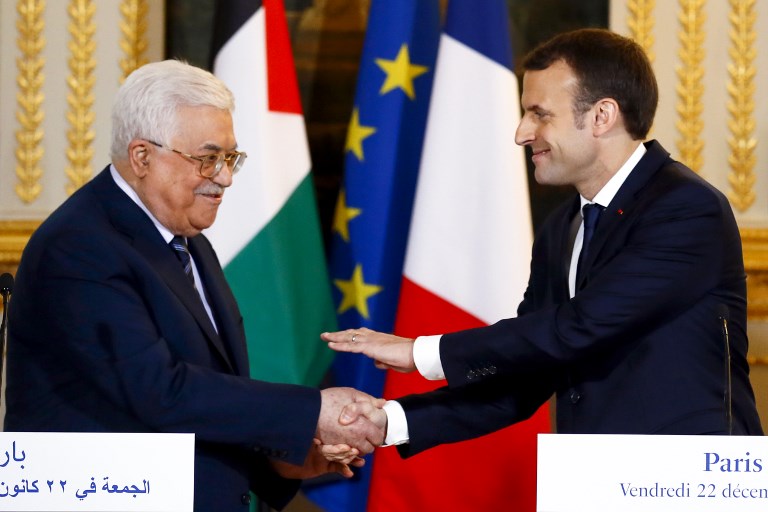
The issue of a Palestinian state has been a contentious for decades and more so in recent years, particularly in light of recent declarations and threats by countries like France to unilaterally recognize “Palestine.” The reality is that notion of a fake, faux-Palestinian state lacks historical legitimacy and that recognizing such a state, especially under current circumstances, poses significant dangers to regional stability and peace.
Palestine as a sovereign state or independent entity has never existed in history. After the Bar Kokhba revolt (132–136 CE), the Romans renamed what was historically Judea, “Palaestina,” to suppress Jewish identity, as a way to vanquish Jews and Jewish history. Over centuries, the region was controlled by various empires, including the Byzantines, Arab Caliphates, Crusaders, Mamluks, and Ottomans, none of which established a state called Palestine.
Under the Ottoman Empire (1517–1917), the area was a sparsely populated province, often described as desolate by visitors like Mark Twain in the 19th century. Twain noted the land’s barrenness, with few inhabitants and little cultivation, contradicting claims of a thriving Palestinian nation. Following World War I, the League of Nations granted Britain the Mandate for Palestine, which included areas that are now Israel, the “West Bank,” Gaza, and Jordan. The Mandate aimed to establish a “national home for the Jewish people” while protecting the rights of non-Jewish communities, but it did not mention an Arab state called Palestine. The term “Palestinian” during this period referred to Jews living in the Mandate, as evidenced by institutions like the Palestine Post, a Jewish newspaper, the Palestine Philharmonic, and various Palestinian (Jewish) athletic teams, just to name a few.
Even pre-1948 “Palestinian” currency was coined with English, Arabic, and Hebrew, something that never would have happened had there been an independent Arab entity.
In 1947, the United Nations adopted Resolution 181, partitioning the Mandatory Palestine into Jewish and Arab states, with Jerusalem as an international city. Jewish leaders accepted the plan, but Arab leaders rejected it, leading to the 1948 Arab-Israeli War of Independence. Many say that Israel is still fighting that very war today. When Israel declared independence in May 1948, no Palestinian Arab state emerged. Instead, Jordan annexed the “West Bank” (Judea and Samaria), and Egypt controlled Gaza, neither granting independence to the local Arabs. Dring the 1967 Six-Day War, 58 years ago this week, Israel captured these territories that were never an independent Palestinian Arab state and which many Arab leaders at the time did not recognize as an independent geographic or ethnic entity.
The identity of the Palestinian Arabs is a complex and relatively recent creation. Before 1948, the Arab population in the region was a mix of indigenous Arabs, Bedouin clans, and migrants drawn by economic opportunities created by Jewish immigration and development. Historical records show significant Arab migration from Egypt, Syria, and Arabia during the late 19th and early 20th centuries, driven by the prosperity brought by Jewish residents who transformed the barren landscape. These migrants did not identify as a distinct “Palestinian” nation but as Arabs within the broader Ottoman or Arab world.
The modern “Palestinian” identity was only made up in the mid-20th century, largely as a political response to, and means to delegitimize, the establishment of Israel. The Palestine Liberation Organization (PLO), born in 1964, adopted the term “Palestinian” to unify Arabs in the region under their new national cause. The PLO’s 1968 National Charter defined Palestine as the entire British Mandate territory, including Israel and Jordan, rejecting the Jewish state’s legitimacy, as well as that of the Hashemite kingdom on the East Bank. The term “Palestinian” was further solidified through Soviet- propaganda in the 1960s, framing them as an oppressed nation fighting for liberation. This narrative, however, ignores the lack of a historical Palestinian state or unified ethnic Arab identity prior to this period.
Recognizing a Palestinian Arab state is problematic due to the absence of historical and legal foundations for such an entity. A state requires defined borders, a unified government, a currency, and sovereignty, none of which have ever existed for “Palestine.” The 1988 PLO declaration of a “State of Palestine” claimed sovereignty over the “West Bank,” Gaza, and East Jerusalem, but these territories have never been under unified Palestinian Arab control. The Palestinian Authority (PA), established under the 1993 Oslo Accords, controls parts of the “West Bank,” and Gaza, albeit for nearly two decades Hamas has controlled Gaza. The lack of a centralized authority undermines claims to statehood.
The “Palestinian” narrative hinges on the notion of “occupation,” yet the PLO’s formation in 1964 and its goal to “liberate” all of Mandate Palestine, including Israel, highlights that the core issue is Israel’s very existence, not just the post-1967 territories. The absence of a historical Palestinian state, coupled with the rejection of Israel’s legitimacy by all Palestinian Arab terror groups, including the PLO and Hamas, makes recognition of a “Palestinian” state a fraud.
Unilateral recognition of a Palestinian Arab state poses several dangers. First, it rewards violence, especially following Hamas’s October 7, 2023, attack and massacre on Israel, which killed over 1,200 people and involved widespread atrocities. Recognizing a “Palestinian” state without addressing Hamas’s influence or requiring Palestinian leaders to renounce violence incentivizes further terrorism. Polls indicate that 75% of Palestinians support the October 7 attack, and Hamas would likely win a democratic election, suggesting that “Palestinian” would just become a new state whose raison d’etre is to destroy another state.
Second, recognition undermines negotiations. The Oslo Accords and subsequent agreements envisioned a two-state solution through mutual negotiations, not unilateral actions. By recognizing “Palestine” without requiring peace and reciprocal recognition of Israel, countries like France embolden Palestinian rejectionism, as seen in the PLO’s and Hamas’ refusal to accept Israel’s right to exist. This perpetuates the conflict rather than resolving it.
Third, a Palestinian state under current conditions would be unstable, authoritarian, and undemocratic. The PA’s “pay to slay” policy, which financially rewards terrorists, and its history of corruption, kleptocracy, and human rights abuses raise concerns about governance. Such a state would be Judenrein (free of Jews) and hostile to democratic principles, contradicting the values of liberal democracies like France which threaten recognition of “Palestine” as a form of backward diplomacy.
Finally, such recognition ignores Israel’s security concerns. A Palestinian state in the “West Bank” and Gaza, without demilitarization, recognition of Israel’s legitimacy, or clear borders, would serve as a base for attacks on Israel. The 2005 Gaza disengagement, where Israel withdrew all civilian and military presence in Gaza, including disinterring corpses, created a vacuum leading to Hamas’ takeover, tens of thousands of rocket attacks, and the infrastructure that allowed the October 7 massacre to happen unchecked.
The push for Palestinian statehood stems from a desire to address “Palestinian” grievances, but ignores the historical and practical realities. The “Palestinian” identity, while real to millions today, is a modern invention rooted in opposition to Israel rather than a distinct historical nation. Recognizing a Palestinian state without addressing the rejection of Israel’s existence, the glorification of and incitement to violence, and the lack of unified governance will perpetuate conflict.
True peace requires a radical change of heart and recognition of Israel’s legitimacy. As former Israeli Prime Minister Golda Meir noted, peace can only come when “Palestinians” prioritize their children’s future over hatred of Israel. This necessitates a cultural and political shift away from violence and victimhood, fostered by education and economic development, not external validation of a fake narrative. International actors like France should focus on fostering accountability, not unilateral actions that reward terrorism and undermine truth.
With no history of a sovereign Palestinian Arab entity, and the “Palestinian” identity, while embraced as real today, there is no precedent for a State of “Palestine.” Unilateral recognition of a Palestinian state is deceitful due to the lack of historical and legal foundations, and dangerous because it rewards terrorism, undermines peace, and threatens regional stability.