
Fearless: The Anthology, by Ronnie Wood
My parents, and all my family going back to the 1700s, were water gypsies. They lived on longboats and barges. My mum was born on a boat called the Orient, and my dad on the
Antelope. I suppose that makes me a nomad.”
Fearless: The Anthology is Ronnie Wood’s chronicle of his lifelong musical journey – from his late forties London childhood to fame, rock stardom, and a rare double induction into the Rock and Roll Hall of fame.
Number eight Whitehorn Avenue
Wood’s tale opens with the family’s water-gypsy legacy going back to the 1700s, and the revelation that Ronnie and his two older brothers were the first in the family to be born on dry land. The youngest of three grew up in a council house filled with live music, exploration and art. Wood recalls a house throbbing with energy, a close family and a tight-knit community that was also “a hard-drinking, hard-smoking world.”
His “always in the pub” dad would “bring home this incredible mix of people from all walks of life – rag-and-bone men, bin men, characters you’d never normally meet.” It was a house filled with music – number eight Whitehorn Avenue became the party house – “everyone brought something, a barrel, a keg, whatever they could manage. Soon there’d be 40 people crammed into the back room, rocking along while Dad played his harmonica, telling stories and cracking jokes.”
Little Ronnie remembers being encouraged, guided and inspired by older brothers Art and Ted, ten and eight years his senior respectively. It was his brothers who brought home records by Howlin’ Wolf, Muddy Waters, Fats Domino and Jimmy Reed, sparking Ronnie’s deep, life long love for music.
Both brothers played in bands, with Ted being a jazz man while Art was into blues and R&B. It was also on his brothers’ (and brothers friends’) many instruments that he taught himself to play. He explored their clarinets, banjos, cornets, saxophones, guitars, trumpets, harmonicas, kazoos, “comb and paper, a homemade drum kit with Chinese wood blocks, and the washboard.”
Particularly moving is the story of little Ronnie’s eagerness to learn chords catching the eyes of two of his brothers’ friends. In a kind gesture he remembers to this day, they drew a guitar neck on a piece of paper for him, “marking the frets and putting dots where my fingers should go.” When his brothers bought him a “old beat-up acoustic” with strings sitting high on the neck and hurting his fingers to play, he continued to practice, persevering in getting to know what he calls his “new spokesman.” He would play the likes of Chuck Berry, Wes Montgomery and Ken Burrell, learning to play the solos by ear.
From the BIRDS to the Rolling Stones
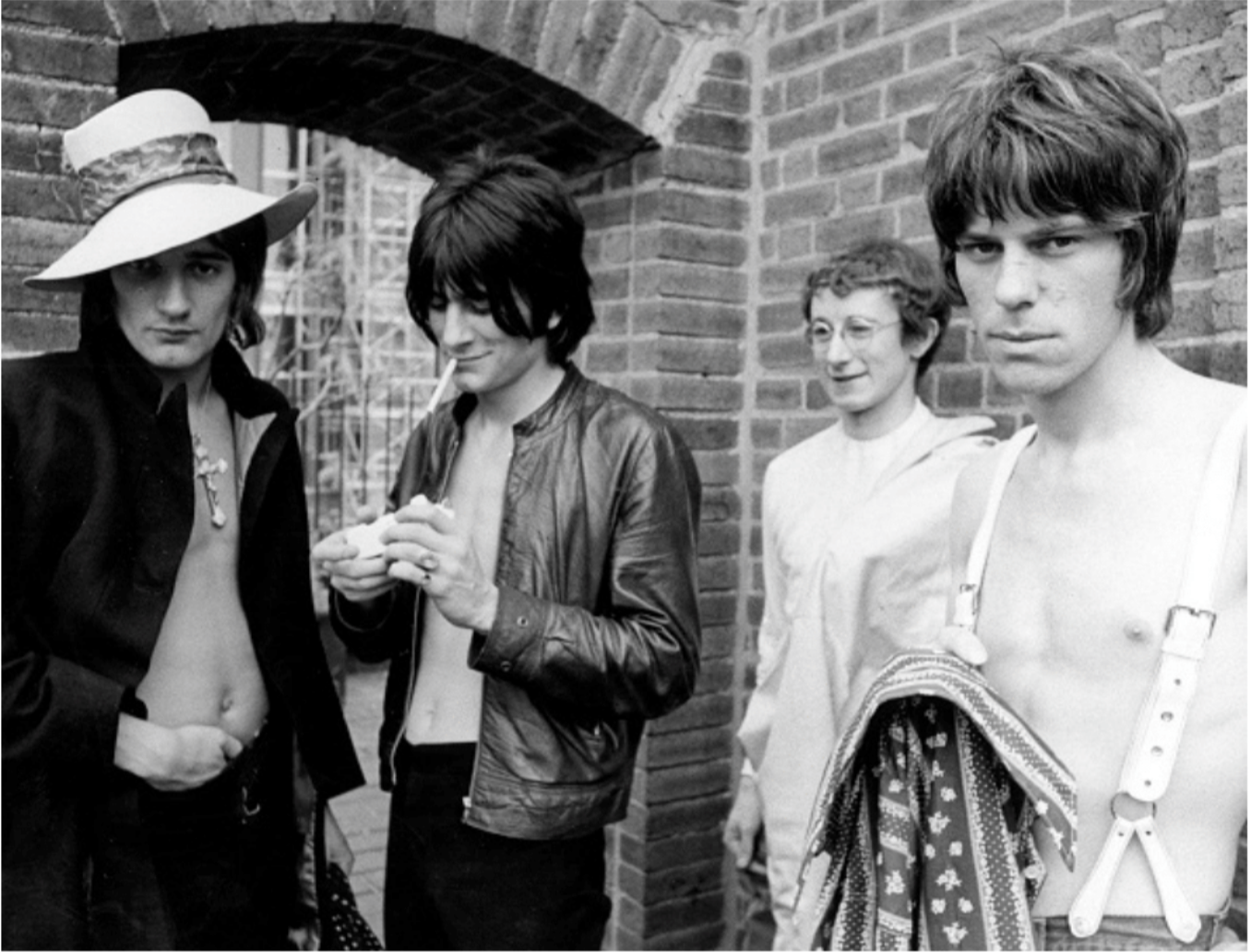
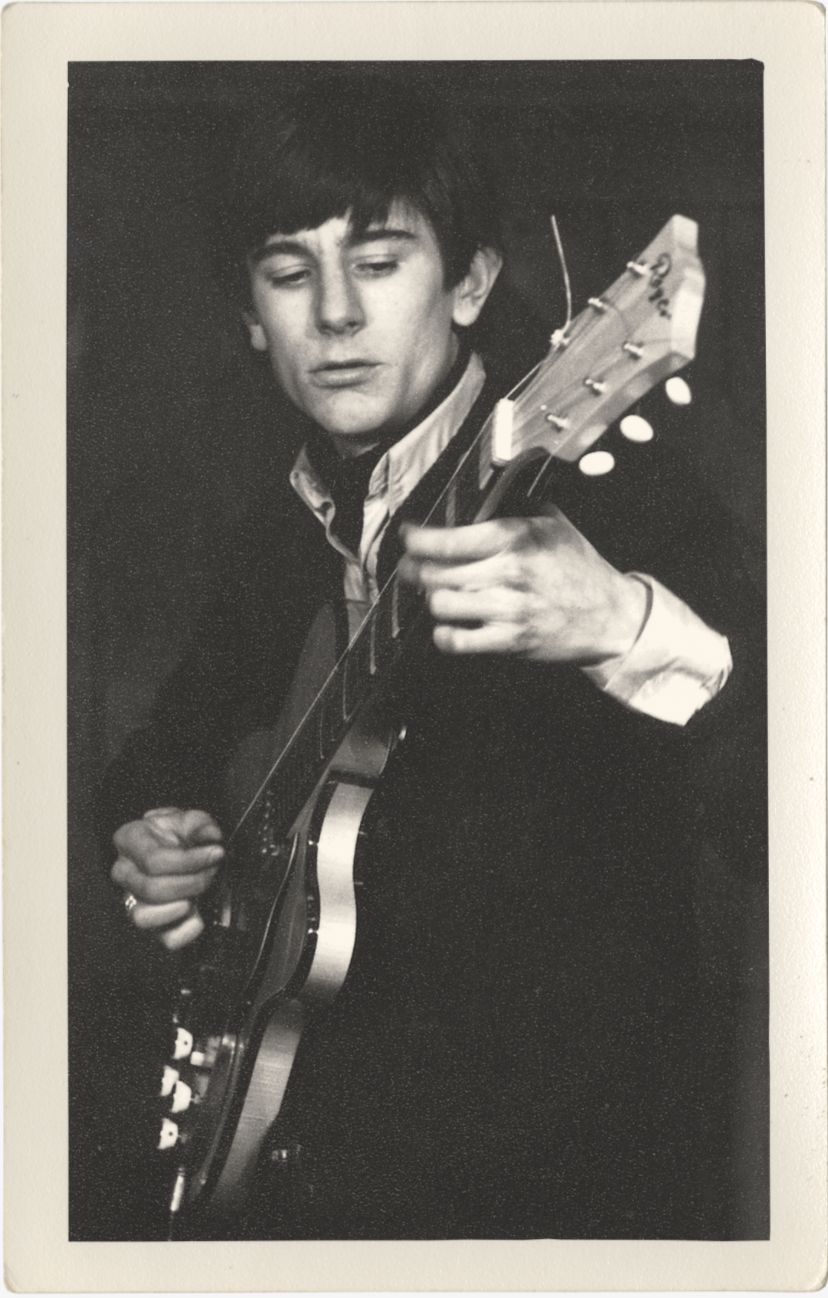
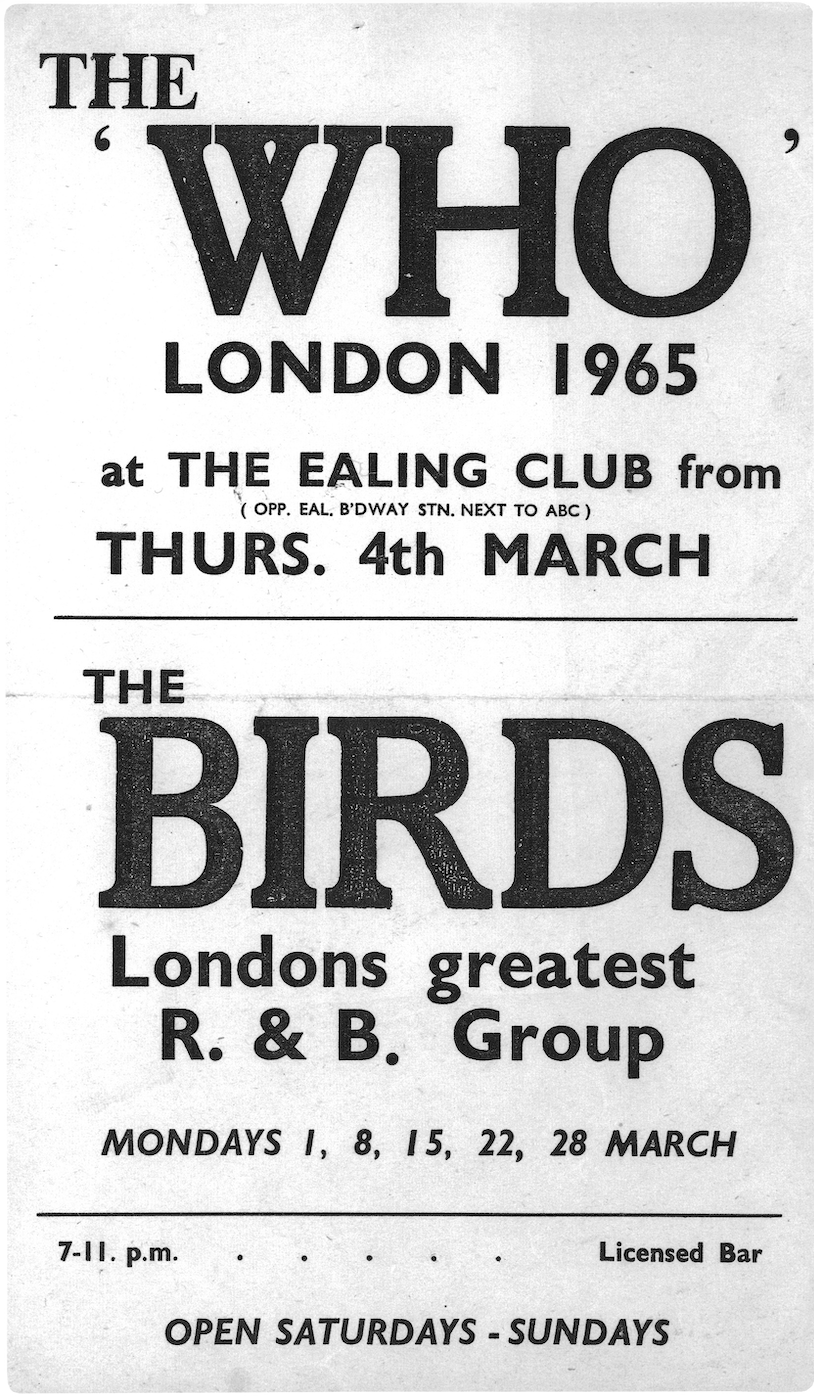
From the BIRDS, to the Jeff Beck Group, the Faces and The Rolling Stones, Wood writes of his colourful journey as a young musician making his way through London’s band scene. We hear of how after the Birds split up, he met Jeff Beck at the Mojo Club in Sheffield – it was a chance encounter that led to a Jeff Beck Group gig at the 100 Club with Rod Stewart on vocals, and Wood taking on Beck’s suggestion to play bass – it was a 1964 Fender Jazz Bass that he recalls sandpapering down to the wood, in the garden of his Mum and Dad’s house.
I used to play this bass with the Jeff Beck Group with an old penny, and it had wire-wound strings on it. A real scratchy, thunderous sound. You can hear some of that on the song ‘Plynth’ on the Fearless collection.
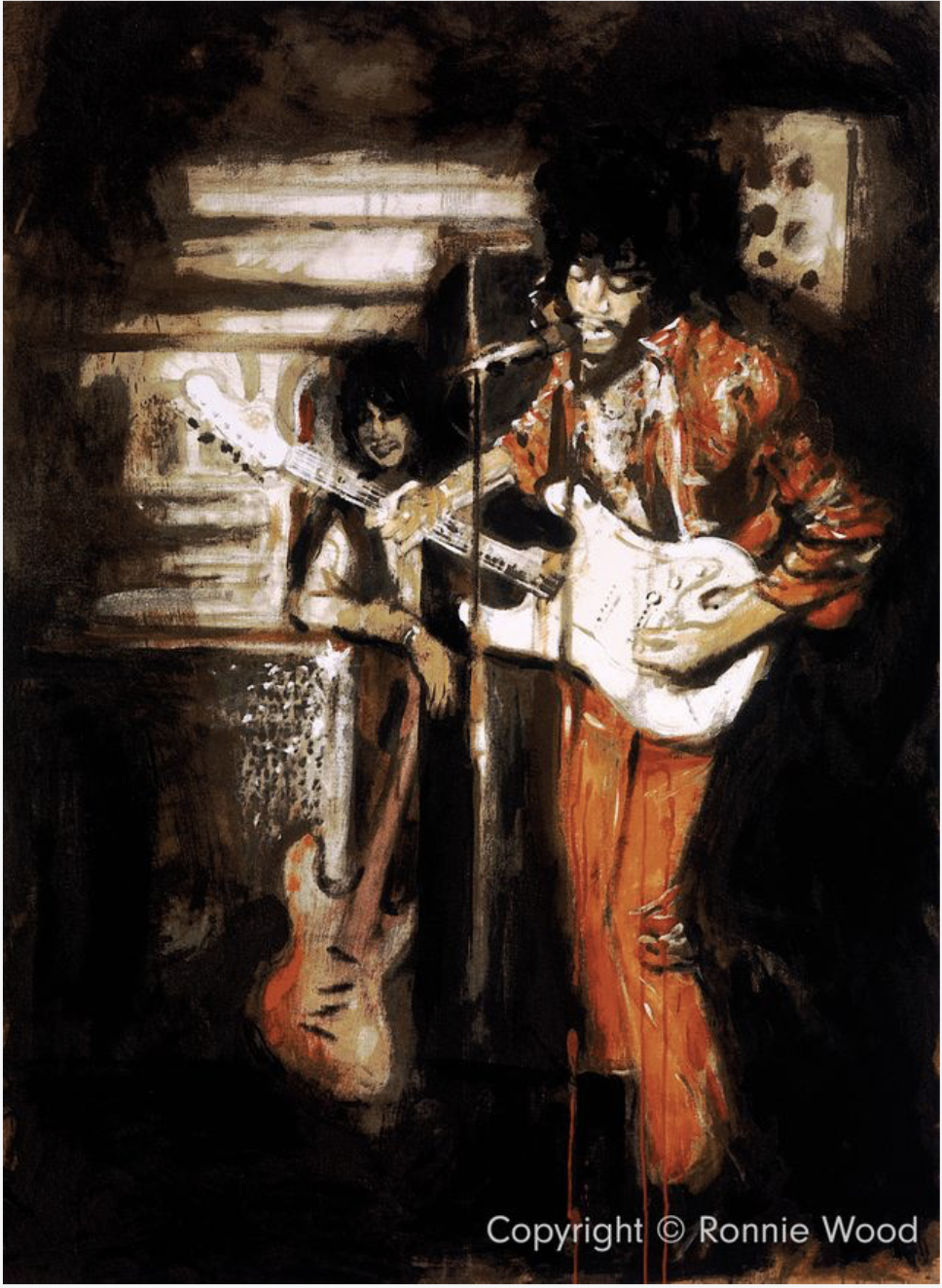
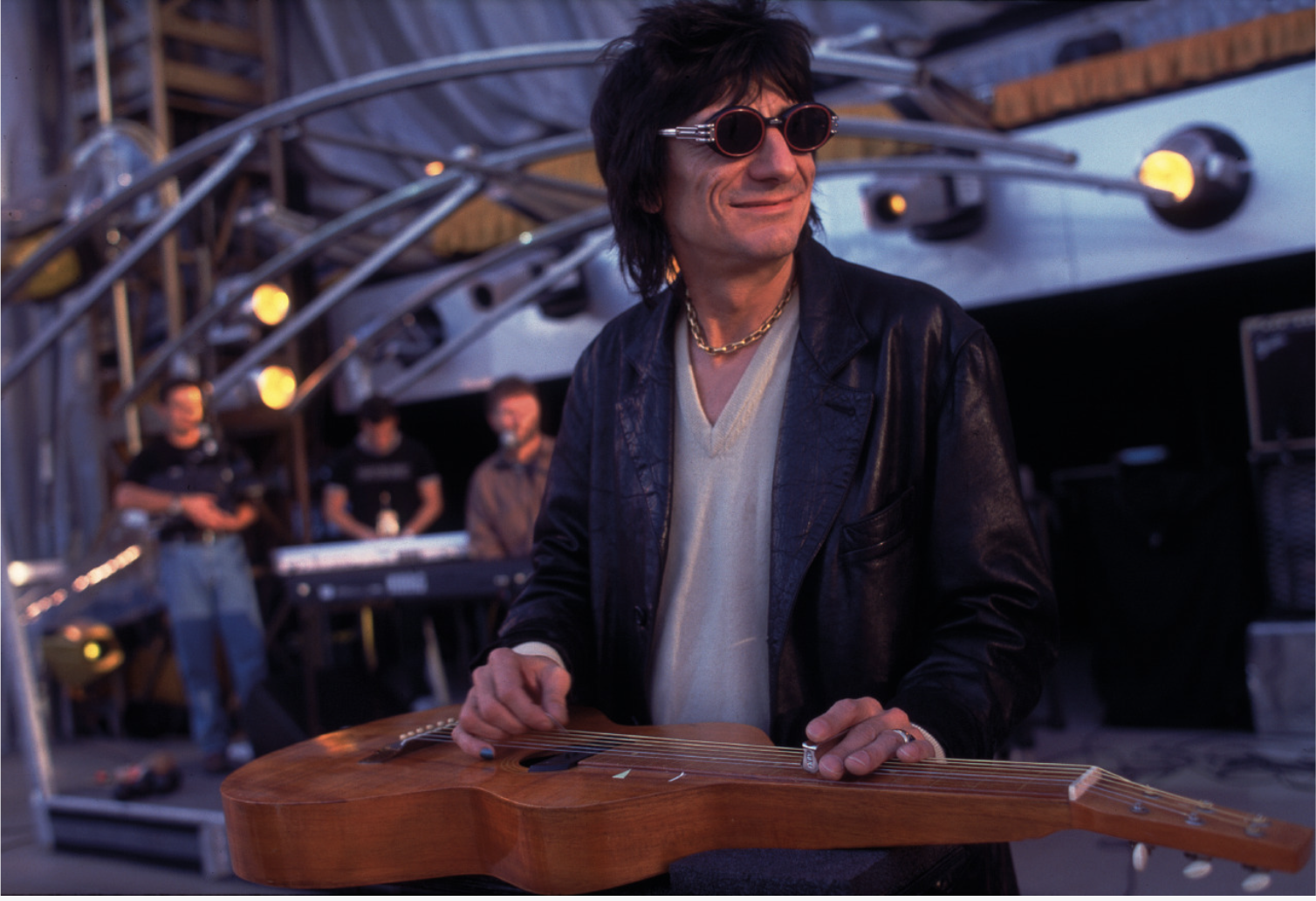
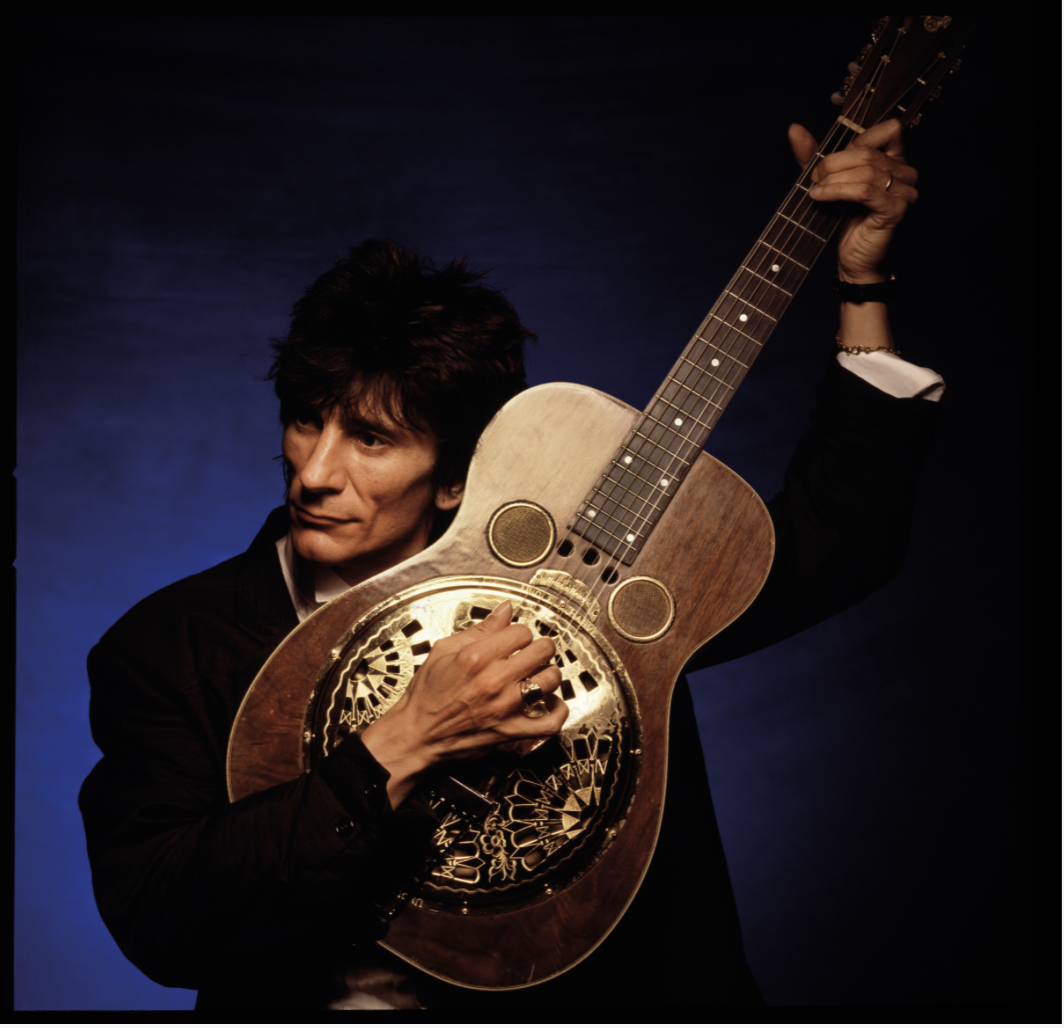
Throughout the book Wood shares images and details of the many guitars he has played. Fascinating details of the instruments themselves as well as the craftsmen who laboured to make them. Craftsmen such as Tony Zemaitis who made distinctive guitars. Wood tells of the music loving cabinet-maker who started building acoustics in the 1950s, his transition to electric guitars, creating his signature metal-front design in 1970, and how the ornate decoration meant that these guitars “made a statement on stage and became favourites of musicians including Jimi Hendrix, Eric Clapton and George Harrison.”
We also hear of an original Dan Armstrong Plexi that Wood gave David Bowie, Wood’s idea for a heart shaped sound hole, the countless decorations illustrating his many guitars and even how he painted imagery over the inside of a sound hole – ” I’ve had guitars where I did landscapes inside” he explained, “whole paintings on the backboard.”
The Stones – “I was in the right place at the right time”
Ronnie tells of the clubs, bands and iconic names he has encountered along the way, too numerous to note here – from Pete Townshend, Eric Clapton, George Harrison and Bo Diddley to Bob Dylan and Jimi Hendrix with whom he played and shared a London flat. Wood’s many reflections include him always supporting the main man on stage be it Rod Stewart in the Faces or the Stones’ Jagger, his special connection with Kieth Richards, and Wood being in awe of Hendrix’s ambidextrous playing.
That period I spent on bass with Jeff brought me a new perspective with guitar. It provided me with a more melodic playing than if I hadn’t been in that band
We learn where the striking guitars were played, which ones were stolen (some recovered, some never traced), their special features, why Wood loves playing them on which tracks and more. “My guitars are the tools of my trade” he concludes, “they are really precious to me, and it’s amazing to see them documented in this book.”
He reflects on costumes he wore, his affinity to fashion, guitar playing, mastery of painting and the musicians he has met and collaborated with along the way, from Bowie and Slash to Hendrix and Bob Marley among many others.
My early career was all good groundwork. Playing bass guitar in the Jeff Beck Group gave me a melodic sense that most guitarists don’t have a chance to develop. And then when I was the only guitar player in the Faces, I had to play both lead and rhythm, which came in very useful for the weaving I do with the Stones.
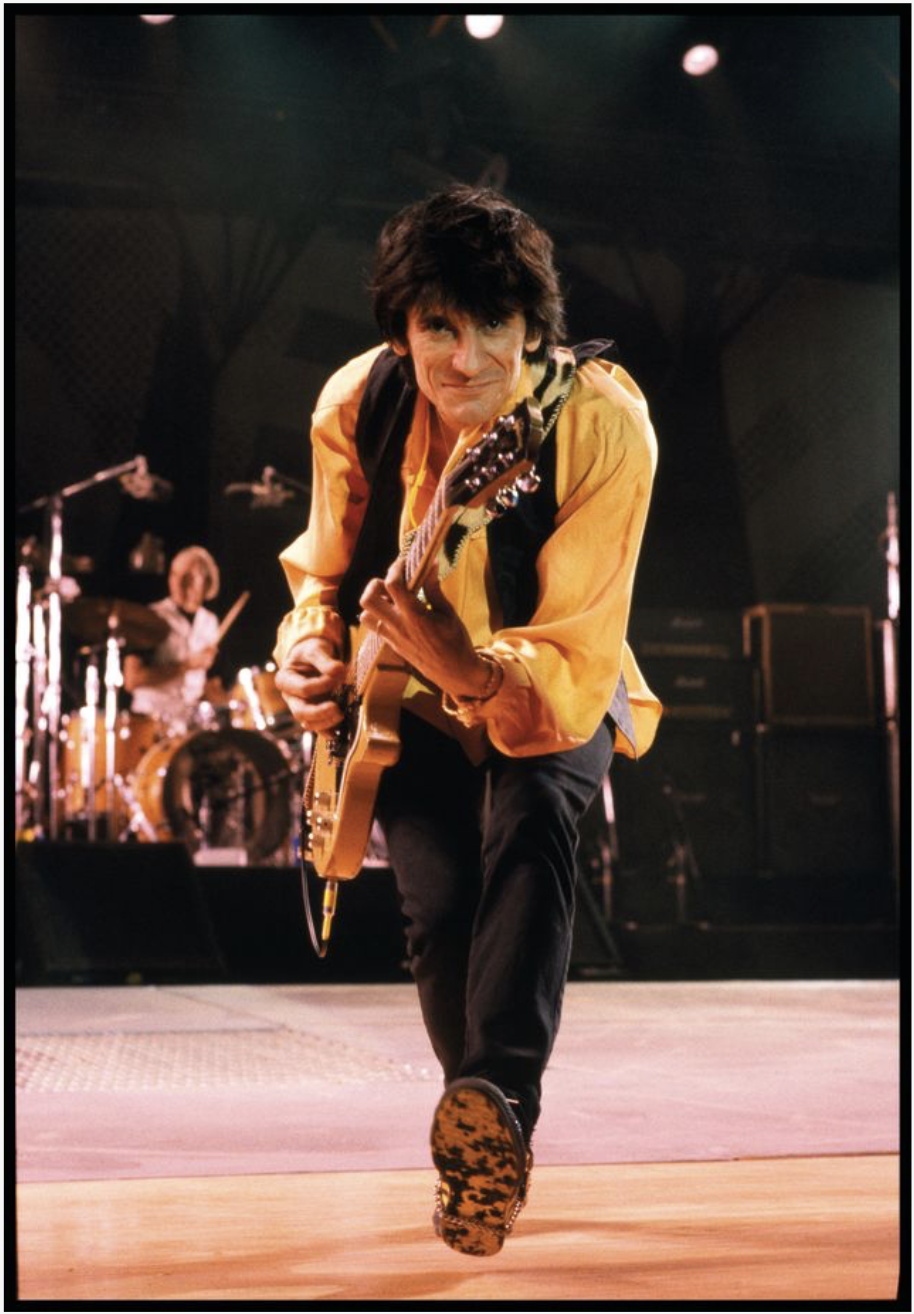
Ronnie Wood’s chronicle is all about his journey in music, from the little boy realising his vocation to the world famous guitarist gracing the world’s grandest stages with the Stones. It is about working hard, creating opportunities but also having the great fortune of being in the right place at the right time. Take for example his chance Sheffield encounter with Jeff Beck, or the Robert Stigwood party where Jagger asked Wood if he would join the Stones.
As you read Wood’s account you recognise the hard work and massive behind the scenes effort to make music a success. “Even as a teenager” Wood notes, “I’d be up into the small hours, practising, getting a little lick, figuring out how a part goes together. You make it look like you’ve stumbled on a sound, but a lot of work has gone into it.”