Filling in the blank spaces
We are living in extraordinary times.
On the surface, our days appear deceptively ordinary. Kids go to school, adults are at work. Life has its normal routines.
But living among us are extraordinary people making extraordinary decisions about how to face life and its challenges.
There are the names that we know – Iris Chaim, Rachel Goldberg-Polin, Eli Sharabi, Omer Shem Tov.
And then there is everyone else. Seemingly ordinary, anonymous people going about their lives but choosing to live each day in ways that go above and beyond the expected.
People taking leaves of absence from their workplace to help rehabilitate injured soldiers. Families leaving the comforts of their home to move south to the Gaza envelope or north to the Galil to strengthen our borders. Men and women deciding to enlist voluntarily at later stages of life. Wives of soldiers holding down the fort at home, devoting themselves to providing their children with as much normalcy as possible.
The holiday of Shavuot, when we commemorate the day the Jews were given the Torah and heard the Ten Commandments at Mount Sinai, is around the corner. It is a time when, as a nation, we were given the dos and don’ts of how we are expected to live. A time when we were told what we have to do to be good Jews.
It might seem strange, therefore, that the megillah that we read on this day is the Book of Ruth.
In Midrash Ruth Rabbah, Rabbi Zeira remarks that the book of Ruth contains no laws of purity and impurity, no rules of what is forbidden and what is permitted. In fact, he states, Ruth was written and canonized only to teach us about the rewards that come to people who engage in acts of chessed, acts of giving and kindness, that go beyond the letter of the law.
Ruth is the story of a young Moabite woman who returns with her mother-in-law Naomi to Naomi’s native country of Israel. After their husbands die, Ruth makes the decision not to abandon her mother-in-law. She famously tells her: “Do not urge me to leave you, to turn back and not follow you. For wherever you go, I will go; wherever you lodge, I will lodge; your people shall be my people, and your God my God. Where you die, I will die, and there I will be buried. Thus and more may the Lord do to me if anything but death parts me from you.” (Ruth 1:16-17)
In so doing, Ruth is prepared to leave not only her county, community, and family, but also to give up her independence, in order to keep Naomi company and ensure her well being. She commits herself not only to Naomi, but also to the destiny of the Jewish people. “Your people shall be my people,” she declares, ready to share in both its history and its trajectory. She also seeks her own personal relationship with God.
The rest of the megillah details the ways in which Ruth is willing to degrade and exhaust herself in the fields, collecting grain day after day, so that Naomi will have something to eat.
Of course, it would have made sense for Ruth to leave her mother-in-law Naomi, as did her sister-in-law Orpa, and return home to pick up the pieces of her life and move forward after her husband died. Who could have blamed her? And yet Ruth chooses to stay.
Of course, it makes sense that a distant kinsman does not want to marry Ruth, redeem her dead father-in-law’s fields, and risk his own inheritance. Who would think otherwise? And yet Boaz chooses to do just that.
In essence, the Book of Ruth is not about what we have to do in life, but about what we think we should do. It is about what can happen when we move past the ordinary of what is expected from us to the extraordinary of realizing what potential lies beyond.
It takes a lot just to stay afloat these days. It can take enormous energy just to get out of bed each morning and face another day. No one should look down on anyone who is just managing to get by.
In the Book of Ruth, there is a focus on the characters who choose to make extraordinary choices. Not because they have to, but because they want to.
The holiday of Shavuot is the holiday of receiving the Torah. But Ruth reminds us that receiving the Torah is not only about committing to the laws we are expected to follow. Most of our day-to-day decisions don’t revolve around what we have to do; rather, they concern how we want to live.
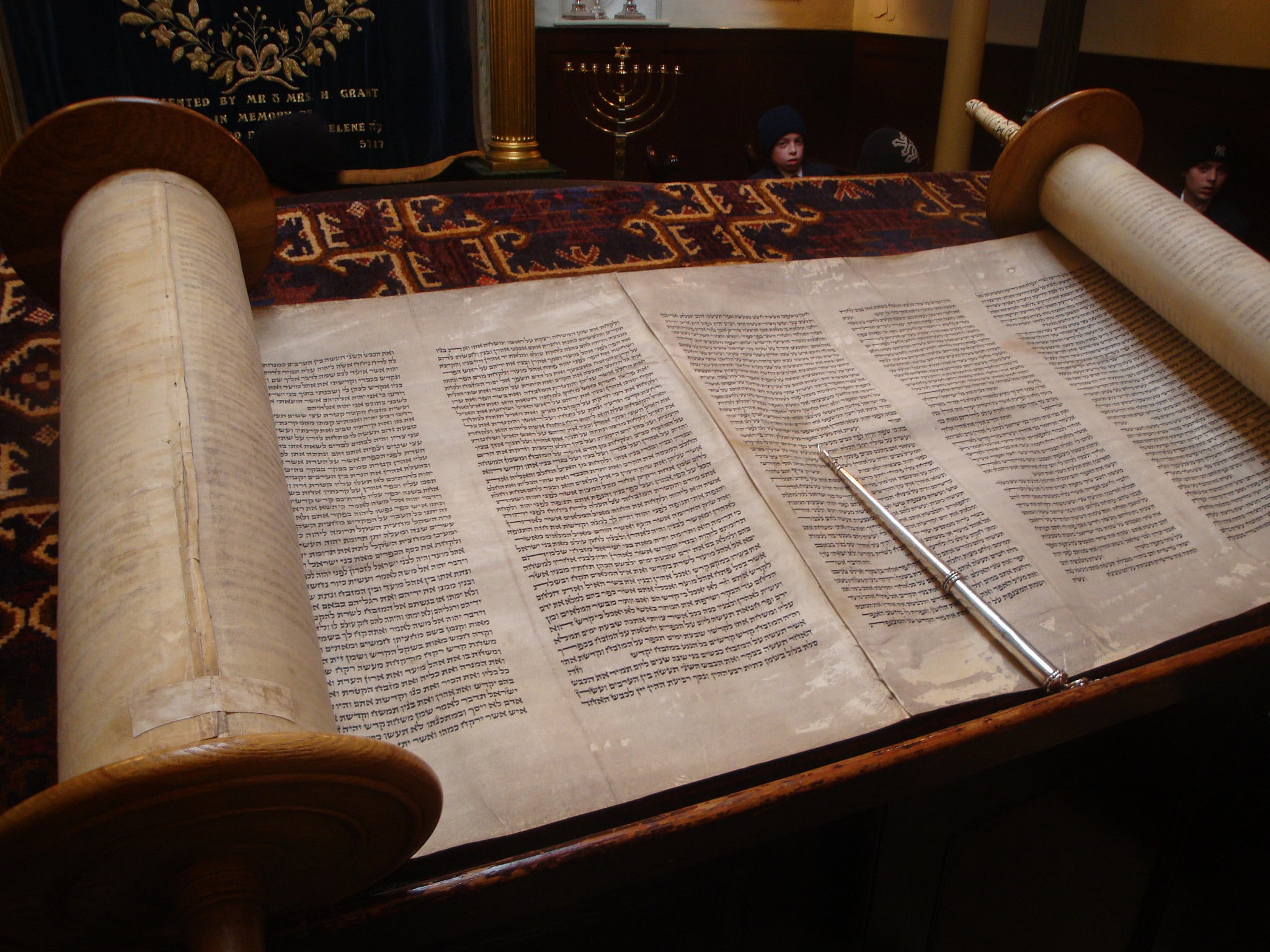
On Shavuot we were told the rules. We were given commandments. We received the text — black letters on white parchment. Around those words there is a lot of empty space.
The decision of whether to fill it with something extraordinary is one the Torah leaves in our hands.
Chag Sameach.