

Life on the Border with the Gaza Strip
Finding My Red Nose Again
Medical clowning is love. So I was taught.
Medical clowning means entering a space flooded with concern and trepidation, heavy with the foreign odors of disinfectants and medications. It’s performed in places where everyone except local staff exists outside their comfort zone—where people are forced to relinquish some or all autonomous control over their bodies and lives, placing it in the hands of strangers in green scrubs and white lab coats. Medical clowns bring color, sound, and playfulness into rooms that seem the antithesis of where such things belong, virtually transporting people to a parallel universe, even if only for a few precious minutes.
I earned my red nose in 2011 under the tutelage of a master: Prof Chimichuri (aka Alex Gruber). Living nearly an hour from the closest hospitals, I didn’t clown often, but I treasured each opportunity. Most of my clowning took place at Ashkelon’s Barzilai Medical Center, alongside a sweet clown-soulmate named Sarit. The last time I went, before our world shattered, was just before Rosh Hashanah—the Jewish New Year—in September 2023.
And then October 7th happened.
Traumatized. Uprooted. Mourning so many losses. So many friends and neighbors stolen to Gaza as hostages.
I could find no way to put on the red nose. People tried to convince me, saying that by not doing it, terror would win. Or that now, more than ever, people needed that silliness, that joy, that distraction in their lives.That it would “do me good”.
And yet.
To morph into the mindset of a medical clown, to work your magic, you must dig deep inside and pull out the essence of happiness, optimism, and silliness that lies within. That essence was comatose. MIA. I didn’t know if I could ever find it again.
Before I could even consider sending out a search party, I needed to heal—to trudge my way through the five stages of grief: denial, anger, bargaining, depression, acceptance. There was no room for shortcuts.
I needed to return to my home, to my kibbutz—to have my feet on the ground where I could smell “Eau de Nirim”: freshly mowed lawns, budding plants, and cow manure mixed with milk. Not the 21st-floor apartment opening into halls and elevators and lobbies with chemically manufactured scents camouflaging closed spaces.
I needed my community back. My neighbors. My family.
Most importantly, I needed the hostages to come home. As long as even one remained in Gaza, I could not imagine putting on the red nose.
Finally, last week, a clown-buddy convinced me to join her and her herd. I dug out my balloons and magic tricks from storage, clowned-up, nosed-up, and drove to Ashkelon. One hostage still remained in Gaza, but we’d all heard whispers, promises, and rumors that the IDF knew where he was, and his body would be returned to his family for proper burial imminently. So I went – not quite ready, but you have to start somewhere.
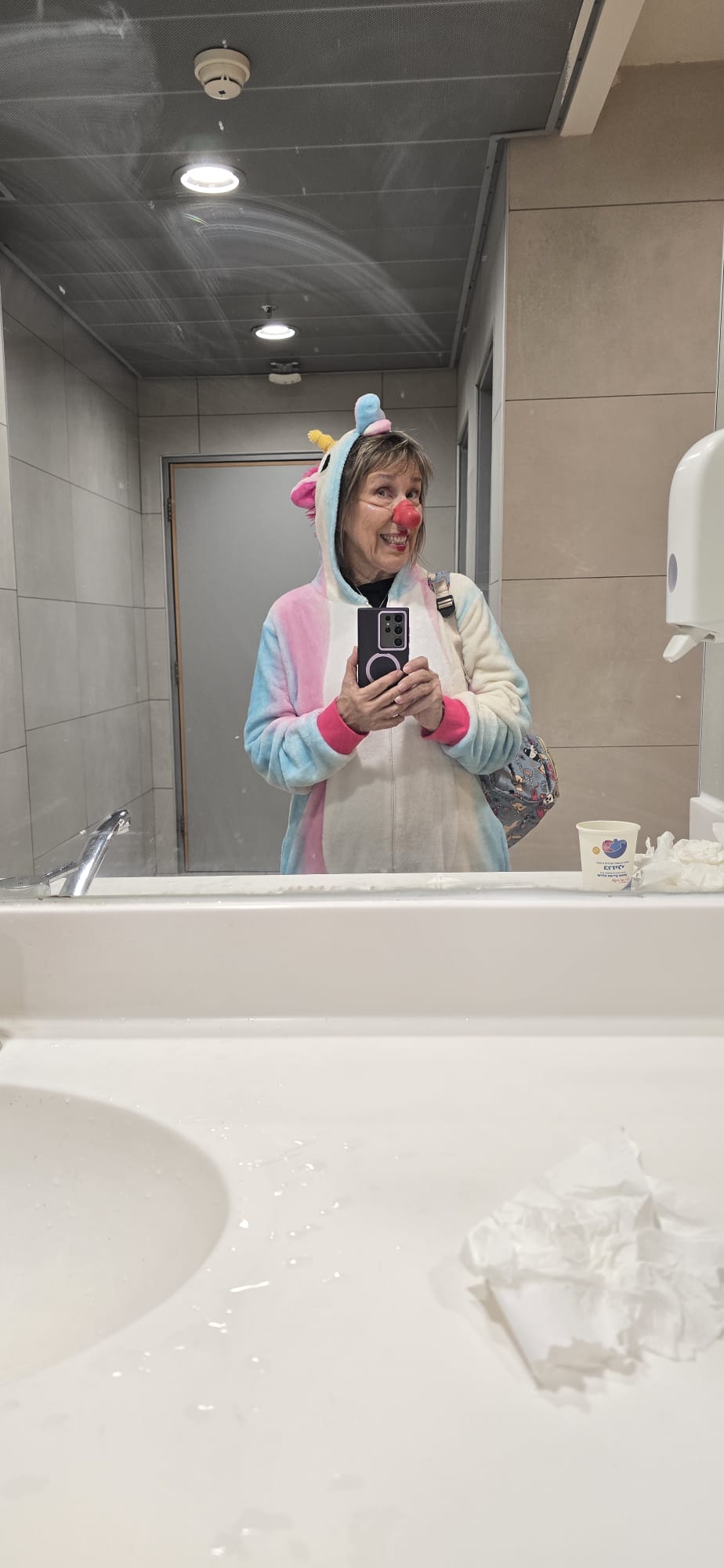
Under my costume, I wore the piece of masking tape with the number 483, as I had worn each day, counting, since before day 100. I went armed with my bag of tricks, my balloons, and my unicorn onesie, accompanied by a pinch of guilt for going back on what I’d promised myself. But I allowed myself to lean in, trust the process, and do it anyway.
It was tentative. Fragile. And wonderful.
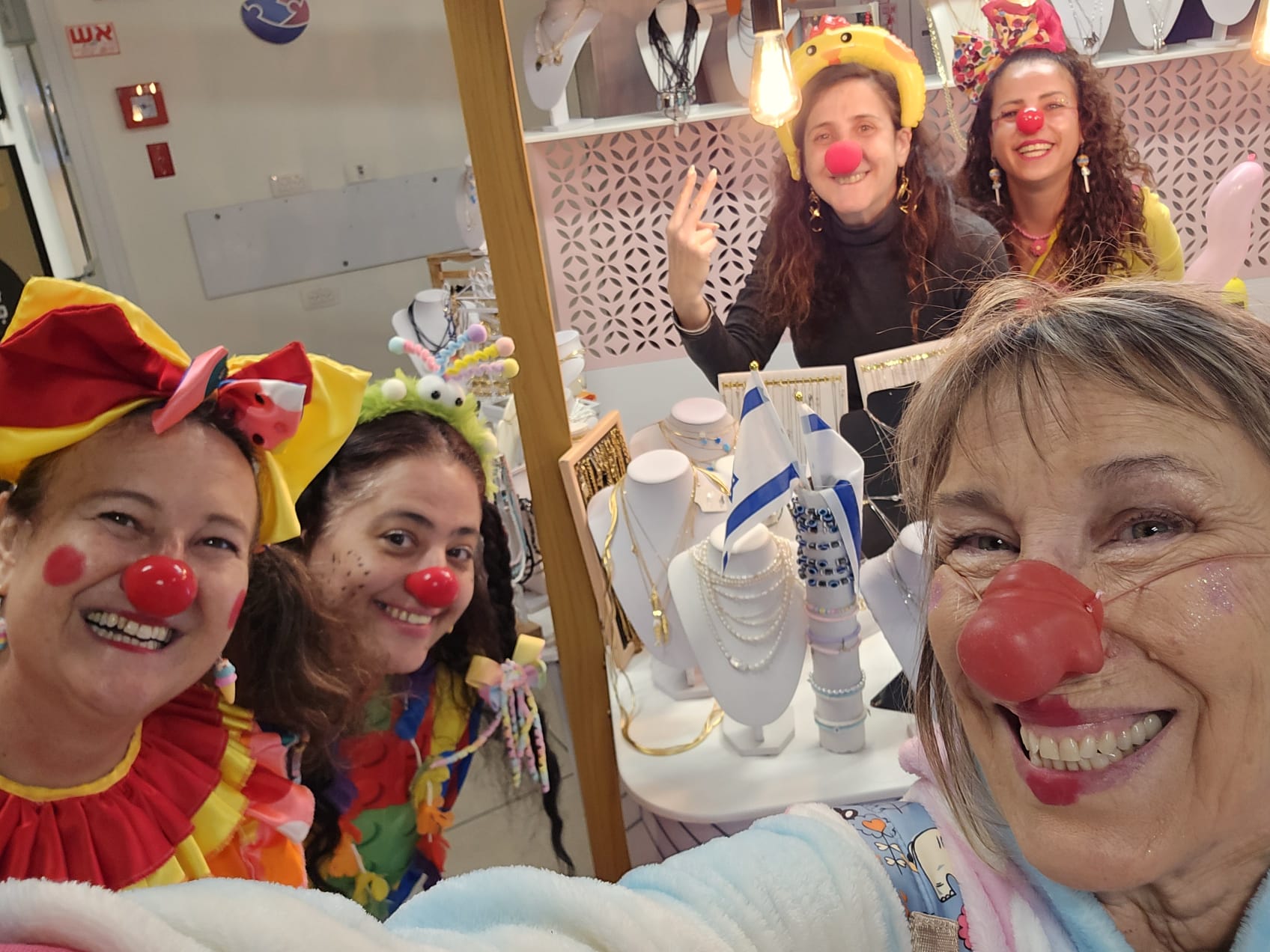
Surrounded by three supportive colleagues, I found my hospital-clown sea legs again.
A few hours later, Ran Gvili z”l, the last Israeli hostage, had been identified.
How’s that for timing?
This past week, I joined the clown bandwagon again—this time to Aleh Negev Rehabilitation Center. Closer to home, but hardcore. It’s a center where young adults with severe cognitive and physical disabilities live. The sights are heartbreaking: young people in wheelchairs with deformed limbs, many living in universes of their own.
In hospitals, we ask permission before entering a patient’s space. Interaction is mutual. Respect is central. We are trained to read cues and boundaries.
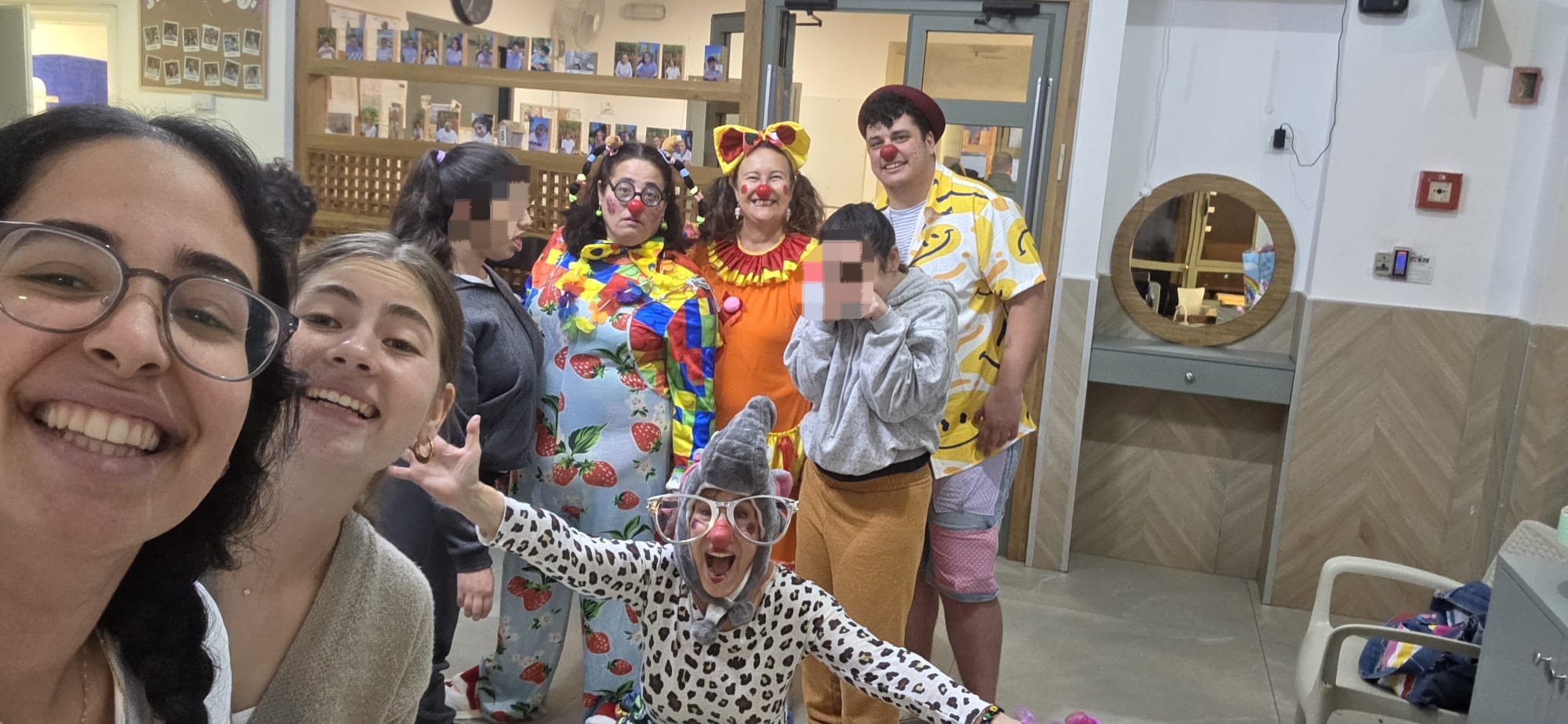
In a facility like Aleh Negev, communication is often elusive. We entered with music and juggling; I had a puppet in tow. I quickly understood that magic tricks were irrelevant there, balloons were forbidden but soap bubbles reigned. In some cases, my advances were met with smiles and applause. In others, empty stares into space and sounds impossible for strangers to interpret.
I followed the lead of the other clowns and staff as best I could. I hoped that what I was witnessing was enjoyment, not distress. I was immersed in a new foreign language: one of glances, gestures, tones, and subtle signals.
Maybe I’m not yet resilient enough to learn this language.
Or maybe I am.
The staff in each section certainly enjoyed the change of pace. It was both touching and inspiring to see the affection with which they who had learned the different languages of sounds, glances, and body language of their charges, interacted affectionately with them and helped bridge the communication gap when needed.
Medical clowning had become part of my healing journey after the sudden, violent loss of my husband. I am hoping it is now part of my journey back from October 7.
Back to myself.
Back to purpose.
Back to giving.
As always, when you volunteer, you receive at least as much as you give.
Especially when what you give is love.
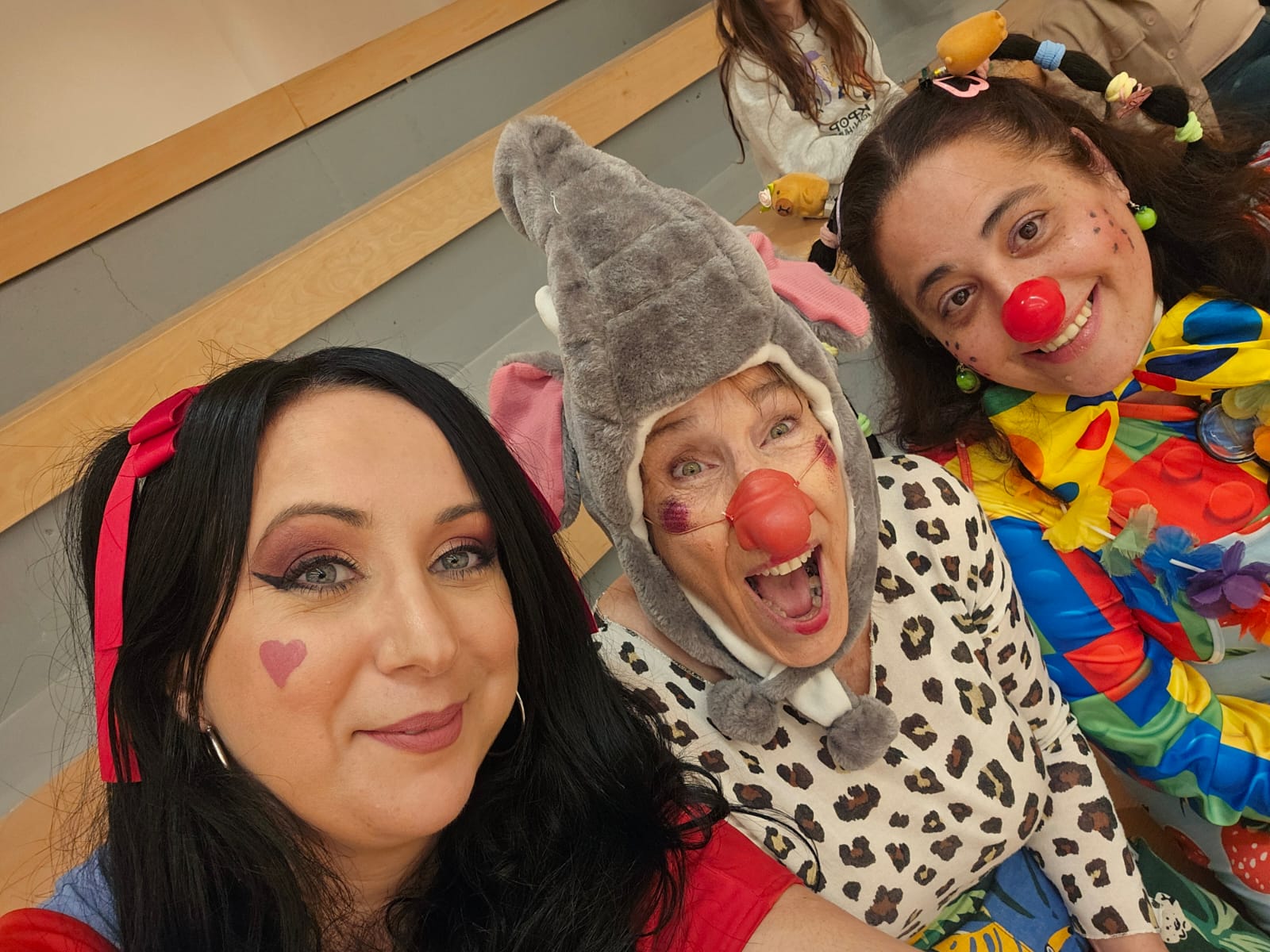
PS Special thanks to Jeff and Hava for not giving up on me <3