


Finding Our Way – Hayyei Sarah 5787
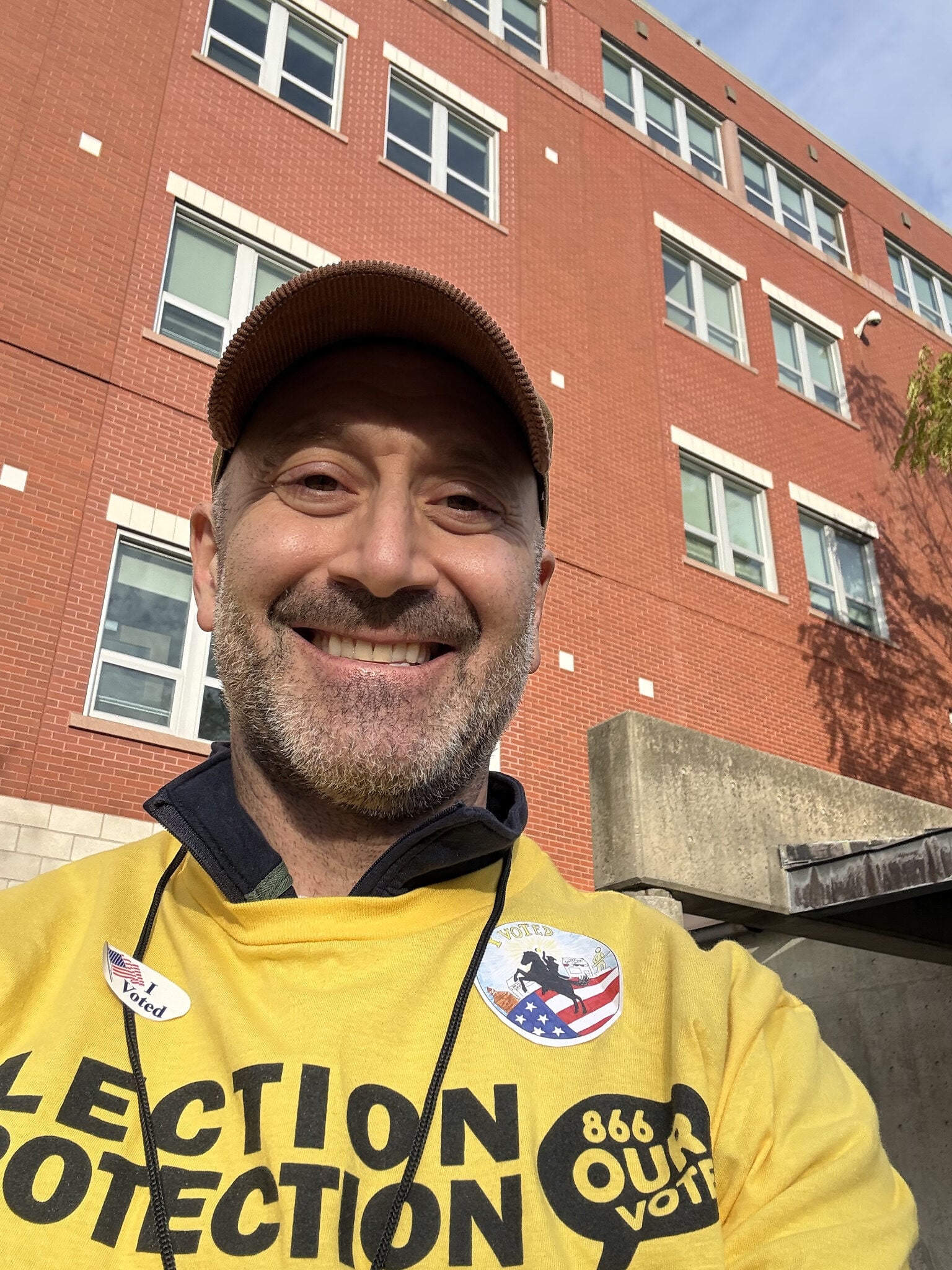
“Hi, did you have a chance to vote today? Yes? Great.”
“Did you get to vote? Yes? Nice.”
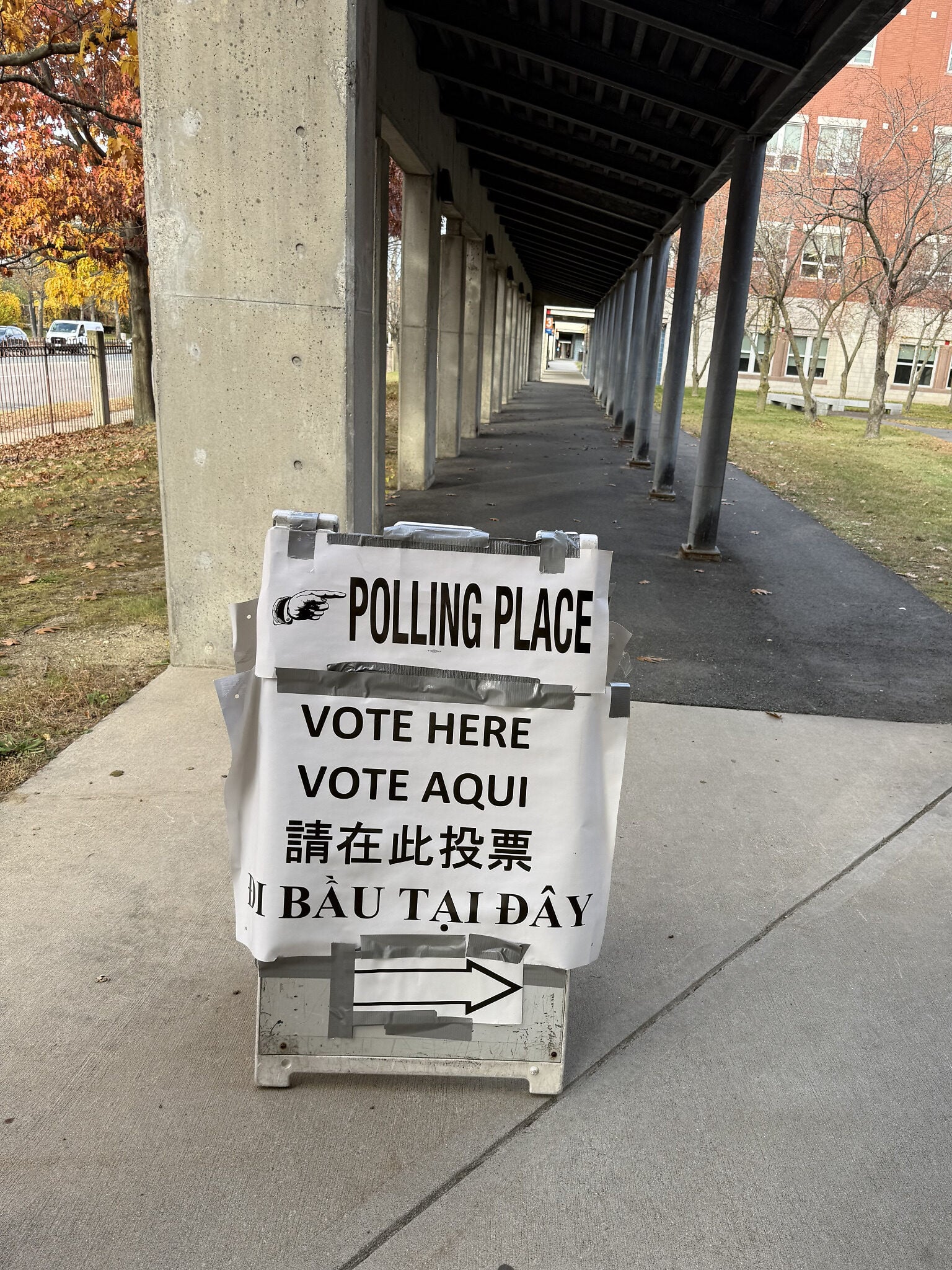
“Oh, where is the polling station? Let me show you – follow this path and turn right at the sign.”
“Did you vote today? You did? Thank you for voting!”
I spent a good part of Tuesday pretty much asking people if they voted.
And I have to tell you: it was probably the most patriotic I have felt in years.
And it was just really a great feeling.
It didn’t start off that great. I couldn’t find the polling place.
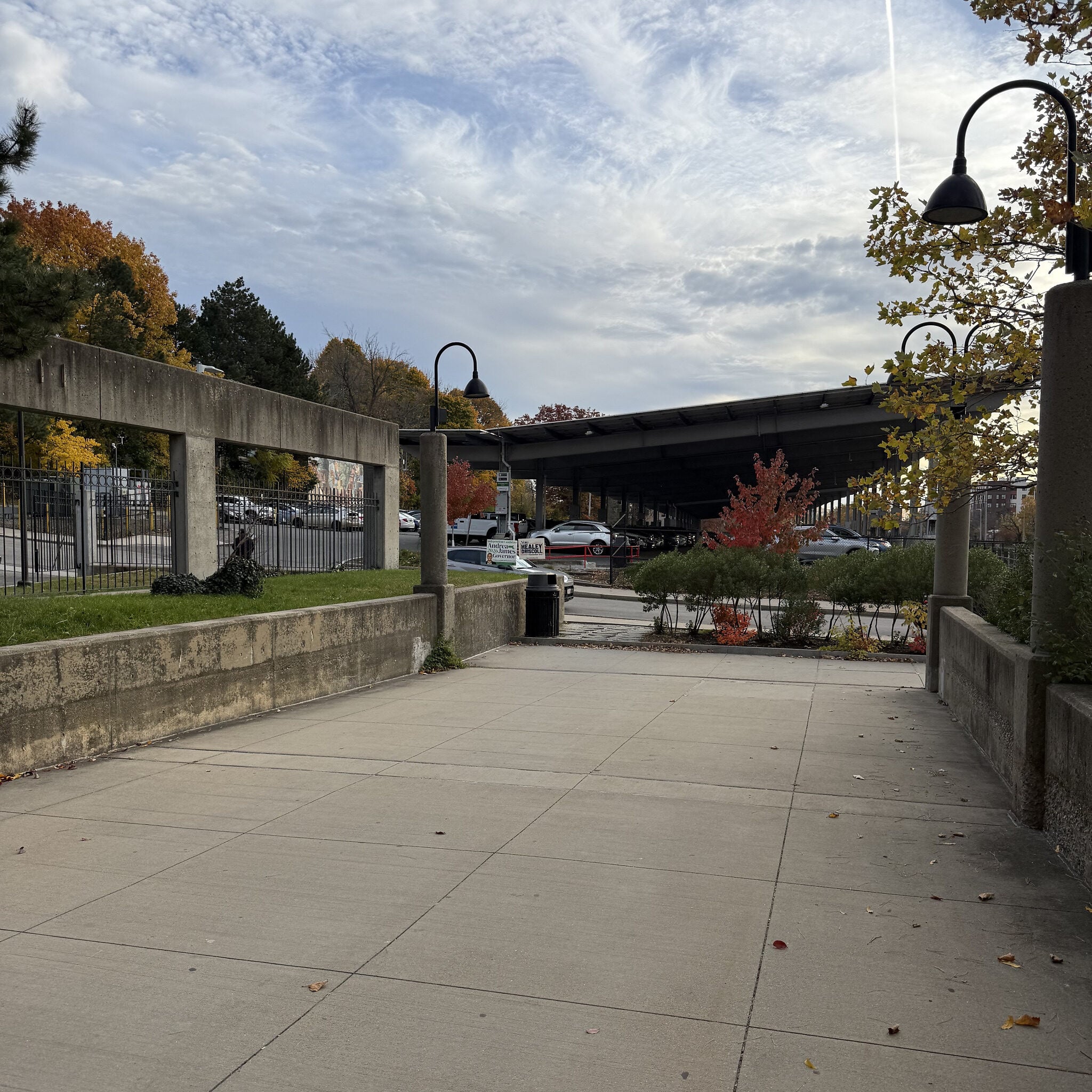
I was assigned to Roxbury Community College.
I got lost getting there and ended up parking somewhere that was kakha-kakha legal.
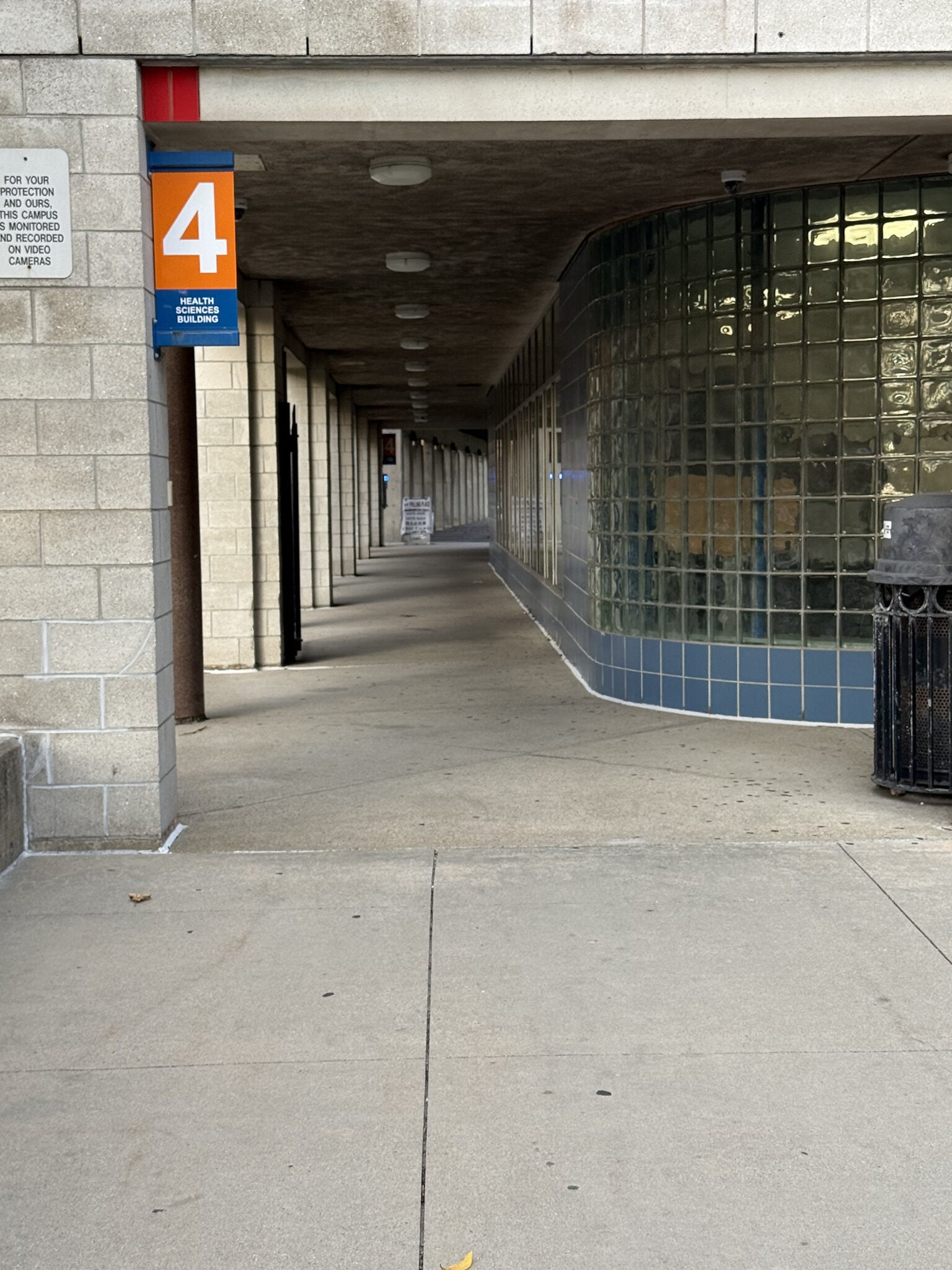
And there were several buildings, long covered walkways, entrances, seemingly random arrows.
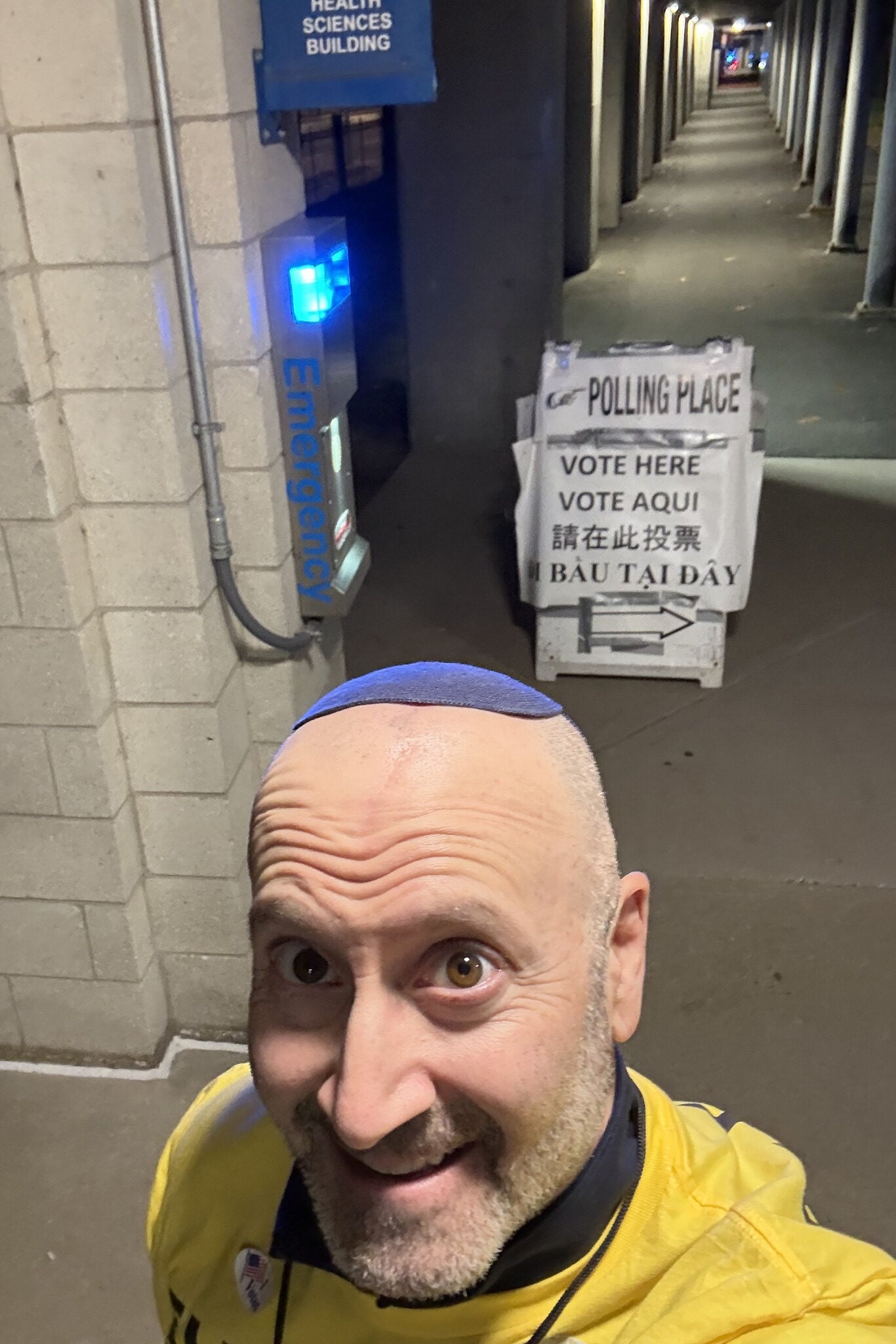
And there I was, wearing this bright yellow shirt that says ELECTION PROTECTION, trying to figure out where the election was.
But luckily, the people I was trying to help helped me find it.
*****
After working on threats to our democracy, due process, and the rule of law over the last two years, I really wanted to do something meaningful during this election.
I trained to be a nonpartisan Election Protection volunteer, helping voters find information and assistance if they encountered confusion, intimidation, or other obstacles.
And reporting anything out of the ordinary.
Mostly, though, I just pointed.
And I smiled.
It had to have been one of my favorite afternoons in Boston.
One older man arrived carrying a large booklet about the ballot questions. He was frustrated that his polling location had been moved.
“Why did they move it?”
I didn’t know. But I pointed him in the right direction and thanked him for coming out to vote.
“You might not like it,” he replied. “But I’m a Republican.”
I explained that I was there as a nonpartisan volunteer and told him it’s great that he was voting.
He clearly felt a bit politically outnumbered given Boston’s voting trends. But he had come anyway.
And as we talked, he told me about his neighborhood, and then we spoke about guns on the street.
He felt there were too many guns.
And sure enough, after he came out, the man told me he voted yes on Question 9 to keep our 2024 gun-safety law.
Our great commonwealth already has one of the lowest firearm death rates in the country, and he wanted to keep strong protections in place. Just as we, as a Jewish community, advocated for.
The conversation reminded me to look beyond a label.
Another interaction was when a man came by wearing a Celtics jacket, hat, and other swag. Naturally, we discussed the Celtics.
I reflected that the Celtics really didn’t shoot the ball well on the previous night.
He consoled me. “It’s only one game.”
He was right; I appreciated his positive attitude on his way to vote.
*****
And I wondered about the impressions going in the other direction.
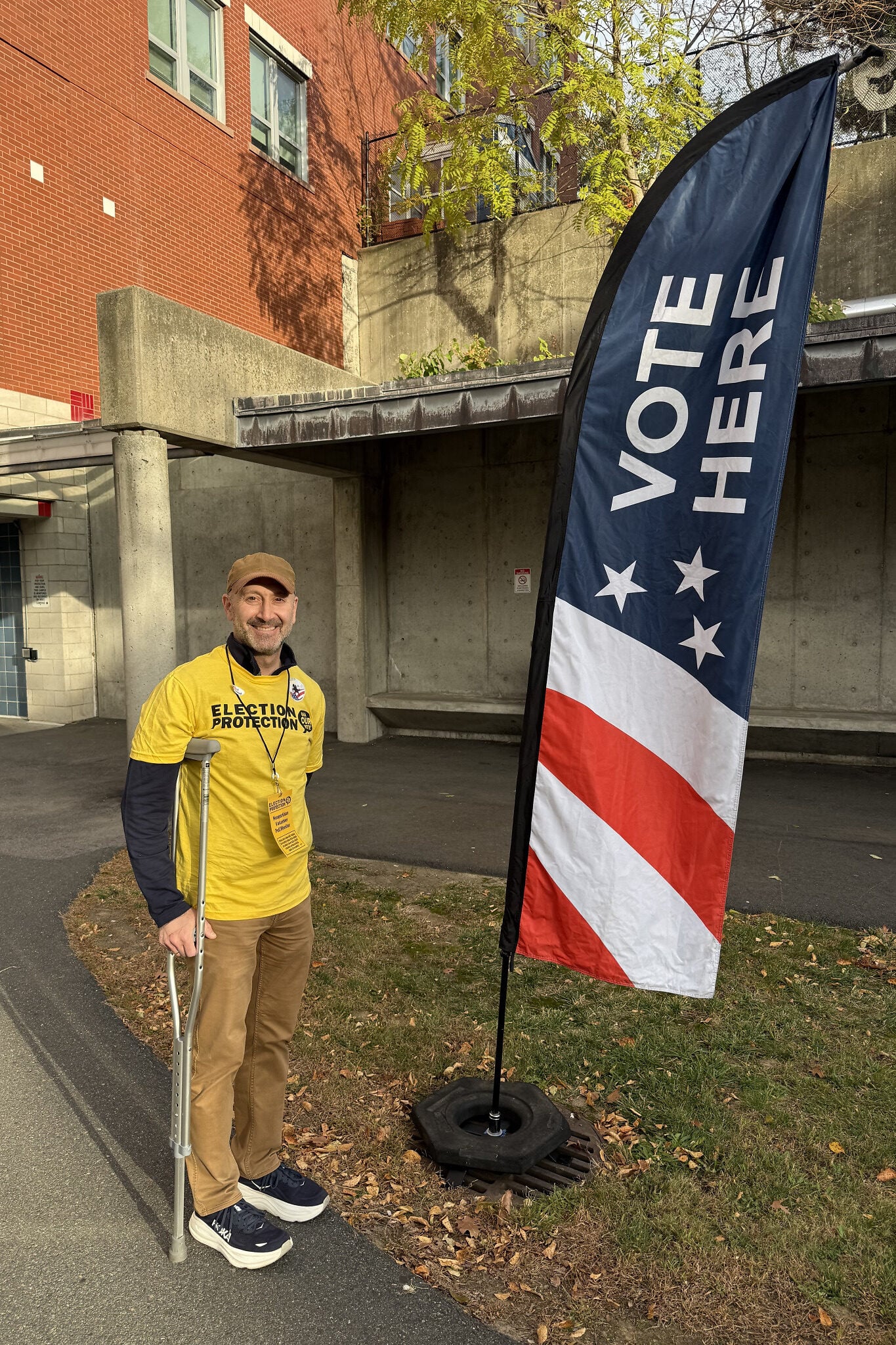
What did people see when they looked at me? A middle-aged white man asking them if they voted?
The yellow shirt? The crutch I was still using?
I alternated between wearing my kippah and my hat. If they noticed my kippah, what associations did that bring?
Whatever assumptions people might have had, I was focused on welcoming people.
A warm hello. A conversation. A question. A little humor.
And that afternoon left me asking:
What happens to our democracy when we actually spend time with the people who share it with us?
The people that you don’t usually interact with.
*****
I want to explore one of the wells in our parashah; there is the one where Rivkah meets Eliezer, and there is another one with a more complicated history.
As Rivkah approaches her new home, the Torah tells us: וְיִצְחָק בָּא מִבּוֹא בְּאֵר לַחַי רֹאִי Isaac had come from a place called Be’er Laḥai Ro’i.
We’ve heard of this place.
Earlier in Genesis, Hagar, the Egyptian woman in Abraham and Sarah’s household, flees Sarah’s harsh treatment. An angel finds her by a spring in the wilderness.
There, she encounters God and names God El Ro’i — God who sees me.
The well becomes Be’er Laḥai Ro’i, the well of the Living One who sees me.
Hagar’s experience gives the place its meaning.
So why is Isaac there?
Sforno, the 16th Century Italian Torah commentator, explains:
לְהִתְפַּלֵּל בִּמְקוֹם שֶׁבּוֹ נִשְׁמְעָה תְּפִלַּת שִׁפְחָתוֹ
To pray in the place where Hagar’s prayer had been heard.
Sforno is explaining where Isaac goes to pray. He’s a smart guy, logical. He seeks a place where God has already answered someone and goes to daven there.
But it is interesting whose prayer gives him reason to go there.
Hagar’s.
The woman his family mistreated and eventually sent away.
Isaac is the heir to the covenant. Yet he seeks out a place whose sacred history comes through her, and not his parents.
Sforno does not say that Isaac went there to understand Hagar’s life.
But I feel like his explanation invites us to consider something powerful:
Hagar’s experience of God matters to Isaac’s own spiritual life.
Not just his father’s and mother’s and his own experience.
What might we discover if we, too, sought out places made meaningful by people whose lives are different from ours?
*****
Rashi offers another explanation, drawing on Bereishit Rabbah.
Isaac went to the well:
שֶׁהָלַךְ לְהָבִיא הָגָר לְאַבְרָהָם אָבִיו שֶׁיִּשָּׂאֶנָּה
To bring Hagar to his father Abraham, so that Abraham could marry her.
This is midrash. The Torah itself does not describe such a reunion.
But consider what the rabbis are imagining.
Abraham arranges for someone to find a wife for Isaac in this morning’s reading. And Isaac seeks out Hagar as a wife for his father.
The son whose future Sarah wanted to secure becomes the person who brings Hagar back.
Rashi does not tell us how Isaac understood his family’s painful history. But the action he imagines opens a possibility: that separation need not be permanent.
Sforno sees Isaac going to a place where Hagar’s prayer was heard. Rashi sees him going to bring Hagar back into his father’s life.
In both readings, Isaac has a reason to go to Hagar’s well.
And that leaves us with a question: where might we need to go — and whom might we need to seek out — to make a different future possible?
Eitan Hersh, the Tufts political scientist, explores the importance of showing up in his book Politics Is for Power.
He challenges what he calls “political hobbyism,” following politics closely while doing little of the hard work of building relationships and organizations.
In the book, he describes Lisa Mann, a Brooklyn architect who trained with the Changing the Conversation Together project.
She went to Staten Island to speak with voters, including people who disagreed with her political perspective.
The volunteers learned to share personal stories, ask questions, and listen.
Lisa had pictured Staten Island as overwhelmingly white, Republican, and monolithic in its views. But going door to door, she discovered much more diversity — in people’s backgrounds, politics, and views.
As she told Hersh, “you didn’t know who was the next person you were going to meet.”
Meeting people changed her understanding of the place.
This is something I have seen as well – through the work that our community has been involved in with the Greater Boston Interfaith Organization – that community organizing, interfaith work, and volunteering give us opportunities to meet people beyond our usual circles.
*****
By the end of my shift on Tuesday, I felt really joyful.
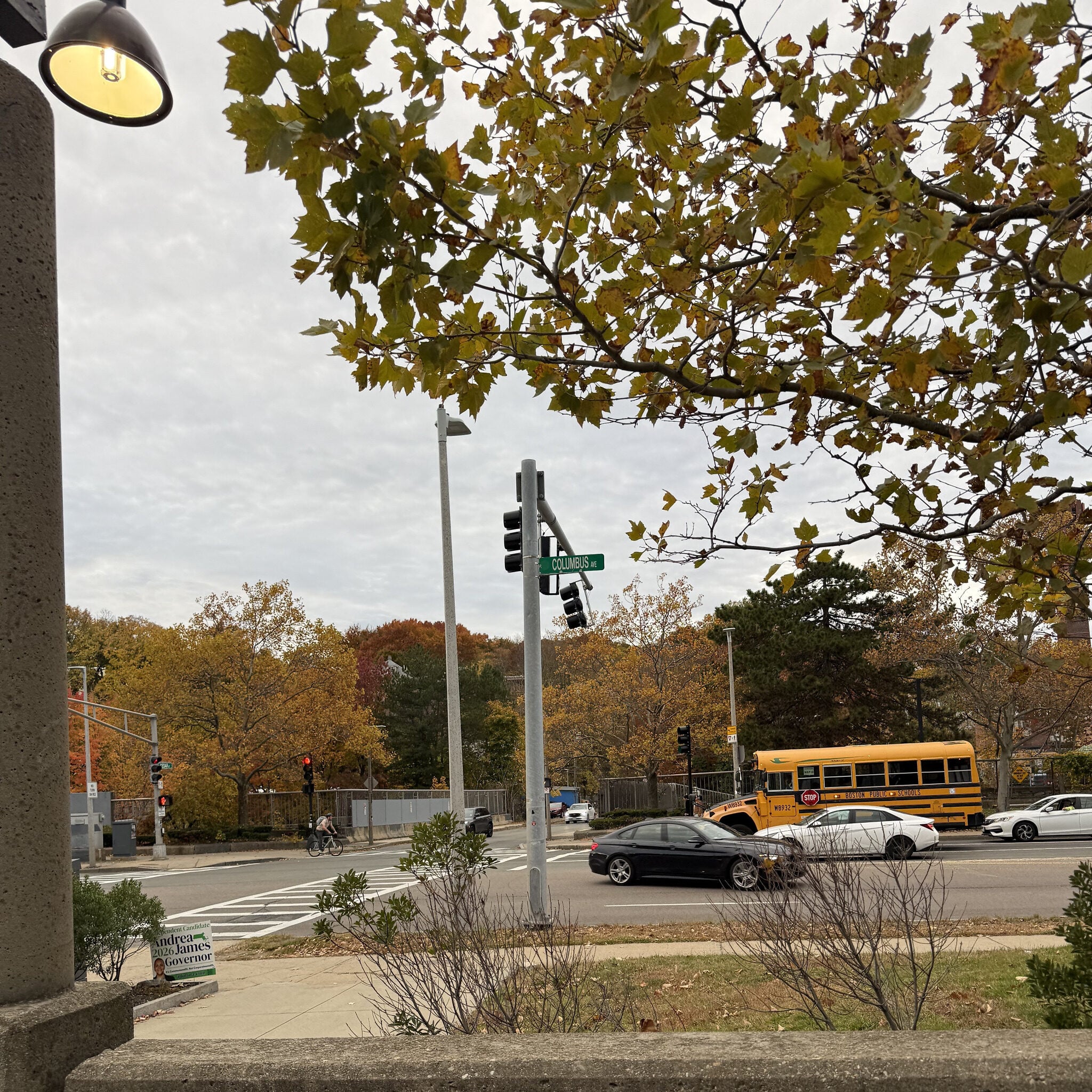
It was a beautiful autumn day. Across Columbus Avenue, the trees were full of color.
And I was just watching people vote.
Seeing them come out with their stickers and their smiles. Their children, their parents, their dogs.
There were some practical problems. An election worker and I discussed the need for better signage for the location.
She was concerned about every voter. That’s democracy. Helping people vote.
The polling location was near where my mother grew up and went to shul. I was meeting people making their lives in a neighborhood that had helped shape my family 80 years ago.
For all our country’s flaws — and there are many — here was something to cherish.
It felt like the real July 4th.
*****
At the end of our parashah, Isaac and Ishmael come together to bury their father, Abraham. וַיִּקְבְּרוּ אֹתוֹ יִצְחָק וְיִשְׁמָעֵאל בָּנָיו “Isaac and Ishmael, his sons, buried him.” His sons.
The Torah has told us much about what separates them: different mothers, different inheritances, different futures.
Now it names an obligation they share.
We are not told what they said or how much they resolved. We are told what they did together.
I keep thinking about that man.
“I’m a Republican.”
Thank you for voting. And thank you for talking with me.
I had arrived wearing this shirt — Election Protection.
I thought I was coming to help protect our democracy. Not sure how much I did.
But the people I met reminded me why I love this democracy. It’s something special.